 Preview
 Send
Send Share
Share
 Details

 Download
 Similars
 X-Ray
X-Ray Diaporama
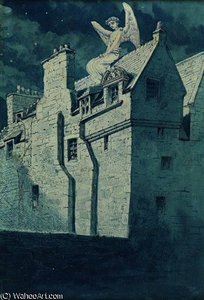
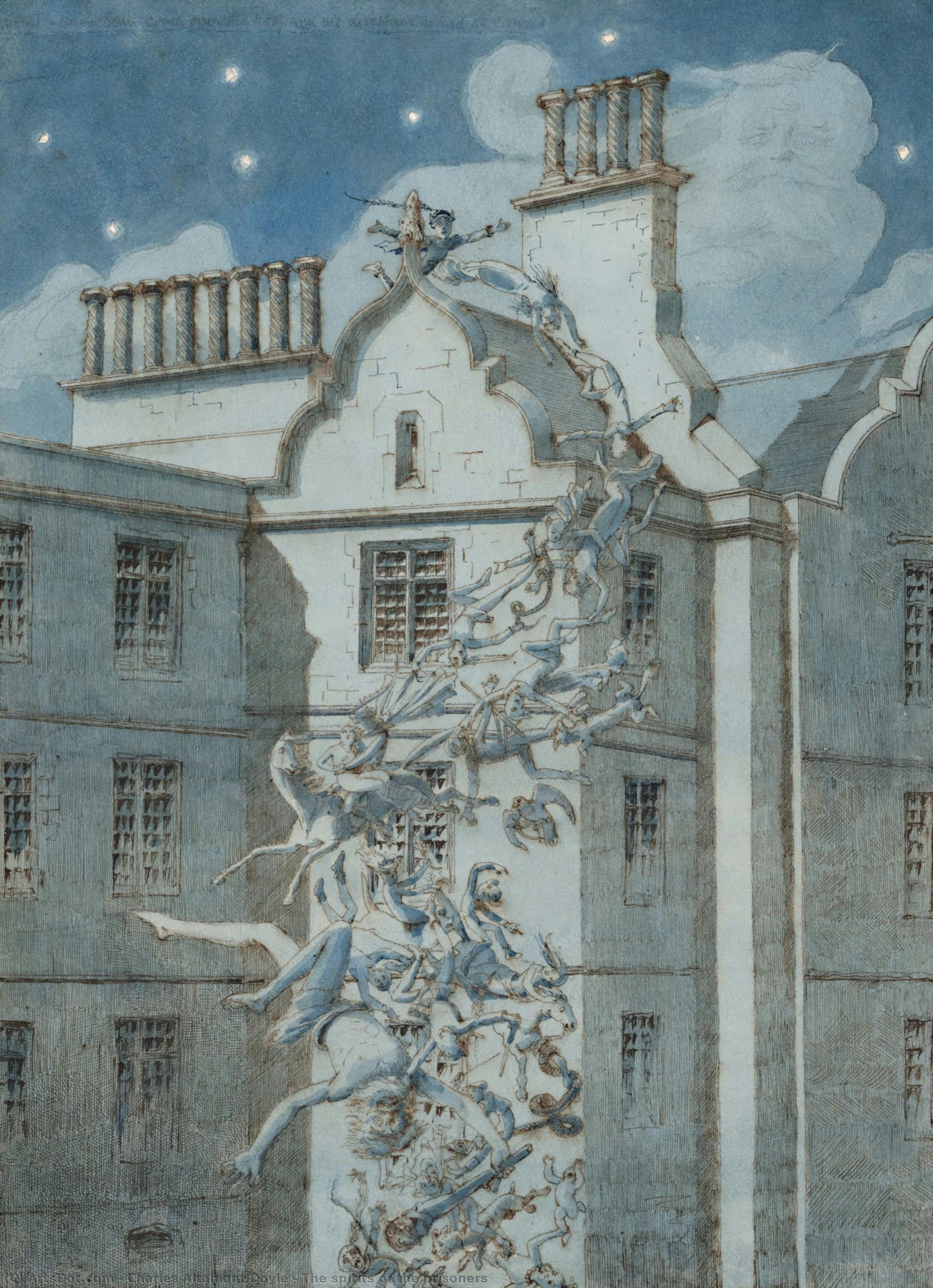
The spirits of the prisoners
 Watercolor
- WallArt
- Romanticism
 1889
1889- 19th Century
 60.0 x 50.0 cm
 Art Gallery of New South Wales
 Read More
Hand Made Oil Reproduction
Hand-painted oil on canvas in your size and frame, made to order by our artists. ( Buy Print Buy Image)




P118B $10

P118H $10

P118W $10

P438Z $10

P508JH $12

P508YH $12

P805H $10

P805Z $10

P919BZ $10

P919G $10

P919XJ $10

P959ZH $10

P968JZ $12

W106C $8

W218G $10

W218JH $8

W218Y $10

W307PJ $10

W316G $10

W316PJ $8

W316Y $10

W398PJ $8

W4111J $10

W500HY $15

W500JH $15

W692G $12

W849H $8

W940BG $15

W953PJ $8




Pick from our preset sizes that match the artwork's original proportions.

You may enter your own dimensions to fit a specific frame or space. If your selected size does not match the original image's proportions, we will either crop the artwork or extend the painting with additional hand-painted elements. A digital mockup will be sent for your approval before production begins.
Please note that the on-screen preview does not reflect the actual cropping or extension. Only the mockup will accurately show the final composition.
While custom sizes are available, we recommend selecting a dimension from the predefined list to preserve the original proportions.
After order, ArtsDot.com team will email client for instructions and provide a mockup preview
Worldwide Delivery () in 3/4 weeks instead of standard 5 weeks. (27 August). No compromise on quality.

Free Worldwide Express Shipping

High-Quality Linen Canvas

Full Shipping Insurance

Customs Tax Refund Guarantee

True Color Matching Guarantee

60-Day Return Policy (Defects Only)

100% Money-Back Guarantee

Bulk Discount Offer
 Glass option is only available in size under 110 CM

The spirits of the prisoners
Reproduction Medium
Reproduction Size
-


Total Price
$ 263
Artwork Description
A Visionary Descent: The Haunting Ethereality of Doyle’s Spirit World
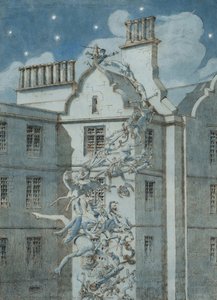
In the quiet, shadowed corridors of Victorian history, few works possess the raw, psychological intensity found in Charles Altamont Doyle’s 1889 watercolor, "The Spirits of the Prisoners." This is not merely a painting; it is a window into a fractured psyche and a glimpse into a realm where the boundaries between the living and the spectral are perilously thin. The scene unfolds with a breathtaking sense of movement, capturing a nocturnal procession of souls that swirl with supernatural purpose over the brooding rooftops of an asylum. As these translucent figures cascade down the dark, brick walls of the structure, the viewer is drawn into a rhythmic, almost hypnotic dance of ascent and descent. It is a masterpiece of Romantic fantasy, where the weight of gravity seems to struggle against the lightness of the ethereal.
The technique employed by Doyle showcases the delicate yet powerful capabilities of watercolor. Through masterful use of washes and fine, precise linework, he creates a profound sense of atmosphere and depth. The nocturnal palette—dominated by deep, somber tones—allows the luminous, ghostly figures to emerge from the darkness, creating a chiaroscuro effect that heightens the drama. Each of the thirteen or more individuals is rendered with a unique posture of struggle; some cling desperately to the masonry, while others appear to be caught in a mid-air tumble. This fluidity of form lends the piece an urgent, kinetic energy, making the viewer feel as though they are witnessing a fleeting, sacred moment of transition between worlds.
To understand this work, one must look through the lens of Doyle’s own tragic biography. Created during his time within the Royal Montrose Lunatic Asylum, the painting is deeply intertwined with his personal confinement and his visionary experiences. The presence of a bearded apparition watching from the clouds—a self-portrait of the artist himself—adds a layer of profound introspection and melancholy. This inclusion transforms the piece from a mere landscape of spirits into a deeply personal meditation on isolation, observation, and the transcendence of the soul. There is a haunting symbolism at play here: the asylum walls represent the physical and mental prisons of the earthly realm, while the swirling spirits represent the uncontainable nature of human thought and spirit.
For the discerning collector or interior designer, "The Spirits of the Prisoners" offers an unparalleled opportunity to introduce a conversation piece of immense depth and character into a curated space. Its dark, evocative tones and dramatic composition make it an ideal focal point for a study, a library, or a gallery wall designed to evoke contemplation and mystery. As a high-quality reproduction, this work brings the profound emotional weight of the Victorian Gothic tradition into the modern home, offering more than just decoration—it offers a portal to a beautifully tragic and imaginative past.
Related Artworks
Artist Biography
A Visionary Caught Between Worlds
In the shadowed corridors of Victorian history, few figures possess a legacy as hauntingly beautiful and deeply complex as Charles Altamont Doyle. While history often remembers him through the lens of his most famous progeny—the legendary creator of Sherlock Holmes, Sir Arthur Conan Doyle—the elder Doyle was a master of a much more ethereal realm. A British illustrator, watercolourist, and civil servant, his life was a delicate dance between the mundane responsibilities of the Victorian era and a profound, often turbulent, immersion in the realms of fantasy and folklore.
Born in London in 1832 into a lineage of immense creative potency, Doyle was the son of the celebrated political cartoonist John Doyle, known to the public as "H.B." This artistic heritage provided him with an early apprenticeship in visual storytelling, though his training remained largely informal, nurtured within the walls of his father's studio. Growing up amidst a family of seven siblings, many of whom would also pursue the arts, Doyle developed a worldview where the boundaries between reality and imagination were perpetually porous.
The Intersection of Duty and Dream
Doyle’s adult life was marked by a striking duality. In 1849, seeking the stability required to support a burgeoning family, he relocated to Edinburgh to serve as an assistant surveyor for the Scottish Office of Works. This role as a civil servant provided a structured, terrestrial anchor to his existence, yet it could not suppress the whimsical currents of his imagination. His marriage to Mary Foley in 1855 further grounded him in the domestic realities of the nineteenth century, even as his mind wandered through moonlit forests and spectral landscapes.
It was within this tension between professional duty and creative compulsion that his most significant works emerged. Doyle became a prolific illustrator, lending his delicate touch to classic narratives such as The Pilgrim’s Progress and Robinson Crusoe. His ability to breathe life into text through watercolor allowed him to weave intricate tapestries of myth and legend. His technique was characterized by a masterful use of washes and precise linework, creating an atmosphere that felt both luminous and deeply melancholic.
The Macabre Beauty of the Fantastic
As Doyle’s personal struggles with depression and alcoholism intensified, so too did the intensity of his art. The whimsical elements of his early career began to coalesce into something more profound and unsettling. His later works often explored themes of fairies, folklore, and the supernatural, but they were imbued with a sense of unease that mirrored his own inner turmoil. This stylistic evolution saw him moving toward a more macabre aesthetic, where the ethereal figures of his paintings seemed to emerge from a darkness that was as much psychological as it was atmospheric.
One of his most poignant achievements is found in works like The Spirits of the Prisoners, a piece that serves as a harrowing window into a fractured psyche. Created during a period of profound personal crisis, the painting captures a nocturnal procession of souls swirling over brooding rooftops, embodying a sense of kinetic energy and spiritual transition. In these late works, Doyle achieved a unique form of Romanticism—one that did not merely celebrate nature or emotion, but interrogated the very thin veil between the living and the spectral.
The historical significance of Charles Altamont Doyle lies in his ability to capture the Victorian fascination with the occult and the unseen through a deeply personal lens. His oeuvre remains a testament to the power of art to act as both a refuge and a reflection of human suffering. Through his watercolors, we encounter an artist who, despite being overshadowed by the detective fiction of his son, carved out a singular space in the annals of British art—a space defined by the haunting beauty of the dreamscape.
Charles Altamont Doyle
1832 - 1893 , United Kingdom
Quick Facts
- Artistic Movement Or Style: Romanticism
- Artists Or Movements Influenced By This Artist: ['Sherlock Holmes']
- Artists Who Influenced This Artist: ['John Doyle']
- Date Of Birth: 1832
- Date Of Death: 1893
- Full Name: Charles Altamont Doyle
- Nationality: British
- Notable Artworks:
- The Escape
- Hearts Are Trumps
- The fairy queen
- Place Of Birth: United Kingdom
Related Articles

Watercolor Wonders: 10 Masterpieces That Redefined Art History | ArtsDot
Journey through 10 legendary watercolor masterpieces by Sargent, Turner & Homer! Explore iconic landscapes, portraits & floral art that redefined history. Find museum-quality reproductions and curated decor ideas at ArtsDot.com.

Ephemeral Visions: Exploring the Artistic Legacy & Contemporary Practice of Watercolor Painting
Explore the captivating world of watercolor painting! Discover its rich history, essential techniques, influential artists & collecting tips. A comprehensive guide for art enthusiasts from ArtsDot.

Ephemeral Visions: Exploring the History & Emotional Resonance of Watercolor Painting
Explore the captivating history of watercolor painting, from ancient techniques to modern masters like Kandinsky & Blake. Discover essential artists, collecting tips & the emotional power of this luminous medium. Expert insights for art enthusiasts.

Ephemeral Visions: Exploring the Artistic Legacy & Nuances of Watercolor Painting
Explore the captivating world of watercolor painting! Discover its rich history, essential techniques, influential artists & collecting tips from art experts. A comprehensive guide for enthusiasts.
The Enduring Appeal of Watercolor: History, Techniques & Contemporary Practice
Explore the captivating world of watercolor painting! Discover its rich history, essential techniques, influential artists, and collecting tips. A comprehensive guide for art enthusiasts.