 Preview
 Send
Send Share
Share
 Details

 Download
 Similars
 X-Ray
X-Ray Diaporama
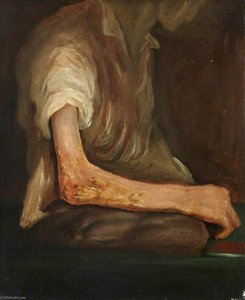
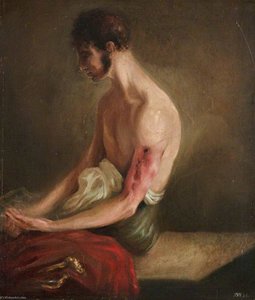
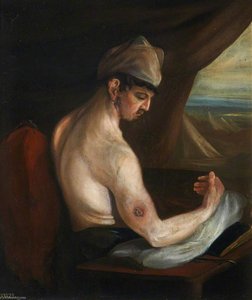
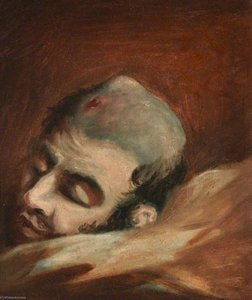
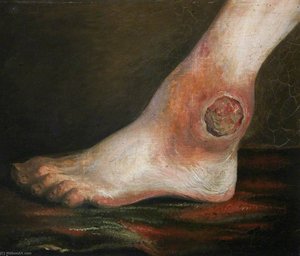
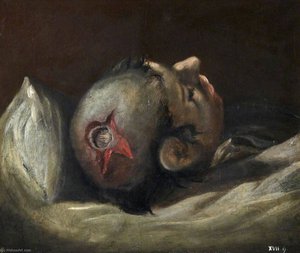
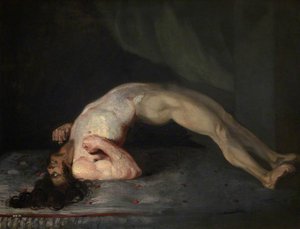
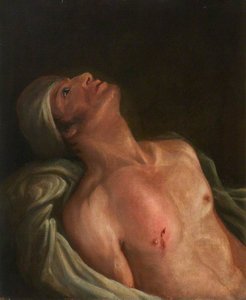
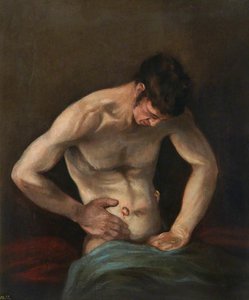
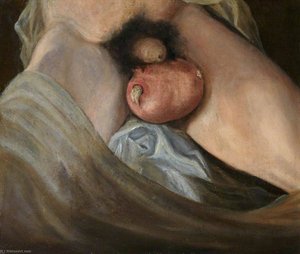
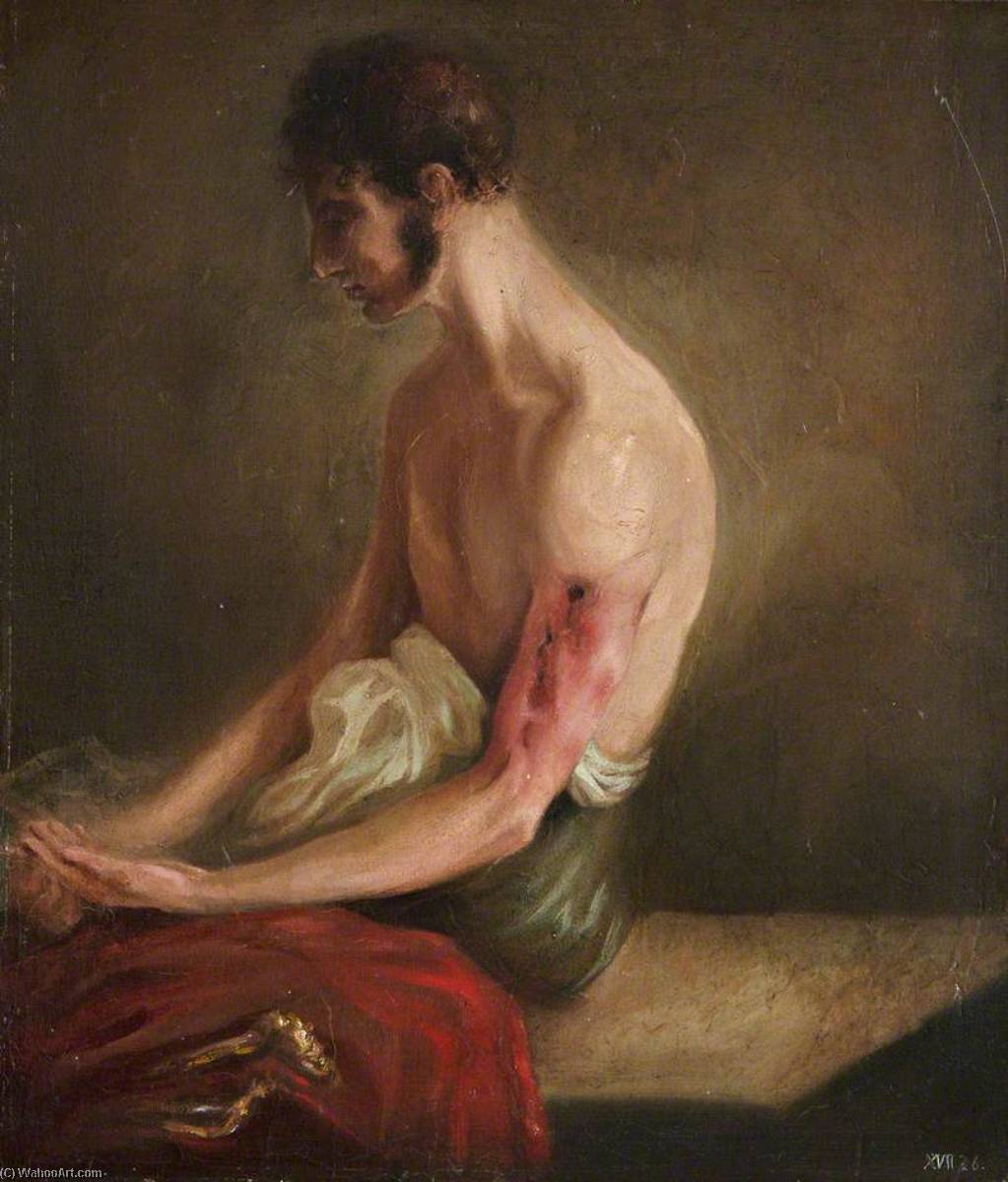
The Wounded following the Battle of Corunna Gunshot Fracture of Shaft of Humerus


 Read More
Giclée / Art Print
Museum-quality giclée or canvas print with fast production and flexible finish options. ( Buy Hand Made Painting Buy Image)




































Pick from our preset sizes that match the artwork's original proportions.

You may enter your own dimensions to fit a specific frame or space. If your selected size does not match the original image's proportions, we will either crop the artwork or extend the image with a mirrored or solid-fill edge. A digital mockup will be sent for your approval before production begins.
Please note that the on-screen preview does not reflect the actual cropping or extension. Only the mockup will accurately show the final composition.
While custom sizes are available, we recommend selecting a dimension from the predefined list to preserve the original proportions.
Worldwide Delivery () in 2 weeks instead of standard 4/5 weeks. (3 September)

Free Worldwide Express Shipping

High-Quality Linen Canvas

Full Shipping Insurance

Customs Tax Refund Guarantee

True Color Matching Guarantee

60-Day Return Policy (Defects Only)

100% Money-Back Guarantee

Bulk Discount Offer
 Glass option is only available in size under 110 CM

The Wounded following the Battle of Corunna Gunshot Fracture of Shaft of Humerus
Giclée / Art Print
Reproduction Size
-


Total Price
$ 63
A Visceral Encounter with History
In the quiet, somber halls of the Royal College of Surgeons of Edinburgh, there exists a window into the raw, unvarnished reality of nineteenth-century warfare. The Wounded following the Battle of Corunna Gunshot Fracture of Shaft of Humerus, painted by Charles Bell in 1809, is not merely a depiction of injury; it is a profound meditation on human vulnerability. The canvas captures a singular, harrowing moment: a man, seated and weary, tending to a devastating gunshot wound that has shattered the shaft of his humerus. Through Bell’s meticulous brushwork, the viewer is drawn into the immediate aftermath of conflict, where the grand narratives of Napoleonic battles dissolve into the intimate, agonizing struggle of a single individual trying to stem the tide of his own mortality.
The composition is strikingly focused, stripping away the chaotic landscape of the battlefield to center entirely on the physical and psychological weight of the injury. The man’s open shirt serves as a stark frame for the trauma, revealing the anatomical precision of the fracture. There is a heavy, palpable stillness in his posture—a sense of exhaustion that transcends the physical pain. As he clutches a cloth to his arm, the tension in his hands and the slumped set of his shoulders speak to a profound resilience amidst despair. For the collector or lover of fine art, this piece offers more than visual interest; it provides an emotional anchor, a study in the quiet strength found within moments of extreme fragility.
Mastery of Light and Anatomical Truth
Technically, Bell’s work stands as a testament to the power of oil on canvas to convey texture and depth. The artist employs a masterful command of light to illuminate the wounded limb, making the skin appear almost translucent against the darker, more muted tones of the background. This chiaroscuro effect does not merely create dimension; it directs the eye with surgical precision to the focal point of the trauma. Every fold in the fabric and every shadow cast by the man's arm is rendered with a level of detail that honors the scientific accuracy required for such a medical subject, while simultaneously elevating the work into the realm of high drama.
For interior designers and curators of fine reproductions, this painting offers a sophisticated opportunity to introduce a piece of profound historical gravity into a space. Its somber palette and intense subject matter make it an ideal centerpiece for a study, a library, or a gallery wall dedicated to classical realism. To possess a reproduction of such a work is to invite a conversation about the human condition, the cost of history, and the enduring power of art to document the truths that words often fail to capture. It is a piece that demands attention, rewarding the observer with a deep, contemplative experience every time it is viewed.
Related Artworks


Artist Biography
A World Rendered in Miniature: The Life and Art of Charles Bell
Charles Bell, born in Tulsa, Oklahoma, in 1935, emerged as a pivotal figure within the Photorealist movement, though his path to artistic recognition was remarkably unconventional. Unlike many of his contemporaries who formally studied art, Bell’s journey began with an early inclination towards visual representation, nurtured by drawing and painting lessons provided by Scottish painter David Allan. This foundational training, coupled with a keen observational eye, would later prove instrumental in his meticulous approach to capturing the world around him. His initial academic pursuits led him down a different path—a degree in Business Administration from the University of Oklahoma followed by service in the U.S. Navy—before he fully embraced his artistic calling. It wasn’t until settling in New York City in 1967 that Bell dedicated himself entirely to painting, establishing a studio where he would meticulously craft images that blurred the lines between reality and representation.From Still Life to Symbolic Narrative
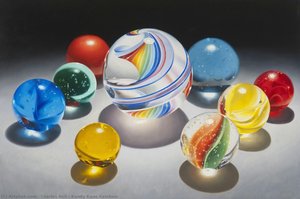
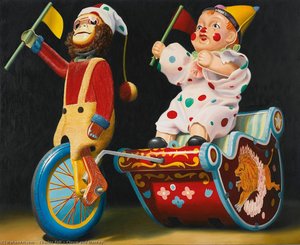
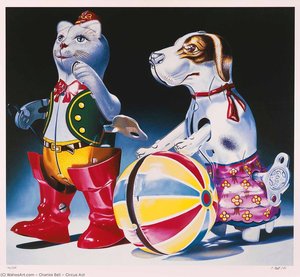
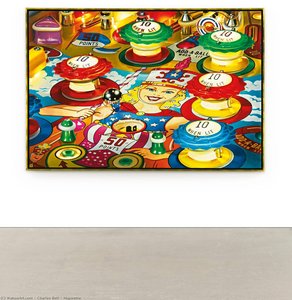
Bell's artistic signature lies in his large-scale depictions of everyday objects—vintage toys, pinball machines, gumball dispensers, dolls, and action figures—rendered with an almost obsessive attention to detail. He didn’t seek to merely replicate these items; rather, he elevated them, transforming the mundane into something monumental and imbued with a sense of nostalgia and wonder. His process was deeply rooted in photography. Bell would carefully arrange his subjects in still life compositions, photograph them, and then painstakingly translate those images onto canvas using oil paints. The resulting works possess a glass-like clarity, an almost hyperreal quality that invites viewers to examine the textures, reflections, and intricate details of these familiar objects with newfound appreciation. But beyond technical mastery, Bell’s art held a deeper resonance. He frequently drew inspiration from Classical mythology, reimagining iconic scenes—such as the Judgement of Paris—using action figures as stand-ins for gods and goddesses. This juxtaposition of high art and pop culture created a unique visual language, imbuing his work with layers of meaning and inviting contemplation on themes of consumerism, memory, and the enduring power of narrative.Recognition and Legacy
Throughout the 1970s and 80s, Bell’s work gained increasing recognition within the art world. He exhibited regularly at the Louis K. Meisel Gallery in New York, a key venue for showcasing Photorealist artists, and his paintings were included in prestigious group exhibitions such as “Photo-Realism 1973” and "American Masters." His dedication to technical precision and innovative approach earned him critical acclaim, with art critic Henry Geldzahler particularly praising his pinball series as a landmark achievement. Bell’s commitment to pushing the boundaries of printmaking was also evident in his creation of “The Viking,” a complex silkscreen print that demanded extensive effort and numerous proofings—a testament to his unwavering pursuit of perfection. Today, his works are held in prominent collections including The Metropolitan Museum of Art, The Solomon R. Guggenheim Museum, and the Smithsonian American Art Museum, solidifying his place as a significant figure in contemporary art history. Following his death in 1995, Louis K. Meisel acquired all intellectual property rights to Bell’s body of work, ensuring that his artistic vision would continue to be preserved and celebrated for generations to come.A Lasting Influence
Charles Bell's impact extends beyond the aesthetic qualities of his paintings. He demonstrated a unique ability to find beauty and significance in the commonplace, challenging conventional notions of subject matter and elevating popular culture to the realm of fine art. His meticulous technique and unwavering dedication to realism influenced countless artists, inspiring them to explore new possibilities within the genre. Bell’s work serves as a reminder that art can be found in unexpected places, and that even the most ordinary objects can hold profound meaning when viewed through the lens of artistic vision. He left behind a legacy not only of stunning visual imagery but also of intellectual curiosity, technical innovation, and a deep appreciation for the power of representation.
Charles Bell
1935 - 1995 , United States of America
Quick Facts
- Artistic Movement Or Style: Photorealism
- Artists Who Influenced This Artist:
- Richard Diebenkorn
- Wayne Thiebaud
- Date Of Birth: 1935
- Date Of Death: 1995
- Full Name: Charles Bell
- Nationality: American
- Notable Artworks:
- Kandy Kane Rainbow
- Untitled (ARCVFK)
- The Viking
- Place Of Birth: Tulsa, USA
Related Articles
Philip James de Loutherbourg: Romantic Visions of Maritime Life & the Sublime
Explore the dramatic naval scenes & landscapes of Philip James de Loutherbourg (1740-1812), a key figure in Romantic painting. Discover his legacy, theatrical innovations & iconic works like 'The Battle of the Nile' at ArtsDot.
Émile Jean Horace Vernet: Romantic Realism & Depicting 19th-Century Life
Explore the life & art of Émile Jean Horace Vernet, a master of Romantic Realism. Discover his captivating battle scenes, portraits, and Orientalist works – a window into 19th-century France. Learn about his techniques & enduring legacy.
Thomas Butterworth (1768–1842): Navigating the Aesthetics of British Marine Painting
Explore the captivating maritime art of Thomas Butterworth (1768–1842). Discover his stunning depictions of Napoleonic naval battles and life at sea, commissioned works for the East India Company, and enduring legacy. Learn more today!
Isaac Lazarus Israëls: A Chronicle of Dutch Life & the Evolution of Impressionistic Realism
Explore the captivating world of Isaac Lazarus Israëls (1865-1934), a leading Dutch Amsterdam Impressionist. Discover his city scenes, portraits & travels through Asia – a chronicle of Dutch life and artistic evolution.

William Owen: A Poetic Vision of War & Landscape in British Modernism
Explore the poignant war poetry of Wilfred Owen, a key figure in British Modernism. Discover his innovative style, themes of loss & camaraderie, and lasting impact on 20th-century literature. Analysis & historical context included.