 Preview
 Send
Send Share
Share
 Details

 Download
 Similars
 X-Ray
X-Ray Diaporama
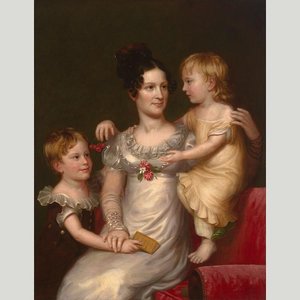
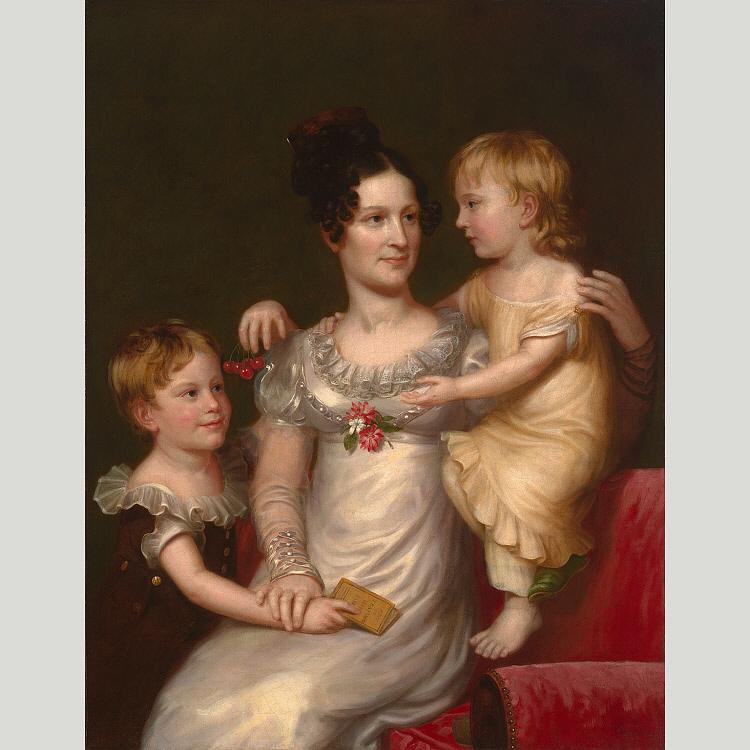
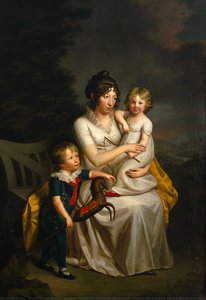
Sarah Weston Seaton with her Children Augustine and Julia
 Oil
Oil- WallArt
- American Portraiture
 1815
1815- 19th Century
 112.0 x 87.0 cm
 Read More
Hand Made Oil Reproduction
Hand-painted oil on canvas in your size and frame, made to order by our artists. ( Buy Print Buy Image)




































Pick from our preset sizes that match the artwork's original proportions.

You may enter your own dimensions to fit a specific frame or space. If your selected size does not match the original image's proportions, we will either crop the artwork or extend the painting with additional hand-painted elements. A digital mockup will be sent for your approval before production begins.
Please note that the on-screen preview does not reflect the actual cropping or extension. Only the mockup will accurately show the final composition.
While custom sizes are available, we recommend selecting a dimension from the predefined list to preserve the original proportions.
After order, ArtsDot.com team will email client for instructions and provide a mockup preview
Worldwide Delivery () in 3/4 weeks instead of standard 5 weeks. (23 August). No compromise on quality.

Free Worldwide Express Shipping

High-Quality Linen Canvas

Full Shipping Insurance

Customs Tax Refund Guarantee

True Color Matching Guarantee

60-Day Return Policy (Defects Only)

100% Money-Back Guarantee

Bulk Discount Offer
 Glass option is only available in size under 110 CM

Sarah Weston Seaton with her Children Augustine and Julia
Reproduction Medium
Reproduction Size
-


Total Price
$ 263
Artwork Description
A Tender Legacy Captured in Oil
In the quiet intimacy of Charles Bird King’s 1815 masterpiece, Sarah Weston Seaton with her Children Augustine and Julia, we are invited into a private sanctuary of maternal devotion. This exquisite portrait serves as more than a mere likeness; it is a window into the domestic heart of early nineteenth-century American life. The composition centers on Sarah Weston Seaton, whose poised yet gentle presence anchors the scene. Seated with an air of quiet grace, she holds a book—a subtle nod to the intellect and cultivation expected of her station—while her children, Augustine and Julia, surround her in a display of pure, unscripted affection. One child rests upon her lap, anchored by her warmth, while the other stands beside her, eyes wandering toward an unseen point of interest, perhaps caught in a moment of childhood wonder. The presence of another figure softly receding into the background adds a layer of lived-in reality to the scene, suggesting a bustling, vibrant household where love and lineage are nurtured daily.
The technical mastery of Charles Bird King is on full display through his delicate handling of light and texture. As an artist who rose to prominence by capturing both the political elite and the profound dignity of Native American leaders, King brings a sophisticated, Dutch-influenced sensibility to this family portrait. His brushwork breathes life into the soft fabrics of the children's garments and the subtle sheen of the surroundings, creating a tactile experience for the viewer. The lighting is masterfully orchestrated to cast a warm, golden glow over the subjects, emphasizing the softness of skin and the tender expressions that define this familial bond. This luminous quality does not merely illuminate the figures; it imbues the entire canvas with an emotional warmth, transforming a formal commission into a timeless celebration of human connection.
An Elegant Addition to the Refined Interior
For the discerning collector or interior designer, this painting offers a profound sense of historical continuity and emotional depth. The artwork transcends simple decoration, acting as a focal point that commands attention through its narrative richness rather than mere spectacle. Its palette, characterized by earthy tones and soft highlights, possesses a versatile elegance that complements both classical and contemporary settings. Whether placed in a sun-drenched morning room or a stately library, the painting introduces an atmosphere of tranquility and sophisticated nostalgia.
Investing in a high-quality reproduction of this work allows one to bring the storied history of American portraiture into the modern home. The piece serves as a conversation starter, inviting guests to contemplate the enduring themes of motherhood, growth, and the sanctity of the family unit. It is an ideal selection for those seeking to infuse their living spaces with a sense of heritage, grace, and the quiet beauty of a moment frozen in time.
Related Artworks
Artist Biography
A Life Etched in Portraiture: The World of Charles Bird King
Charles Bird King, born in Newport, Rhode Island, in 1785, stands as a pivotal figure in the evolution of American portraiture during an era defined by profound national transformation. His life story is a compelling tapestry woven with threads of personal hardship and unwavering artistic ambition—a journey that ultimately immortalized not only the nation’s political elite but also its Native American leaders, a demographic often overlooked within the artistic landscape of his time. The early years of King's existence were marked by tragedy; at just four years old, he endured the loss of his father, Captain Zebulon King, a veteran of the Revolutionary War, who fell victim to an attack near Marietta, Ohio. This devastating event prompted a return with his mother to Newport, where the seeds of his artistic calling would begin to sprout and take root.From European Academies to the American Capital
King’s formal artistic training commenced at the age of fifteen under the tutelage of Edward Savage in New York City—a foundational experience that ignited within him a passionate dedication to portraiture. However, it was his subsequent seven-year sojourn at the Royal Academy in London, studying alongside the esteemed Benjamin West, that truly defined his artistic sensibilities and shaped his evolving style. This immersive period within European art traditions—particularly those of the Dutch and Northern Renaissance masters—would become a defining characteristic woven into the very fabric of his work. Upon returning to the United States amidst the turmoil of the War of 1812, King navigated a shifting landscape, briefly establishing himself in Philadelphia, Baltimore, and Richmond before ultimately settling in Washington, D.C. This strategic move proved decisive; the burgeoning capital offered both economic opportunity and access to a powerful network of potential patrons. It was here that King would establish himself as the preeminent portraitist of his era, capturing the likenesses of influential politicians, diplomats, and military figures with remarkable skill and sensitivity.A Legacy Forged in Likeness: Style and Influences
King’s artistic style is characterized by a meticulous attention to detail, a refined sense of composition, and a subtle yet compelling psychological depth. While firmly rooted in European traditions, his work possesses a distinctly American quality—a realism tempered by an understated elegance. The influence of Dutch masters is particularly evident in his masterful use of light and shadow, the exquisite texture of fabrics, and the overall sense of quiet dignity that permeates his portraits. However, King was not merely a copyist; he adapted these European techniques to suit the unique character of his American subjects. His ability to capture both physical resemblance and inner personality set him apart from many of his contemporaries. He wasn’t driven by flamboyant displays or dramatic narratives but rather focused on presenting his sitters with honesty and respect—an approach that resonated deeply with a society that valued decorum, intellect, and civic virtue. His portraits weren't simply representations; they were statements about character and status.Portraits of Power and Cultural Exchange
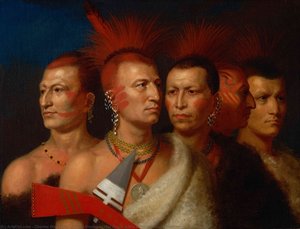
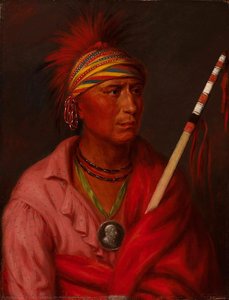
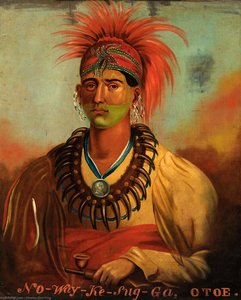
Perhaps King’s most enduring contribution lies in his remarkable series of portraits depicting Native American leaders and tribesmen. Commissioned by Thomas L. McKenney, the Superintendent of Indian Trade, these paintings were intended to document the diverse cultures and individuals encountered during diplomatic missions to Washington D.C. These works are not simply historical records; they are powerful statements about cultural exchange, political negotiation, and the complex relationship between the United States government and Native American tribes. Portraits such as those of Kee-shes-wa (a Fox chief), Jack-o-pa (a Chippewa chief), and Teh-ro-hon (an Ioway warrior) stand as testaments to King’s skill in capturing not only physical likeness but also the dignity, strength, and cultural identity of his subjects. While some modern critics have noted potential inaccuracies or romanticized depictions within these portraits, their historical significance remains undeniable—they offer a rare glimpse into a pivotal moment in American history. These paintings served as both artistic achievements and diplomatic tools.Enduring Impact and Artistic Remembrance
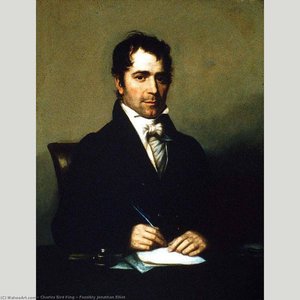
Charles Bird King’s success was not solely attributable to his artistic talent; he possessed a remarkable ability to cultivate relationships with influential patrons, including John Quincy Adams, Henry Clay, James Monroe, and Daniel Webster. This social acumen, combined with his unwavering dedication to his craft, allowed him to thrive in the competitive art world of early 19th-century America. Elected an honorary academician by the National Academy of Design in 1827, King continued to paint prolifically until his death in Washington D.C. in 1862. In a final act of generosity, he bequeathed his collection of paintings, books, and prints to the Redwood Library and Athenaeum, ensuring that his legacy would endure for generations to come. Today, Charles Bird King’s works are held in prominent museums across the United States, serving as invaluable windows into a formative period of American history and artistic expression.- Key Achievements: Masterful portraiture of Native American leaders and influential political figures.
- Artistic Style: Blend of European (Dutch & Northern Renaissance) techniques with an understated American realism.
- Historical Significance: Documented a crucial period of cultural exchange and political negotiation in early America.
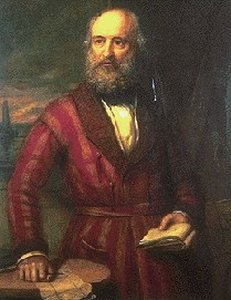
Charles Bird King
1785 - 1862 , United States of America
Quick Facts
- Artistic Movement Or Style: Dutch influence, realism
- Artists Who Influenced This Artist:
- Edward Savage
- Benjamin West
- Date Of Birth: 1785
- Date Of Death: 1862
- Full Name: Charles Bird King
- Nationality: American
- Notable Artworks:
- Stephen Decatur
- Hayne Hudjihini
- Itinerant Artist
- Place Of Birth: Newport, USA
Related Articles
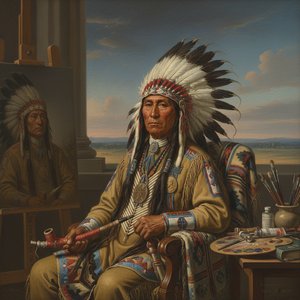
Charles Bird King: Capturing Native American Dignity Through Portraiture & Cultural Exchange
Explore the captivating portraits of Charles Bird King, renowned for his depictions of Native American leaders. Discover the historical context, artistic techniques, and collecting value of these significant 19th-century artworks.

Evolving Portraits: Personalized Art as a Chronicle of Family Life Across Generations
Create a timeless family legacy with custom portraits! ArtsDot connects you with skilled artists for heirloom-quality paintings & prints. Explore styles, commission your unique artwork today.
Feathered Visions: A Historical & Artistic Exploration of Birds in Painting
Explore the rich history of birds in painting! Discover symbolism, artistic movements & master artists like Audubon. High-quality reproductions available at ArtsDot.
The Enduring Legacy of Family Portraiture: A Historical & Artistic Exploration
Explore the rich history of family portraiture with ArtsDot. Discover artistic styles, symbolism & collecting insights. Commission a custom oil painting or appraise your existing artwork today!
Preserving Generations: The Enduring Significance of Family Portraits as Legacy
Discover the enduring power of family portraits. Explore how commissioning a custom oil painting preserves your legacy for generations. Expert artists & heirloom quality.