 Preview
 Send
Send Share
Share
 Details

 Download
 Similars
 X-Ray
X-Ray Diaporama
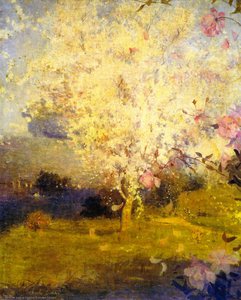
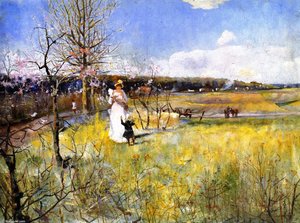
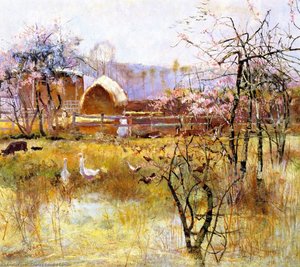
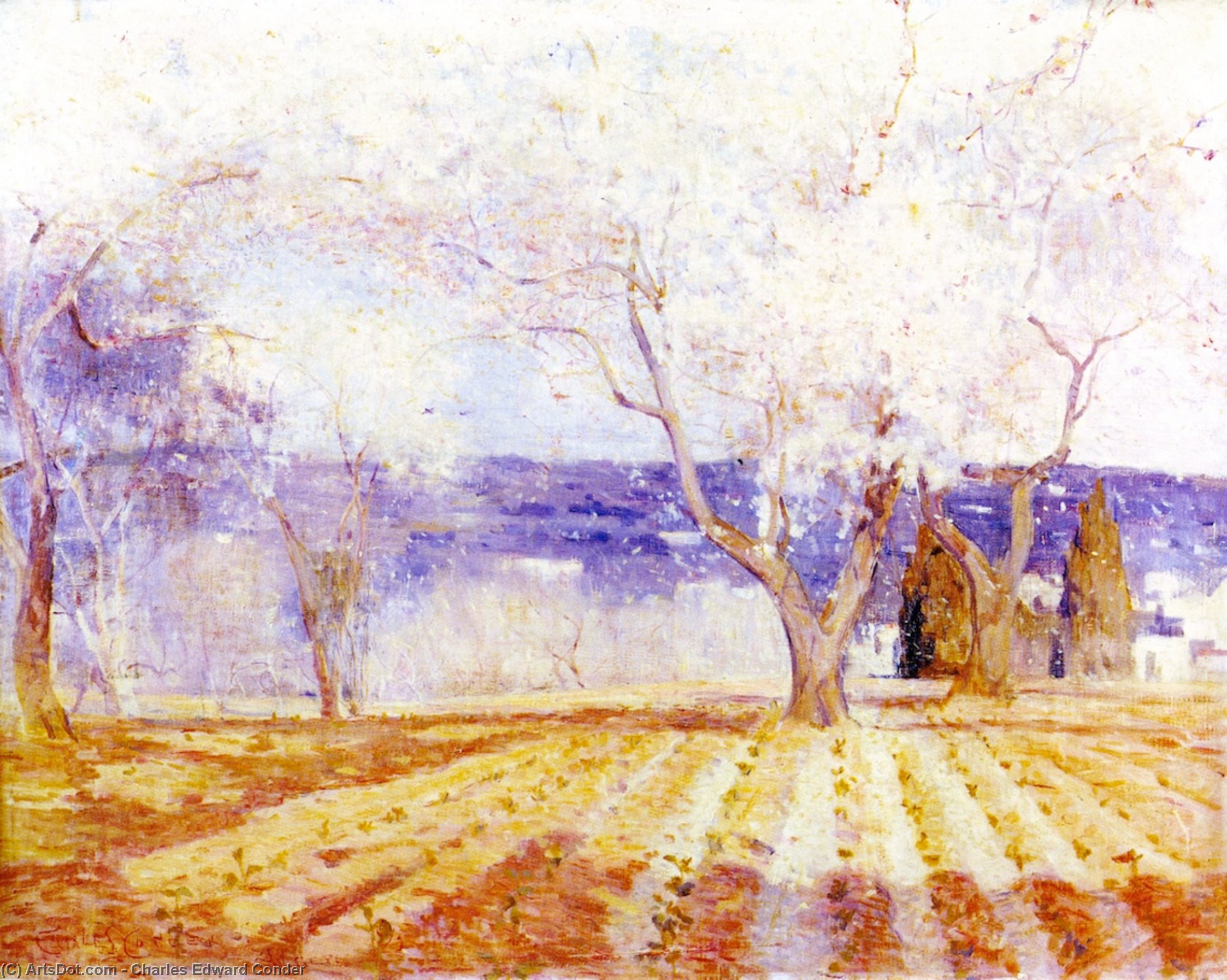
Fruit Trees in Blossom, Algiers


 Read More
Hand Made Oil Reproduction
Hand-painted oil on canvas in your size and frame, made to order by our artists. ( Buy Print Buy Image)




P118B $10

P118H $10

P118W $10

P438Z $10

P508JH $12

P508YH $12

P805H $10

P805Z $10

P919BZ $10

P919G $10

P919XJ $10

P959ZH $10

P968JZ $12

W106C $8

W218G $10

W218JH $8

W218Y $10

W307PJ $10

W316G $10

W316PJ $8

W316Y $10

W398PJ $8

W4111J $10

W500HY $15

W500JH $15

W692G $12

W849H $8

W940BG $15

W953PJ $8




Pick from our preset sizes that match the artwork's original proportions.

You may enter your own dimensions to fit a specific frame or space. If your selected size does not match the original image's proportions, we will either crop the artwork or extend the painting with additional hand-painted elements. A digital mockup will be sent for your approval before production begins.
Please note that the on-screen preview does not reflect the actual cropping or extension. Only the mockup will accurately show the final composition.
While custom sizes are available, we recommend selecting a dimension from the predefined list to preserve the original proportions.
After order, ArtsDot.com team will email client for instructions and provide a mockup preview
Worldwide Delivery () in 3/4 weeks instead of standard 5 weeks. (16 August). No compromise on quality.

Free Worldwide Express Shipping

High-Quality Linen Canvas

Full Shipping Insurance

Customs Tax Refund Guarantee

True Color Matching Guarantee

60-Day Return Policy (Defects Only)

100% Money-Back Guarantee

Bulk Discount Offer
 Glass option is only available in size under 110 CM

Fruit Trees in Blossom, Algiers
Reproduction Medium
Reproduction Size
-


Total Price
$ 263
Artwork Description
A Symphony of Light and Petals
In his 1892 masterpiece, Fruit Trees in Blossom, Algiers, Charles Edward Conder invites the viewer into a sun-drenched sanctuary where the boundaries between reality and impression dissolve. This exquisite oil on canvas serves as a breathtaking window into a moment of pure, unadulated serenity. The scene is dominated by the delicate architecture of fruit trees, their branches heavy with ivory blossoms that seem to dance against a brilliant, crystalline blue sky. Conder, an artist deeply moved by the landscapes he encountered during his travels, captures not just a botanical study, but the very essence of an Algerian spring. The composition is masterfully balanced; while the flowering trees command our attention, the inclusion of two quiet benches—one nestled near the center and another tucked toward the periphery—suggests a human presence that has only just departed, leaving behind a profound sense of peace and invitation.
The technique employed in this work is a testament to the brilliance of the Impressionist movement. Conder utilizes soft, feathery brushstrokes that imbue the canvas with a rhythmic, living energy. There is no rigid line here; instead, light is sculpted through a sophisticated palette of pastels, vibrant greens, and deep, atmospheric blues. This approach allows the artist to capture the play of sunlight as it filters through the blossoms, creating a sense of depth and dimensionality that pulls the observer into the warmth of the scene. For the discerning collector or interior designer, this painting offers more than mere decoration; it provides a luminous focal point that can breathe life and airy elegance into any sophisticated space, acting as a perennial source of light even in the dimmest rooms.
Historical Resonance and Emotional Depth
To understand the soul of Fruit Trees in Blossom, Algiers, one must consider the journey of its creator. Charles Edward Conder, a pivotal figure of Australia's Heidelberg School, possessed a unique ability to translate his global wanderlust into emotive visual poetry. His time in Algiers left an indelible mark on his aesthetic sensibility, infusing his work with a warmth and luminosity often found in the Mediterranean tradition. This painting stands as a bridge between his English roots and his profound connection to the light of the Southern Hemisphere and North Africa. The symbolism within the piece is subtle yet powerful; the blossoming trees represent renewal, fertility, and the fleeting beauty of nature, while the empty benches serve as poignant symbols of contemplation and the quietude found in solitude.
For those seeking to adorn their homes with art that evokes emotion, this work offers a sanctuary of tranquility. The emotional impact of the painting lies in its ability to transport the viewer away from the chaos of modern life into a realm of eternal springtime. It is an evocative piece that resonates with themes of nostalgia and hope. Whether displayed in a grand gallery setting or as a centerpiece in a contemporary living room, a high-quality reproduction of this work allows the timeless beauty of Conder's vision to become a part of one's daily environment, offering a constant, gentle reminder of the splendor found in the natural world.
Related Artworks
Artist Biography
early life and artistic journey
charles edward conder, a british-born painter, lithographer, and designer, left an indelible mark on the art world. born in tottenham, middlesex, on october 24, 1868, conder's early life was marked by his mother's passing in india when he was just four years old.artistic career in australia
in 1884, at 16, conder moved to sydney, australia, working for his uncle as a land surveyor. however, he soon discovered his true passion lay in drawing the landscape rather than surveying it. by 1886, he had become an artist for the illustrated sydney news, alongside notable artists like albert henry fullwood and frank mahony.the heidelberg school and notable works
conder's masterpiece, departure of the orient – circular quay (1888), showcased his newfound mastery of form and brushwork. this dockside scene, depicting the bustling harbour at sydney cove, was quickly purchased by the art gallery of new south wales, making it conder's first work to enter a public collection.- a holiday at mentone (1888), a fun-loving painting showcasing men and women relaxing on the beach, is another notable example of conder's work.
- conder's association with g. p. nerli, an itinerant italian painter, significantly influenced his development as an artist.
- his contributions to the 9 by 5 impression exhibition in melbourne, alongside tom roberts and arthur streeton, solidified his position within the heidelberg school movement.
legacy and later life
conder's later years were plagued by poor health, including paralysis and a bout of delirium tremens. despite this, he continued to paint, leaving behind a legacy as a key figure in the heidelberg school. his art was better received in england than in paris, with his portrait being painted by henri de toulouse-lautrec in 1892. view conder's works at the art gallery of new south wales or explore more about the heidelberg school on ArtsDot's charles edward conder page.- discover more about conder's life and works on wikipedia's charles conder page.
- explore ArtsDot's collection of conder's paintings, including a holiday at mentone (1888) and departure of the orient – circular quay (1888), on ArtsDot's website.
conclusion
charles edward conder's impact on australian impressionism is undeniable. his legacy, marked by his captivating paintings and association with the heidelberg school, continues to inspire art enthusiasts worldwide.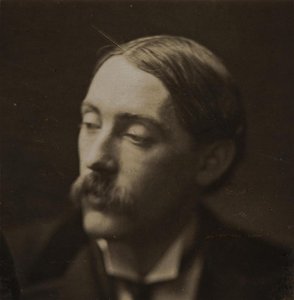
Charles Edward Conder
1868 - 1909 , United Kingdom
Quick Facts
- Artistic Movement Or Style: Heidelberg School
- Artists Who Influenced This Artist:
- Alfred Daplyn
- Victor Mann
- Julian Ashton
- Date Of Birth: October 24, 1868
- Full Name: Charles Edward Conder
- Nationality: British
- Notable Artworks:
- Departure of the Orient – Circular Quay
- A holiday at Mentone
- Under The Southern Sun
- Place Of Birth: Tottenham, United Kingdom
Related Articles

White on Canvas: 10 Masterpieces & Timeless Elegance for Your Home Decor
Explore 10 iconic white paintings by Monet, Whistler & Rothko! Discover the stories behind these serene masterpieces and their impact on art history. Find museum-quality reproductions for your home decor at .

Cézanne's Masterpieces: 25 Iconic Artworks to Transform Your Space
Journey through 25 iconic artworks by Paul Cézanne – a master of Impressionism and Post-Impressionism. Explore his landscapes, still lifes, and the stories behind these timeless masterpieces. Discover museum-quality reproductions & curated decor at ArtsDot.com.
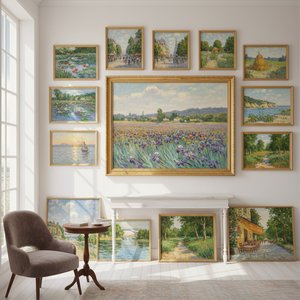
Impressionist Landscapes: 10 Masterpieces for Your Home | ArtsDot
Journey through 10 iconic Impressionist landscapes by Monet, Renoir & Degas. Explore the history, techniques & emotions behind these masterpieces. Find museum-quality reproductions for your home at ArtsDot.com – where art comes to life! Discover all masterpieces on ArtsDot.com
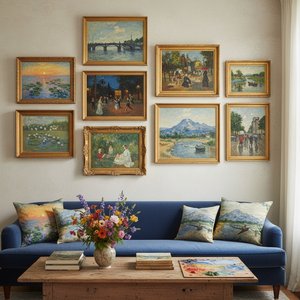
Impressionistic Landscapes: 10 Masterpieces That Changed Art & Decor
Journey into the heart of Impressionism! Explore 10 masterpieces by Monet, Renoir & Degas that revolutionized landscape art. Discover their stories, techniques & find museum-quality reproductions to elevate your home decor on ArtsDot.com.

Beyond the Horizon: 10 Landscape Masterpieces for Your Home Decor
Journey through 10 breathtaking landscape paintings by Monet, Van Gogh & more! Explore iconic artworks, artistic techniques & find inspiration for your home decor. Museum-quality reproductions at ArtsDot.com. Discover all masterpieces on ArtsDot.com