 Preview
 Send
Send Share
Share
 Details

 Download
 Similars
 X-Ray
X-Ray Diaporama
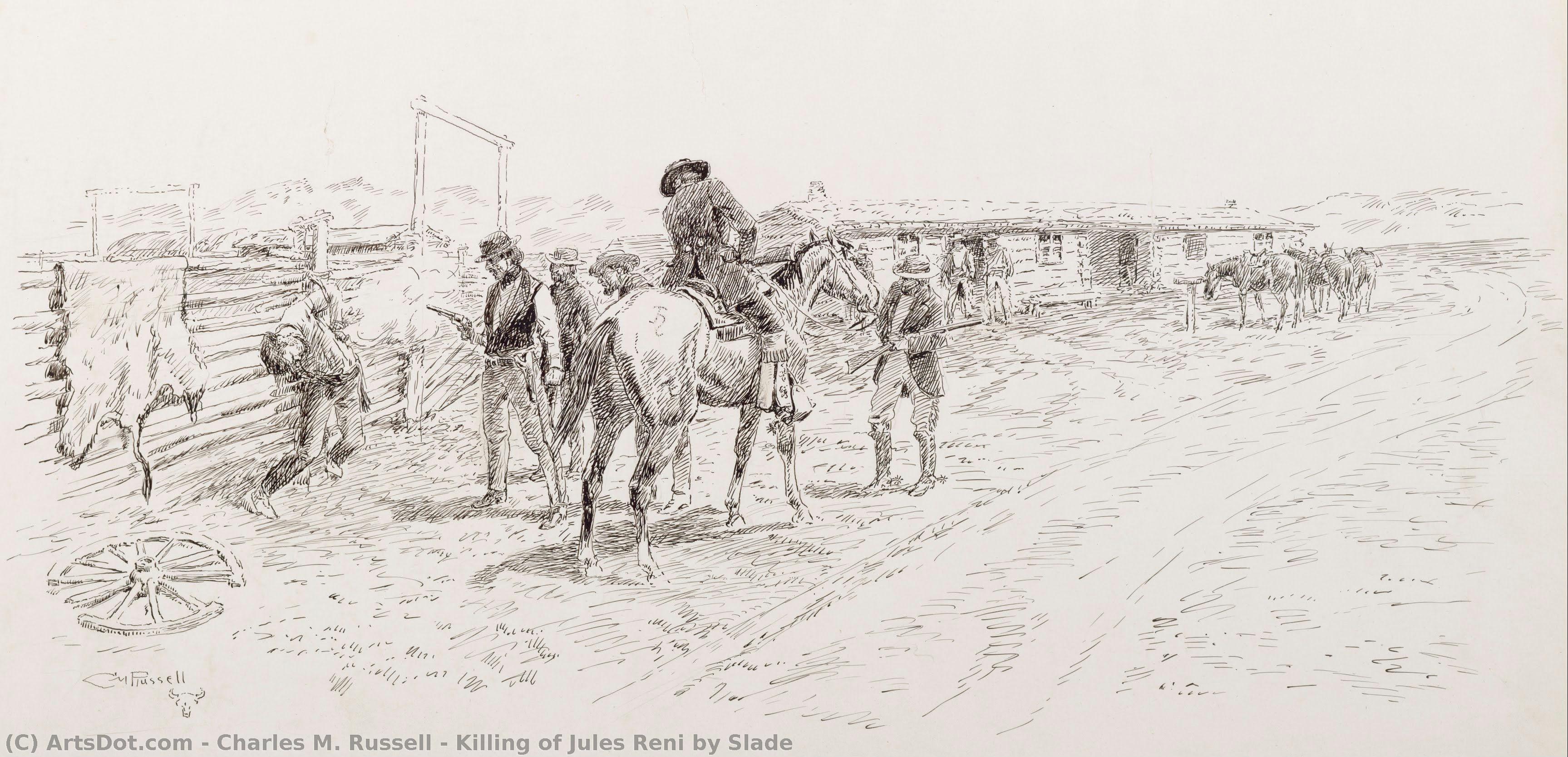
Killing of Jules Reni by Slade
 Acrylic On Canvas
- WallArt
- Contemporary Realism
 1922
1922- 19th Century
 55.0 x 35.0 cm
 Amon Carter Museum of American Art
 Read More
Hand Made Oil Reproduction
Hand-painted oil on canvas in your size and frame, made to order by our artists. ( Buy Print Buy Image)




P118B $10

P118H $10

P118W $10

P438Z $10

P508JH $12

P508YH $12

P805H $10

P805Z $10

P919BZ $10

P919G $10

P919XJ $10

P959ZH $10

P968JZ $12

W106C $8

W218G $10

W218JH $8

W218Y $10

W307PJ $10

W316G $10

W316PJ $8

W316Y $10

W398PJ $8

W4111J $10

W500HY $15

W500JH $15

W692G $12

W849H $8

W940BG $15

W953PJ $8




Pick from our preset sizes that match the artwork's original proportions.

You may enter your own dimensions to fit a specific frame or space. If your selected size does not match the original image's proportions, we will either crop the artwork or extend the painting with additional hand-painted elements. A digital mockup will be sent for your approval before production begins.
Please note that the on-screen preview does not reflect the actual cropping or extension. Only the mockup will accurately show the final composition.
While custom sizes are available, we recommend selecting a dimension from the predefined list to preserve the original proportions.
After order, ArtsDot.com team will email client for instructions and provide a mockup preview
Worldwide Delivery () in 3/4 weeks instead of standard 5 weeks. (29 August). No compromise on quality.

Free Worldwide Express Shipping

High-Quality Linen Canvas

Full Shipping Insurance

Customs Tax Refund Guarantee

True Color Matching Guarantee

60-Day Return Policy (Defects Only)

100% Money-Back Guarantee

Bulk Discount Offer
 Glass option is only available in size under 110 CM

Killing of Jules Reni by Slade
Reproduction Medium
Reproduction Size
-


Total Price
$ 363
Charles Marion Russell’s “Killing of Jules Reni” – A Study in Western Grit
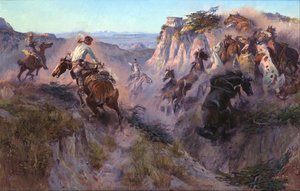
Charles Marion Russell's "Killing of Jules Reni," completed in 1922, is more than just a depiction of the American West; it’s a visceral embodiment of the era’s rugged spirit and a testament to Russell’s unparalleled ability to translate experience into art. Measuring 55 x 35 cm, this monochrome drawing immediately commands attention with its raw energy and meticulous detail. Executed primarily in graphite or charcoal on paper, the artwork captures a pivotal moment – likely an encounter or conflict – within the vast expanse of the frontier, featuring cowboys and horses against a dusty plain. The scene’s subdued palette, ranging from stark whites to deep blacks, masterfully employs tonal variations to sculpt form and create a palpable sense of depth, drawing the viewer into the heart of the action.
- Composition & Movement: The loose formation of cowboys and horses, captured in dynamic poses, speaks volumes about Russell’s understanding of movement. Hatching and cross-hatching techniques are deployed with remarkable precision to convey not just the physical presence of these figures but also their restless energy – a characteristic hallmark of the Western landscape and its inhabitants.
- Technique & Texture: The artist's skillful rendering is evident in the varied line densities, creating textures that range from smooth, almost ethereal surfaces to rough, weathered areas. This technique isn’t merely representational; it actively contributes to the artwork’s emotional impact, mirroring the harsh realities and unpredictable nature of life on the frontier.
A Window into the Life of a Cowboy
Born in St. Louis in 1864, Charles Marion Russell's artistic journey was inextricably linked to his lived experience. He abandoned formal schooling at sixteen to become a working cowboy in Montana’s Judith Basin, an immersion that profoundly shaped his vision. This wasn’t simply observation; it was absorption – the scent of dust, the rhythm of cattle drives, the vastness of the sky. Russell's biography reveals a deliberate rejection of conventional artistic training in favor of a deeply personal engagement with the West, a decision that ultimately fueled his enduring legacy. The "Killing of Jules Reni" reflects this profound connection; it’s not just a scene rendered on paper but a distillation of Russell’s years spent living and breathing the life of a cowboy.
Symbolism and Emotional Resonance
The artwork's symbolism extends beyond a literal depiction of a Western encounter. The presence of horses, central to both transportation and livelihood in this era, immediately evokes notions of freedom, power, and danger. The muted color palette and the dynamic composition contribute significantly to the emotional impact – a sense of ruggedness, adventure, and perhaps even a touch of melancholy associated with the vanishing frontier. The scene’s ambiguity—the “killing” itself is not explicitly shown—allows for interpretation, inviting viewers to contemplate themes of conflict, survival, and the precarious balance between humanity and nature.
Historical Context & Artistic Style
"Killing of Jules Reni," created in 1922, sits firmly within Russell’s oeuvre – a period marked by a deepening engagement with narrative storytelling. The artwork exemplifies his representational style, leaning heavily towards realism while retaining the distinctive character of Western art. It's a powerful example of how Russell translated the spirit of the American West onto canvas, capturing not just its physical landscape but also its cultural and emotional essence. This piece would have resonated deeply with audiences captivated by tales of the Wild West, solidifying Russell’s place as one of America’s most celebrated artists.
Related Artworks

Artist Biography
A Life Etched in the West
Charles Marion Russell, affectionately known as “C.M.” or “Kid” Russell, wasn’t born into the world he would so vividly immortalize on canvas and in bronze. Born in St. Louis, Missouri, in 1864, his early life was steeped not in formal artistic training but in a consuming fascination with the American West—a realm initially experienced through stories and sketches, fueled by an almost romantic yearning for open spaces and untamed freedom. This nascent passion would eventually propel him westward, abandoning traditional schooling at sixteen to become a working cowboy in Montana’s Judith Basin. It was a bold move, a deliberate immersion into the life he so vividly imagined, and it proved pivotal in shaping his artistic vision. Russell didn't merely *depict* the West; he lived it, breathed its dust, and absorbed its rhythms. This firsthand experience would become the bedrock of his enduring legacy. For eleven years, he embraced the rugged existence of a cowboy, ranch hand, and hunter, experiences that provided an intimate understanding of the landscape, the animals, and, most importantly, the people who inhabited it—the cowboys, Native Americans, and trappers whose lives he would so powerfully portray.From Wrangler to Chronicler
Russell’s artistic journey wasn't one of deliberate academic progression but rather an organic unfolding born from necessity and observation. While working as a cowboy, he began sketching scenes from his daily life—branding cattle, rounding up horses, encounters with wildlife—capturing moments that resonated with the raw beauty and inherent drama of the West. These weren’t polished works intended for galleries; they were personal records, visual diaries documenting a way of life rapidly disappearing. His early work was characterized by a remarkable naturalism, a keen eye for detail honed by years spent observing the nuances of his surroundings. He wasn't interested in romanticizing or idealizing the West; he sought to portray it as it *was*, with all its hardships and glories. A breakthrough came after illustrating a postcard depicting cattle struggling through a harsh winter—a scene so evocative that it sparked demand for his work, allowing him to transition from ranch hand to full-time artist in 1893. This marked the beginning of a prolific career spanning painting, sculpture, and writing, all unified by his unwavering commitment to portraying the authentic spirit of the American West. He wasn’t simply an artist; he was a visual historian, meticulously documenting a vanishing world before it faded into memory.Capturing a Vanishing World: Themes and Techniques
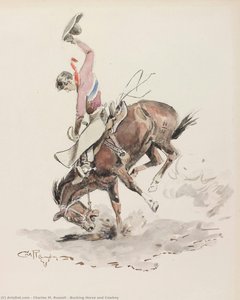
Russell’s art is profoundly imbued with narrative—each canvas tells a story, often steeped in the mythology and realities of frontier life. His subjects are diverse yet consistently focused on the interactions between cowboys, Native Americans, and the untamed landscape. He didn't shy away from depicting conflict, but his portrayals were rarely sensationalized; instead, they conveyed a sense of respect for all involved, acknowledging the complexities of a changing world. A Bad Hoss, painted in 1904, exemplifies this—a dynamic scene capturing the struggle between cowboy and bucking bronco, embodying both the skill and danger inherent in the cowboy lifestyle. Similarly, Battle of Belly River (1905) showcases his ability to depict dramatic historical events with precision and emotional depth. His technique evolved over time, moving from a more illustrative style towards looser brushwork and bolder color palettes. He was a master storyteller, using composition, light, and shadow to create compelling narratives that resonated deeply with audiences eager to connect with the romance and ruggedness of the West. His later works often featured a heightened sense of drama and emotional intensity, reflecting his growing maturity as an artist and his deepening understanding of the human condition. He understood that the true beauty of the West lay not just in its landscapes but also in the resilience and spirit of those who inhabited it.Legacy and Enduring Influence
Charles Marion Russell’s impact on American art is undeniable. He wasn't simply a painter of Western scenes; he defined them for generations. His work helped to shape the popular image of the cowboy, the Native American, and the vast landscapes of the West, influencing countless artists who followed in his footsteps. He became known as “the cowboy artist” not just for his subject matter but also for his authentic portrayal of Western life—a portrayal rooted in personal experience rather than romanticized fantasy. Today, his paintings and sculptures are highly sought after by collectors and museums worldwide. The C.M. Russell Museum Complex in Great Falls, Montana, stands as a testament to his enduring legacy, housing an extensive collection of his work and preserving the spirit of the West he so passionately captured. His murals, like Lewis and Clark Meeting Indians at Ross' Hole, continue to inspire awe and admiration, serving as powerful reminders of a pivotal moment in American history. Russell’s art transcends mere representation; it is a celebration of courage, resilience, and the enduring power of the human spirit—a legacy that continues to captivate audiences more than a century after his death.Beyond the Canvas: A Voice for Change
Russell wasn't just an artist; he was also an advocate. He developed a deep respect for Native American cultures during his time in Montana and Canada, and he used his art to challenge prevailing stereotypes and promote understanding. He actively supported the Chippewa tribe’s efforts to secure a reservation in Montana, even lobbying Congress on their behalf. This commitment to social justice is often overlooked but represents an important dimension of his character and artistic vision. He believed that it was crucial to document and preserve Native American traditions before they were lost forever—a belief reflected in many of his paintings and sculptures. His art wasn’t simply about depicting the West; it was about bearing witness to a changing world and advocating for those whose voices were often marginalized. This dedication to authenticity, coupled with his artistic talent, cemented his place as one of America's most important and beloved artists—a chronicler of a vanishing way of life and a champion of cultural understanding.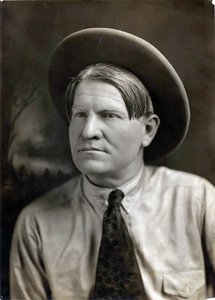
Charles Marion Russell
1864 - 1926 , United States of America
Quick Facts
- Artistic Movement Or Style: Western art
- Artists Or Movements Influenced By This Artist: ['Western artists']
- Date Of Birth: March 19, 1864
- Date Of Death: October 24, 1926
- Full Name: Charles Marion Russell
- Nationality: American
- Notable Artworks:
- Big Nose George...
- When the Plains...
- Peace Talk
- A Bad Hoss
- Battle of Belly...
- Place Of Birth: St. Louis, USA
Related Articles
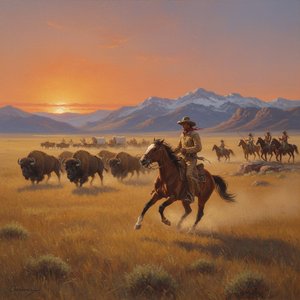
Charles Marion Russell: Capturing the American West Through a Romantic Lens
Explore the captivating world of Charles Marion Russell, 'the cowboy artist.' Discover his life, iconic paintings, advocacy for Native Americans, and investment potential. A guide for discerning art collectors.
The Nuances of Graphite: Exploring Emotional Depth & Technical Mastery in Pencil Drawing
Explore the captivating world of graphite drawing! Discover its rich history, master essential techniques like chiaroscuro, and learn how artists evoke emotion through this timeless medium. Expert insights for art enthusiasts.
Benjamin West: Transatlantic Ambition & Shaping American Art
Explore the life & legacy of Benjamin West, pioneering American artist and Royal Academy president. Discover his Neoclassical masterpieces, transatlantic influence, and lasting impact on art history. Learn more at ArtsDot.
The Alchemy of Graphite: An Expert Guide to Mastering Detail and Depth in Pencil Sketching
Unlock the secrets of graphite sketching with our expert guide for art students. Learn to master pencil grades, create realistic depth, and capture intricate textures through professional techniques designed to elevate your observational drawing skills.
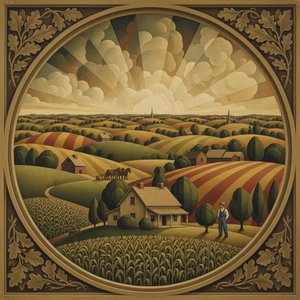
Grant Wood & American Regionalism: Identity, Myth & the Rural Landscape
Explore the world of Grant Wood & American Regionalism with ArtsDot. Discover the symbolism behind 'American Gothic', recurring themes, and the movement's lasting impact on art history. High-quality reproductions available.