 Preview
 Send
Send Share
Share
 Details

 Download
 Similars
 X-Ray
X-Ray Diaporama
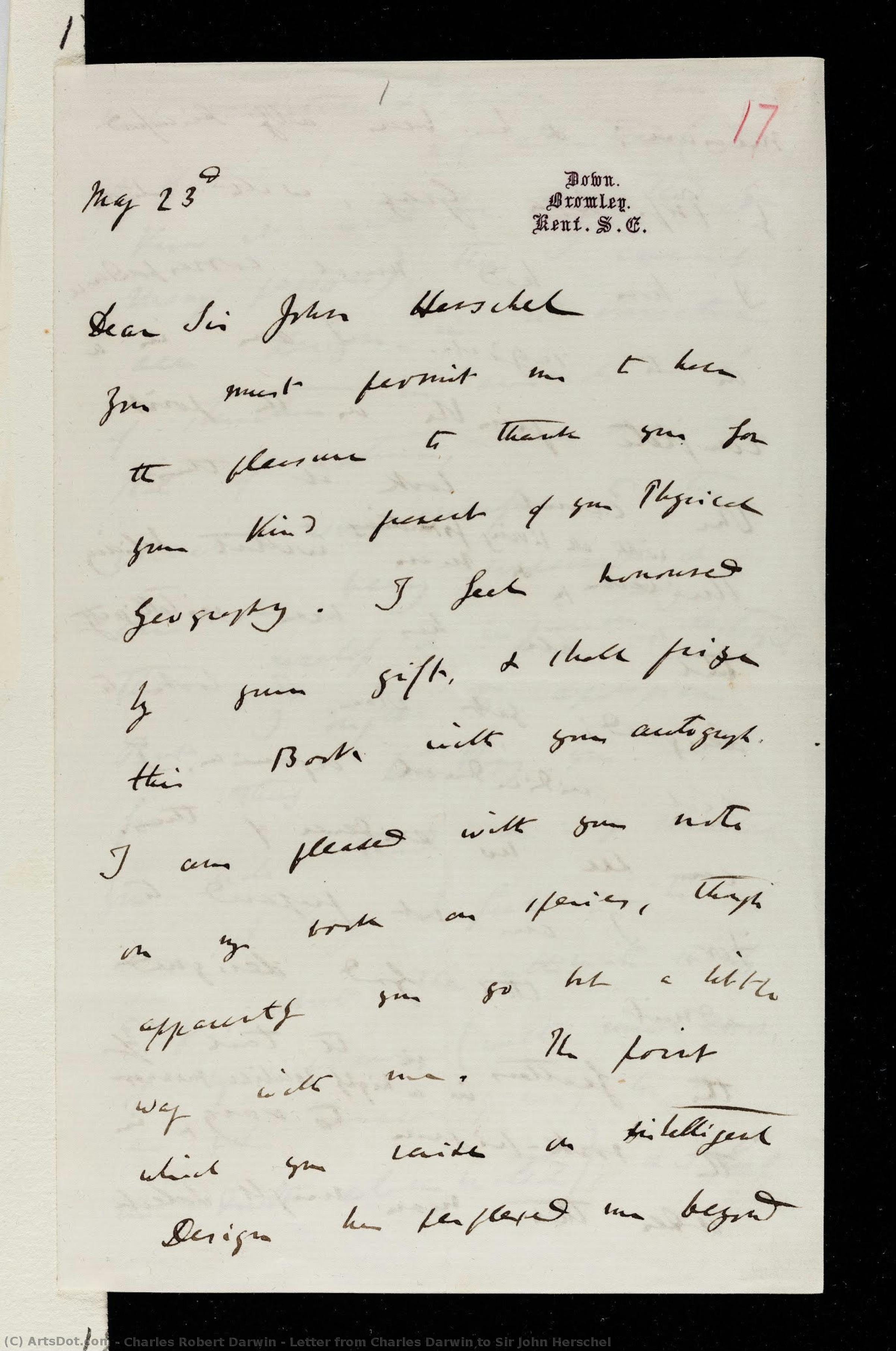
Letter from Charles Darwin to Sir John Herschel


 Read More
Hand Made Oil Reproduction
Hand-painted oil on canvas in your size and frame, made to order by our artists. ( Buy Print Buy Image)




P118B $10

P118H $10

P118W $10

P438Z $10

P508JH $12

P508YH $12

P805H $10

P805Z $10

P919BZ $10

P919G $10

P919XJ $10

P959ZH $10

P968JZ $12

W106C $8

W218G $10

W218JH $8

W218Y $10

W307PJ $10

W316G $10

W316PJ $8

W316Y $10

W398PJ $8

W4111J $10

W500HY $15

W500JH $15

W692G $12

W849H $8

W940BG $15

W953PJ $8




Pick from our preset sizes that match the artwork's original proportions.

You may enter your own dimensions to fit a specific frame or space. If your selected size does not match the original image's proportions, we will either crop the artwork or extend the painting with additional hand-painted elements. A digital mockup will be sent for your approval before production begins.
Please note that the on-screen preview does not reflect the actual cropping or extension. Only the mockup will accurately show the final composition.
While custom sizes are available, we recommend selecting a dimension from the predefined list to preserve the original proportions.
After order, ArtsDot.com team will email client for instructions and provide a mockup preview
Worldwide Delivery () in 3/4 weeks instead of standard 5 weeks. (16 August). No compromise on quality.

Free Worldwide Express Shipping

High-Quality Linen Canvas

Full Shipping Insurance

Customs Tax Refund Guarantee

True Color Matching Guarantee

60-Day Return Policy (Defects Only)

100% Money-Back Guarantee

Bulk Discount Offer
 Glass option is only available in size under 110 CM

Letter from Charles Darwin to Sir John Herschel
Reproduction Medium
Reproduction Size
-


Total Price
$ 263
Artwork Description
A Window into Victorian Thought: The Letter from Charles Darwin
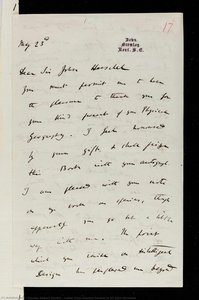
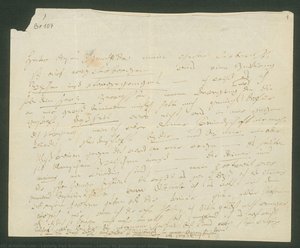
The image before you isn’t merely a reproduction of an aged letter; it's a tangible fragment of intellectual history, a whispered conversation across time between two giants – Charles Darwin and Sir John Herschel. This meticulously rendered photograph captures the weight of words penned nearly 150 years ago, preserving the texture of parchment, the faded ink, and the very essence of a pivotal moment in scientific thought. The dark background serves not as an absence, but as a deliberate stage, amplifying the delicate script and drawing the viewer’s eye to the core message: a thoughtful exchange between two men shaping our understanding of the natural world.
The letter itself, dated May 23rd, 1861, is a fascinating artifact. It represents Darwin's engagement with Herschel’s work on physical geography – a field that was rapidly evolving alongside Darwin’s own revolutionary theories of evolution by natural selection. The content reveals a keen interest in Herschel’s observations and insights, suggesting a shared intellectual curiosity and a desire to understand the interconnectedness of life and its environment. The formality of the language—the careful phrasing, the respectful address—reflects the Victorian era's emphasis on propriety and scholarly discourse, yet beneath this veneer lies a genuine exchange of ideas.
Decoding the Details: Technique and Material
The photograph itself is a testament to skillful reproduction. The artist has painstakingly recreated the nuances of the original document – the slight imperfections in the parchment’s surface, the subtle variations in ink density, even the ghosting of graphite used for corrections. This level of detail speaks volumes about the dedication involved and highlights the importance of preserving these historical records. The lighting is soft and diffused, avoiding harsh shadows that might obscure the delicate script. Instead, it gently illuminates the texture of the paper, inviting us to trace the lines with our eyes.
Beyond the photographic process itself, consider the materials used: parchment, a symbol of antiquity and scholarly tradition; ink, the medium through which ideas were disseminated; and graphite, a humble tool that nonetheless facilitated the formation of groundbreaking theories. These simple elements combine to create an image that feels both grounded in history and imbued with intellectual significance.
Symbolism and Context: A Moment of Scientific Dialogue
This letter transcends its literal content; it embodies a crucial moment in the development of evolutionary thought. Darwin’s correspondence with Herschel represents a dialogue between two brilliant minds, each contributing to our understanding of the natural world. Herschel, a pioneering astronomer and photographer, brought a unique perspective to the study of geography, emphasizing observation and systematic recording. Darwin, grappling with the complexities of species variation and adaptation, sought to integrate these insights into his own revolutionary theory.
The Victorian era, in which this letter was written, was a time of immense scientific progress, fueled by industrialization and a growing belief in reason and empirical observation. Darwin’s work challenged established beliefs about the nature of life, sparking both excitement and controversy. This letter captures that spirit of intellectual ferment – a willingness to question assumptions and explore new possibilities.
A Reproduction for Reflection: Bringing History Home
This meticulously reproduced artwork offers more than just a visual representation of a historical document; it provides an opportunity to connect with the past, to contemplate the enduring legacy of scientific discovery. Whether displayed in a study, a gallery, or a thoughtfully curated interior space, this image serves as a reminder of the power of observation, the importance of intellectual curiosity, and the ongoing quest to understand our place in the universe. It’s an invitation to engage with history on a deeply personal level, fostering reflection and inspiring a sense of wonder.
Related Artworks

Artist Biography
The Architect of Evolution: The Life and Legacy of Charles Darwin
To contemplate the life of Charles Robert Darwin is to witness the unfolding of a scientific revolution that forever altered the human perception of our place in the natural world. Born in 1809 amidst the scholarly atmosphere of Shropshire, England, Darwin was a child of intellectual lineage. His very foundation was laid by the radical ideas of his grandfather, Erasmus Darwin, a man whose visionary scientific pursuits provided a fertile soil for the young naturalist's burgeoning curiosity. While his early education at Shrewsbury School focused heavily on the classics, it was a profound and restless passion for the natural world that would eventually pull him away from the rigid structures of theology and medicine toward the vast, uncharted mysteries of biological life.
The defining epoch of Darwin’s existence began with the Voyage of the Beagle between 1831 and 1835. This expedition was far more than a mere maritime journey; it was a transformative odyssey that carried him across the diverse landscapes of South America and the enigmatic archipelagos of the Galapagos Islands. As he traversed these varied habitats, Darwin became an obsessive observer of life's intricate patterns. The subtle variations in finch beaks and the unique adaptations of tortoise shells served as the silent witnesses to a grander truth. It was within this crucible of global exploration that the seeds of his most monumental achievement began to germinate, as he gathered the empirical evidence necessary to challenge the prevailing doctrines of his era.
The Dawn of Natural Selection
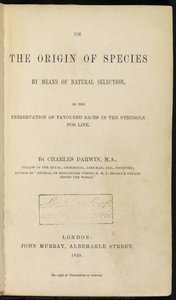
The culmination of years of meticulous research and profound contemplation arrived in 1859 with the publication of On the Origin of Species. This work was not merely a scientific treatise; it was an intellectual earthquake that shook the very foundations of Victorian society. In its pages, Darwin presented the breathtaking concept of natural selection—the mechanism by which species evolve through descent with modification. He proposed a world where life is not static but in a state of constant, beautiful, and brutal flux, driven by the struggle for existence and the subtle advantages of individual variation. The impact of this revelation was immediate and profound, sparking intense debate across scientific, religious, and social spheres.
Beyond the singular triumph of his theory of evolution, Darwin’s contributions spanned a breathtaking breadth of biological inquiry. His later years were dedicated to refining his understanding of the natural world through extensive studies in:
- Biogeography: Mapping the distribution of species across the globe and how geological history shapes life.
- Embryology: Observing the shared developmental patterns that hint at a common ancestry among diverse organisms.
- Animal Behavior: Investigating the complex social structures and evolutionary drivers behind instinct and action.
A Lasting Scientific Impression
The historical significance of Charles Darwin cannot be overstated. He did not simply discover a new fact; he provided a new lens through which to view all of existence. By establishing that all life is connected through a vast, branching tree of descent, he unified the biological sciences under a single, coherent framework. His work remains the bedrock upon which modern evolutionary biology is built, influencing everything from genetics to ecology. Even as we move further into the era of genomic sequencing, the fundamental principles Darwin articulated during his time at Down House continue to resonate with unparalleled clarity.
Today, the legacy of Darwin lives on not only in textbooks but in our very understanding of the interconnectedness of all living things. He remains a titan of scientific thought, a man whose relentless pursuit of truth transformed a singular curiosity into a universal truth, leaving an indelible mark on the tapestry of human knowledge.
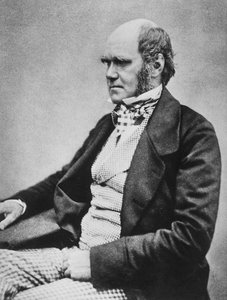
charles robert darwin
1809 - 1882 , United Kingdom
Quick Facts
- Artistic Movement Or Style: Naturalism
- Artists Or Movements Influenced By This Artist: ['Evolutionary theory']
- Artists Who Influenced This Artist: ['Erasmus Darwin']
- Date Of Birth: February 12, 1809
- Date Of Death: December 23, 1882
- Full Name: Charles Robert Darwin
- Nationality: British
- Notable Artworks: ['HMS Beagle voyage specimens']
- Place Of Birth: Shrewsbury, United Kingdom
Related Articles

Monochrome Visions: Exploring the Aesthetic & Historical Significance of Black & White Photography
Explore the rich history & artistic power of black and white photography. From early techniques to iconic masters like Ansel Adams, discover why monochrome continues to captivate art lovers today. Expert insights for collectors.

Beyond the Lens: Photography's Enduring Influence on Modern & Contemporary Art
Explore photography's pivotal role in shaping modern & contemporary art. Discover key movements, influential artists like Stieglitz, and expert collecting advice from ArtsDot.

Pictorialism: A Search for Artistic Photography's Soul – Aesthetics, Techniques & Legacy
Explore the captivating world of Pictorialism – a pivotal movement that transformed photography into fine art. Discover key artists like Stieglitz & Käsebier, techniques, and collecting tips from experts.

Beyond the Portrait: Félix Nadar & the Psychological Depths of 19th-Century Photography
Explore the revolutionary photography of Félix Nadar – pioneer of portraiture, aerial imaging & psychological depth. Discover his iconic portraits of Baudelaire, Hugo & more. A deep dive into 19th-century art history.

Witnessing History Through Lens & Light: Documentary Photography's Enduring Legacy
Explore the powerful history of documentary photography – from its origins to contemporary masters like Gordon Parks & W. Eugene Smith. Discover how this art form shapes our understanding of society and witness pivotal moments in time.