 Preview
 Send
Send Share
Share
 Details

 Download
 Similars
 X-Ray
X-Ray Diaporama
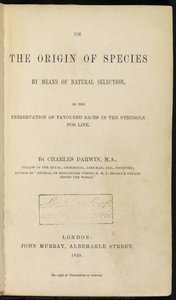
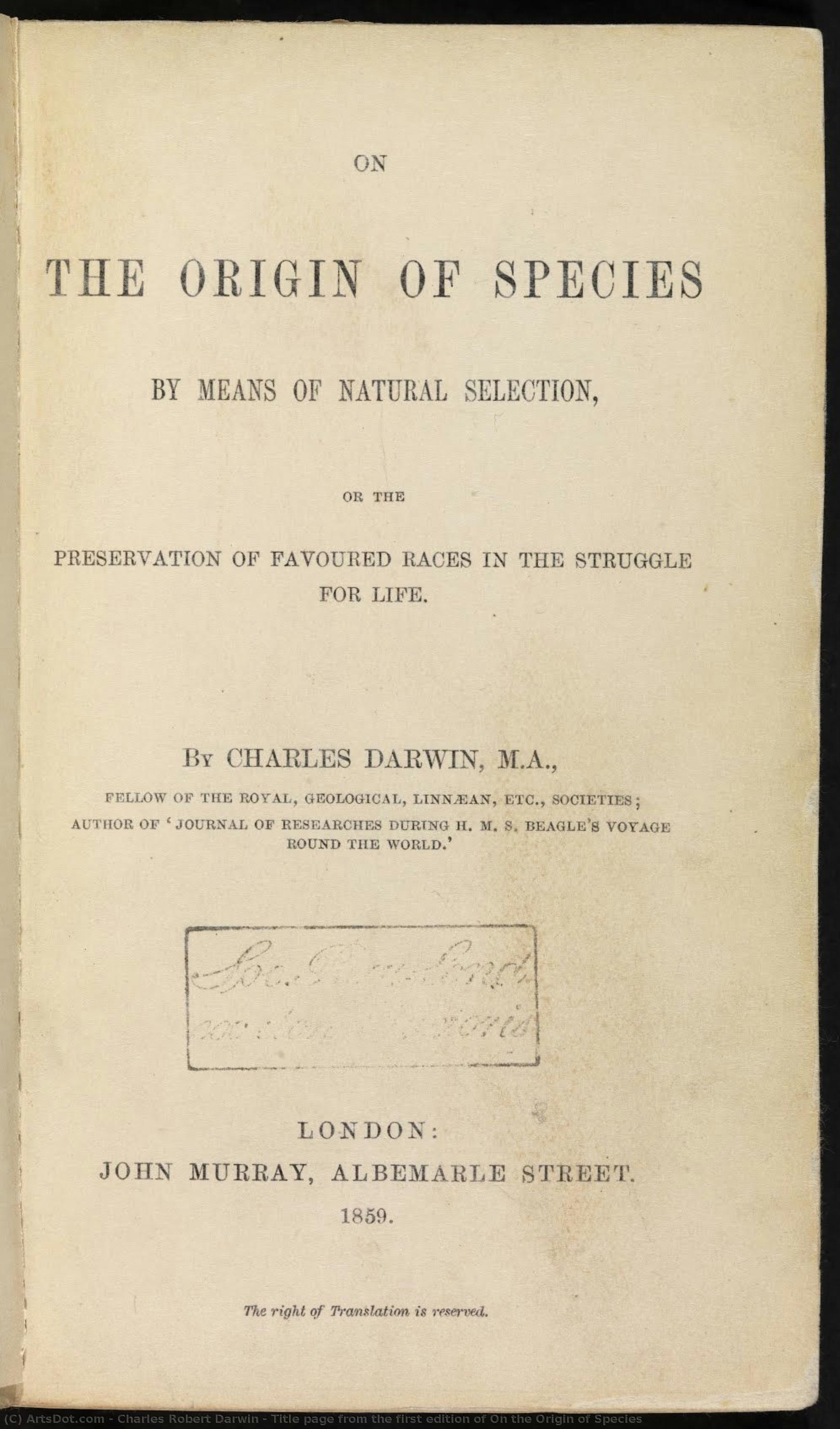
Title page from the first edition of On the Origin of Species


 Read More
Hand Made Oil Reproduction
Hand-painted oil on canvas in your size and frame, made to order by our artists. ( Buy Print Buy Image)




P118B $10

P118H $10

P118W $10

P438Z $10

P508JH $12

P508YH $12

P805H $10

P805Z $10

P919BZ $10

P919G $10

P919XJ $10

P959ZH $10

P968JZ $12

W106C $8

W218G $10

W218JH $8

W218Y $10

W307PJ $10

W316G $10

W316PJ $8

W316Y $10

W398PJ $8

W4111J $10

W500HY $15

W500JH $15

W692G $12

W849H $8

W940BG $15

W953PJ $8




Pick from our preset sizes that match the artwork's original proportions.

You may enter your own dimensions to fit a specific frame or space. If your selected size does not match the original image's proportions, we will either crop the artwork or extend the painting with additional hand-painted elements. A digital mockup will be sent for your approval before production begins.
Please note that the on-screen preview does not reflect the actual cropping or extension. Only the mockup will accurately show the final composition.
While custom sizes are available, we recommend selecting a dimension from the predefined list to preserve the original proportions.
After order, ArtsDot.com team will email client for instructions and provide a mockup preview
Worldwide Delivery () in 3/4 weeks instead of standard 5 weeks. (17 August). No compromise on quality.

Free Worldwide Express Shipping

High-Quality Linen Canvas

Full Shipping Insurance

Customs Tax Refund Guarantee

True Color Matching Guarantee

60-Day Return Policy (Defects Only)

100% Money-Back Guarantee

Bulk Discount Offer
 Glass option is only available in size under 110 CM

Title page from the first edition of On the Origin of Species
Reproduction Medium
Reproduction Size
-


Total Price
$ 263
Artwork Description
A Window Into Evolution: Examining Darwin's Title Page
The title page from the first edition of “On the Origin of Species” by Charles Robert Darwin stands as more than just an announcement; it’s a visual embodiment of the intellectual upheaval that defined Victorian England and irrevocably altered humanity’s understanding of life itself. Published in 1859, this unassuming sheet of paper holds within it layers of symbolism and artistic intention that continue to fascinate scholars and inspire artists today.The Artist's Vision: William Henry Haydon
The artwork was executed by William Henry Haydon (1830-1891), a British painter known for his dramatic landscapes and portraits, particularly those depicting biblical scenes. Haydon’s choice to portray Darwin – rather than a more conventional subject – speaks volumes about the prevailing intellectual climate of the time. He wasn't simply illustrating a scientific treatise; he was attempting to capture the spirit of revolutionary thought itself. The painting depicts Darwin seated at his desk, surrounded by sketches and specimens—a deliberate representation of the scientist’s meticulous observation and tireless pursuit of knowledge. Haydon skillfully employed chiaroscuro – dramatic contrasts between light and dark – to illuminate Darwin's face and hands, emphasizing his concentration and conveying a sense of profound seriousness.Technique and Style: Romantic Idealism Meets Scientific Detail
Haydon’s technique blended elements of Romantic idealism with the burgeoning precision of scientific illustration. He utilized oil paints on canvas, applying thick impasto – textured brushstrokes – to create a palpable physicality that contrasts sharply with the intellectual realm he sought to depict. The palette is muted yet rich, dominated by earthy tones reflecting Darwin's fascination with natural history and his grounding in empirical observation. Despite its stylistic conventions of the era, Haydon’s work transcends mere aesthetic beauty; it strives for psychological depth, conveying Darwin’s inner contemplation and unwavering dedication to unraveling the mysteries of the natural world.Historical Context: Challenging Newtonian Orthodoxy
The publication of “On the Origin of Species” provoked considerable controversy within the scientific community and beyond. Newton's mechanistic worldview—the belief that God created the universe according to mathematical laws—was increasingly questioned by thinkers like Darwin who championed the concept of natural selection as a driving force behind evolution. Haydon’s depiction of Darwin reflects this intellectual struggle, symbolizing the triumph of observation over dogma. The image served as a visual declaration of Darwin's groundbreaking theory and its challenge to established beliefs about creation.Symbolism: Light and Knowledge
The prominent illumination on Darwin’s face and hands is particularly significant. It represents enlightenment—the pursuit of knowledge and understanding—a core theme of the Romantic movement and powerfully conveyed by Haydon’s masterful use of light. The sketches and specimens surrounding Darwin symbolize his meticulous research and unwavering commitment to uncovering the secrets of life's origins. They underscore the importance of empirical evidence in shaping scientific thought, aligning perfectly with Darwin’s intellectual convictions.Emotional Impact: Inspiration for Generations
Ultimately, Haydon’s title page transcends its artistic merit; it embodies the spirit of scientific inquiry and challenges viewers to contemplate profound questions about our place in the universe. It serves as a reminder that progress often arises from questioning accepted truths and embracing new perspectives—a message that resonates powerfully with artists and collectors alike who seek inspiration from works that capture both intellectual brilliance and emotional resonance. This artwork continues to inspire awe and contemplation, cementing Darwin’s legacy not only as a scientist but also as a visionary artist who dared to depict the genesis of evolutionary thought.Related Artworks

Artist Biography
The Architect of Evolution: The Life and Legacy of Charles Darwin
To contemplate the life of Charles Robert Darwin is to witness the unfolding of a scientific revolution that forever altered the human perception of our place in the natural world. Born in 1809 amidst the scholarly atmosphere of Shropshire, England, Darwin was a child of intellectual lineage. His very foundation was laid by the radical ideas of his grandfather, Erasmus Darwin, a man whose visionary scientific pursuits provided a fertile soil for the young naturalist's burgeoning curiosity. While his early education at Shrewsbury School focused heavily on the classics, it was a profound and restless passion for the natural world that would eventually pull him away from the rigid structures of theology and medicine toward the vast, uncharted mysteries of biological life.
The defining epoch of Darwin’s existence began with the Voyage of the Beagle between 1831 and 1835. This expedition was far more than a mere maritime journey; it was a transformative odyssey that carried him across the diverse landscapes of South America and the enigmatic archipelagos of the Galapagos Islands. As he traversed these varied habitats, Darwin became an obsessive observer of life's intricate patterns. The subtle variations in finch beaks and the unique adaptations of tortoise shells served as the silent witnesses to a grander truth. It was within this crucible of global exploration that the seeds of his most monumental achievement began to germinate, as he gathered the empirical evidence necessary to challenge the prevailing doctrines of his era.
The Dawn of Natural Selection
The culmination of years of meticulous research and profound contemplation arrived in 1859 with the publication of On the Origin of Species. This work was not merely a scientific treatise; it was an intellectual earthquake that shook the very foundations of Victorian society. In its pages, Darwin presented the breathtaking concept of natural selection—the mechanism by which species evolve through descent with modification. He proposed a world where life is not static but in a state of constant, beautiful, and brutal flux, driven by the struggle for existence and the subtle advantages of individual variation. The impact of this revelation was immediate and profound, sparking intense debate across scientific, religious, and social spheres.
Beyond the singular triumph of his theory of evolution, Darwin’s contributions spanned a breathtaking breadth of biological inquiry. His later years were dedicated to refining his understanding of the natural world through extensive studies in:
- Biogeography: Mapping the distribution of species across the globe and how geological history shapes life.
- Embryology: Observing the shared developmental patterns that hint at a common ancestry among diverse organisms.
- Animal Behavior: Investigating the complex social structures and evolutionary drivers behind instinct and action.
A Lasting Scientific Impression
The historical significance of Charles Darwin cannot be overstated. He did not simply discover a new fact; he provided a new lens through which to view all of existence. By establishing that all life is connected through a vast, branching tree of descent, he unified the biological sciences under a single, coherent framework. His work remains the bedrock upon which modern evolutionary biology is built, influencing everything from genetics to ecology. Even as we move further into the era of genomic sequencing, the fundamental principles Darwin articulated during his time at Down House continue to resonate with unparalleled clarity.
Today, the legacy of Darwin lives on not only in textbooks but in our very understanding of the interconnectedness of all living things. He remains a titan of scientific thought, a man whose relentless pursuit of truth transformed a singular curiosity into a universal truth, leaving an indelible mark on the tapestry of human knowledge.
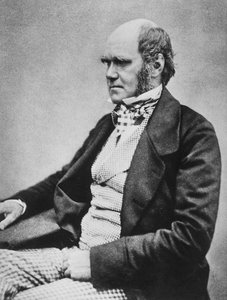
charles robert darwin
1809 - 1882 , United Kingdom
Quick Facts
- Artistic Movement Or Style: Naturalism
- Artists Or Movements Influenced By This Artist: ['Evolutionary theory']
- Artists Who Influenced This Artist: ['Erasmus Darwin']
- Date Of Birth: February 12, 1809
- Date Of Death: December 23, 1882
- Full Name: Charles Robert Darwin
- Nationality: British
- Notable Artworks: ['HMS Beagle voyage specimens']
- Place Of Birth: Shrewsbury, United Kingdom
Related Articles
The Refined Aesthetic of Victorian Illustration: A Study in Narrative & Technique
Explore the captivating world of Victorian illustration! Discover Pre-Raphaelite influences, key artists like Rossetti & Stephens, and the era's rich narrative detail. A deep dive for art enthusiasts.
The Precision of Perception: Scientific Illustration as Art & Epistemology
Explore the fascinating history of scientific illustration – where art meets accuracy. Discover key artists like Karl Blossfeldt & Maud H. Purdy, and delve into its profound epistemological roots. ArtsDot offers museum-quality reproductions.

The Evocative Detail of Nature: A History of Naturalistic Illustration
Explore the rich history of botanical illustration! Discover pioneering artists like Maria Sibylla Merian & Marianne North. Learn about scientific precision, artistic expression, and find museum-quality reproductions at ArtsDot.

Victorian Botanical Painting: Science, Art & Aesthetic Sensibility
Explore the exquisite world of Victorian botanical art! Discover the science & artistry behind stunning floral illustrations by Gould, Muckley & more. Learn about collecting, value & investment at ArtsDot.

Hablot Knight Browne: Phiz & the Victorian Social Canvas – A Critical Legacy
Explore the life & art of Hablot Knight Browne ('Phiz'), Dickens's iconic illustrator. Discover his masterful social commentary, technical innovations, and enduring legacy in Victorian illustration. A critical examination for history lovers.