 Preview
 Send
Send Share
Share
 Details

 Download
 Similars
 X-Ray
X-Ray Diaporama
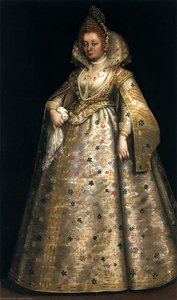
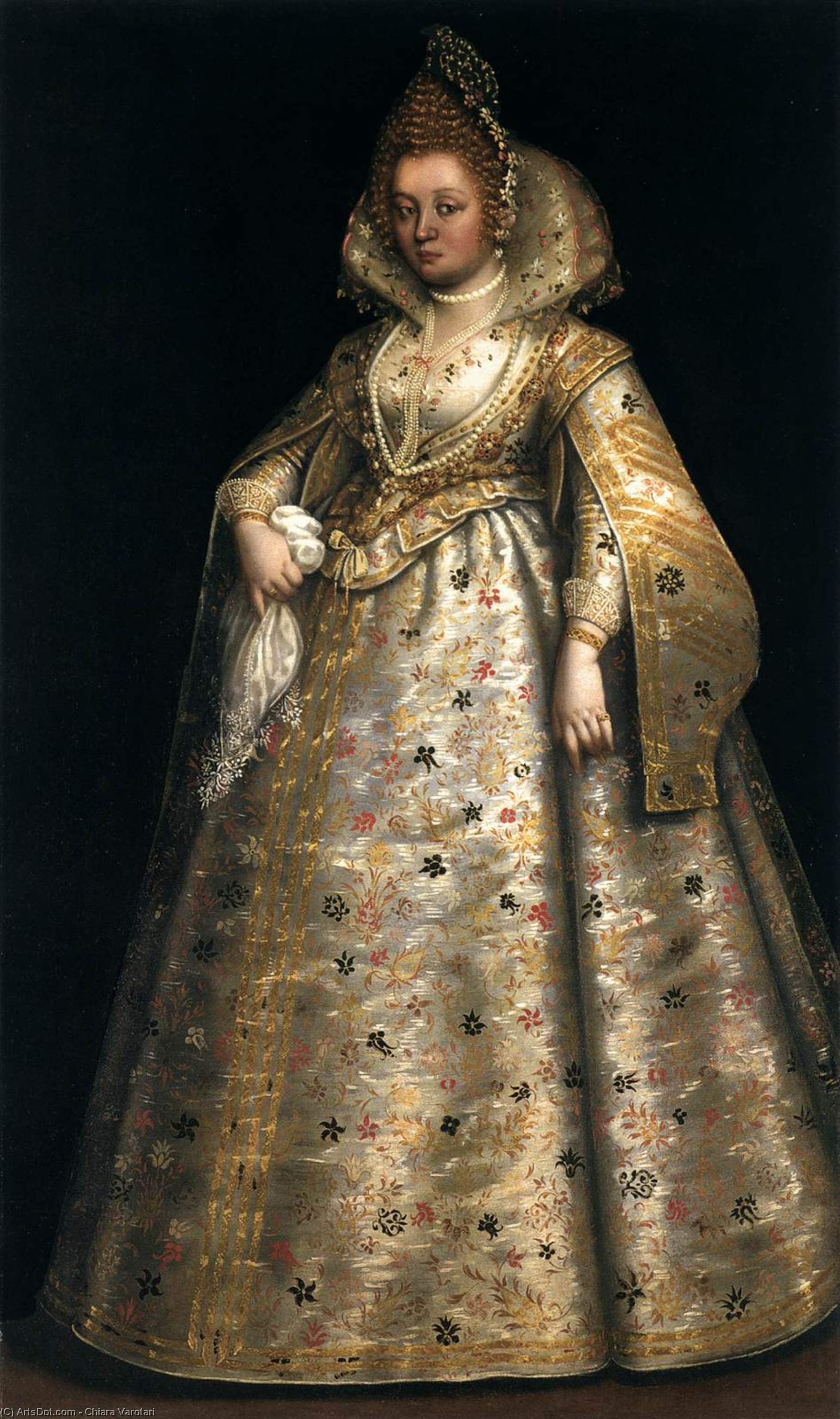
Portrait of a Lady
 Baroque
 1630
1630 200.0 x 117.0 cm
 Музей Чівіко
 Read More
Giclée / Art Print
Museum-quality giclée or canvas print with fast production and flexible finish options. ( Buy Hand Made Painting Buy Image)




































Pick from our preset sizes that match the artwork's original proportions.

You may enter your own dimensions to fit a specific frame or space. If your selected size does not match the original image's proportions, we will either crop the artwork or extend the image with a mirrored or solid-fill edge. A digital mockup will be sent for your approval before production begins.
Please note that the on-screen preview does not reflect the actual cropping or extension. Only the mockup will accurately show the final composition.
While custom sizes are available, we recommend selecting a dimension from the predefined list to preserve the original proportions.
Worldwide Delivery () in 2 weeks instead of standard 4/5 weeks. (25 August)

Free Worldwide Express Shipping

High-Quality Linen Canvas

Full Shipping Insurance

Customs Tax Refund Guarantee

True Color Matching Guarantee

60-Day Return Policy (Defects Only)

100% Money-Back Guarantee

Bulk Discount Offer
 Glass option is only available in size under 110 CM

Portrait of a Lady
Giclée / Art Print
Reproduction Size
-


Total Price
$ 63
Related Artworks


Artist Biography
The Enigmatic Brush of Chiara Varotari
Chiara Varotari remains one of the most captivating mysteries of the Venetian Baroque era, an artist whose brushstrokes whispered secrets of a life largely obscured by the passage of time. Born in Padua around 1584 into a lineage of creative mastery, her very existence was woven into the fabric of the Italian Renaissance and Baroque traditions. As the daughter of the respected painter Dario Varotari the Elder, Chiara did not merely observe art; she breathed it. Her upbringing provided a rare, intimate access to the technical rigors of the craft, fostering a profound understanding of visual language that would later define her delicate yet powerful hand.
While much of her early biography remains shrouded in shadow, the influence of her family is unmistakable. Residing in Padua, she likely received formal instruction from her brother, Alessandro Varotari, a figure of significant importance in the regional art scene. This familial bond created a fertile ground for intellectual and artistic exchange, allowing Chiara to absorb the evolving aesthetics of the seventeenth century. Her development was not an isolated journey but part of a collaborative, vibrant environment that shaped her ability to translate human emotion onto canvas with unparalleled grace.
A Mastery of Portraiture and Light
The true essence of Varotari’s genius is found within her portraits, particularly those of women and young girls. Her oeuvre is characterized by a remarkable sensitivity, where the physical likeness of her subjects serves as a gateway to their inner psychological landscapes. There is a profound intimacy in her work, a quality that suggests she sought to capture more than just the surface of nobility; she aimed for the soul. This skill is most evident in her stylistic kinship with Padovanino Zuccarelli, whose idealized depictions of femininity provided a stylistic touchstone for her own compositions.
In her hands, the technique of chiaroscuro becomes a tool for storytelling. By masterfully manipulating light and shadow, she could imbue a simple portrait with dramatic tension or serene tranquility. Her ability to render the tactile reality of luxurious fabrics—the heavy sheen of silk, the intricate patterns of lace, and the soft weight of velvet—demonstrates a technical precision that commanded respect. This mastery of texture, combined with a luminous palette, allowed her to create works that felt both physically present and ethereally beautiful.
Legacy and Historical Significance
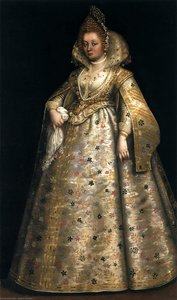
Among her most enduring achievements is the celebrated "Portrait of a Lady," completed around 1630. This masterpiece stands as a testament to her ability to balance technical brilliance with emotional depth, utilizing subtle facial expressions to convey a complex narrative of status and sentiment. Her commissions for the Paduan nobility, such as those for the wealthy Pantasilea Dotto Capodilista, further highlight her role as a preferred chronicler of the era's upper echelons, capturing the dignity and complexity of the period's most influential figures.
Though history has, at times, overlooked her contributions in favor of her male contemporaries, the resurgence of interest in female Baroque artists has brought Varotari back into the light. Her significance lies not only in her technical prowess but in her role as a vital, albeit mysterious, contributor to the Venetian Baroque movement. To study her work is to engage with a lost chapter of art history, rediscovering an artist who turned the fleeting beauty of her subjects into an eternal, luminous legacy.
chiara varotari
1584 - 1660 , Italy
Quick Facts
- Artistic Movement Or Style: Baroque
- Artists Who Influenced This Artist: Padovanino
- Date Of Birth: Padua, Italy (1584)
- Date Of Death: Venice (around 1663)
- Full Name: Chiara Varotari
- Nationality: Italian
- Notable Artworks:
- Portrait of a Lady
- Portrait of a Young Girl
- Place Of Birth: Italy
Related Articles

Baroque Drama: Bringing Opulence & Emotion into Contemporary Interiors
Explore the opulent world of Baroque interior design! Discover key elements, modern applications & how to bring dramatic elegance into your home with 's authentic reproductions.

Baroque Masterpieces: 10 Paintings That Defined an Era |
Journey through the drama & grandeur of Baroque art! Explore 10 masterpieces by Caravaggio, Rembrandt, Rubens & more. Discover stunning oil paintings, rich colors & timeless stories. Find museum-quality reproductions at .

The Enduring Power of Painting: A Historical & Contemporary Exploration of Form and Emotion
Explore the rich history & enduring techniques of oil painting with ArtsDot. Discover masterpieces, learn about art collecting, and find authentic handmade reproductions crafted by skilled artists.

The Visceral Stage: Exploring Dramatic Narratives & Emotional Intensity in Baroque Art
Explore the dramatic world of Baroque art! Discover iconic masters like Caravaggio & Rembrandt, their techniques, and the movement's lasting impact. Expert insights for collectors & enthusiasts at ArtsDot.

The Enduring Legacy of Oil on Canvas: Technique, History & Aesthetic Impact
Explore the rich history & techniques of oil painting – from Renaissance masters to Impressionism. Discover pigments, layering methods, and why this timeless medium endures. Expert insights for artists & art enthusiasts.