 Preview
 Send
Send Share
Share
 Details

 Download
 Similars
 X-Ray
X-Ray Diaporama
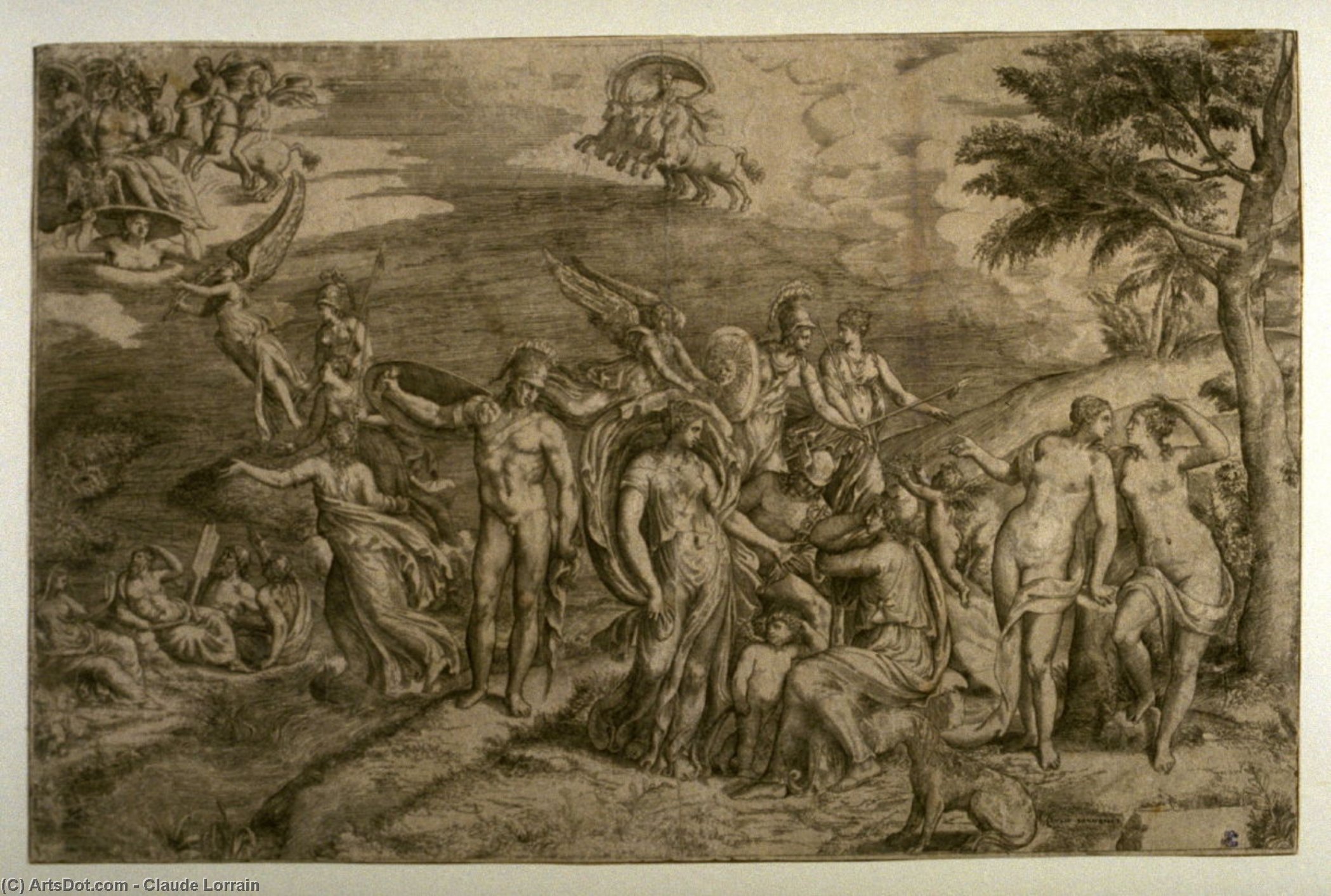
The Judgment of Paris
 Baroque Landscape
 1645
1645- Renaissance
 90.0 x 130.0 cm
 British Museum
 Read More
Giclée / Art Print
Museum-quality giclée or canvas print with fast production and flexible finish options. ( Buy Hand Made Painting Buy Image)




P118B $10

P118H $10

P118W $10

P438Z $10

P508JH $12

P508YH $12

P805H $10

P805Z $10

P919BZ $10

P919G $10

P919XJ $10

P959ZH $10

P968JZ $12

W106C $8

W218G $10

W218JH $8

W218Y $10

W307PJ $10

W316G $10

W316PJ $8

W316Y $10

W398PJ $8

W4111J $10

W500HY $15

W500JH $15

W692G $12

W849H $8

W940BG $15

W953PJ $8




Pick from our preset sizes that match the artwork's original proportions.

You may enter your own dimensions to fit a specific frame or space. If your selected size does not match the original image's proportions, we will either crop the artwork or extend the image with a mirrored or solid-fill edge. A digital mockup will be sent for your approval before production begins.
Please note that the on-screen preview does not reflect the actual cropping or extension. Only the mockup will accurately show the final composition.
While custom sizes are available, we recommend selecting a dimension from the predefined list to preserve the original proportions.
Worldwide Delivery () in 2 weeks instead of standard 4/5 weeks. (23 August)

Free Worldwide Express Shipping

High-Quality Linen Canvas

Full Shipping Insurance

Customs Tax Refund Guarantee

True Color Matching Guarantee

60-Day Return Policy (Defects Only)

100% Money-Back Guarantee

Bulk Discount Offer
 Glass option is only available in size under 110 CM

The Judgment of Paris
Giclée / Art Print
Reproduction Size
-


Total Price
$ 63
Collectible Description
The Judgment of Paris – A Baroque Masterpiece of Fate and Desire
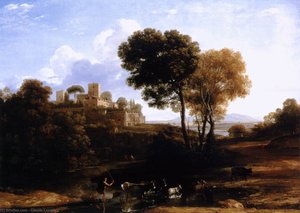
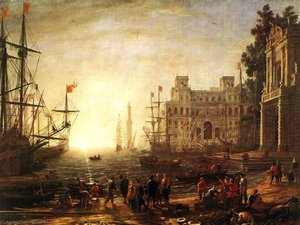
Claude Lorrain’s “The Judgment of Paris” is more than just a depiction of a pivotal moment in mythology; it's a meticulously crafted meditation on human desire, divine decree, and the precarious balance between fate and free will. Painted in 1645, this monumental canvas—measuring an impressive 90 x 130 cm—captures a scene brimming with dramatic tension and subtle beauty, firmly establishing Lorrain as one of the foremost landscape painters of his era. The painting’s rich palette, dominated by earthy browns, deep greens, and hints of gold, immediately draws the viewer into a meticulously rendered Italianate countryside – a carefully constructed stage for this fateful encounter.
A Scene from Myth and Meaning
The subject itself—the Judgment of Paris—is drawn directly from Ovid’s *Metamorphoses*, where the Trojan prince is tasked with choosing between Aphrodite, Hera, and Athena as the most beautiful goddess. His decision irrevocably alters the course of history, leading to the abduction of Helen and ultimately sparking the Trojan War. Lorrain doesn't simply illustrate this narrative; he imbues it with a profound sense of psychological drama. The figures are not merely posed; they are caught in moments of intense contemplation and barely concealed emotion. The central figure, a woman whose identity remains deliberately ambiguous, holds the golden apple aloft – a symbol of power, beauty, and ultimately, the consequences of choice.
Technique and Composition: Lorrain’s Baroque Vision
Lorrain's mastery lies in his ability to seamlessly blend classical ideals with naturalistic observation. His technique is characterized by a remarkable attention to detail – from the individual blades of grass to the folds of the figures’ drapery. He employs *sfumato*, a subtle blurring of lines and colors, creating an atmospheric depth that evokes the hazy light of the Italian countryside. The composition itself is carefully orchestrated: a receding landscape guides the eye towards the central action, while diagonal lines create a dynamic sense of movement. Notice how Lorrain uses light to sculpt the forms, highlighting key figures and emphasizing their emotional states. The use of aerial perspective – where distant objects appear paler and less distinct – further enhances the illusion of depth and distance.
Symbolism and Emotional Resonance
Beyond the immediate narrative, “The Judgment of Paris” is rich in symbolic meaning. The three goddesses represent not just beauty but also different aspects of power and influence: Aphrodite embodies sensual desire, Hera represents marital authority, and Athena symbolizes strategic intellect. The woman holding the apple could be interpreted as representing wisdom or perhaps even a cautionary voice, urging restraint against impulsive choices. The expressions on the figures’ faces – ranging from haughty confidence to anxious uncertainty – reveal their internal struggles. Lorrain masterfully conveys the emotional weight of this pivotal decision, suggesting that it is not merely a matter of choosing the most beautiful goddess but also a reflection of our own desires and vulnerabilities.
A Timeless Masterpiece for Art Lovers and Collectors
Claude Lorrain’s “The Judgment of Paris” remains a powerfully evocative work, demonstrating his exceptional skill as a landscape painter and his profound understanding of human psychology. Reproductions offer an accessible way to experience the beauty and complexity of this Baroque masterpiece in your own home. The painting's themes – choice, desire, fate, and the consequences of our actions – continue to resonate with viewers today, making it a timeless addition to any art collection or interior design scheme. Learn more about Claude Lorrain’s life and work here.
Related Artworks

Artist Biography
Claude Lorrain (Claude Gellée): A Life in Light and Landscape
Early Life and Training
Born around 1600 in Chamagne, a small village in the Duchy of Lorraine (modern-day France), Claude Lorrain – originally Claude Gellée – remains one of the most celebrated landscape painters of the Baroque period. His early life is shrouded in some mystery, with conflicting accounts of his apprenticeship. One account, by Joachim von Sandrart, suggests a humble beginning as an apprentice to a pastry baker before finding employment with artists in Rome. Another, from Filippo Baldinucci, details earlier training in Naples with Goffredo Wals and later in Rome under Agostino Tassi.
Rise to Prominence
By the 1630s, Claude Lorrain had firmly established himself as the leading landscapist in Italy. His paintings quickly gained recognition for their atmospheric qualities and command high prices. He skillfully blended Italianate landscapes with classical and biblical themes, creating scenes that were both visually stunning and intellectually engaging.
Artistic Style and Key Characteristics
- Luminous Sunlight: A defining feature of Claude’s work is his masterful depiction of light. He was among the first artists to consistently portray sunlight streaming through landscapes, creating a sense of atmosphere and realism previously unseen.
- Classical Influences: His compositions often draw inspiration from classical antiquity, incorporating Roman ruins, mythological figures, and architectural elements.
- Idealized Landscapes: Claude didn’t aim for strict topographical accuracy; instead, he created idealized landscapes that evoked a sense of harmony and tranquility.
- Detailed Drawings: He was a prolific draughtsman, creating numerous sketches and studies in pen, watercolor wash, and chalk – many preserved in his Liber Veritatis.
Influences and Development
Claude’s early influences included the landscape traditions of Northern Europe, particularly those of the Flemish painters. He also studied the works of Italian Renaissance masters like Titian and Raphael. Over time, his style evolved from darker, more dramatic compositions to lighter, airier scenes characterized by a golden glow.
Notable Works
- Landscape with Peasants Returning with their Herds
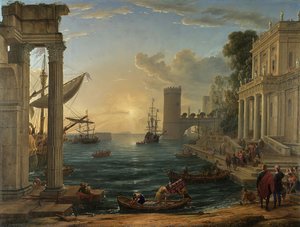
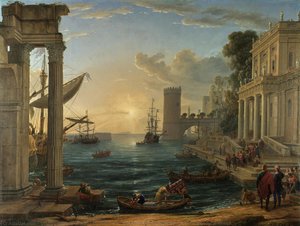
- Seaport with the Embarkation of the Queen of Sheba
- Sunrise
- Pastoral Landscape: The Roman Campagna
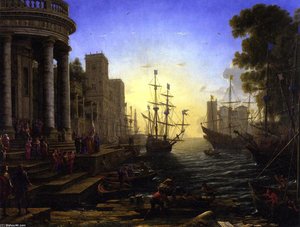
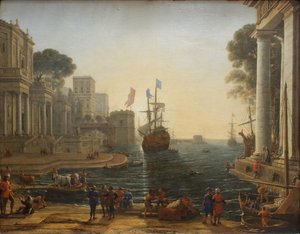
- The Disembarkation of Cleopatra at Tarsus
Historical Significance and Legacy
Claude Lorrain’s impact on landscape painting is immeasurable. He elevated the genre to a level of prestige previously reserved for historical and religious subjects. His works influenced generations of artists, including J.M.W. Turner and Impressionist painters who sought to capture the fleeting effects of light and atmosphere. Today, his paintings are highly valued and can be found in major museums worldwide, particularly the National Gallery (London) and the Art Gallery of South Australia.
Later Life and Death
Claude Lorrain passed away on November 23, 1682, in Rome. His tombstone in the church of San Luigi dei Francesi bears a simple inscription: “Claude / peintre de / rome / mort / le 23 novembre 1682”. He left behind a legacy as one of the most important and influential landscape painters in Western art history.

claude lorrain (claude gellée)
1600 - 1682
Quick Facts
- Birth_Date: c. 1600
- Birth_Place: Chamagne, Vosges, Duchy of Lorraine
- Death_Date: November 23, 1682
- Influenced_By:
- Goffredo Wals
- Agostino Tassi
- Movement: Baroque
- Name: Claude Lorrain (Claude Gellée)
- Nationality: French (Lorraine)
- Notable_Works:
- Landscape with Peasants returning with their herds
- Seaport with the Embarkation of the Queen of Sheba
Related Articles
Monet's Masterpieces: 25 Iconic Artworks to Transform Your Home
Journey through 25 iconic Claude Monet masterpieces! Explore Impressionism’s beauty, from Water Lilies to Rouen Cathedral. Discover stunning art reproductions & curated decor ideas – explore the full collection online at ArtsDot.com.
Baroque Classicism: Reconciling Drama & Order in 17th-Century Art
Explore the captivating world of Baroque Classicism! Discover its history, key artists like Caravaggio & Rubens, and defining characteristics. Expert insights & high-quality reproductions at ArtsDot.
Claude Lorrain: Master of Light & Landscape in the Golden Age
Explore the luminous landscapes of Claude Lorrain, a Baroque master renowned for his masterful use of light & atmosphere. Discover his life, techniques, key works & enduring influence on art history.

Baroque Drama: Bringing Opulence & Emotion into Contemporary Interiors
Explore the opulent world of Baroque interior design! Discover key elements, modern applications & how to bring dramatic elegance into your home with 's authentic reproductions.

Decoding Baroque Grandeur: A Guide to the Drama and Emotion of 17th-Century Art
Explore the breathtaking drama of 17th-century Baroque art. Our expert guide decodes the use of chiaroscuro, emotional intensity, and historical grandeur to help you appreciate and curate timeless masterpieces for your collection.