 Preview
 Send
Send Share
Share
 Details

 Download
 Similars
 X-Ray
X-Ray Diaporama
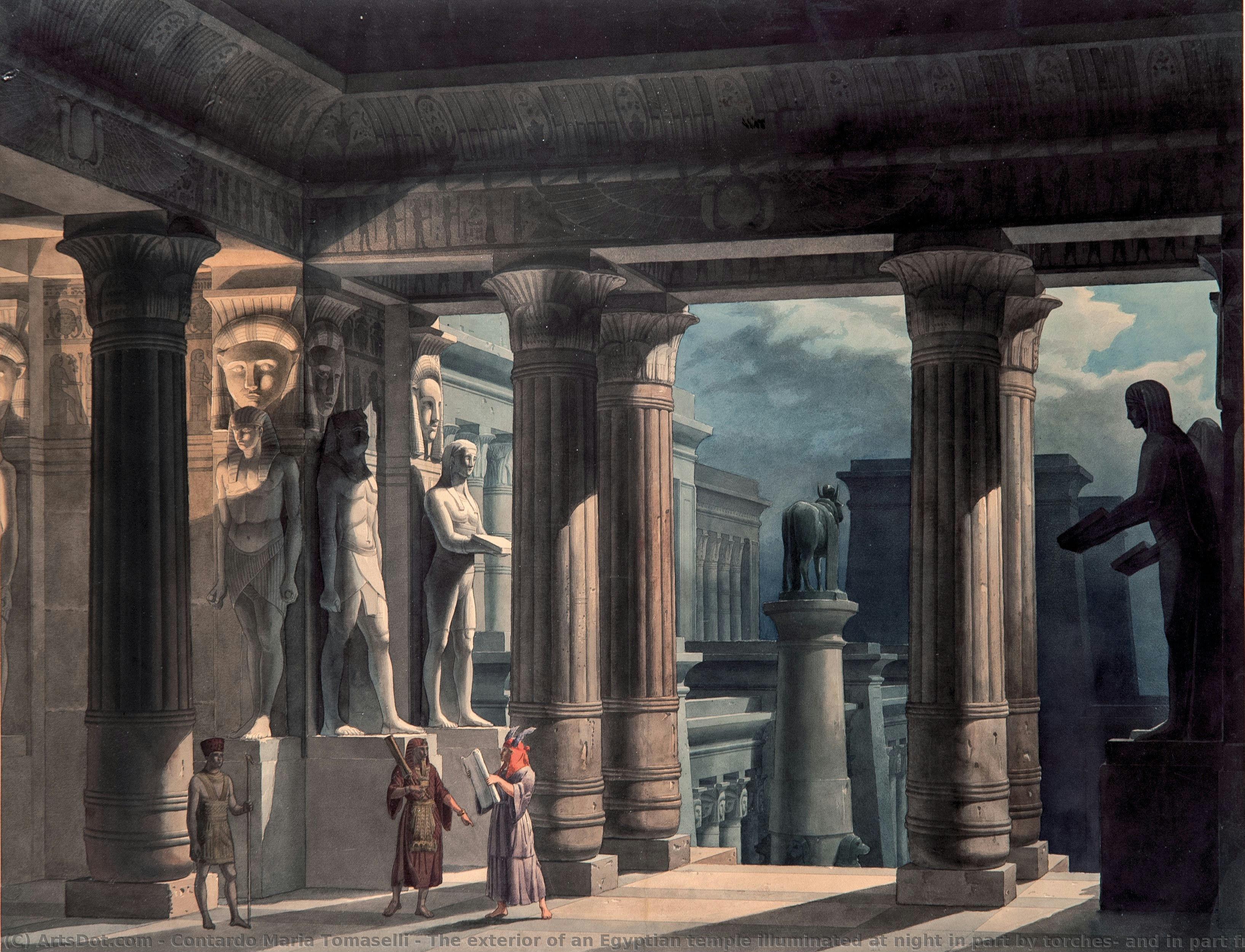
The exterior of an Egyptian temple illuminated at night in part by torches, and in part from the moon


 Read More
Hand Made Oil Reproduction
Hand-painted oil on canvas in your size and frame, made to order by our artists. ( Buy Print Buy Image)




































Pick from our preset sizes that match the artwork's original proportions.

You may enter your own dimensions to fit a specific frame or space. If your selected size does not match the original image's proportions, we will either crop the artwork or extend the painting with additional hand-painted elements. A digital mockup will be sent for your approval before production begins.
Please note that the on-screen preview does not reflect the actual cropping or extension. Only the mockup will accurately show the final composition.
While custom sizes are available, we recommend selecting a dimension from the predefined list to preserve the original proportions.
After order, ArtsDot.com team will email client for instructions and provide a mockup preview
Worldwide Delivery () in 3/4 weeks instead of standard 5 weeks. (29 August). No compromise on quality.

Free Worldwide Express Shipping

High-Quality Linen Canvas

Full Shipping Insurance

Customs Tax Refund Guarantee

True Color Matching Guarantee

60-Day Return Policy (Defects Only)

100% Money-Back Guarantee

Bulk Discount Offer
 Glass option is only available in size under 110 CM

The exterior of an Egyptian temple illuminated at night in part by torches, and in part from the moon
Reproduction Medium
Reproduction Size
-


Total Price
$ 313
Related Artworks
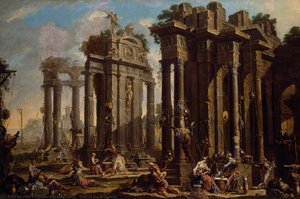
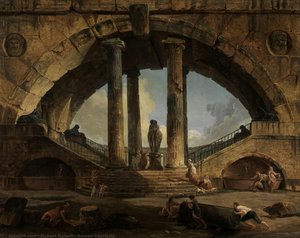
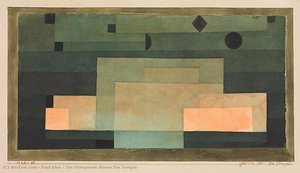
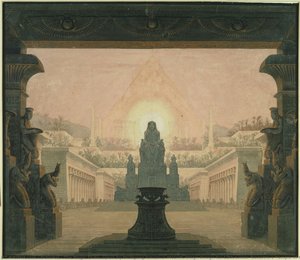
Artist Biography
William Blake: A Visionary Bridging Poetry and Art
William Blake remains one of the most enigmatic and profoundly influential figures in Western art and literature. Born in London in November 1757, his life was a tapestry woven from radical ideas, intense spiritual searching, and an extraordinary creative output that defied easy categorization. Initially apprenticed to a commercial engraver, Blake quickly transcended this conventional training, forging a unique artistic language rooted in visionary poetry and powerfully symbolic prints. His work, often unsettling and deeply personal, continues to resonate with audiences today, offering glimpses into the depths of human consciousness and challenging established notions of beauty and truth.Early Life and Artistic Foundations
William Blake’s early life was marked by a complex family situation and a strong religious upbringing within a nonconformist community. His father, James Blake, was a warehouse manager, and his mother, Catherine Blake (née Darby), instilled in him a deep sense of morality and spirituality. Despite limited formal education, Blake demonstrated an exceptional talent for drawing from a young age, receiving instruction at the drawing academy of Henry Pars. This initial training provided him with fundamental skills, but it was Blake’s independent study of medieval and Renaissance art—particularly the works of Raphael, Michelangelo, and Dürer—that truly shaped his artistic vision. He sought to emulate these masters in producing timeless, “Gothic” art infused with Christian spirituality, a pursuit that would inform much of his later work. His early engravings for Edward Young’s *Night Thoughts*, showcasing his ability to capture both beauty and melancholy, hinted at the poetic intensity he would later bring to his illuminated books.The Illuminated Books: A Revolutionary Approach
Blake's most significant artistic achievement lies in his “illuminated books”—a series of hand-printed volumes that combined poetry and intricate illustrations. Rejecting the conventional methods of printing, Blake developed a revolutionary technique known as “relief etching.” This process involved creating a single, raised printing surface for both text and image, allowing him to control every aspect of the production—from composition to color. The death of his beloved younger brother Robert in 1784 profoundly impacted Blake’s artistic trajectory, leading him to develop his unique method as a way to honor his lost sibling and express his deeply personal grief. These books, including *Songs of Innocence*, *Songs of Experience*, *The Marriage of Heaven and Hell*, *Vala*, and *Jerusalem*, are not merely collections of poems; they are complex allegories exploring themes of good and evil, spirituality and materialism, freedom and oppression. Blake’s illuminated books represent a radical departure from traditional publishing practices, establishing him as a pioneer in the field of book design and illustration.Symbolism and Visionary Themes
Blake's art is saturated with symbolism, drawing heavily on biblical imagery, mythology, alchemy, and his own intensely personal visions. He believed that the imagination was the “body of God,” a source of profound creative power capable of revealing hidden truths about the universe and humanity. His works are filled with recurring motifs—angels, demons, lions, tigers, rivers, trees—each imbued with multiple layers of meaning. Blake’s use of color is particularly striking, employing vibrant hues to evoke emotional responses and convey symbolic significance. He frequently employed a limited palette of reds, blues, and yellows, creating a distinctive visual style that is both arresting and deeply expressive. His exploration of themes such as innocence and experience, reason and intuition, spirituality and materialism continues to provoke debate and inspire interpretation.Later Years and Legacy
In his later years, Blake’s artistic output shifted towards grander, more ambitious projects, including the twelve large color prints known as *The Pre-Raphaelite Drawings*. These monumental works, created between 1827 and 1830, represent a culmination of his lifelong experimentation with printmaking techniques. Despite facing financial hardship and struggling to gain recognition during his lifetime, Blake’s work was rediscovered in the late nineteenth century, thanks largely to the efforts of William Michael Rossetti and other scholars who championed his visionary genius. Today, William Blake is revered as one of the most important artists and poets of the Romantic era, a profoundly original voice whose work continues to challenge and inspire generations of artists, writers, and thinkers. His legacy lies not only in his stunning visual art but also in his radical ideas about the power of imagination and the interconnectedness of all things.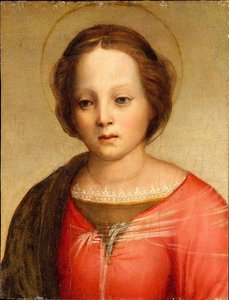
contardo maria tomaselli
1827 - 1877 , Italy
Quick Facts
- Artistic Movement Or Style:
- Romanticism
- Pre-Raphaelite
- Prophetic poetry
- Artists Or Movements Influenced By This Artist:
- Eugène Delacroix
- Romanticism
- Artists Who Influenced This Artist:
- Raphael
- Michelangelo
- Dürer
- Emanuel Swedenborg
- Date Of Birth: November 28, 1757
- Date Of Death: August 12, 1827
- Full Name: William Blake
- Nationality: British
- Notable Artworks:
- Songs of Innocence
- Songs of Experience
- The Marriage of Heaven and Hell
- Place Of Birth: London, England
Related Articles

Watercolor Wonders: 10 Masterpieces That Redefined Art History | ArtsDot
Journey through 10 legendary watercolor masterpieces by Sargent, Turner & Homer! Explore iconic landscapes, portraits & floral art that redefined history. Find museum-quality reproductions and curated decor ideas at ArtsDot.com.

Ephemeral Visions: Exploring the Artistic Legacy & Contemporary Practice of Watercolor Painting
Explore the captivating world of watercolor painting! Discover its rich history, essential techniques, influential artists & collecting tips. A comprehensive guide for art enthusiasts from ArtsDot.

Ephemeral Visions: Exploring the History & Emotional Resonance of Watercolor Painting
Explore the captivating history of watercolor painting, from ancient techniques to modern masters like Kandinsky & Blake. Discover essential artists, collecting tips & the emotional power of this luminous medium. Expert insights for art enthusiasts.

Ephemeral Visions: Exploring the Artistic Legacy & Nuances of Watercolor Painting
Explore the captivating world of watercolor painting! Discover its rich history, essential techniques, influential artists & collecting tips from art experts. A comprehensive guide for enthusiasts.
The Enduring Appeal of Watercolor: History, Techniques & Contemporary Practice
Explore the captivating world of watercolor painting! Discover its rich history, essential techniques, influential artists, and collecting tips. A comprehensive guide for art enthusiasts.