 Preview
 Send
Send Share
Share
 Details

 Download
 Similars
 X-Ray
X-Ray Diaporama
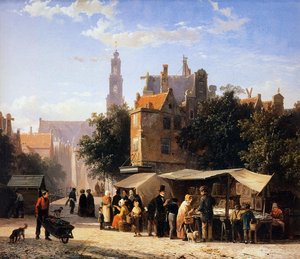
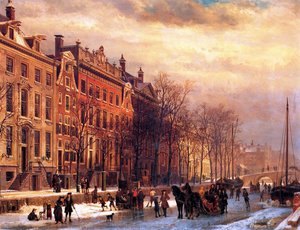
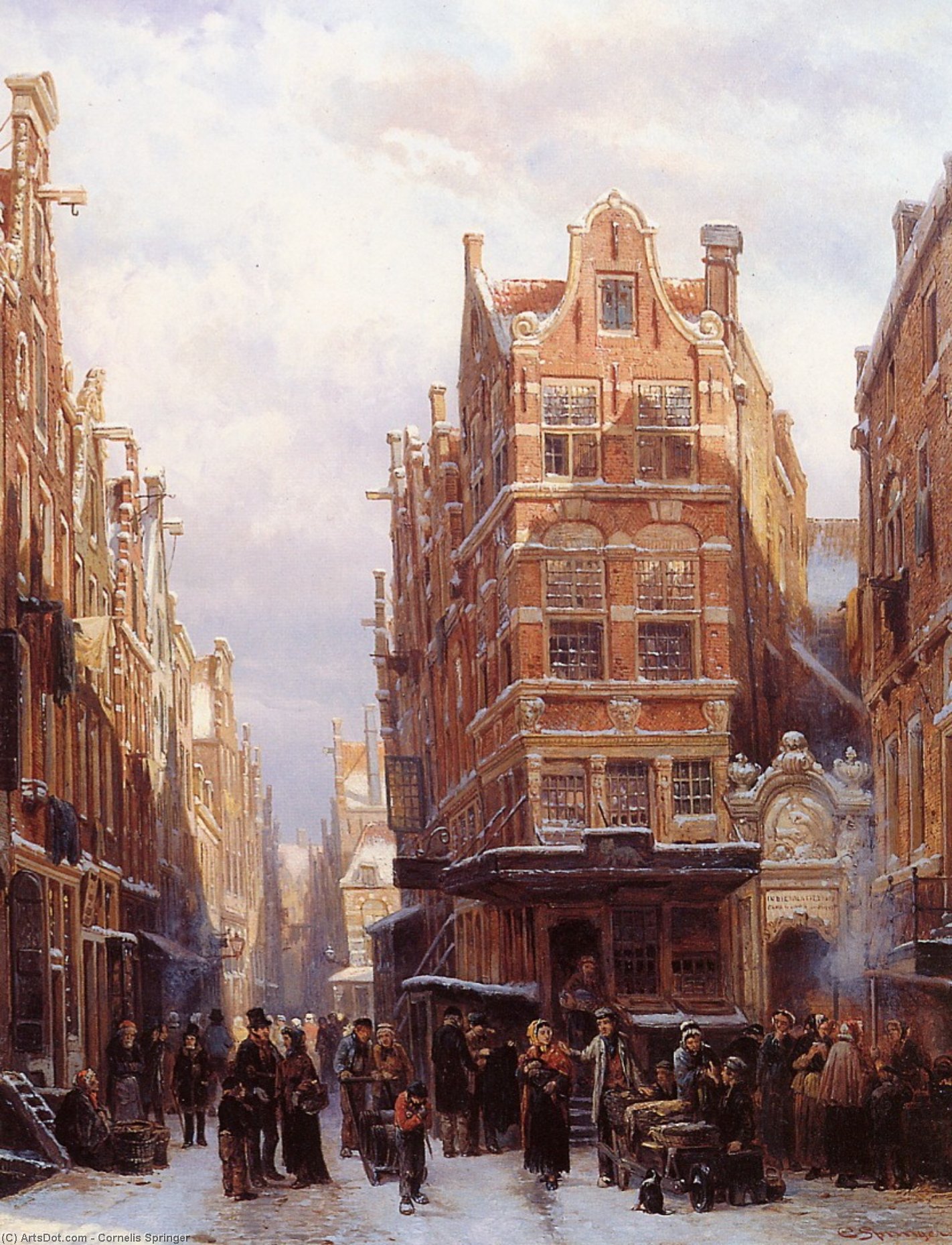
The Jewish quarter in Amsterdam

 Read More
Hand Made Oil Reproduction
Hand-painted oil on canvas in your size and frame, made to order by our artists. ( Buy Print Buy Image)




































Pick from our preset sizes that match the artwork's original proportions.

You may enter your own dimensions to fit a specific frame or space. If your selected size does not match the original image's proportions, we will either crop the artwork or extend the painting with additional hand-painted elements. A digital mockup will be sent for your approval before production begins.
Please note that the on-screen preview does not reflect the actual cropping or extension. Only the mockup will accurately show the final composition.
While custom sizes are available, we recommend selecting a dimension from the predefined list to preserve the original proportions.
After order, ArtsDot.com team will email client for instructions and provide a mockup preview
Worldwide Delivery () in 3/4 weeks instead of standard 5 weeks. (20 August). No compromise on quality.

Free Worldwide Express Shipping

High-Quality Linen Canvas

Full Shipping Insurance

Customs Tax Refund Guarantee

True Color Matching Guarantee

60-Day Return Policy (Defects Only)

100% Money-Back Guarantee

Bulk Discount Offer
 Glass option is only available in size under 110 CM

The Jewish quarter in Amsterdam
Reproduction Medium
Reproduction Size
-


Total Price
$ 413
Artwork Description
A Glimpse into 17th-Century Amsterdam: "The Jewish Quarter"
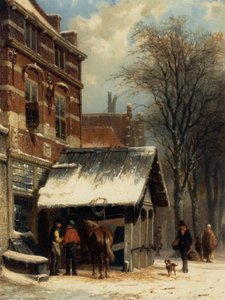
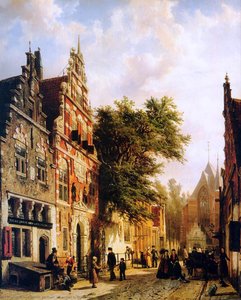
Cornelis Springer’s “The Jewish Quarter in Amsterdam” offers a captivating window into daily life during the Dutch Golden Age. This meticulously rendered oil painting transports viewers to a snow-covered street scene, likely within the historic Jewish quarter of Amsterdam itself. The artwork's strength lies in its remarkable realism and depth, achieved through skillful perspective and detailed observation – hallmarks of Springer’s signature style.
Style & Technique: Dutch Golden Age Realism
Springer firmly belongs to the tradition of Dutch Golden Age painting, a period renowned for its realistic depictions of everyday scenes. Unlike some contemporaries who focused on grand historical narratives or dramatic religious subjects, Springer dedicated himself to capturing the beauty and detail of urban landscapes. The painting’s style is characterized by:
- Linear Precision: Sharp lines define the architecture, creating a sense of order and structure within the bustling streetscape.
- Geometric Composition: Buildings are constructed from recognizable geometric shapes – squares, rectangles, and triangles – lending a sense of stability to the scene.
- Textural Richness: The snow is not merely a white blanket; Springer masterfully depicts its texture through layered brushstrokes, creating a palpable sense of cold and depth. The weathered surfaces of the buildings are equally well-observed.
- Soft Lighting: The diffused light suggests an overcast day, bathing the scene in a gentle glow that emphasizes the subtle nuances of color and shadow.
Historical Context & Subject Matter
Painted around the mid-19th century (though depicting a 17th-century scene), Springer’s work reflects a renewed interest in Dutch history and heritage during his time. The Jewish quarter, with its distinctive architecture and vibrant community, provided a compelling subject for an artist seeking to document a specific aspect of Amsterdam's past. The painting isn't just about buildings; it's about the people who inhabited them. The small group of figures in the foreground adds scale and life to the scene, hinting at the social fabric of this historic neighborhood.
Symbolism & Emotional Resonance
Beyond its documentary value, “The Jewish Quarter” carries symbolic weight. The snow, while visually striking, can be interpreted as representing a sense of coldness or isolation. However, the presence of people moving through the scene suggests resilience and community spirit – a testament to the enduring strength of human connection even in challenging circumstances. The overall emotional tone is one of quiet contemplation; Springer invites viewers to pause and reflect on a bygone era, appreciating the beauty and complexity of everyday life in 17th-century Amsterdam. It’s a snapshot frozen in time, offering a poignant glimpse into history.
Related Artworks
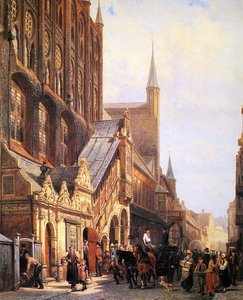
Artist Biography
The Foundations of a Master
Born in the vibrant heart of Amsterdam in 1817, Cornelis Springer’s artistic journey was deeply intertwined with the tactile world of craftsmanship. The son of Willem Springer, a skilled carpenter, Cornile inherited an eye for architectural precision and a profound respect for the structural beauty of the physical world. This early exposure to the nuances of wood and form provided a unique foundation for his later mastery of cityscape painting. His formal education at the Amsterdam Academy of Fine Arts under Jacobus van der Stok, coupled with private mentorship from Hendrik Gerrit ten Cate and Kasparus Karsen, allowed him to transcend mere technical skill. From Karsen, he absorbed a penchant for idyllic, often fantastical townscapes and a muted, copper-toned palette that would define his early explorations of the Dutch landscape.
As his talent matured, Springer moved beyond the practicalities of his upbringing to embrace the sweeping emotions of the Romantic movement. He did not merely seek to document the world; he sought to interpret it through a lens of atmosphere and light. This transition from the structural discipline of his youth to the expressive freedom of his maturity allowed him to become one of the most significant landscape painters of the nineteenth century.
A Romantic Vision of the Dutch Spirit
Springer’s artistic style was deeply rooted in Romantic ideals, standing in poignant contrast to the prevailing Classical Realism of his era. While others focused on idealized forms and photographic accuracy, Springer embraced emotion and imagination as the true heart of artistic expression. He excelled in a variety of media, including watercolor, etching, and drawing, prioritizing the capture of fleeting moments and subjective impressions. His work often features the tranquil canals, bustling market squares, and intricate facades of seventeenth and eighteenth-century buildings, all imbued with a sense of nostalgia and grace.
His ability to manipulate light and shadow created a sense of movement within his static scenes, making the architecture itself feel alive. This mastery is perhaps most evident in his celebrated achievements and iconic compositions:
- St. Joseph’s Church in Hamelen: A triumphant work that earned him a prestigious gold medal from the Amsterdam Painters Collective Felix Meritis.
- Franeker with the Zakkend Ragerschuisje: A masterful watercolor that exemplifies his use of dramatic lighting to convey the spirit of provincial life.
- The Smithy of Culemborg in the Winter: An oil on canvas that showcases his ability to infuse a cold, seasonal landscape with a sense of warmth and human comfort.
- A View of a Town along the Rhine: A stunning example of his skill in capturing the serene beauty of European river towns.
An Enduring Architectural Memory
The historical significance of Cornelis Springer lies in his role as a custodian of Dutch cultural memory. Through his detailed cityscapes and atmospheric landscapes, he preserved the essence of an era that was rapidly changing under the weight of industrialization. His paintings are not merely topographical records; they are intimate reflections of a bygone age, offering viewers a window into the soul of the Netherlands. By blending the precision learned from his father with the expressive power of Romanticism, Springer created a body of work that remains as captivating today as it was during his lifetime. His legacy continues to resonate through the halls of art history, reminding us of the profound beauty found in the intersection of human craftsmanship and the natural world.
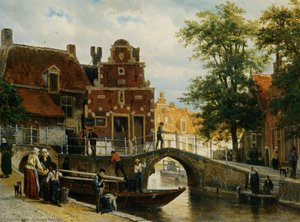
Cornelis Springer
1817 - 1891
Quick Facts
- Artistic Movement Or Style: Romanticism
- Artists Who Influenced This Artist:
- Hendrik Gerrit Ten Cate
- Kasparus Karsen
- Date Of Birth: May 25, 1817
- Date Of Death: February 20, 1891
- Full Name: Cornelis Springer
- Nationality: Dutch
- Notable Artworks:
- View of Franeker
- Town Square before a Church
- Rhine Fantasy
- Place Of Birth: Amsterdam, Netherlands
Related Articles

Dutch Masters: 10 Golden Age Paintings That Still Inspire |
Journey into the Dutch Golden Age! Explore 10 iconic paintings by Rembrandt, Vermeer & Hals. Discover the stories behind these Baroque masterpieces and find museum-quality art reproductions to elevate your home decor on .
Cornelis Springer: A Dutch Master of Cityscapes & Intimate Reflections
Explore the captivating world of Cornelis Springer (1817-1891), a Dutch master renowned for his detailed cityscapes and atmospheric paintings. Discover his life, style & available artworks at ArtsDot.
Charles Leickert: Capturing the Dutch Golden Age Light – A Comprehensive Study of Technique, Context, and Legacy
Explore the captivating winter landscapes of Charles Leickert, a master of Dutch Golden Age light & atmosphere. Discover his techniques, symbolism, and lasting legacy – a comprehensive study for art enthusiasts and collectors.

Golden Age Reflections: Dutch Baroque Painting & Cultural Innovation
Explore the Dutch Golden Age of painting! Discover key artists like Vermeer & ter Borch, their innovative techniques, and the rich cultural context behind these Baroque masterpieces. Learn about collecting & appreciating this iconic art period.

Illuminating Innovation: Exploring the Dutch Golden Age of Painting
Explore the Dutch Golden Age of painting with ArtsDot. Discover Rembrandt, Vermeer & other Masters. Learn about key characteristics, iconic artworks, and lasting influence. Expert insights for collectors & enthusiasts.