 Preview
 Send
Send Share
Share
 Details

 Download
 Similars
 X-Ray
X-Ray Diaporama
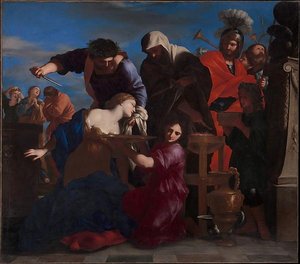
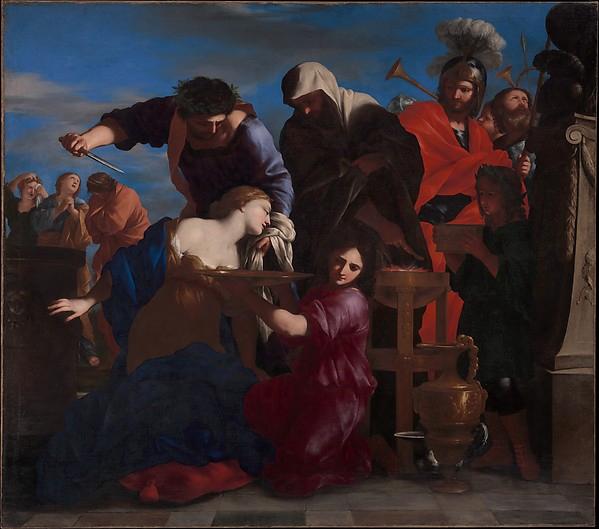
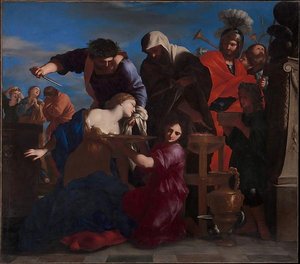
The Sacrifice of Polyxena
 Baroque
 198.0 x 224.0 cm
 Read More
Hand Made Oil Reproduction
Hand-painted oil on canvas in your size and frame, made to order by our artists. ( Buy Print Buy Image)




































Pick from our preset sizes that match the artwork's original proportions.

You may enter your own dimensions to fit a specific frame or space. If your selected size does not match the original image's proportions, we will either crop the artwork or extend the painting with additional hand-painted elements. A digital mockup will be sent for your approval before production begins.
Please note that the on-screen preview does not reflect the actual cropping or extension. Only the mockup will accurately show the final composition.
While custom sizes are available, we recommend selecting a dimension from the predefined list to preserve the original proportions.
After order, ArtsDot.com team will email client for instructions and provide a mockup preview
Worldwide Delivery () in 3/4 weeks instead of standard 5 weeks. (29 August). No compromise on quality.

Free Worldwide Express Shipping

High-Quality Linen Canvas

Full Shipping Insurance

Customs Tax Refund Guarantee

True Color Matching Guarantee

60-Day Return Policy (Defects Only)

100% Money-Back Guarantee

Bulk Discount Offer
 Glass option is only available in size under 110 CM

The Sacrifice of Polyxena
Reproduction Medium
Reproduction Size
-


Total Price
$ 463
Related Artworks
Artist Biography
The Luminous Legacy of Giovanni Francesco Romanelli
In the grand, theatrical theater of the Italian Baroque, few painters captured the era's characteristic splendor with as much grace and clarity as Giovanni Francesco Romanelli. Born in Viterbo in 1610 to Laura de Angelis and Bartolomeo Romanelli, his journey from a provincial upbringing to the heart of Rome’s artistic elite is a testament to the transformative power of classical training. At the tender age of fourteen, Romanelli arrived in the Eternal City, entering the prestigious studio of Pietro da Cortona. This formative period was more than mere instruction; it was an immersion into a visual language defined by movement, light, and a profound sense of divine order. Under Cortona’s tutelage, Romanelli absorbed the essence of the High Baroque, learning to balance the exuberant energy of the style with a refined, almost classical restraint that would eventually become his stylistic hallmark.
The early years of Romanelli's career were inextricably linked to the powerful Barberini family. His talent quickly earned him a place within the household of Cardinal Francesco Barberini, a position that provided him with unparalleled access to the most prestigious commissions in Rome. During the 1630s, he worked alongside his mentor on monumental projects, such as the breathtaking ceiling frescoes of the Palazzo Barberini, contributing to the legendary Divine Providence cycle. However, Romanelli was not merely a shadow of Cortona. While he inherited the master's ability to orchestrate complex compositions, he began to cultivate a more luminous palette and a meticulous attention to detail that set him apart. This period of intense collaboration eventually gave way to a spirited pursuit of independence; following a professional rift with Cortona in 1639, Romanelli emerged as a formidable master in his own right, eventually taking the helm as Director of Saint Luke’s Academy.
A Mastery of Color and Devotion
As his career progressed, Romanelli's work became celebrated for its vividness and clarity, qualities that offered a refreshing counterpoint to the more turbulent shadows found in other Baroque masters. His ability to manipulate light allowed him to create scenes that felt both physically present and spiritually transcendent. This is perhaps most evident in his religious and mythological compositions, where the emotional weight of the subject matter is conveyed through subtle shifts in hue and texture rather than through overt drama. Whether depicting the profound sorrow of The Sacrifice of Polyxena or the celestial glory of his Vatican commissions, Romanelli possessed a unique gift for portraying human emotion with a dignified, almost serene, grace.
His repertoire was as diverse as it was impressive, spanning from large-scale fresco cycles to intimate easel paintings. Some of his most enduring achievements include:
- The Vatican Commissions: His work within the Vatican Gallery of Maps, including the Nativity altarpiece and the Feed my Sheep ceiling fresco, showcased his ability to handle monumental scale with breathtaking precision.
- Decorative Excellence: His contributions to the decoration of the Apostolic Palace, specifically his series of decorative putti for tapestries, demonstrated a profound connection to the classical traditions of the Raphael school.
- Narrative Depth: Works such as St. Peter Healing the Sick illustrate his capacity to blend historical narrative with a sense of miraculous intervention, a hallmark of the Counter-Reformation spirit.
Historical Significance and Enduring Influence
The significance of Giovanni Francesco Romanelli extends far beyond the borders of Rome. As a painter who bridged the gap between the heavy dynamism of early Baroque and the more refined, classical sensibilities that would later emerge, he acted as a vital link in the evolution of European art. His influence can be traced through his many collaborations and his leadership within the artistic community, which helped shape the training of subsequent generations of painters. Even as styles shifted toward the more ornate Rococo or the austere Neoclassical, Romanelli’s commitment to clarity, balance, and luminous color remained a standard of excellence.
Today, his legacy is preserved in some of the world's most esteemed institutions, most notably the Louvre, where his masterful decorations continue to captivate viewers with their timeless elegance. To study Romanelli is to witness the height of Baroque sophistication—a period where art served as a bridge between the earthly and the divine, rendered through the steady, brilliant hand of a true visionary. His life, marked by both the shadow of a great master and the light of his own independent genius, remains an essential chapter in the history of Italian painting.
da giovanni francesco romanelli
1610 - 1662
Quick Facts
- Artistic Movement Or Style: Baroque
- Artists Or Movements Influenced By This Artist: ['Ludwig XIV']
- Artists Who Influenced This Artist: ['Pietro da Cortona']
- Date Of Birth: 1610
- Date Of Death: 9 November 1662
- Full Name: Giovanni Francesco Romanelli
- Nationality: Italian
- Notable Artworks:
- The Sacrifice of Polyxena
- Venus pouring a balm on the wound of Aeneas
- Campo di Santi Giovanni e Paolo
- Place Of Birth: Viterbo
Related Articles

The Dramatic Flourish: Exploring the Baroque Movement's Enduring Legacy in Art History
Explore the dramatic world of Baroque art! Discover iconic artists like Caravaggio & Rubens, defining techniques, and its lasting impact on art history. Expert insights for collectors & enthusiasts at ArtsDot.
Decoding Baroque Grandeur: A Guide to the Drama and Emotion of 17th-Century Art
Explore the breathtaking drama of 17th-century Baroque art. Our expert guide decodes the use of chiaroscuro, emotional intensity, and historical grandeur to help you appreciate and curate timeless masterpieces for your collection.

Baroque Classicism: Reconciling Drama & Order in 17th-Century Art
Explore the captivating world of Baroque Classicism! Discover its history, key artists like Caravaggio & Rubens, and defining characteristics. Expert insights & high-quality reproductions at ArtsDot.

The Visceral Stage: Exploring Dramatic Narratives & Emotional Intensity in Baroque Art
Explore the dramatic world of Baroque art! Discover iconic masters like Caravaggio & Rembrandt, their techniques, and the movement's lasting impact. Expert insights for collectors & enthusiasts at ArtsDot.

Baroque Masterpieces: 10 Paintings That Defined an Era |
Journey through the drama & grandeur of Baroque art! Explore 10 masterpieces by Caravaggio, Rembrandt, Rubens & more. Discover stunning oil paintings, rich colors & timeless stories. Find museum-quality reproductions at .