

 Preview
 Send
Send Share
Share
 Details

 Download
 Similars
 X-Ray
X-Ray Diaporama
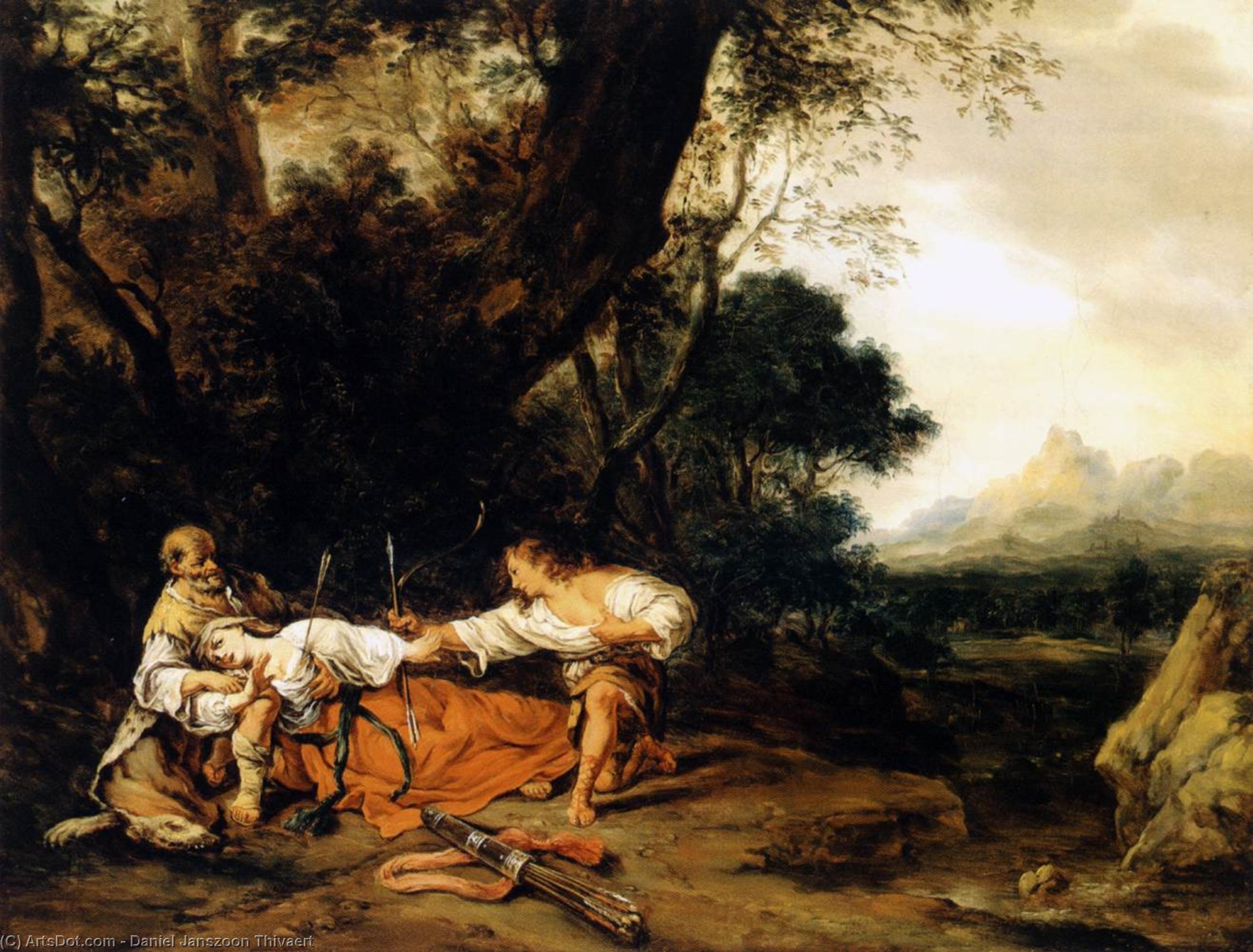
Silvio and Dorinda
 Oil On Canvas
- WallArt
- Baroque
 Early Modern
 43.0 x 55.0 cm
 Szépmûvészeti Múzeum
 Read More
Hand Made Oil Reproduction
Hand-painted oil on canvas in your size and frame, made to order by our artists. ( Buy Print Buy Image)




P118B $10

P118H $10

P118W $10

P438Z $10

P508JH $12

P508YH $12

P805H $10

P805Z $10

P919BZ $10

P919G $10

P919XJ $10

P959ZH $10

P968JZ $12

W106C $8

W218G $10

W218JH $8

W218Y $10

W307PJ $10

W316G $10

W316PJ $8

W316Y $10

W398PJ $8

W4111J $10

W500HY $15

W500JH $15

W692G $12

W849H $8

W940BG $15

W953PJ $8




Pick from our preset sizes that match the artwork's original proportions.

You may enter your own dimensions to fit a specific frame or space. If your selected size does not match the original image's proportions, we will either crop the artwork or extend the painting with additional hand-painted elements. A digital mockup will be sent for your approval before production begins.
Please note that the on-screen preview does not reflect the actual cropping or extension. Only the mockup will accurately show the final composition.
While custom sizes are available, we recommend selecting a dimension from the predefined list to preserve the original proportions.
After order, ArtsDot.com team will email client for instructions and provide a mockup preview
Worldwide Delivery () in 3/4 weeks instead of standard 5 weeks. (17 August). No compromise on quality.

Free Worldwide Express Shipping

High-Quality Linen Canvas

Full Shipping Insurance

Customs Tax Refund Guarantee

True Color Matching Guarantee

60-Day Return Policy (Defects Only)

100% Money-Back Guarantee

Bulk Discount Offer
 Glass option is only available in size under 110 CM

Silvio and Dorinda
Reproduction Medium
Reproduction Size
-


Total Price
$ 263
Artwork Description
A Moment Frozen in Time: The Drama of Silvio and Dorinda
In the quiet, shadowed depths of a dense forest, a profound moment of human vulnerability unfolds within Daniel Janszoon Thievaert’s evocative masterpiece, Silvio and Dorinda. This captivating oil on canvas invites the viewer into a private, high-stakes drama where the boundaries between life and tragedy blur. At the heart of the composition lies a figure reclined upon the earth, their head resting against a striking splash of red cloth that serves as both a visual anchor and a symbolic harbinger of blood or passion. The scene is thick with tension; an injured individual lies incapacitated, surrounded by companions whose faces are etched with the raw, universal emotions of concern and desperation. As light filters through a heavy, overcast canopy, the soft, diffused glow illuminates the textures of white garments and weathered robes, creating a sense of intimacy that draws the observer into this silent, woodland sanctuary.
The artistry of Thievaert, a master of the Dutch Golden Age, is on full display through his meticulous command of atmospheric perspective and light. The painting breathes with the characteristic weight of the Baroque period, utilizing a rich, tonal palette to establish depth and mood. Notice how the dark, tangled foliage of the background recedes into mystery, allowing the central figures to emerge with startling clarity. A single, sharp detail—a sword resting on the ground with its blade pointed toward the viewer—acts as a silent narrator, hinting at a violent conflict that has just passed. This subtle use of chiaroscroll and composition directs the eye through the narrative arc, from the cold steel of the weapon to the tender, reaching hands of the caregivers, ensuring that every brushstroke contributes to the unfolding story.
A Legacy of Dutch Mastery for the Modern Collector
Beyond its immediate narrative, Silvio and Dorinda serves as a window into the sophisticated visual culture of seventeenth-century Holland. Thievaert, influenced by the legendary Pieter Bruegel the Elder, possessed an unparalleled ability to imbue landscapes with psychological weight. For the discerning collector or interior designer, this piece offers more than mere decoration; it provides a profound emotional resonance that can transform a space. The painting’s ability to balance the ruggedness of nature with the delicate nuances of human emotion makes it a versatile centerpiece for any curated collection. Whether placed in a grand library or a contemporary living space, the work commands attention through its historical gravity and timeless aesthetic appeal.
Integrating a high-quality reproduction of such a significant work allows one to bring the spirit of the Dutch Golden Age into the modern home. The interplay of light and shadow within the piece provides a sophisticated texture that complements both classical and minimalist decor. As an investment in atmosphere, this artwork evokes a sense of history and storytelling, making it an ideal choice for those who seek to surround themselves with art that speaks of resilience, compassion, and the enduring beauty of the human condition. To possess such a work is to hold a fragment of the Baroque soul, preserved through the masterful hands of Thievaert.
Related Artworks

Artist Biography
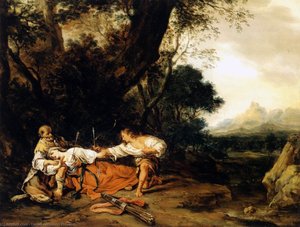
The Master of Atmospheric Drama: The Life and Legacy of Daniel Jansz Thievaert
In the vibrant, salt-sprayed era of the Dutch Golden Age, few artists captured the mercurial temperament of the natural world as poignantly as Daniel Jansz Thievaert. Born in Amsterdam around 1613, Thievaert emerged during a period of unparalleled commercial prosperity and artistic experimentation. While the biographical shadows surrounding his early years remain somewhat elusive—a common challenge when reconstructing the lives of seventeenth-century masters from fragmented archives—his brushwork provides a vivid testament to his presence in the heart of Dutch culture. His life, which concluded around 1657, was defined by an unwavering commitment to capturing the profound interplay between light, shadow, and the elements.
Thievaert’s artistic journey was shaped by the prestigious lineage of Dutch landscape painting. He honed his technical prowess under the guidance of Willem van Delft, a master renowned for landscapes imbued with humanist ideals. This foundational training, likely supplemented by the enduring influence of Pieter Bruegel the Elder, instilled in Thievaert a deep respect for compositional balance and narrative depth. As he matured, his style evolved beyond mere topographical accuracy, moving toward a more emotive and atmospheric approach. He became a specialist in the dramatic, particularly through his command of atmospheric perspective—a technique that allowed him to render turbulent, cloud-heavy skies and shafts of sunlight piercing through gloom with breathtaking realism.
Narrative Grandeur and Technical Mastery
The true brilliance of Thievaert lies in his ability to transform a seascape or a woodland scene into a stage for human drama. His works are rarely static; they breathe with the tension of an unfolding story. In masterpieces such as Silvio en Dorinda, the artist moves away from the open sea to explore the intimate, shadowed depths of a dense forest. Here, he utilizes a rich, tonal palette and the dramatic chiaroscuro characteristic of the Baroque period to guide the viewer’s eye through a landscape of vulnerability and tension. A single, sharp detail—perhaps a sword resting on the earth—serves as a silent narrator, hinting at recent violence and heightening the emotional stakes of the scene.
This mastery of light was not merely decorative but served a psychological purpose. Thievaert’s skies are often ablaze with movement, reflecting the turbulent spirit of an age of maritime exploration. Whether depicting the rhythmic swell of the North Sea or the heavy, overcast canopy of a forest, his technique involved layering thin glazes to create a sense of depth and luminosity. This meticulous attention to detail allowed him to capture:
- The translucent quality of light filtering through thick maritime mist.
- The tactile textures of weathered robes, white garments, and rugged terrain.
- The profound emotional resonance found in the faces of figures caught in moments of crisis or prayer.
A Lasting Impression on the Dutch Golden Age
Thievaert’s contribution to the visual culture of seventeenth-century Holland extends far beyond the depiction of ships and coastlines. By infusing maritime scenes with a sense of psychological depth, he elevated the genre from mere documentation to high art. His ability to weave biblical narratives—seen in works like Paulus en Barnabus and Abraham en Isaak in gebed van dankbaarheid—into landscapes of immense scale ensured that his work resonated with both the religious and secular sensibilities of his time.
Though his career was relatively brief, the historical significance of Daniel Jansz Thievaert remains etched in the annals of Dutch art. He stands as a bridge between the structured landscapes of his predecessors and the more emotive, atmospheric explorations that would follow. Today, his paintings continue to captivate collectors and historians alike, offering a window into a world where the boundaries between the natural environment and human emotion were beautifully, and often dramatically, blurred.
daniel janszoon thivaert
1613 - 1657 , Netherlands
Quick Facts
- Artistic Movement Or Style: Dutch Golden Age Painting
- Artists Or Movements Influenced By This Artist: ['']
- Artists Who Influenced This Artist:
- Leonaert Bramer
- Willem de Poorter
- Date Of Birth: Amsterdam, Netherlands (1613)
- Date Of Death: Amsterdam, Netherlands (1657)
- Full Name: Daniel Jansz Thievaert
- Nationality: Dutch
- Notable Artworks:
- Silvio and Dorinda
- The Reconciliation of Jacob and Esau
- Abraham and Isaak in prayer of thanksgiving
- Place Of Birth: Amsterdam
Related Articles

Golden Age Reflections: Dutch Baroque Painting & Cultural Innovation
Explore the Dutch Golden Age of painting! Discover key artists like Vermeer & ter Borch, their innovative techniques, and the rich cultural context behind these Baroque masterpieces. Learn about collecting & appreciating this iconic art period.

Dutch Masters: 10 Golden Age Paintings That Still Inspire |
Journey into the Dutch Golden Age! Explore 10 iconic paintings by Rembrandt, Vermeer & Hals. Discover the stories behind these Baroque masterpieces and find museum-quality art reproductions to elevate your home decor on .

Dutch Baroque Masters: 10 Paintings That Shaped an Era | ArtsDot
Journey through the Golden Age with our guide to the Top 10 Dutch Baroque masterpieces! Explore iconic paintings by Rembrandt, Vermeer & Frans Hals. Find museum-quality art reproductions and elevate your home decor at ArtsDot.com.

Illuminating Innovation: Exploring the Dutch Golden Age of Painting
Explore the Dutch Golden Age of painting with ArtsDot. Discover Rembrandt, Vermeer & other Masters. Learn about key characteristics, iconic artworks, and lasting influence. Expert insights for collectors & enthusiasts.
Golden Light & Dutch Skies: Bringing the Magic of Dutch Golden Age Landscapes into Your Home
Transform your home with the breathtaking light of Dutch Golden Age landscapes. Discover how hand-painted oil reproductions of masterworks like Ruisdael and Vermeer bring timeless elegance, atmosphere, and soulful texture to modern interiors. Elevate your space with museum-quality art.

