

 Preview
 Send
Send Share
Share
 Details

 Download
 Similars
 X-Ray
X-Ray Diaporama
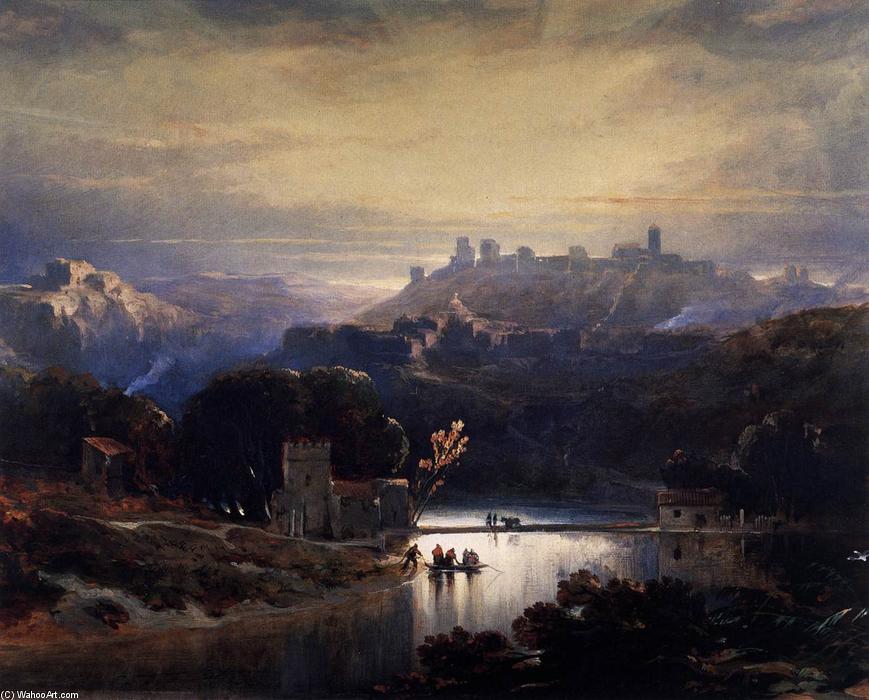
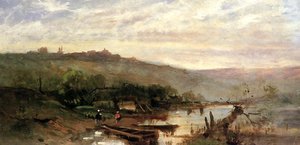
The Castle of Alcalá de Guadaira
 Oil On Canvas
- WallArt
- Romanticism
 1830
1830 40.0 x 48.0 cm
 Museo del Prado
 Read More
Purchase a high-resolution, enhanced digital image, far superior to the online preview.
Each file is meticulously prepared by our in-house specialists using advanced tools and expert manual retouching. We ensure every image has exceptional clarity, precise color accuracy, and fine detail.
The final file is delivered via email within 72 hours, optimized for immediate use in professional, editorial, and print environments. This is the same quality trusted by top-tier design studios, publishers, and galleries.
Digital Image
Download a high-resolution file for personal display, printing, and creative projects. ( Buy Print Buy Hand Made Painting)
Included in Every Digital Image Order
Expert Digital Delivery, Guaranteed
When you choose ArtsDot.com, you're not just getting an image - you're receiving a professionally enhanced digital artwork, crafted with precision and backed by a satisfaction guarantee. Here's everything that comes with your order, automatically:

Fast Email Delivery
Your high-resolution digital image file will be emailed to you within 72 hours of ordering - ready for immediate use.

AI-Enhanced Digital File
Your artwork is professionally optimized using advanced AI tools and manual editing, ensuring maximum detail, clarity, and color accuracy.

Free Lifetime Re-Delivery
Accidentally deleted or lost your file? No worries - we'll resend it to you anytime, free of charge.

No Import Fees - Ever
Enjoy your artwork instantly with zero customs, duties, or delivery fees - digital downloads are always tax-free.

Color Accuracy Guarantee
We ensure your digital image reflects the original colors as closely as possible using professional tools and color management.

60-Day Satisfaction Guarantee
If you're not satisfied with your digital image, we'll revise it or refund 100% within 60 days - no questions asked.

100% Money-Back Guarantee
Not satisfied? Get a full refund within 60 days of receiving your digital file - no questions asked.

Bulk Order Discounts
Buy 3 images, save 10% - Buy 5, save 15% - Buy 10+, save 20%. Great for creative projects, galleries, and agencies.
Collectible Description
A Distant Majesty: David Roberts’ “The Castle of Alcalá de Guadaira”
David Roberts' "The Castle of Alcalá de Guadaira," painted in 1830, isn’t merely a landscape; it’s a carefully constructed vision of Romanticism – a yearning for the sublime intertwined with an appreciation for human settlement. This expansive canvas transports us to the rolling hills and hazy vistas of Andalusia, Spain, offering a glimpse into a world both familiar and profoundly distant. The painting immediately establishes a sense of atmospheric depth, achieved through Roberts’ masterful use of color and light, creating an almost dreamlike quality that draws the viewer into its serene expanse.
The composition itself is deliberately horizontal, emphasizing the vastness of the landscape and lending it a feeling of timelessness. A body of water dominates the foreground, acting as a mirror to the distant cityscape – a subtle connection between the earthly realm and the heavens. Scattered across this water are small boats, populated by figures that suggest leisurely pursuits, hinting at the pleasures of travel and escape. However, the true focal point lies in the background: the ruins of Alcalá de Guadaira’s medieval castle, partially obscured by atmospheric haze. This strategic placement elevates the castle not as a symbol of power or defense, but rather as an echo of a bygone era, blending seamlessly into the landscape.
Romanticism and the Sublime
Roberts' work firmly anchors itself within the Romantic movement, a period characterized by an intense fascination with nature’s grandeur and the emotional response it evokes. The painting embodies this spirit through its emphasis on dramatic light, atmospheric perspective, and the depiction of untamed beauty. The hazy atmosphere, rendered in soft blues, purples, and greys, isn't simply decorative; it actively contributes to a sense of mystery and awe – a key element of the Romantic concept of the “sublime.” The sublime wasn’t about terror, but rather an overwhelming feeling of grandeur that simultaneously inspired reverence and a humbling awareness of one’s own insignificance in the face of nature’s power.
Roberts' background as a scenic designer for the Drury Lane theatre undoubtedly informed his approach to landscape painting. He was accustomed to creating immersive environments, and this experience is evident in the meticulous detail with which he renders the distant cityscape and the subtle variations in color across the rolling hills. The careful balance between realism and artistic license reflects the Romantic ideal of capturing not just a literal representation of nature, but also its emotional essence.
Technique and Artistic Detail
Examining the painting’s technique reveals a sophisticated understanding of oil paint and layering. Roberts employs loose brushwork, particularly in the sky and distant mountains, creating a sense of movement and dynamism. The colors are blended seamlessly, contributing to the overall atmospheric effect. Noticeable texture is achieved through these deliberate brushstrokes – the soft, layered application of pigment gives the painting a tactile quality, inviting the viewer to almost feel the warmth of the sun on the landscape.
The flattened perspective, prioritizing breadth over strict realism, further enhances the sense of vastness. Roberts skillfully uses atmospheric perspective—objects in the distance appear paler and less distinct—to create an illusion of depth without resorting to traditional linear techniques. This approach is characteristic of Romantic painting, which often prioritized emotional impact over photographic accuracy.
Symbolism and Legacy
"The Castle of Alcalá de Guadaira" transcends a simple depiction of a landscape; it’s laden with symbolic meaning. The castle represents the remnants of civilization – a testament to human ambition and ingenuity, yet now integrated into the natural world. It speaks to the cyclical nature of time, suggesting that even the most imposing structures eventually succumb to the forces of nature. The painting, therefore, becomes a meditation on humanity’s relationship with the environment, a theme that continues to resonate today.
David Roberts' work is now recognized as a cornerstone of Orientalist art and a significant contribution to Romantic landscape painting. Reproductions of “The Castle of Alcalá de Guadaira” offer a beautiful way to bring this evocative scene into any space, capturing the spirit of the Romantic era and inviting contemplation on the enduring power of nature’s beauty.
Related Artworks
Artist Biography
David Roberts: A Life in Art
David Roberts (1796-1864) was a Scottish painter celebrated for his detailed Orientalist scenes and meticulous lithographs. His work provides invaluable visual documentation of the Middle East during the 19th century, bridging artistic representation with historical record.
Early Life and Career
Born on October 24, 1796, in Stockbridge near Edinburgh, Roberts’s early life was marked by practical training. At the age of ten, he began an apprenticeship with house painter and decorator Gavin Beugo. This foundational experience instilled a strong technical skill set, which he supplemented through evening art studies.
His initial professional work included redecorating Scone Palace in 1815. He then transitioned to scene painting for James Bannister’s circus, honing his skills in creating immersive environments. These early experiences laid the groundwork for his later success as a prominent Orientalist painter.
Artistic Journey and Influences
Roberts' artistic development was shaped by a growing fascination with different cultures and landscapes. While initially focused on theatrical scenery, he gradually shifted towards more independent artistic pursuits. His travels to Spain in 1832 were formative, sparking an interest in architectural detail and exotic locales.
However, it was his extensive tours of Egypt and the Near East (1838-1840) that truly defined his career. These journeys provided him with a wealth of sketches and observations which he later translated into his most famous works. His style wasn’t heavily influenced by any single artist, but rather developed from careful observation and technical mastery.
Notable Works and Achievements
Roberts is best known for The Holy Land, Syria, Idumea, Arabia, Egypt, and Nubia – a series of meticulously detailed lithograph prints. These images captured the grandeur of ancient sites and the vibrancy of contemporary life in the region.
- Lithographs: His lithographs were widely circulated and became highly influential in shaping European perceptions of the Middle East.
- Paintings: He also produced numerous oil paintings, often large-scale works depicting expansive landscapes and architectural marvels.
In 1841, Roberts was elected as a Royal Academician – a significant recognition of his contributions to the art world.
Artistic Style and Characteristics
Roberts’s artistic style is characterized by:
- Orientalism: A strong focus on depicting scenes from the Middle East, reflecting the European fascination with “the Orient.”
- Attention to Detail: His work is renowned for its precision and accuracy in rendering architectural details, costumes, and landscapes.
- Landscaping & Townscapes: He skillfully combined romantic sensibilities with detailed observation, creating evocative depictions of both natural environments and urban settings.
Legacy and Historical Significance
David Roberts’s work played a crucial role in popularizing the Middle East among European audiences. His images provided a visual window into a region that was largely unknown to many, influencing travel, scholarship, and artistic representation.
His lithographs served as important historical documents, preserving images of sites that have since changed or been lost. He left an indelible mark on the art world, inspiring subsequent generations of artists and continuing to captivate viewers today.
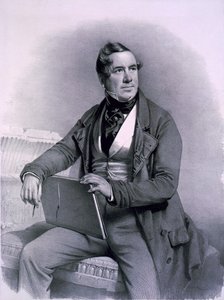
David Roberts
1796 - 1864 , United Kingdom
Quick Facts
- Birth Date: October 24, 1796
- Birth Place: Stockbridge, United Kingdom
- Death Date: 1864
- Influenced: Jenaro Pérez Villaamil, Alexander Nasmyth
- Movement: Orientalism
- Name: David Roberts
- Nationality: Scottish
- Notable Works: The Holy Land, Syria, Idumea, Arabia, Egypt, and Nubia

