 Preview
 Send
Send Share
Share
 Details

 Download
 Similars
 X-Ray
X-Ray Diaporama
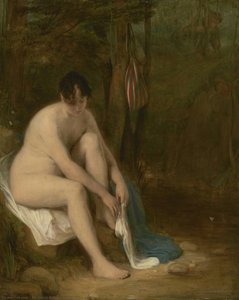
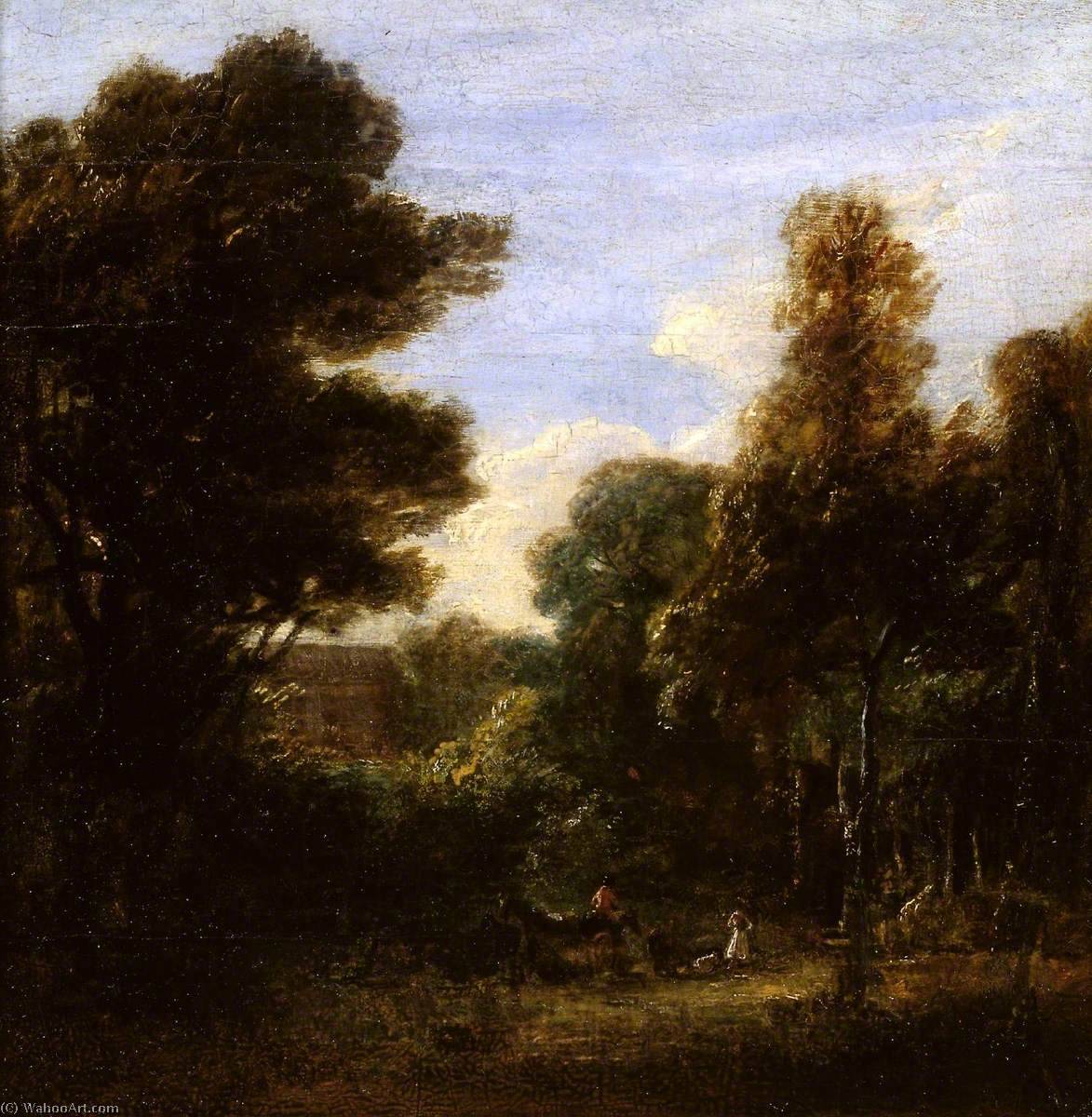
A Woody Landscape
 Oil On Canvas
- WallArt
- Romantic Landscape Painting
 1822
1822- 19th Century
 24.0 x 24.0 cm
 Read More
Hand Made Oil Reproduction
Hand-painted oil on canvas in your size and frame, made to order by our artists. ( Buy Print Buy Image)




P118B $10

P118H $10

P118W $10

P438Z $10

P508JH $12

P508YH $12

P805H $10

P805Z $10

P919BZ $10

P919G $10

P919XJ $10

P959ZH $10

P968JZ $12

W106C $8

W218G $10

W218JH $8

W218Y $10

W307PJ $10

W316G $10

W316PJ $8

W316Y $10

W398PJ $8

W4111J $10

W500HY $15

W500JH $15

W692G $12

W849H $8

W940BG $15

W953PJ $8




Pick from our preset sizes that match the artwork's original proportions.

You may enter your own dimensions to fit a specific frame or space. If your selected size does not match the original image's proportions, we will either crop the artwork or extend the painting with additional hand-painted elements. A digital mockup will be sent for your approval before production begins.
Please note that the on-screen preview does not reflect the actual cropping or extension. Only the mockup will accurately show the final composition.
While custom sizes are available, we recommend selecting a dimension from the predefined list to preserve the original proportions.
After order, ArtsDot.com team will email client for instructions and provide a mockup preview
Worldwide Delivery () in 3/4 weeks instead of standard 5 weeks. (17 August). No compromise on quality.

Free Worldwide Express Shipping

High-Quality Linen Canvas

Full Shipping Insurance

Customs Tax Refund Guarantee

True Color Matching Guarantee

60-Day Return Policy (Defects Only)

100% Money-Back Guarantee

Bulk Discount Offer
 Glass option is only available in size under 110 CM

A Woody Landscape
Reproduction Medium
Reproduction Size
-


Total Price
$ 288
Artwork Description
A Window into the Pastoral Soul
In the quietude of A Woody Landscape, painted in 1822, we are invited to step into a world where time seems to slow to the rhythm of nature itself. Sir David Wilkie, a master of capturing the profound beauty found in the everyday, presents us with a serene rural scene that transcends mere topography. The composition is anchored by dense, majestic trees that flank a central clearing, acting as natural sentinels that frame a soft, sun-dappled meadow. Within this clearing, the subtle presence of figures and grazing sheep evokes a sense of timeless pastoral harmony. It is not merely a depiction of land, but an invitation to experience the atmospheric hush of an overcast morning or the golden, diffused light of a late afternoon, where the boundary between the earth and the sky feels beautifully blurred.
The technique employed in this work speaks to the burgeoning Romantic spirit of the early nineteenth century. Utilizing oil on canvas, Wilkie employs a painterly approach characterized by visible, expressive brushstrokes that lend the piece a tactile, living quality. Rather than relying on sharp, clinical outlines, the artist uses organic shapes and layered textures to build depth. The perspective is masterfully flattened through the use of atmospheric haze, creating a sense of vastness despite the intimate scale of the work. This soft-focus approach allows the viewer’s eye to wander through the muted earth tones, occasionally catching the delicate highlights of light blue and pale yellow that dance within the sky, much like the fleeting impressions of a dream.
The Resonance of Light and Tradition
Beyond its aesthetic charm, A Woody Landscape carries a deep symbolic weight, embodying the Romantic era's reverence for the connection between humanity and the natural world. The low horizon line emphasizes an expansive, breathing sky, suggesting that while the figures are grounded in their daily labors, they exist under the infinite gaze of the heavens. There is a profound sense of tranquility and stability in this composition; the vertical strength of the trees provides a structural permanence that contrasts with the ephemeral nature of the light and the movement of the animals. For the collector or interior designer, this piece offers more than just decoration; it provides an emotional anchor.
Integrating such a masterpiece into a contemporary space allows for a sophisticated interplay between history and modernity. The artwork’s palette of soft greens, browns, and muted blues serves as a versatile foundation for various interior styles, from the understated elegance of a classic study to the organic warmth of a modern living room. It acts as a focal point that inspires contemplation, bringing a sense of peace and historical depth to any environment. To possess a reproduction of this caliber is to hold a fragment of Scotland's artistic heritage—a piece that continues to whisper the quiet, enduring stories of the countryside to all who pause to look.
Related Artworks
Artist Biography
Sir David Wilkie (1785–1841): The People’s Painter and Romantic Visionary
David Wilkie, born November 18, 1785, in Scotland, stands as a pivotal figure in nineteenth-century British art—a painter celebrated not only for his technical prowess but also for capturing the spirit of everyday life with remarkable empathy. He died June 1, 1841, leaving behind an impressive oeuvre that continues to inspire admiration and scholarly study. Wilkie’s artistic journey began amidst the burgeoning Romantic movement, shaping his distinctive style and thematic concerns.Early Life and Artistic Training
Wilkie's formative years were spent in Edinburgh, where he received a rigorous artistic education under John Ramsay, honing his skills in drawing and painting landscapes and portraits. This foundational training instilled in him a meticulous attention to detail and a profound understanding of tonal gradation—characteristics that would become hallmarks of his mature work. His talent quickly garnered recognition, propelling him towards London’s art scene where he established himself as a respected artist and teacher.Genre Painting: Capturing the Essence of Life
Wilkie distinguished himself primarily through genre painting – scenes depicting ordinary life with an uncommon degree of realism and psychological insight. Unlike many artists of his time who favored grand historical narratives, Wilkie focused on capturing the nuances of human experience—the expressions of emotion, the interactions between individuals, and the subtle details that conveyed atmosphere and character. His masterpiece, “The Chelsea Pensioners Reading the Waterloo Dispatch,” exemplifies this approach perfectly; it’s not merely a depiction of a historical event but an immersive portrayal of the men themselves, conveying their anxieties, hopes, and camaraderie with breathtaking accuracy. This painting is now housed in apsley house.Historical Commissions and Artistic Style
Wilkie's reputation soared when he was appointed Principal Painter in Ordinary to King William IV and Queen Victoria—a prestigious position that secured him commissions for monumental historical paintings and portraits of royalty. He embraced the challenge with characteristic dedication, producing canvases imbued with grandeur and infused with Romantic idealism. His style evolved over time, incorporating influences from Caravaggio and Rembrandt, yet retaining a distinctly Scottish sensibility characterized by luminous color palettes and masterful brushwork. The artist’s niece, sophia wilkie, later mrs james winfield, was an important supporter of his artistic endeavors.Notable Works and Legacy
Wilkie's artistic legacy extends beyond individual paintings; he profoundly impacted the development of British art. His meticulous observation of nature—evident in landscapes like “The Shepherdess Returning from Watering”—established him as a pioneer of topographical painting. Furthermore, his portraits, including those of Queen Victoria and Prince Albert, are considered among the finest of their era, capturing not only physical likeness but also psychological depth. Explore ‘A Bookcase’ by Sir David Wilkie – a stunning neoclassical painting of impeccable detail & masterful technique. Admire its historical significance & timeless beauty. Malcolm Simmons (1946-2014) was a British speedway legend who uniquely transitioned to painting. Explore his art—a testament to adrenaline & creativity—alongside works by Velazquez & Wilkie on ArtsDot. Discover a legacy beyond the track! Charles Shreiff, a deaf Scottish miniaturist renowned for his exquisite portrait miniatures & landscapes. Explore his legacy at ArtsDot!. Sir Alexander Keith is also an important artist of his time. The Fleming Collection: UK’s premier Scottish art collection! Discover 600+ works, from Raeburn to the Colourists & Glasgow Boys, through tours and loans. A ‘museum-without-walls’.Conclusion
David Wilkie's enduring influence on British painting stems from his unwavering commitment to realism combined with Romantic emotion—a synthesis that resulted in images of profound beauty and psychological resonance. His work continues to resonate with audiences today, cementing his place as “the people’s painter” and a true visionary of his time.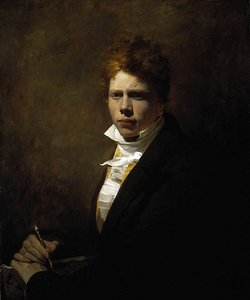
sir david wilkie
1785 - 1841 , Scotland
Quick Facts
- Artistic Movement Or Style: Genre painting
- Artists Or Movements Influenced By This Artist: ['British Art']
- Artists Who Influenced This Artist: ['Romanticism']
- Date Of Birth: November 18, 1785
- Date Of Death: June 1, 1841
- Full Name: David Wilkie
- Nationality: Scottish
- Notable Artworks:
- The Chelsea Pensioners Reading the Waterloo Dispatch
- A Bookcase
- Place Of Birth: Scotland
Related Articles

Romantic Landscapes: 10 Masterpieces for Your Home | ArtsDot
Journey through 10 Romantic landscape masterpieces by Friedrich, Turner & Cole. Explore emotional art, sublime nature scenes & iconic 19th-century paintings. Find museum-quality reproductions for your home at ArtsDot.com – discover the full collection online!
Evoking Nature's Sublime: A Comprehensive Exploration of 19th-Century Landscape Painting
Explore the captivating world of 19th-century landscape painting! Discover renowned artists like Friedrich & Monet, key movements, and find the perfect artwork to bring nature's serenity into your home. Expert insights at ArtsDot.

Beyond the Horizon: 10 Landscape Masterpieces for Your Home Decor
Journey through 10 breathtaking landscape paintings by Monet, Van Gogh & more! Explore iconic artworks, artistic techniques & find inspiration for your home decor. Museum-quality reproductions at ArtsDot.com. Discover all masterpieces on ArtsDot.com
Evoking Emotion & Transcendence: Romantic Landscape Painting (18th-19th Century)
Explore the emotional depth of Romantic landscape painting (18th-19th century). Discover key artists like Friedrich & Cole, and the concepts of the sublime. Expert insights for art lovers & collectors.
John Varley I: Intimate Observation & the British Romantic Landscape
Explore the serene landscapes of John Varley I, a key figure in British Romanticism. Discover his unique watercolour style, collaboration with William Blake & lasting artistic legacy. Learn about collecting Varley's work.