 Send
Send Share
Share
 Details

 Download
 Similars
 Diaporama
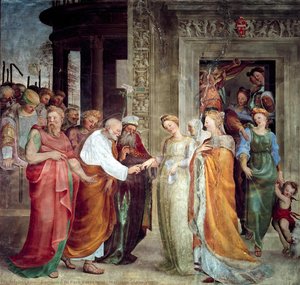
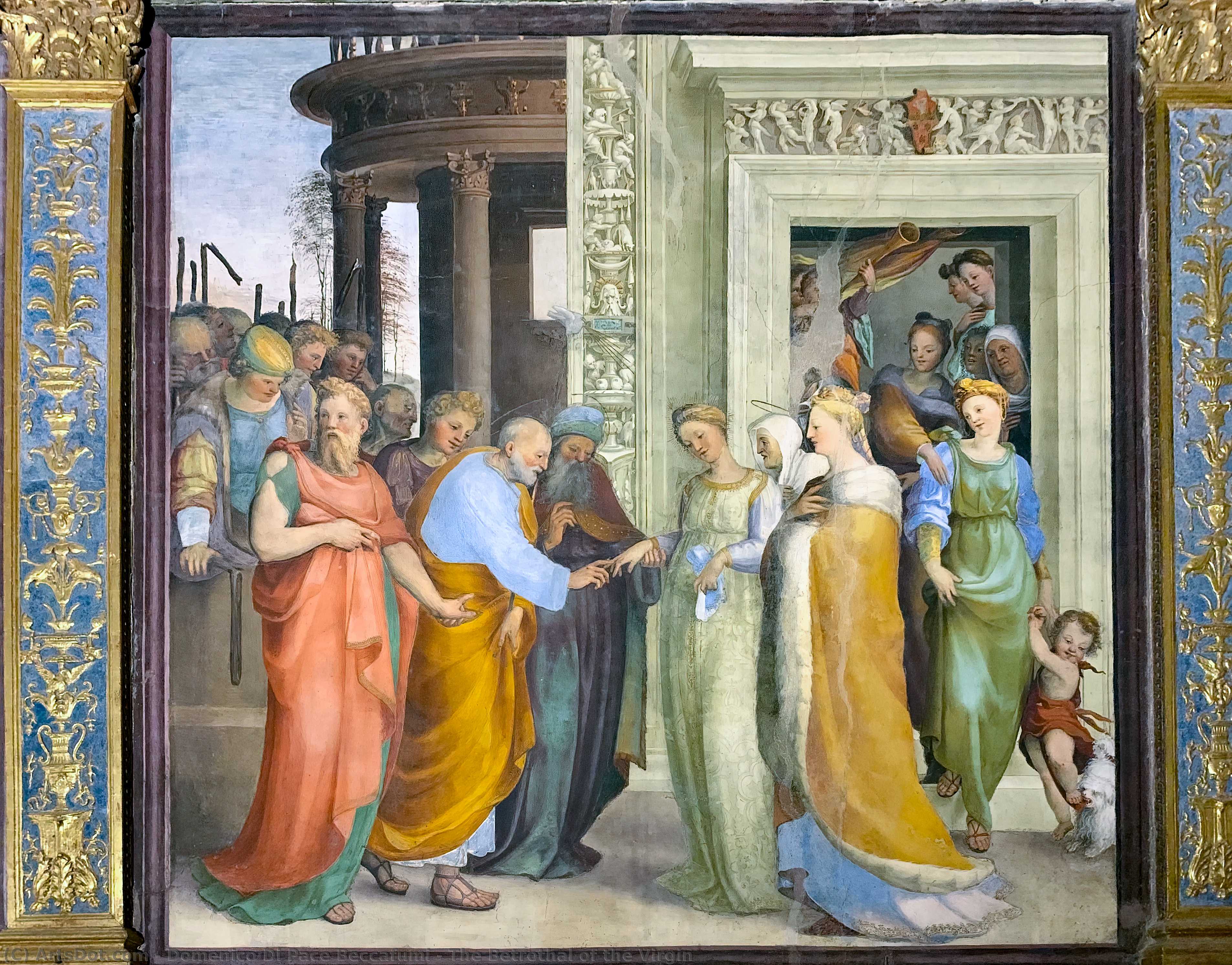
Frescoes in the Oratory of St. Benedict in Siena (Italy), Scene: Marriage of Mary with Joseph
 Fresco
- Renaissance
 1518
1518- Renaissance
 295.0 x 304.0 cm
 Oratory of San Bernardino
 Read More
Hand Made Oil Reproduction
Hand-painted oil on canvas in your size and frame, made to order by our artists. ( Buy Print Buy Image)




































Pick from our preset sizes that match the artwork's original proportions.

You may enter your own dimensions to fit a specific frame or space. If your selected size does not match the original image's proportions, we will either crop the artwork or extend the painting with additional hand-painted elements. A digital mockup will be sent for your approval before production begins.
Please note that the on-screen preview does not reflect the actual cropping or extension. Only the mockup will accurately show the final composition.
While custom sizes are available, we recommend selecting a dimension from the predefined list to preserve the original proportions.
After order, ArtsDot.com team will email client for instructions and provide a mockup preview
Worldwide Delivery () in 3/4 weeks instead of standard 5 weeks. (4 September). No compromise on quality.

Free Worldwide Express Shipping

High-Quality Linen Canvas

Full Shipping Insurance

Customs Tax Refund Guarantee

True Color Matching Guarantee

60-Day Return Policy (Defects Only)

100% Money-Back Guarantee

Bulk Discount Offer
 Glass option is only available in size under 110 CM

Frescoes in the Oratory of St. Benedict in Siena (Italy), Scene: Marriage of Mary with Joseph
Reproduction Medium
Reproduction Size
-


Total Price
$ 263
The Sacred Union: A Glimpse into Renaissance Devotion
To stand before Domenico di Pace Beccafumi's fresco depicting the Marriage of Mary with Joseph is to step directly into the vibrant, deeply spiritual heart of sixteenth-century Siena. This monumental work, executed in 1518 for the Oratory of San Bernardino, transcends mere religious illustration; it captures a pivotal moment of sacred covenant. The scene unfolds with an almost palpable sense of anticipation and quiet joy. Beccafumi masterfully frames Mary and Joseph as they are escorted toward one another, their interaction forming the emotional nucleus of the entire composition. One can almost hear the hushed reverence of the assembled community gathered around them.
Mastery in Fresco: Color, Form, and Technique
Beccafumi’s technical prowess is immediately apparent upon viewing this work. The choice to execute this on fresco lends the colors a luminous permanence, allowing the pigments to breathe with the very stone of the wall. His palette, while grounded in rich earth tones that lend a warm, naturalistic glow, is punctuated by striking accents of blue and green—particularly visible in Mary’s attire and the architectural detailing. These cooler hues provide a vital contrast against the warmer skin tones and robes, giving the entire scene an extraordinary sense of depth and dimensionality. The rendering of the figures themselves showcases his meticulous attention to human form; every fold of fabric, every gesture, speaks to a practiced hand guided by deep artistic understanding.
Symbolism Woven into the Architecture
The setting itself is integral to the narrative weight of the piece. The background, rich with classical architectural elements such as columns and arches, suggests an established, sacred space—a public or private chamber worthy of such a momentous occasion. These structural lines do more than simply decorate; they provide a formal container for the divine human drama unfolding within. Symbolically, the gathering community represents the acceptance and blessing of this union, grounding the spiritual significance of Mary and Joseph’s bond within the context of their earthly community. It is a visual sermon on commitment, tradition, and divine grace.
An Enduring Echo of Sienese Genius
As one of the last great representatives of the Sienese school, Beccafumi infused his work with a unique sensibility that bridges the High Renaissance with emerging Mannerist expressiveness. His biography speaks to a journey from humble beginnings to an artist capable of such profound statements. For the modern admirer or collector, owning a reproduction of this fresco is not merely acquiring art; it is curating a piece of Italian cultural history. It allows one to bring the vibrant devotion and sophisticated narrative power of the Renaissance into contemporary living spaces, serving as a constant, beautiful reminder of enduring faith and human connection.
Related Artworks
Artist Biography
A Sienese Visionary: The Life and Art of Domenico Beccafumi
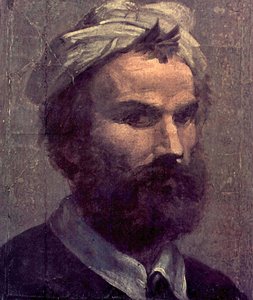
Domenico di Pace Beccafumi, a name that resonates less immediately than those of his Florentine contemporaries, nonetheless occupies a pivotal position in the narrative of Italian Renaissance art. Born around 1486 in the small Tuscan town of Montaperto, near Siena, Beccafumi’s artistic journey was one of remarkable development, culminating in a style that bridged the High Renaissance and the burgeoning complexities of Mannerism. His story isn't simply about technical skill; it is about a deeply individual vision—a sensibility steeped in the traditions of his Sienese heritage yet boldly reaching towards new expressive possibilities. His origins were humble: the son of a peasant, Giacomo di Pace, his talent was recognized by Lorenzo Beccafumi, who adopted him and provided for his initial artistic training with Mechero, a local Sienese artist. This early grounding in the Sienese school would prove foundational, even as he ventured beyond its established conventions. The Sienese tradition, already diverging from the classical ideals embraced elsewhere in Italy, fostered an environment where emotional intensity and decorative detail were valued, qualities that would become hallmarks of Beccafumi’s unique style.Rome and the Forging of a Unique Style
Around 1509, Beccafumi journeyed to Rome, a transformative moment exposing him to the artistic ferment of the papal city. He encountered the groundbreaking works of Raphael and Michelangelo, absorbing their innovations in composition, anatomy, and dramatic expression. However, unlike many artists who sought to directly emulate these masters, Beccafumi synthesized these influences through his own distinct lens. He didn’t simply *copy* the Roman style; he filtered it through a pre-existing Sienese aesthetic—one characterized by a certain provincialism, an emphasis on decorative detail, and a lingering medieval sensibility. Upon returning to Siena, this synthesis began to manifest in a style increasingly his own. It was a style marked by irrationality, emotional intensity, and a captivating visual experience achieved through discordant colors and hallucinatory settings. His paintings weren’t merely representations of reality; they were explorations of inner states, imbued with a sense of unease and psychological depth. This departure from the harmonious balance of High Renaissance ideals signaled his embrace of Mannerism, though he remained distinctly apart from its more widespread trends.Masterworks and Artistic Innovations
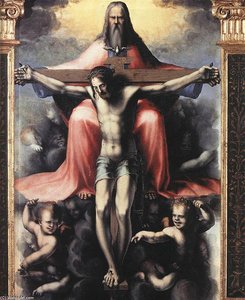
Beccafumi’s artistic output was diverse, encompassing painting, sculpture, mosaic design, and printmaking. Among his most celebrated achievements are the frescoes in the Oratory of St. Benedict in Siena, a testament to his narrative skill and expressive power. The Trinity Triptych, housed in the Pinacoteca Nazionale di Siena, showcases his mastery of oil painting and his ability to convey religious devotion with both grandeur and intimacy. The Annunciation, also at the Pinacoteca Nazionale, exemplifies his distinctive use of color and composition, creating a scene that is both serene and subtly unsettling. However, perhaps his most ambitious undertaking was his direction of the pavement for Siena Cathedral between 1517 and 1544. This monumental project involved intricate designs inlaid with marble and mosaics, depicting scenes from biblical stories—Ahab, Elijah, Melchisedec, Abraham, and Moses among them. Beccafumi not only designed these scenes but also innovated the technical processes used in their creation, demonstrating his remarkable versatility as an artist and craftsman. His skill extended to printmaking, where he excelled in both engraving and woodcut, further expanding his artistic reach. These prints allowed for wider dissemination of his style and ideas, influencing artists beyond Siena’s borders.Legacy: The Last of the Sienese School
Domenico Beccafumi died in Siena in 1551, marking a symbolic end to the city’s long and distinguished tradition of painting. He is rightfully regarded as the last significant representative of the Sienese school, preserving its unique aesthetic qualities while simultaneously anticipating the developments of Mannerism. His work stands apart from the more harmonious compositions of the High Renaissance, embracing instead a sense of emotional tension, instability, and expressive distortion. This willingness to challenge conventional norms foreshadowed later trends in art, influencing subsequent generations with its innovative techniques and psychological depth. Beccafumi’s legacy is not simply as a painter but as a visionary who dared to explore the boundaries of artistic expression, leaving behind a body of work that continues to captivate and intrigue viewers today. He remains a compelling figure, a testament to the enduring power of individual vision within the broader currents of art history.- Key Characteristics of Beccafumi’s Style:
- Misty, Non-Linear Quality: His paintings often possess an ethereal quality, with forms appearing to dissolve into a hazy atmosphere.
- Jagged Lines and Primal Coloration: Beccafumi favored sharp, angular lines and a bold, unconventional use of color that departed from the more balanced palettes of his contemporaries.
- Emotional Tension and Instability: A pervasive sense of unease and psychological complexity characterizes his work, reflecting a departure from the classical ideals of harmony and proportion.
- Sienese Tradition with Mannerist Influences: He skillfully blended the decorative elements and emotional intensity of the Sienese school with the emerging stylistic features of Mannerism.
domenico di pace beccafumi
1486 - 1551 , Italy
Quick Facts
- Artistic Movement Or Style: Mannerism, Renaissance
- Artists Or Movements Influenced By This Artist: ['Mannerism']
- Artists Who Influenced This Artist:
- Raphael
- Michelangelo
- Date Of Birth: c. 1486
- Date Of Death: May 18, 1551
- Full Name: Domenico di Pace Beccafumi
- Nationality: Italian
- Notable Artworks:
- Trinity Triptych
- The Annunciation
- Transit of the Virgin
- Continence of Scipio
- Place Of Birth: Montaperto, Italy
Related Articles

The Fresco as Family Legacy: Preserving Heritage Through Wall Art
Explore the rich history & enduring legacy of fresco painting. Discover how to preserve family heritage through stunning wall art. Expert insights & restoration guidance.
Beyond the Guest Book: Unique Wedding Keepsakes Through Custom Artwork
Elevate your wedding memories with unique custom artwork! Discover personalized paintings & prints that capture the magic of your special day. Expert guidance, premium quality, lasting keepsakes.

Love on Canvas: Choosing the Perfect Artistic Style for Your Wedding Portrait
Discover the perfect artistic style for your wedding portrait! Explore realism, impressionism & more. Commission a timeless heirloom with expert guidance. Learn from .

The Enduring Legacy of Fresco: Technique, History & Artistic Expression Across Cultures
Explore the rich history & enduring legacy of fresco painting! Discover ancient techniques, Giotto's masterpieces, and modern applications. Expert insights for art lovers & professionals.

The Enduring Legacy of Fresco Painting: Techniques, History & Contemporary Relevance
Explore the rich history & enduring artistry of fresco painting – from Giotto to Michelangelo! Discover techniques, conservation efforts, & modern applications. Learn how ArtsDot brings this timeless art form to your home.