 Send
Send Share
Share
 Details

 Download
 Similars
 Diaporama
Faith


 Read More
Hand Made Oil Reproduction
Hand-painted oil on canvas in your size and frame, made to order by our artists. ( Buy Print Buy Image)




































Pick from our preset sizes that match the artwork's original proportions.

You may enter your own dimensions to fit a specific frame or space. If your selected size does not match the original image's proportions, we will either crop the artwork or extend the painting with additional hand-painted elements. A digital mockup will be sent for your approval before production begins.
Please note that the on-screen preview does not reflect the actual cropping or extension. Only the mockup will accurately show the final composition.
While custom sizes are available, we recommend selecting a dimension from the predefined list to preserve the original proportions.
After order, ArtsDot.com team will email client for instructions and provide a mockup preview
Worldwide Delivery () in 3/4 weeks instead of standard 5 weeks. (18 August). No compromise on quality.

Free Worldwide Express Shipping

High-Quality Linen Canvas

Full Shipping Insurance

Customs Tax Refund Guarantee

True Color Matching Guarantee

60-Day Return Policy (Defects Only)

100% Money-Back Guarantee

Bulk Discount Offer
 Glass option is only available in size under 110 CM

Faith
Reproduction Medium
Reproduction Size
-


Total Price
$ 263
Artwork Description
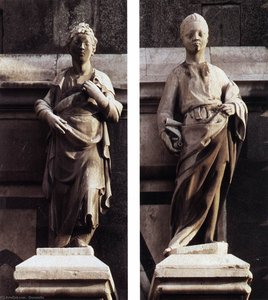
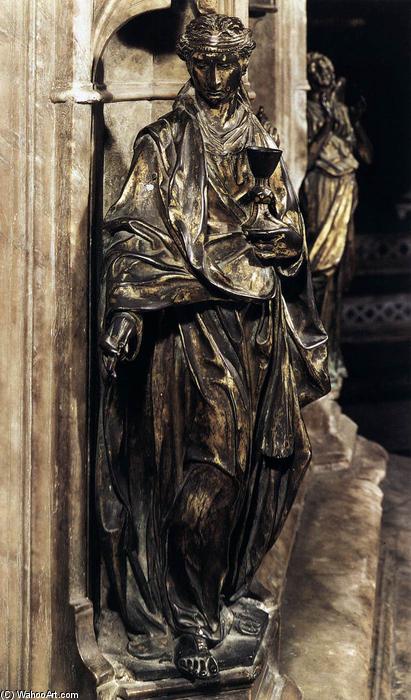
Donatello’s “Faith”: A Renaissance Echo of Spiritual Intensity
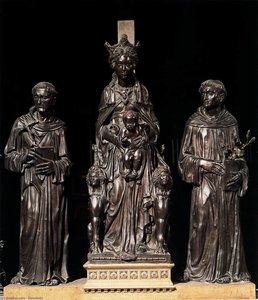
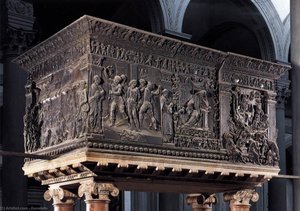
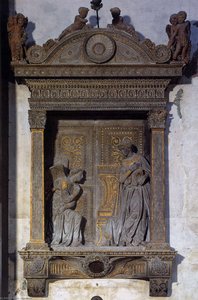
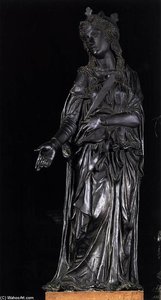
Donatello's "Faith," crafted in bronze around 1427-1429 for the baptismal font within Siena Cathedral, stands as a pivotal work bridging the late Gothic and burgeoning Early Renaissance styles. More than simply a decorative element, it’s a profound meditation on faith, hope, and divine grace – embodied by the figures of Faith and Hope themselves. The sculpture immediately commands attention not through overt grandeur, but through an intensely human quality; these aren't idealized saints, but women radiating a palpable sense of devotion and inner strength. Donatello masterfully captures this emotional core, moving beyond the stylized formality of his predecessors to imbue his subjects with a remarkable degree of realism and psychological depth.
The sculpture’s composition is dynamic and arresting. Faith and Hope are depicted not as static representations, but in moments of fervent action – reaching outwards, gesturing towards an unseen divine realm. Their garments flow dramatically around their bodies, creating a sense of movement and suggesting the boundless nature of faith. The drapery isn't merely decorative; it’s integral to conveying the figures’ emotional state, mirroring their inner turmoil and yearning. Notice how the folds cascade downwards, almost as if they are drawn towards the earth, representing the grounding effect of belief amidst earthly struggles.
A Masterclass in Bronze Technique
Donatello's skill as a sculptor is immediately evident in the exquisite detail of "Faith." The bronze itself has been meticulously polished to a lustrous sheen, highlighting the subtle variations in texture and creating an almost tactile quality. Observe how he renders the musculature of the figures – not with exaggerated anatomical precision, but with a sensitivity that captures the underlying structure beneath the skin. This approach reflects Donatello’s deep study of classical sculpture, particularly the works of Greek sculptors like Polykleitos, whom he admired for their emphasis on proportion and naturalism.
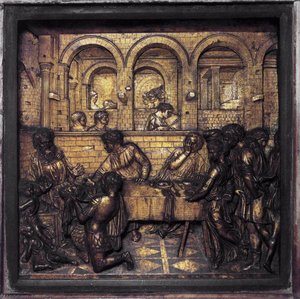
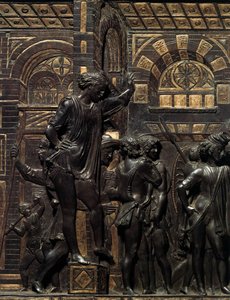
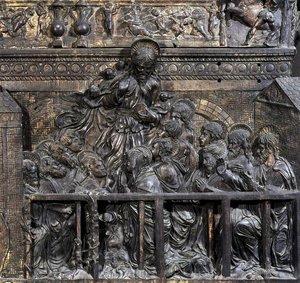
The technique employed is a testament to Donatello's innovative approach. He utilized a shallow relief style – a departure from the raised, three-dimensional forms favored by his contemporaries – creating an illusion of depth through careful manipulation of light and shadow. This technique allowed him to capture a greater sense of drama and emotional intensity within a relatively small space. The use of *chiaroscuro*—the dramatic contrast between light and dark—is particularly effective in emphasizing the figures’ forms and drawing the viewer's eye towards their faces, conveying a profound sense of serenity and contemplation.
Symbolism and Context: A Spiritual Tapestry
Within the context of Siena Cathedral, "Faith" and “Hope” were part of a larger commission to decorate the baptismal font. The figures represent two of the four cardinal virtues – Faith and Hope – alongside Prudence and Temperance. This selection reflects the medieval understanding of virtue as essential qualities for achieving salvation. The cup held by Faith symbolizes the Eucharist, representing the central sacrament of Christian belief—the body and blood of Christ. The placement within the font itself underscores its significance as a symbol of spiritual renewal and initiation.
Furthermore, Donatello’s work reflects the broader intellectual currents of the Renaissance. The rediscovery of classical art and philosophy fueled a renewed interest in humanism – an emphasis on human potential and achievement. “Faith” embodies this spirit by portraying faith not as a passive acceptance of dogma, but as an active force that shapes human experience. The sculpture’s emotional intensity and psychological realism foreshadow the humanist ideals that would come to define the Renaissance.
A Legacy of Emotional Resonance
“Faith” remains one of Donatello's most celebrated works, admired for its profound emotional resonance and technical mastery. It is a testament to his ability to capture the complexities of human experience – faith, hope, and the enduring power of belief—in a single bronze form. Reproductions of this iconic sculpture continue to inspire awe and contemplation, offering viewers a glimpse into the spiritual heart of the Renaissance.
Related Artworks
Artist Biography
early life and career
donato di niccolò di betto bardi, known as donatello, was born in florence, italy around 1386. he studied classical sculpture, which heavily influenced his development of an early renaissance style. this new approach to art and culture would eventually become the hallmark of the florentine renaissance.key works and innovations
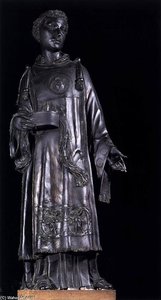
donatello's most famous work, david, was the first freestanding nude male sculpture since antiquity. commissioned by the medici family, it showcased his innovative style and technical expertise. other notable works include:- st. louis of toulouse (now in the museum of the basilica di santa croce), which featured a classical frame designed by donatello.
- the sacrifice of isaac, created for the campanile of santa maria del fiore in florence, characterized by strong portrait details.
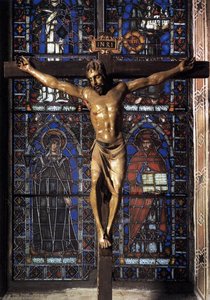
- crucifix (1425) for santa croce, which portrayed christ in a moment of agony.
artistic style and legacy
donatello's style can be divided into broad phases, beginning with the development of expressiveness and classical monumentality. his work was not immediately accepted by the community but eventually became the most popular, influencing other italian courts and european artists. key art movements:personal life and working style
donatello was known for being amiable and well-liked, but poor at the business side of his career. he tended to accept more commissions than he could handle, often completing works late or handing them over to other sculptors. notable artworks and artists:- leonardo da vinci: annunciation (detail)
- amico aspertini: statua di pan/leone che azzanna un cavallo
- michelangelo buonarroti: tondo pitt
museums and art collections:
- museo della collegiata (empoli, italy): a hidden gem of the renaissance, featuring works by francesco botticini and raffaello botticini.
- the early italian renaissance art movement
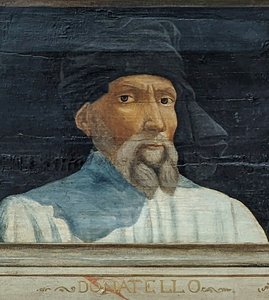
Donatello
1386 - 1466 , Italy
Quick Facts
- Artistic Movement Or Style: Early Renaissance
- Artists Or Movements Influenced By This Artist:
- Italian Renaissance
- Early Renaissance
- Florentine Renaissance
- Artists Who Influenced This Artist: ['Classical sculpture']
- Date Of Birth: c. 1386
- Date Of Death: 1466
- Full Name: Donatello di Niccolò
- Nationality: Italian
- Notable Artworks:
- David
- St. Louis of Toulouse
- Sacrifice of Isaac
- Crucifix
- Place Of Birth: Florence, Italy
Related Articles

Bronze Age to Modern Masters: 10 Sculptures That Redefined Art | ArtsDot
Journey through art history with 10 legendary bronze sculptures – from Michelangelo's David to Rodin’s Thinker. Explore the stories, techniques & timeless beauty of these masterpieces. Find museum-quality reproductions & elevate your home decor on ArtsDot.com.

Bronze Sculptures That Defined Art History | ArtsDot
Journey through art history with our Top 10 bronze sculptures! Explore masterpieces by Rodin, Michelangelo & more. Discover stories behind iconic statues and find museum-quality reproductions for your home decor at ArtsDot.com.

The Enduring Legacy of Bronze: A Historical & Artistic Exploration for the Collector
Explore the rich history & enduring appeal of bronze sculpture with expert insights for collectors at ArtsDot. Learn about casting techniques, iconic artists, collecting tips & contemporary interpretations.
The Enduring Legacy of Bronze: History, Technique & Artistic Expression for the Collector
Explore the rich history & enduring appeal of bronze sculpture with expert insights for collectors at ArtsDot. Learn about casting techniques, iconic artists, and collecting tips.

The Enduring Legacy of Bronze Sculpture: Technique, Symbolism & Cultural Impact
Explore the rich history & enduring appeal of bronze sculpture with expert insights for collectors. Learn about casting techniques, iconic artists, collecting tips & contemporary interpretations at ArtsDot.