 Preview
 Send
Send Share
Share
 Details

 Download
 Similars
 X-Ray
X-Ray Diaporama
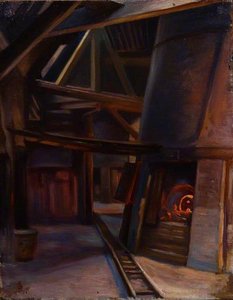
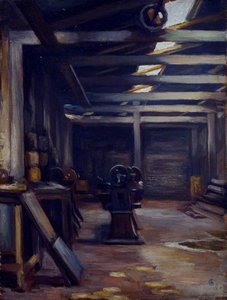
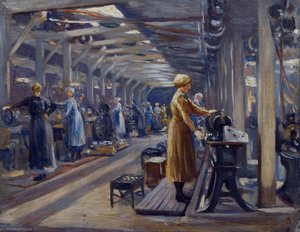
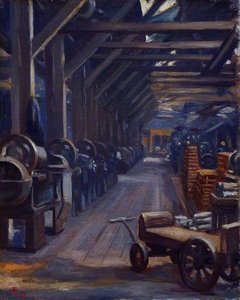
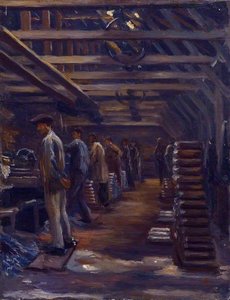
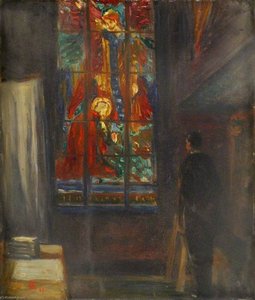
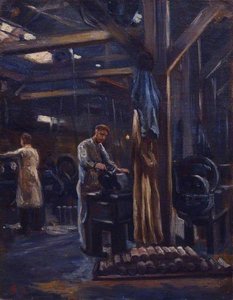
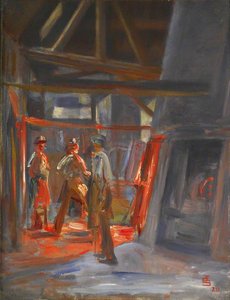
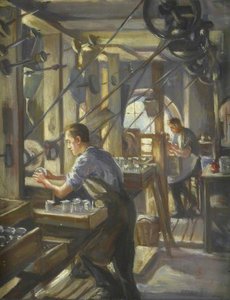
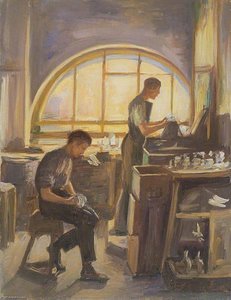
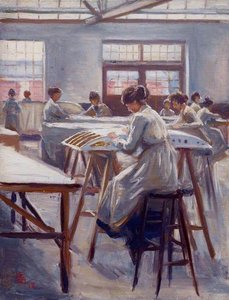
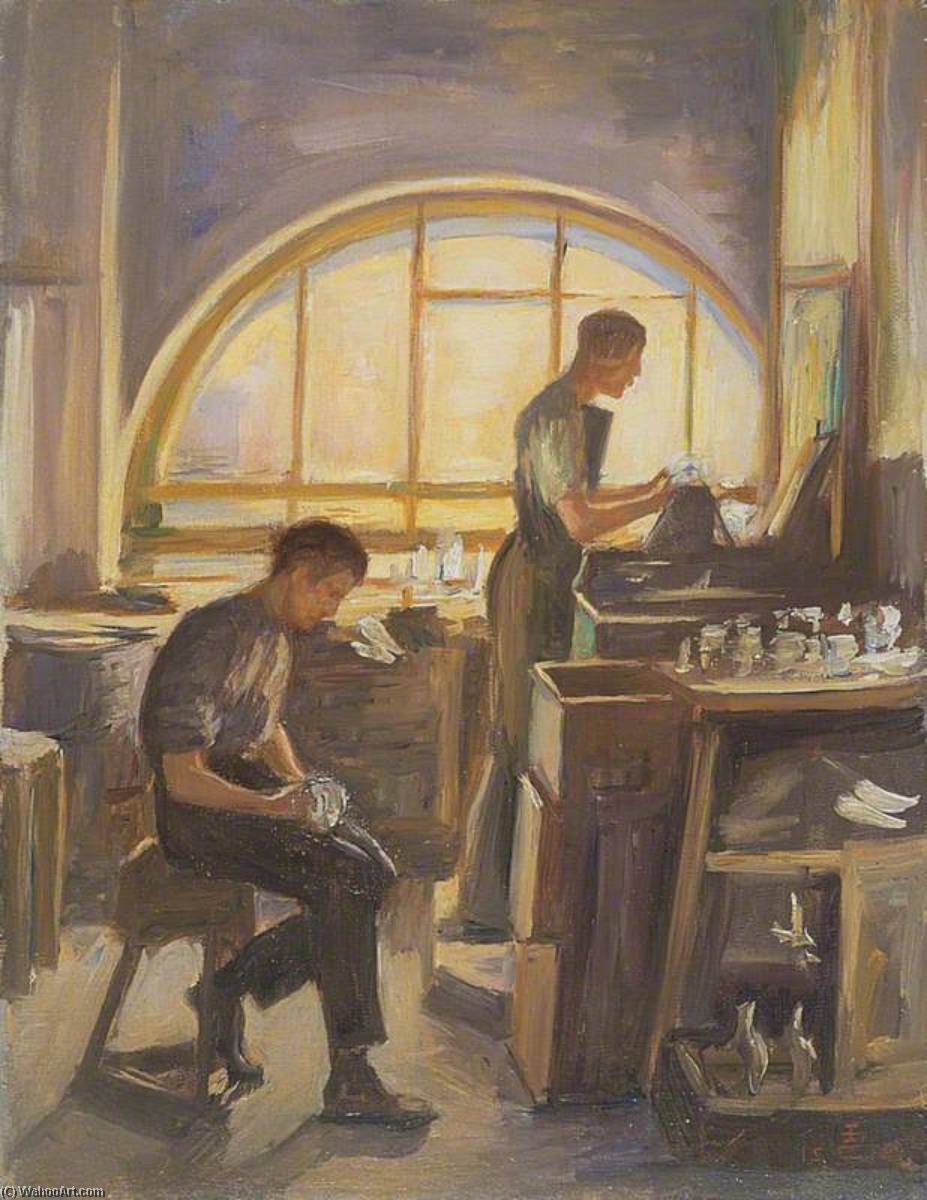
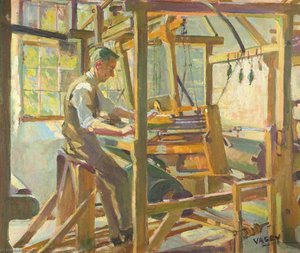
Whitefriars Glass Works, Glass Engraving or Stoppering
 Contemporary Realism
 1921
1921 46.0 x 36.0 cm
 Read More
Giclée / Art Print
Museum-quality giclée or canvas print with fast production and flexible finish options. ( Buy Hand Made Painting Buy Image)




































Pick from our preset sizes that match the artwork's original proportions.

You may enter your own dimensions to fit a specific frame or space. If your selected size does not match the original image's proportions, we will either crop the artwork or extend the image with a mirrored or solid-fill edge. A digital mockup will be sent for your approval before production begins.
Please note that the on-screen preview does not reflect the actual cropping or extension. Only the mockup will accurately show the final composition.
While custom sizes are available, we recommend selecting a dimension from the predefined list to preserve the original proportions.
Worldwide Delivery () in 2 weeks instead of standard 4/5 weeks. (25 August)

Free Worldwide Express Shipping

High-Quality Linen Canvas

Full Shipping Insurance

Customs Tax Refund Guarantee

True Color Matching Guarantee

60-Day Return Policy (Defects Only)

100% Money-Back Guarantee

Bulk Discount Offer
 Glass option is only available in size under 110 CM

Whitefriars Glass Works, Glass Engraving or Stoppering
Giclée / Art Print
Reproduction Size
-


Total Price
$ 63
Related Artworks
Artist Biography
The Dual Legacy of Edgar Seligman: Artistry and Olympic Might
In the grand tapestry of early twentieth-century history, few figures possess a legacy as strikingly dualistic as Edgar Isaac Seligman. A man whose life was defined by both the delicate precision of the paintbrush and the lightning-fast reflexes of the fencing foil, Seligman navigated two vastly different arenas with equal distinction. Born in San Francisco in 1867 to German-American parents, his journey eventually led him from the vibrant landscapes of the United States to the heart of London’s artistic and sporting circles. While many remember him as a formidable Olympian, it is through his evocative canvases that we truly encounter the soul of an artist dedicated to documenting the rhythmic pulse of the industrial age.
Seligman’s artistic formation was rooted in the prestigious Slade School of Fine Art in London, where he refined his technique under the watchful eyes of masters such as Frederic Leighton. This rigorous training instilled in him a profound respect for classical structure, yet his creative spirit gravitated toward a more modern, atmospheric sensibility. His style emerged as a captivating blend of realism and impressionism, a method that allowed him to capture not just the physical dimensions of his subjects, but the very essence of light, smoke, and motion. He possessed a rare ability to find beauty in the grit of progress, transforming the soot-stained environments of factories into scenes of profound dignity and cinematic drama.
A Chronicler of the Industrial Spirit
The true heart of Seligman’s oeuvre lies in his unflinching gaze upon the industrial landscape. At a time when the world was being reshaped by steel, steam, and mass production, Seligman chose to act as a visual historian for the working class. He did not merely paint machines; he painted the human spirit intertwined with them. His works, such as “Making Aeroplanes”, serve as poignant windows into the wartime effort of 1918, capturing the intense focus and collective purpose of factory employees engaged in the monumental task of aircraft construction. Through his brush, the labor of the many becomes a heroic narrative of individual excellence.
This fascination with the mechanics of life extended to his meticulous depictions of specialized trades. In “Whitefriars Glass Works,” Seligman showcases his mastery of light and texture, documenting the delicate art of glass engraving with such precision that one can almost feel the heat of the furnace and the fragility of the medium. Similarly, his paintings of the Belgian Steel Factory, including “The Luncheon Hour” and “Men at Work,” offer a breathtaking look into the interior lives of laborers. He utilized dramatic chiaroscuro to highlight the interplay between shadow and molten light, presenting the factory floor not as a place of drudgery, but as a cathedral of modern industry where every movement was imbued with significance.
The Spirit of Competition and Enduring Significance
Beyond the studio, Seligman’s life was characterized by an extraordinary athletic prowess that mirrored his artistic discipline. As a competitive fencer, he achieved what few could dream of, competing in five Olympiads and securing a silver medal in team épée. His mastery over the three weapons—épée, foil, and sabre—was so complete that he became the only person to win the British title in each weapon at least twice. Serving as the Captain of the British fencing team from 1912 to 1924, he embodied the Victorian ideal of the gentleman-athlete, bringing the same strategic intensity to the fencing piste as he did to the canvas.
The historical significance of Edgar Seligman lies in this rare intersection of disciplines. He was a man who could capture the stillness of a glasswork studio and the explosive energy of an Olympic bout with equal mastery. His work remains a vital record of a transformative era, preserving the dignity of the industrial worker and the grandeur of early twentieth-century progress. Today, his paintings stand as much more than mere reproductions; they are emotional conduits to a lost world of craftsmanship, labor, and the relentless pursuit of excellence in both art and sport.
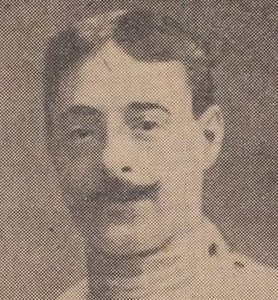
edgar seligman
1867 - 1958
Quick Facts
- Artistic Movement Or Style: Industrial Painting
- Artists Or Movements Influenced By This Artist: ['']
- Artists Who Influenced This Artist: ['']
- Date Of Birth: 1867
- Date Of Death: 1958
- Full Name: Edgar Isaac Seligman
- Nationality: British
- Notable Artworks:
- Making Aeroplanes
- Whitefriars Glass Works
- The Luncheon Hour
- Place Of Birth: London, England
Related Articles
Engraving: A Historical Survey of Technique, Artistic Expression & Enduring Legacy
Explore the rich history of engraving with ArtsDot. Discover techniques, iconic artists like Dürer & Callot, collecting tips, and expert guidance for preserving your art investment. Learn about intaglio printing & more!
Engraving's Golden Age: 10 Masterpieces That Redefined Art | ArtsDot
Journey through art history with our Top 10 Legendary Engravings! Explore masterpieces by Dürer, Rembrandt & Goya. Discover the stories behind these iconic prints and find museum-quality reproductions for your home at ArtsDot.com.
Industrial Revolution on Canvas: 10 Artworks That Define a Modern Aesthetic
Explore 10 iconic artworks capturing the Industrial Revolution’s grit & beauty. From Monet to Manet, discover realism, impressionism & powerful scenes of urban life. Find museum-quality reproductions for your home at ArtsDot.com.
The Intricate World of Engraving: A Historical Survey of Technique, Artistic Expression & Enduring Legacy
Explore the rich history of engraving with ArtsDot. Discover techniques, iconic artists like Dürer & Callot, collecting tips, and expert guidance for preserving your art investment. Learn about intaglio printing & more!
The Gritty Muse: Industrial Vibe as Defining Aesthetic in Modern Artwork
Explore the captivating world of industrial aesthetics in modern art. Discover key movements, influential artists & collecting insights at ArtsDot.com – your source for museum-quality reproductions and expert art guidance.