 Preview
 Send
Send Share
Share
 Details

 Download
 Similars
 X-Ray
X-Ray Diaporama
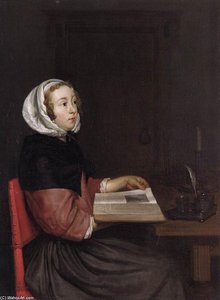
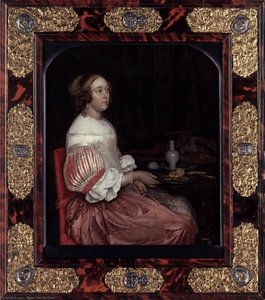
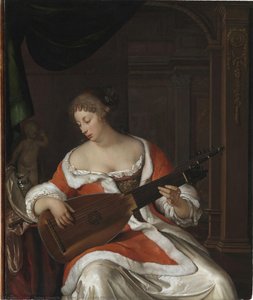
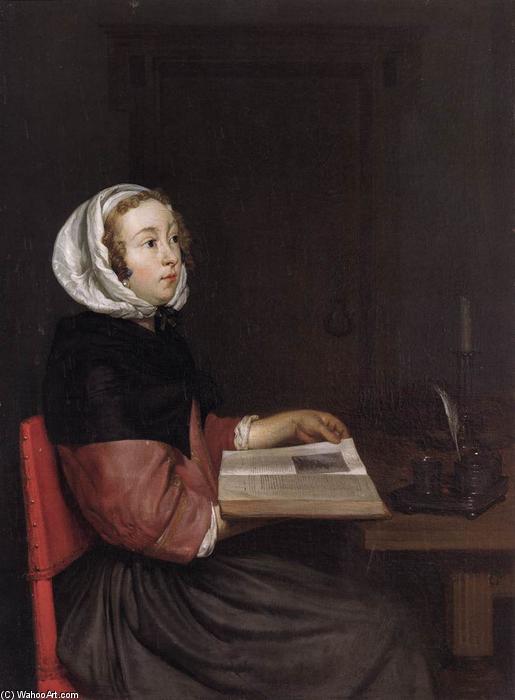
The Reader
 Oil On Canvas
- WallArt
- Baroque Dutch Painting
 1665
1665 38.0 x 28.0 cm
 Metropolitan Museum of Art
 Read More
Hand Made Oil Reproduction
Hand-painted oil on canvas in your size and frame, made to order by our artists. ( Buy Print Buy Image)




P118B $10

P118H $10

P118W $10

P438Z $10

P508JH $12

P508YH $12

P805H $10

P805Z $10

P919BZ $10

P919G $10

P919XJ $10

P959ZH $10

P968JZ $12

W106C $8

W218G $10

W218JH $8

W218Y $10

W307PJ $10

W316G $10

W316PJ $8

W316Y $10

W398PJ $8

W4111J $10

W500HY $15

W500JH $15

W692G $12

W849H $8

W940BG $15

W953PJ $8




Pick from our preset sizes that match the artwork's original proportions.

You may enter your own dimensions to fit a specific frame or space. If your selected size does not match the original image's proportions, we will either crop the artwork or extend the painting with additional hand-painted elements. A digital mockup will be sent for your approval before production begins.
Please note that the on-screen preview does not reflect the actual cropping or extension. Only the mockup will accurately show the final composition.
While custom sizes are available, we recommend selecting a dimension from the predefined list to preserve the original proportions.
After order, ArtsDot.com team will email client for instructions and provide a mockup preview
Worldwide Delivery () in 3/4 weeks instead of standard 5 weeks. (17 August). No compromise on quality.

Free Worldwide Express Shipping

High-Quality Linen Canvas

Full Shipping Insurance

Customs Tax Refund Guarantee

True Color Matching Guarantee

60-Day Return Policy (Defects Only)

100% Money-Back Guarantee

Bulk Discount Offer
 Glass option is only available in size under 110 CM

The Reader
Reproduction Medium
Reproduction Size
-


Total Price
$ 263
Artwork Description
The Quiet Contemplation of “The Reader” by Eglon van der Neer
Eglon van der Neer’s “The Reader,” painted in 1665, is more than just a portrait; it's a carefully constructed tableau of intellectual pursuit and subtle domesticity. This exquisite work, now housed within the Metropolitan Museum of Art, offers a glimpse into the refined world of Dutch society during the mid-seventeenth century – an era defined by burgeoning literacy, philosophical inquiry, and a growing appreciation for the arts.
The central figure is a young woman, elegantly dressed in a dark gown accented with vibrant red trim. Her posture suggests deep engagement; she’s absorbed in a book held open before her, a quill pen and inkwell resting on a nearby table as if poised to capture her thoughts. The room itself is deliberately muted – dark walls provide a dramatic backdrop that emphasizes the woman's attire and the objects surrounding her. A closed window hints at an interior setting, fostering a sense of intimacy and quiet concentration. Van der Neer masterfully employs chiaroscuro, utilizing subtle shifts in light and shadow to sculpt the forms and create a palpable atmosphere of contemplative stillness.
A Masterclass in Dutch Genre Painting
Van der Neer’s style is firmly rooted in the traditions of Dutch genre painting, yet he possesses a distinctive elegance that sets him apart. He was heavily influenced by Gabriel Metsu and Pieter de Hooch, known for their intimate scenes of domestic life and their meticulous attention to detail. However, unlike his contemporaries, Van der Neer frequently incorporated elements of vanitas – symbols representing the transience of earthly pleasures and the inevitability of death. The extinguished candle on the table is a prime example, serving as a poignant reminder of mortality within this otherwise serene scene.
The painting’s composition is remarkably balanced, drawing the eye to the central figure while subtly incorporating secondary elements that enrich the narrative. The arrangement of objects – the book, the quill, the inkwell – speaks volumes about the woman's intellectual pursuits and her connection to the world of learning. Van der Neer’s skill lies in his ability to convey a sense of depth and atmosphere through seemingly simple details, creating an image that is both visually arresting and emotionally resonant.
Symbolism and the Pursuit of Knowledge
“The Reader” is laden with symbolic meaning. The book itself represents knowledge, wisdom, and the transformative power of learning. The open pages suggest a moment of discovery or contemplation – perhaps she’s delving into an emblem book, a popular form of illustrated instruction that combined moral lessons with visual imagery. The red trim on her gown could symbolize passion or virtue, while the dark clothing reflects a sense of seriousness and intellectual dedication.
The muted color palette contributes to the painting's overall mood of quiet introspection. Van der Neer’s use of browns, grays, and blacks creates a sense of depth and atmosphere, drawing the viewer into the scene and inviting them to share in the woman’s contemplative state. The closed window further isolates her, emphasizing her solitary pursuit of knowledge.
A Timeless Portrait of Intellectual Grace
“The Reader” is a testament to Eglon van der Neer's artistic skill and his ability to capture the essence of human experience. It’s a painting that transcends its historical context, offering a timeless meditation on the pursuit of knowledge, the beauty of quiet contemplation, and the enduring allure of the written word. Reproductions of this captivating work continue to resonate with viewers today, reminding us of the power of art to transport us to another time and place, and to evoke profound emotions within our own hearts.
Related Artworks
Artist Biography
early life and training
eglon hendrik van der neer, a prominent dutch painter, was born in amsterdam around 1635. his father, aert van der neer, was a landscape artist who likely taught eglon the basics of painting. eglon's training continued under the guidance of jacob van loo, a leading portrait and genre painter of the time.artistic career
eglon's artistic career can be divided into several phases, each marked by a distinct style and geographical location. in his early twenties, he worked in france for count friedrich von dohna, the dutch governor of the principality of orange. upon his return to the netherlands in 1658, eglon settled in amsterdam and later moved to rotterdam, where he became a sought-after artist.- conversational pieces: eglon specialized in elegant conversation pieces, often in the style of gabriel metsu and pieter de hooch.
- groups in modern dress: he also painted groups in modern dress, sometimes in the style of ter borch, showcasing his inclination towards variety.
- court painter: in 1687, eglon was appointed court painter to king charles ii of spain, further solidifying his reputation as a master of dutch art.
notable works and locations
some of eglon's notable works can be found in the following locations, all part of the ArtsDot.com collection:- kandaules' wife discovers gyges (1675-1680), showcasing his skill in historical scenes.
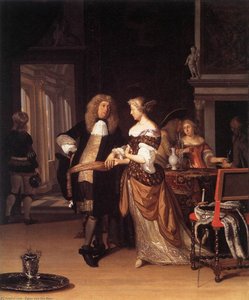
- elegant couple in an interior (1678), a prime example of his conversational piece style, can be found in the galleria degli uffizi.
- selfportrait (1696) is another notable work, demonstrating eglon's versatility as an artist.
legacy
eglon hendrik van der neer's legacy as a dutch master is undeniable. his works, characterized by their elegance and variety, continue to inspire art enthusiasts worldwide. as a prominent figure in the ArtsDot.com collection, his art remains a testament to the enduring power of dutch art.- view more of eglon's works on web gallery of art
- explore the national gallery, london's collection, featuring various dutch artists, on national gallery, london
eglon hendrik van der neer
1635 - 1703 , Netherlands
Quick Facts
- Artistic Movement Or Style: Dutch Golden Age
- Artists Who Influenced This Artist:
- Gabriel Metsu
- Pieter de Hooch
- Date Of Birth: 1635
- Date Of Death: 1703
- Full Name: Eglon Hendrik van der Neer
- Nationality: Dutch
- Notable Artworks:
- Kandaules' wife discovers Gyges
- Elegant couple in an interior
- Place Of Birth: Amsterdam, Netherlands
Related Articles

Dutch Baroque Masters: 10 Paintings That Shaped an Era | ArtsDot
Journey through the Golden Age with our guide to the Top 10 Dutch Baroque masterpieces! Explore iconic paintings by Rembrandt, Vermeer & Frans Hals. Find museum-quality art reproductions and elevate your home decor at ArtsDot.com.

Dutch Masters: 10 Golden Age Paintings That Still Inspire |
Journey into the Dutch Golden Age! Explore 10 iconic paintings by Rembrandt, Vermeer & Hals. Discover the stories behind these Baroque masterpieces and find museum-quality art reproductions to elevate your home decor on .

Golden Age Reflections: Dutch Baroque Painting & Cultural Innovation
Explore the Dutch Golden Age of painting! Discover key artists like Vermeer & ter Borch, their innovative techniques, and the rich cultural context behind these Baroque masterpieces. Learn about collecting & appreciating this iconic art period.

Illuminating Innovation: Exploring the Dutch Golden Age of Painting
Explore the Dutch Golden Age of painting with ArtsDot. Discover Rembrandt, Vermeer & other Masters. Learn about key characteristics, iconic artworks, and lasting influence. Expert insights for collectors & enthusiasts.
Illuminating Realism: Exploring the Dutch Golden Age of Painting (1600-1700)
Explore the Dutch Golden Age of painting (1600-1700) with ArtsDot. Discover Rembrandt, Vermeer & other masters. Learn about techniques, history & find museum-quality reproductions.