 Preview
 Send
Send Share
Share
 Details

 Download
 Similars
 X-Ray
X-Ray Diaporama
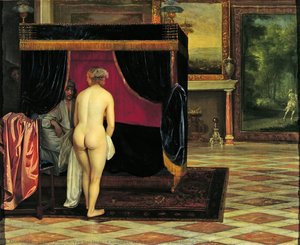
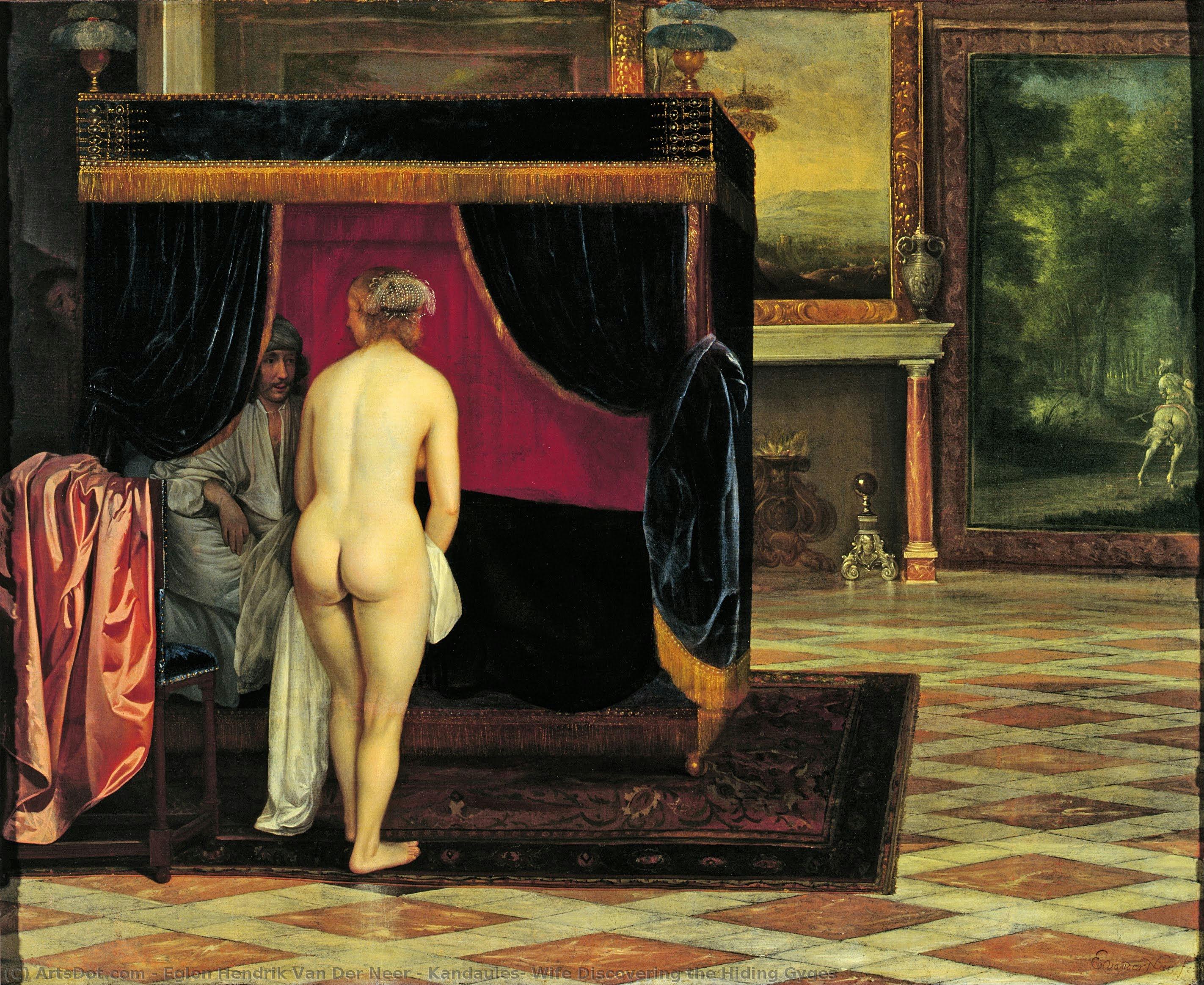
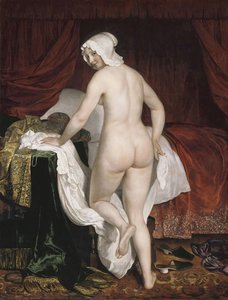
Kandaules’ Wife Discovering the Hiding Gyges
 Oil
Oil- WallArt
- Dutch Golden Age
 1662
1662- Early Modern
 3.0 x 823.0 cm
 Kunstpalast
 Read More
Hand Made Oil Reproduction
Hand-painted oil on canvas in your size and frame, made to order by our artists. ( Buy Print Buy Image)




P118B $10

P118H $10

P118W $10

P438Z $10

P508JH $12

P508YH $12

P805H $10

P805Z $10

P919BZ $10

P919G $10

P919XJ $10

P959ZH $10

P968JZ $12

W106C $8

W218G $10

W218JH $8

W218Y $10

W307PJ $10

W316G $10

W316PJ $8

W316Y $10

W398PJ $8

W4111J $10

W500HY $15

W500JH $15

W692G $12

W849H $8

W940BG $15

W953PJ $8




Pick from our preset sizes that match the artwork's original proportions.

You may enter your own dimensions to fit a specific frame or space. If your selected size does not match the original image's proportions, we will either crop the artwork or extend the painting with additional hand-painted elements. A digital mockup will be sent for your approval before production begins.
Please note that the on-screen preview does not reflect the actual cropping or extension. Only the mockup will accurately show the final composition.
While custom sizes are available, we recommend selecting a dimension from the predefined list to preserve the original proportions.
After order, ArtsDot.com team will email client for instructions and provide a mockup preview
Worldwide Delivery () in 3/4 weeks instead of standard 5 weeks. (17 August). No compromise on quality.

Free Worldwide Express Shipping

High-Quality Linen Canvas

Full Shipping Insurance

Customs Tax Refund Guarantee

True Color Matching Guarantee

60-Day Return Policy (Defects Only)

100% Money-Back Guarantee

Bulk Discount Offer
 Glass option is only available in size under 110 CM

Kandaules’ Wife Discovering the Hiding Gyges
Reproduction Medium
Reproduction Size
-


Total Price
$ 263
Artwork Description
A Scandalous Gaze: The Drama of Kandaules’ Wife
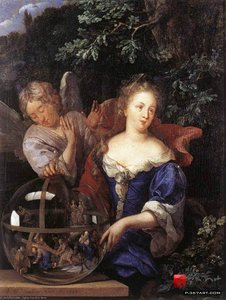
In the evocative masterpiece Kandaules’ Wife Discovering the Hiding Gyges, Eglon Hendrik van der Neer invites the viewer into a moment of profound tension and voyeuristic intrigue. Painted in 1662, this work captures the precise second where privacy is shattered by discovery. The scene depicts the legendary Lydian King Kandaules’ wife, Nyssia, as she stands before her bed, her back turned to the viewer in a state of vulnerable exposure. Behind the heavy, crimson drapery of the bed, the figure of Gyges remains hidden, caught in the act of witnessing what was never meant for his eyes. The composition is masterfully orchestrated to place us, the spectators, in the position of the voyeur, making us complicit in the unfolding drama of forbidden sight and shattered honor.
The narrative weight of this piece is anchored in the tragic intersection of Eros and Death. As Van der Neer illustrates, the king’s pride—his desire to show off the beauty of his wife to his friend—ultimately leads to a cycle of betrayal and bloodshed. The painting serves as a psychological study of power and consequence; Nyssia, rather than being a mere victim, emerges as a formidable force of agency, challenging her discoverer to choose between murder and marriage. This inversion of roles, where the seeker of revenge dictates the terms of survival, provides a gripping intellectual depth that continues to captivate art enthusiasts and historians alike.
Mastery of Light and Dutch Elegance
Technically, Van der Neer demonstrates the pinnacle of Dutch Golden Age genre painting. His ability to manipulate light is nothing short of virtuosic; notice how the soft glow illuminates the textures of the skin and the rich, heavy folds of the red curtain, creating a sense of tactile reality. The artist employs a sophisticated palette where the warmth of the interior setting contrasts with the chilling tension of the subject matter. Every element, from the delicate placement of the vases in the background to the subtle shadows cast by the furniture, is rendered with a precision that suggests both elegance and an underlying sense of unease.
For the discerning collector or interior designer, this painting offers more than just visual beauty; it provides a conversational centerpiece that commands attention. The interplay of light and shadow makes it an ideal selection for spaces designed to evoke mood and sophistication. Whether placed in a grand library or a contemporary gallery setting, a high-quality reproduction of this work brings with it the prestige of 17th-century storytelling. It is a piece that does not merely decorate a wall but breathes life into a room, offering a window into a world where every glance carries the weight of destiny.
Related Artworks
Artist Biography
early life and training
eglon hendrik van der neer, a prominent dutch painter, was born in amsterdam around 1635. his father, aert van der neer, was a landscape artist who likely taught eglon the basics of painting. eglon's training continued under the guidance of jacob van loo, a leading portrait and genre painter of the time.artistic career
eglon's artistic career can be divided into several phases, each marked by a distinct style and geographical location. in his early twenties, he worked in france for count friedrich von dohna, the dutch governor of the principality of orange. upon his return to the netherlands in 1658, eglon settled in amsterdam and later moved to rotterdam, where he became a sought-after artist.- conversational pieces: eglon specialized in elegant conversation pieces, often in the style of gabriel metsu and pieter de hooch.
- groups in modern dress: he also painted groups in modern dress, sometimes in the style of ter borch, showcasing his inclination towards variety.
- court painter: in 1687, eglon was appointed court painter to king charles ii of spain, further solidifying his reputation as a master of dutch art.
notable works and locations
some of eglon's notable works can be found in the following locations, all part of the ArtsDot.com collection:- kandaules' wife discovers gyges (1675-1680), showcasing his skill in historical scenes.
- elegant couple in an interior (1678), a prime example of his conversational piece style, can be found in the galleria degli uffizi.
- selfportrait (1696) is another notable work, demonstrating eglon's versatility as an artist.
legacy
eglon hendrik van der neer's legacy as a dutch master is undeniable. his works, characterized by their elegance and variety, continue to inspire art enthusiasts worldwide. as a prominent figure in the ArtsDot.com collection, his art remains a testament to the enduring power of dutch art.- view more of eglon's works on web gallery of art
- explore the national gallery, london's collection, featuring various dutch artists, on national gallery, london
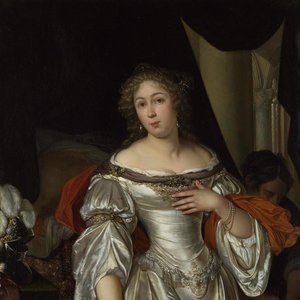
eglon hendrik van der neer
1635 - 1703 , Netherlands
Quick Facts
- Artistic Movement Or Style: Dutch Golden Age
- Artists Who Influenced This Artist:
- Gabriel Metsu
- Pieter de Hooch
- Date Of Birth: 1635
- Date Of Death: 1703
- Full Name: Eglon Hendrik van der Neer
- Nationality: Dutch
- Notable Artworks:
- Kandaules' wife discovers Gyges
- Elegant couple in an interior
- Place Of Birth: Amsterdam, Netherlands
Related Articles

Dutch Masters: 10 Golden Age Paintings That Still Inspire |
Journey into the Dutch Golden Age! Explore 10 iconic paintings by Rembrandt, Vermeer & Hals. Discover the stories behind these Baroque masterpieces and find museum-quality art reproductions to elevate your home decor on .

Golden Age Reflections: Dutch Baroque Painting & Cultural Innovation
Explore the Dutch Golden Age of painting! Discover key artists like Vermeer & ter Borch, their innovative techniques, and the rich cultural context behind these Baroque masterpieces. Learn about collecting & appreciating this iconic art period.

Illuminating Innovation: Exploring the Dutch Golden Age of Painting
Explore the Dutch Golden Age of painting with ArtsDot. Discover Rembrandt, Vermeer & other Masters. Learn about key characteristics, iconic artworks, and lasting influence. Expert insights for collectors & enthusiasts.
Golden Light & Dutch Skies: Bringing the Magic of Dutch Golden Age Landscapes into Your Home
Transform your home with the breathtaking light of Dutch Golden Age landscapes. Discover how hand-painted oil reproductions of masterworks like Ruisdael and Vermeer bring timeless elegance, atmosphere, and soulful texture to modern interiors. Elevate your space with museum-quality art.
Illuminating Realism: Exploring the Dutch Golden Age of Painting (1600-1700)
Explore the Dutch Golden Age of painting (1600-1700) with ArtsDot. Discover Rembrandt, Vermeer & other masters. Learn about techniques, history & find museum-quality reproductions.