 Preview
 Send
Send Share
Share
 Details

 Download
 Similars
 X-Ray
X-Ray Diaporama
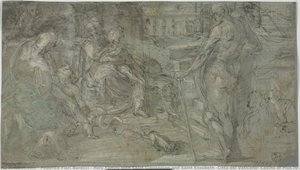
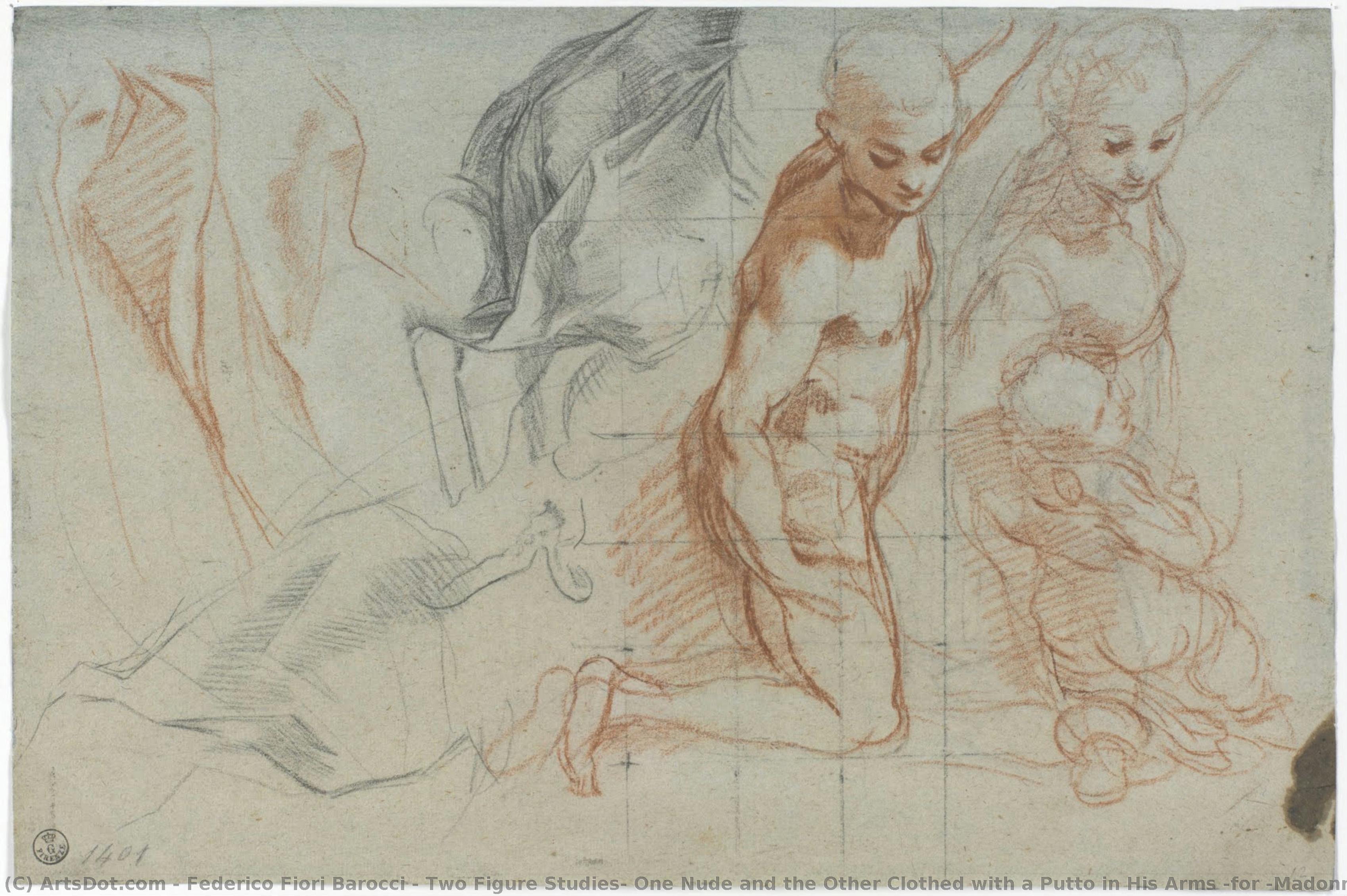
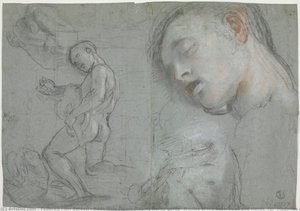
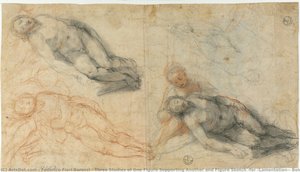
Two Figure Studies, One Nude and the Other Clothed with a Putto in His Arms (for “Madonna del Popolo”, Firenze, Galleria degli Uffizi); Drapery Studies
 Acrylic On Canvas
- WallArt
- Baroque Renaissance
 1579
1579 21.0 x 32.0 cm
 Galleria degli Uffizi
 Read More
Hand Made Oil Reproduction
Hand-painted oil on canvas in your size and frame, made to order by our artists. ( Buy Print Buy Image)




P118B $10

P118H $10

P118W $10

P438Z $10

P508JH $12

P508YH $12

P805H $10

P805Z $10

P919BZ $10

P919G $10

P919XJ $10

P959ZH $10

P968JZ $12

W106C $8

W218G $10

W218JH $8

W218Y $10

W307PJ $10

W316G $10

W316PJ $8

W316Y $10

W398PJ $8

W4111J $10

W500HY $15

W500JH $15

W692G $12

W849H $8

W940BG $15

W953PJ $8




Pick from our preset sizes that match the artwork's original proportions.

You may enter your own dimensions to fit a specific frame or space. If your selected size does not match the original image's proportions, we will either crop the artwork or extend the painting with additional hand-painted elements. A digital mockup will be sent for your approval before production begins.
Please note that the on-screen preview does not reflect the actual cropping or extension. Only the mockup will accurately show the final composition.
While custom sizes are available, we recommend selecting a dimension from the predefined list to preserve the original proportions.
After order, ArtsDot.com team will email client for instructions and provide a mockup preview
Worldwide Delivery () in 3/4 weeks instead of standard 5 weeks. (17 August). No compromise on quality.

Free Worldwide Express Shipping

High-Quality Linen Canvas

Full Shipping Insurance

Customs Tax Refund Guarantee

True Color Matching Guarantee

60-Day Return Policy (Defects Only)

100% Money-Back Guarantee

Bulk Discount Offer
 Glass option is only available in size under 110 CM

Two Figure Studies, One Nude and the Other Clothed with a Putto in His Arms (for “Madonna del Popolo”, Firenze, Galleria degli Uffizi); Drapery Studies
Reproduction Medium
Reproduction Size
-


Total Price
$ 263
Artwork Description
Federico Fiori Barocci’s “Two Figure Studies” – A Dance of Form and Emotion
Federico Fiori Barocci's "Two Figure Studies, One Nude and the Other Clothed with a Putto in His Arms (for ‘Madonna del Popolo’, Firenze, Galleria degli Uffizi’)” is not merely a depiction of two figures; it’s a carefully constructed tableau brimming with Renaissance ideals, subtle symbolism, and an undeniable sense of poised drama. Completed in 1579 and currently residing within the hallowed halls of the Uffizi Gallery in Florence, this charcoal drawing offers a fascinating glimpse into Barocci's artistic process and his burgeoning mastery of capturing both anatomical precision and emotive depth – a hallmark that would later define his legacy as one of the most influential artists of his time.
The composition itself is strikingly balanced. A nude female figure, positioned centrally, dominates the left side of the sheet, her body rendered with an almost startling realism. Her pose, relaxed yet subtly suggestive, invites contemplation and a quiet intimacy. Opposite her stands a male figure, clothed in rich fabrics and holding aloft a cherubic angel – a putto – within his arms. This juxtaposition immediately establishes a dynamic tension: the raw physicality of the nude contrasted against the idealized beauty and divine grace represented by the angelic presence. The placement of the figures creates a visual dialogue, a silent conversation between earthly form and spiritual significance.
Technique and Materials – A Study in Charcoal
Barocci’s choice of medium—charcoal on paper—is crucial to understanding the work's character. Charcoal allows for an extraordinary level of tonal variation, enabling him to build up layers of shadow and highlight with remarkable subtlety. The drawing is not a smooth, polished surface; rather, it possesses a textured quality, revealing the artist’s deliberate marks and expressive gestures. Close examination reveals a meticulous attention to detail – the delicate folds of the drapery, the subtle musculature beneath the nude figure's skin, and the intricate features of the putto. This painstaking approach speaks to Barocci’s commitment to anatomical accuracy, reflecting his deep understanding of human form, honed through rigorous observation and study.
The loose, gestural lines employed in depicting the figures contribute significantly to the work's dynamism. They suggest movement, a sense of life captured on paper. The artist doesn’t simply outline forms; he uses charcoal to create an illusion of volume and depth, employing techniques reminiscent of Leonardo da Vinci – a testament to Barocci’s admiration for the master.
Symbolism and Context – Echoes of Florence
The drawing's title reveals its intended purpose: it served as a preparatory study for “Madonna del Popolo,” a significant altarpiece commissioned for the church of Santa Maria del Popolo in Florence. This context is vital to understanding the work’s symbolism. The nude figure, often interpreted as representing Mary, embodies both earthly beauty and maternal grace. The putto symbolizes divine protection and innocence – a common motif in Renaissance art associated with the Virgin Mary. The inclusion of horses further reinforces this connection to Florentine religious iconography, reflecting the city's rich artistic heritage.
Furthermore, the drawing’s creation coincided with a period of intense artistic experimentation in Florence, marked by the rise of Mannerism and the nascent influence of the Baroque style. Barocci was deeply immersed in these developments, absorbing the ideas of artists like Pontormo and Rosso Fiorentino while simultaneously forging his own distinctive voice. This work exemplifies this transitional phase, showcasing a blend of classical restraint and emerging expressive dynamism.
Emotional Resonance – A Moment Frozen in Time
Beyond its technical merits and historical context, “Two Figure Studies” possesses a profound emotional resonance. The figures seem caught in a moment of quiet contemplation, inviting the viewer to share their unspoken thoughts and feelings. There’s an underlying sense of vulnerability and intimacy within the nude figure's pose, coupled with the protective embrace of the putto. The drawing isn’t simply about depicting two individuals; it’s about capturing a fleeting emotional state – a silent exchange between humanity and divinity.
Today, reproductions of this captivating study offer a remarkable opportunity to experience Barocci's artistic genius firsthand. Its delicate charcoal lines, masterful composition, and evocative symbolism continue to resonate with audiences, reminding us of the enduring power of art to capture beauty, emotion, and the complexities of the human condition.
Related Artworks
Artist Biography
Early Life and Training
- Born: Urbino, Italy (1535)
- Died: 1612
- Federico Fiori Barocci, an Italian Renaissance painter and printmaker, was born in 1535 in Urbino, Italy.
- His original name was Federico Fiori, and he was nicknamed "il Baroccio," which means a two-wheel cart drawn by oxen in northwestern Italian dialects.
- Barocci received his earliest apprenticeship with his father, Ambrogio Barocci, a sculptor of some local eminence.
- He was then apprenticed with the painter Battista Franco in Urbino. This training laid the foundation for his future success.
Artistic Career and Influences
- Barocci's work was highly esteemed and influential, foreshadowing the Baroque style of Peter Paul Rubens.
- He worked in the pre-eminent studio of Taddeo and Federico Zuccari in Rome, where he was exposed to various artistic influences.
- His first notable work was a "St. Margaret" executed for the confraternity of the Holy Sacrament.
- He was invited by Pope Pius IV to assist in the decoration of the Vatican Belvedere Palace at Rome, where he painted the Virgin Mary and infant, with several saints and a ceiling in fresco, representing the Annunciation.
- Barocci's style was characterized by a mix of Mannerism and Baroque elements.
Notable Works and Legacy
- Five Studies of Male Figure and two of His Right Hand and Arm (Uffizi Gallery, Florence, Italy) - A testament to Barocci’s skill in capturing the human form.
- Composition Study (for “Circumcision”, Paris, Musée du Louvre) – Demonstrates his ability to balance composition and emotion.
- Man’s Head (for “Calling of Saint Andrew”, Bruxelles, Musées Royaux des Beaux-Arts de Belgique) - Showcases Barocci's attention to detail and expression.
- The Nativity (1597 oil painting at the Prado).
- Madonna del Popolo (Uffizi Gallery, Florence, Italy).
- The Madonna of the Cat (La Madonna del Gatto)
- Annunciation (1582)
Artistic Impact and Followers
- Barocci's influence can be seen in the work of various artists, including Peter Paul Rubens, who was inspired by Barocci’s dramatic and emotive brushwork.
- His legacy continues to be celebrated through his numerous works, now housed in museums such as the Uffizi Gallery (Florence, Italy) and the Musée du Louvre (Paris, France).
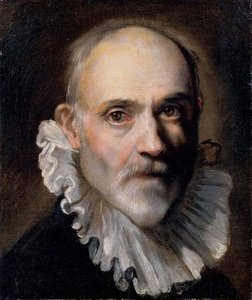
Federico Fiori Barocci
1535 - 1612 , Italy
Quick Facts
- Artistic Movement Or Style: Renaissance, Baroque
- Artists Or Movements Influenced By This Artist: ['Peter Paul Rubens']
- Artists Who Influenced This Artist: ['Battista Franco']
- Date Of Birth: 1535
- Date Of Death: 1612
- Full Name: Federico Fiori Barocci
- Nationality: Italian
- Notable Artworks:
- The Nativity
- Madonna del Popolo
- Annunciation
- Stigmatization of Saint Francis
- Rest on the Flight to Egypt
- Place Of Birth: Urbino, Italy
Related Articles
Federico Barocci: A Master of Emotive Spirituality & the Transition from Mannerism
Explore the captivating world of Federico Barocci, a pivotal figure bridging Mannerism & Baroque art. Discover his emotive spirituality, innovative techniques, and lasting influence on Italian Renaissance painting.

Baroque Drama: Bringing Opulence & Emotion into Contemporary Interiors
Explore the opulent world of Baroque interior design! Discover key elements, modern applications & how to bring dramatic elegance into your home with 's authentic reproductions.

The Dramatic Flourish: Exploring the Baroque Movement's Enduring Legacy in Art History
Explore the dramatic world of Baroque art! Discover iconic artists like Caravaggio & Rubens, defining techniques, and its lasting impact on art history. Expert insights for collectors & enthusiasts at ArtsDot.

Baroque Masterpieces: 10 Paintings That Defined an Era |
Journey through the drama & grandeur of Baroque art! Explore 10 masterpieces by Caravaggio, Rembrandt, Rubens & more. Discover stunning oil paintings, rich colors & timeless stories. Find museum-quality reproductions at .

The Visceral Stage: Exploring Dramatic Narratives & Emotional Intensity in Baroque Art
Explore the dramatic world of Baroque art! Discover iconic masters like Caravaggio & Rembrandt, their techniques, and the movement's lasting impact. Expert insights for collectors & enthusiasts at ArtsDot.