 Preview
 Send
Send Share
Share
 Details

 Download
 Similars
 X-Ray
X-Ray Diaporama
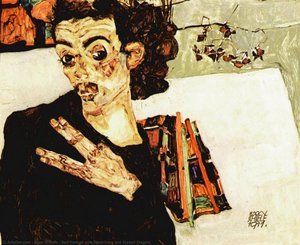
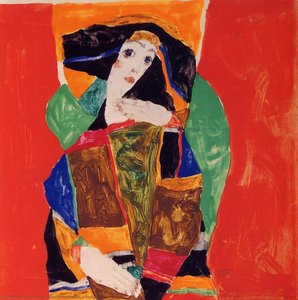
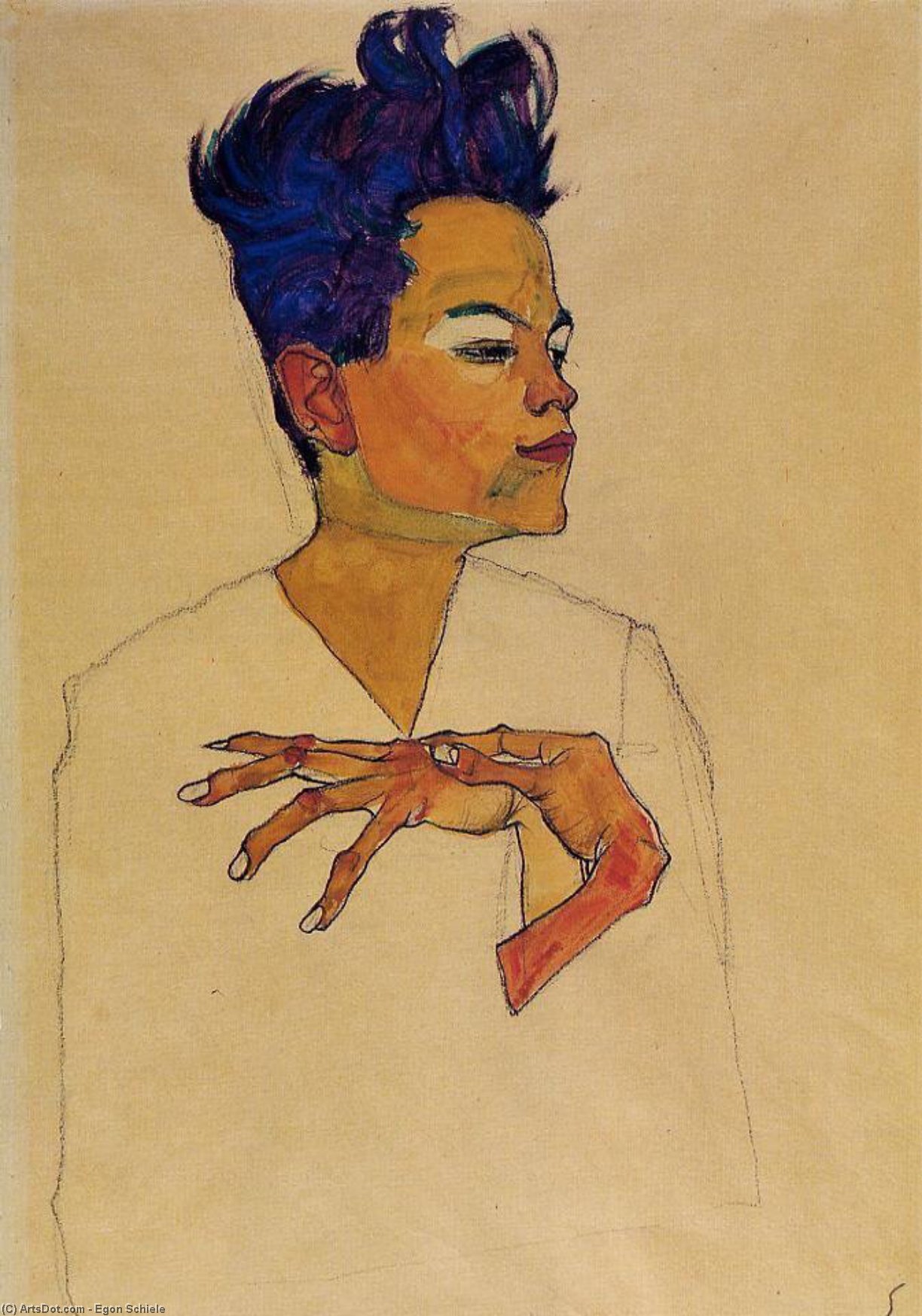
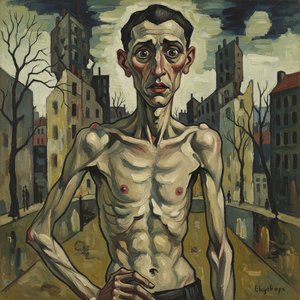
Self Portrait with Hands on Chest


 Read More
Hand Made Oil Reproduction
Hand-painted oil on canvas in your size and frame, made to order by our artists. ( Buy Print Buy Image)




P118B $10

P118H $10

P118W $10

P438Z $10

P508JH $12

P508YH $12

P805H $10

P805Z $10

P919BZ $10

P919G $10

P919XJ $10

P959ZH $10

P968JZ $12

W106C $8

W218G $10

W218JH $8

W218Y $10

W307PJ $10

W316G $10

W316PJ $8

W316Y $10

W398PJ $8

W4111J $10

W500HY $15

W500JH $15

W692G $12

W849H $8

W940BG $15

W953PJ $8




Pick from our preset sizes that match the artwork's original proportions.

You may enter your own dimensions to fit a specific frame or space. If your selected size does not match the original image's proportions, we will either crop the artwork or extend the painting with additional hand-painted elements. A digital mockup will be sent for your approval before production begins.
Please note that the on-screen preview does not reflect the actual cropping or extension. Only the mockup will accurately show the final composition.
While custom sizes are available, we recommend selecting a dimension from the predefined list to preserve the original proportions.
After order, ArtsDot.com team will email client for instructions and provide a mockup preview
Worldwide Delivery () in 3/4 weeks instead of standard 5 weeks. (16 August). No compromise on quality.

Free Worldwide Express Shipping

High-Quality Linen Canvas

Full Shipping Insurance

Customs Tax Refund Guarantee

True Color Matching Guarantee

60-Day Return Policy (Defects Only)

100% Money-Back Guarantee

Bulk Discount Offer
 Glass option is only available in size under 110 CM

Self Portrait with Hands on Chest
Reproduction Medium
Reproduction Size
-


Total Price
$ 263
Artwork Description
A Window into the Soul: Egon Schiele’s ‘Self Portrait with Hands on Chest’ (1910)
This striking self-portrait by Austrian Expressionist master Egon Schiele is more than just a likeness; it's a raw and unflinching exploration of inner turmoil, vulnerability, and the search for identity. Created in 1910, at a pivotal moment in both his artistic development and personal life, this work embodies the core tenets of Expressionism while establishing Schiele’s uniquely haunting style.Artistic Style & Technique: Watercolor's Fragile Power
Schiele deliberately chose watercolor – a medium often associated with delicacy and transience – to depict such intense emotional weight. This choice is profoundly effective. The fluid washes of color, combined with bold, angular lines, create a sense of both fragility *and* nervous energy. Notice how the artist doesn’t blend colors seamlessly; instead, he allows them to bleed and interact, mirroring the complexities of human emotion. The visible brushstrokes contribute to an immediacy that draws the viewer directly into Schiele's psychological space.Expressionism & Influences: A Generation in Revolt
As a leading figure within the Expressionist movement, Schiele reacted against the prevailing artistic conventions of his time. While influenced by artists like Vincent van Gogh and Edvard Munch – particularly their use of distorted forms and emotionally charged color palettes – he forged his own distinct path. Unlike the Impressionists’ focus on capturing fleeting moments of light, Expressionists sought to convey subjective experience and inner states. Schiele's work is characterized by elongated figures, often contorted into uncomfortable poses, reflecting a sense of alienation and existential angst common in early 20th-century Europe.Symbolism & Interpretation: A Gesture of Self-Protection
The central gesture – Schiele’s hands clasped over his chest – is laden with symbolism. It can be interpreted as an act of self-protection, a physical barrier against the harsh realities of the world. However, it also suggests vulnerability and introspection; the hands seem to simultaneously shield *and* expose the heart. The pose subtly echoes traditional depictions of Christian martyrs or saints, imbuing the portrait with a spiritual dimension and hinting at Schiele’s own sense of suffering and isolation. The intense gaze further amplifies this feeling of exposed emotion.Historical Context: Vienna on the Brink
Vienna in 1910 was a city brimming with intellectual and artistic ferment, but also rife with social and political tensions. The Austro-Hungarian Empire was crumbling, and traditional values were being challenged. Schiele’s work reflected this sense of upheaval and uncertainty. His unflinching depictions of the human body – often nude or in psychologically charged poses – scandalized conservative audiences and led to legal troubles for the artist.Emotional Impact & Enduring Legacy
‘Self Portrait with Hands on Chest’ is a profoundly moving work that continues to resonate with viewers today. It's a testament to Schiele’s ability to capture the complexities of the human psyche and translate them into a visually arresting image. The painting invites us to confront our own vulnerabilities, anxieties, and search for meaning in a chaotic world. His influence on subsequent generations of artists is undeniable, and his work remains a powerful example of Expressionist art’s enduring relevance.Considering a Reproduction?
- This piece works beautifully in minimalist interiors, adding a touch of dramatic intensity.
- Its muted color palette complements both modern and traditional décor schemes.
- The intimate scale makes it ideal for smaller spaces like studies or bedrooms.
- A high-quality reproduction captures the nuances of Schiele’s watercolor technique, bringing the artist's vision to life in your home.
Related Artworks
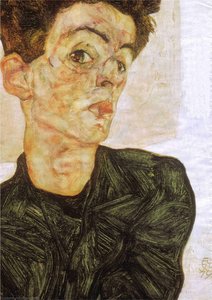
Artist Biography
A Life Forged in Expression
Born in 1890 in the Austrian town of Tulln an der Donau, Egon Schiele’s life was a tempestuous journey marked by both extraordinary artistic vision and profound personal hardship. His early years were shadowed by illness and loss; his father succumbed to syphilis when Egon was just fourteen, a tragedy that would deeply resonate within his work, fueling an obsession with mortality and the fragility of existence. Raised initially by his mother and then under the somewhat controlling guardianship of his uncle Leopold Czihaczek, Schiele’s childhood lacked conventional stability but fostered a fiercely independent spirit. Even as a boy, he displayed an intense fascination with trains—a motif that subtly reappeared in later paintings—and a burgeoning talent for drawing, though this was initially met with disapproval from his father who saw it as a distraction from more practical pursuits. The early death of his sister Elvira also cast a long shadow over the young artist’s psyche. These formative experiences instilled within him a sensitivity and an emotional rawness that would become hallmarks of his artistic expression, a constant grappling with themes of life, death, and the human condition.
The Crucible of Vienna: Artistic Development
Schiele's formal artistic training began at the Kunstgewerbeschule (School of Arts and Crafts) in Vienna, but he quickly found himself stifled by its conservative approach. He transferred to the Akademie der bildenden Künste (Academy of Fine Arts), only to become further disillusioned with its rigid academic traditions. This dissatisfaction led him to abandon formal training altogether, choosing instead to forge his own path, a testament to his unwavering artistic conviction. The influence of Gustav Klimt was pivotal during these early years; Schiele admired Klimt’s decorative style and exploration of symbolism, even receiving mentorship from the established artist. However, Schiele soon diverged from Klimt's aesthetic, developing a distinctly individual voice characterized by its stark honesty and psychological intensity. He co-founded the Neues Wiener Kunstgruppe (New Viennese Art Group) in 1909, aligning himself with other progressive artists who challenged the prevailing artistic norms. His early works, often unsettling portraits and self-portraits, began to emerge as powerful statements of emotional turmoil, featuring distorted figures and a palpable sense of vulnerability. These paintings were not merely representations of physical form but explorations of the inner landscape—the anxieties, desires, and fears that haunted the human psyche. He sought to depict not what he *saw*, but what he *felt*.
Raw Emotion and Unflinching Truth
Egon Schiele’s art is immediately recognizable for its raw honesty and psychological depth. He fearlessly confronted themes often considered taboo – sexuality, death, anxiety, isolation – with an unflinching gaze. His distinctive style features elongated figures, contorted poses, and expressive lines that convey a sense of unease and emotional intensity. The human form, particularly the nude, became his primary subject, not as an object of idealized beauty but as a vessel for exploring the complexities of human experience. Self-portraits constitute a significant portion of his oeuvre, offering intimate glimpses into his inner world—a world often marked by loneliness and self-doubt. He didn’t shy away from depicting himself in unflattering or vulnerable poses, revealing a profound level of self-awareness and introspection. Beyond self-portraiture, Schiele created numerous portraits of others, capturing their likenesses with an unsettling realism that seemed to penetrate beneath the surface. His landscapes, while less central to his work than his figurative paintings, demonstrate his mastery of form and color, often reflecting the same emotional intensity as his portraits. The use of line is particularly striking in Schiele’s work; it's not merely a tool for defining shape but an expressive force that conveys emotion and psychological tension. Recurring motifs like the *Physalis* plant – symbolizing death and transience with its delicate, papery husk – further underscore this preoccupation with mortality.
A Legacy Cut Short: Achievements & Significance
Despite facing censorship and legal challenges – including a brief imprisonment for allegedly corrupting minors with his art – Schiele gained recognition within Vienna’s avant-garde circles. His work challenged the conventions of the time, provoking both admiration and outrage. By the time of his untimely death during the Spanish flu pandemic in 1918 at the age of twenty-eight, he had established himself as a leading figure in Austrian Expressionism. Significant works such as Self-Portrait with Physalis, Couple Embracing, and Field Landscape (Kreuzberg near Krumau) stand as testaments to his artistic genius. His influence on subsequent generations of artists is undeniable, particularly those interested in exploring psychological themes and challenging conventional artistic norms. Schiele’s bold approach to form and subject matter continues to resonate with audiences today, making him one of the most important and influential figures in early 20th-century art. His paintings are now held in major museum collections worldwide, including the Leopold Museum in Vienna and the Egon Schiele Art Centrum in Český Krumlov, ensuring his artistic legacy endures. He left behind a body of work that is not merely aesthetically compelling but profoundly human—a testament to the power of art to confront the complexities of existence with honesty, courage, and unwavering vision.
- Key Themes: Mortality, sexuality, isolation, psychological turmoil.
- Influences: Gustav Klimt, Viennese Secession, personal trauma.
- Style Characteristics: Elongated figures, contorted poses, expressive lines, raw emotion.
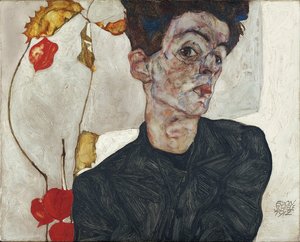
Egon Schiele
1890 - 1918 , Croatia
Quick Facts
- Artistic Movement Or Style: Expressionism
- Artists Or Movements Influenced By This Artist: ['Expressionism']
- Artists Who Influenced This Artist: ['Gustav Klimt']
- Date Of Birth: 1890
- Date Of Death: 1918
- Full Name: Egon Schiele
- Nationality: Austrian
- Notable Artworks:
- Self-Portrait with Physalis
- Couple Embracing
- Field Landscape (Kreuzberg)
- Place Of Birth: Tulln, Austria
Related Articles
Egon Schiele's Masterpieces: 25 Paintings That Define Expressionism | ArtsDot
Delve into the haunting world of Egon Schiele with our curated selection of his 25 most iconic Expressionist paintings. Explore the artist's life, technique & emotional depth. Find museum-quality Schiele reproductions and elevate your home decor on ArtsDot.com.

Watercolor Wonders: 10 Masterpieces That Redefined Art History | ArtsDot
Journey through 10 legendary watercolor masterpieces by Sargent, Turner & Homer! Explore iconic landscapes, portraits & floral art that redefined history. Find museum-quality reproductions and curated decor ideas at ArtsDot.com.
Egon Schiele: Expressionism, Anxiety & the Modern Condition – A Comprehensive Exploration
Explore the emotionally charged world of Egon Schiele (1890-1918). Discover his Expressionist masterpieces, psychological themes, and lasting impact on modern art. A comprehensive guide for collectors & enthusiasts.

Ephemeral Visions: Exploring the Artistic Legacy & Contemporary Practice of Watercolor Painting
Explore the captivating world of watercolor painting! Discover its rich history, essential techniques, influential artists & collecting tips. A comprehensive guide for art enthusiasts from ArtsDot.

Ephemeral Visions: Exploring the History & Emotional Resonance of Watercolor Painting
Explore the captivating history of watercolor painting, from ancient techniques to modern masters like Kandinsky & Blake. Discover essential artists, collecting tips & the emotional power of this luminous medium. Expert insights for art enthusiasts.