 Preview
 Send
Send Share
Share
 Details

 Download
 Similars
 X-Ray
X-Ray Diaporama
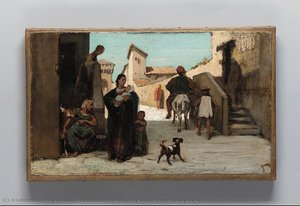
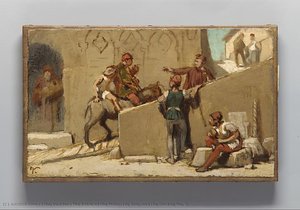
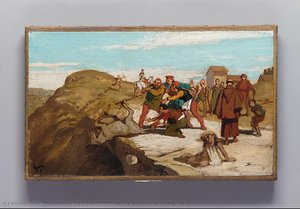
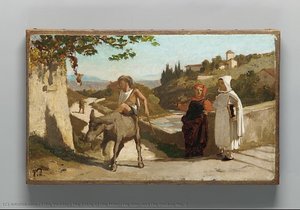
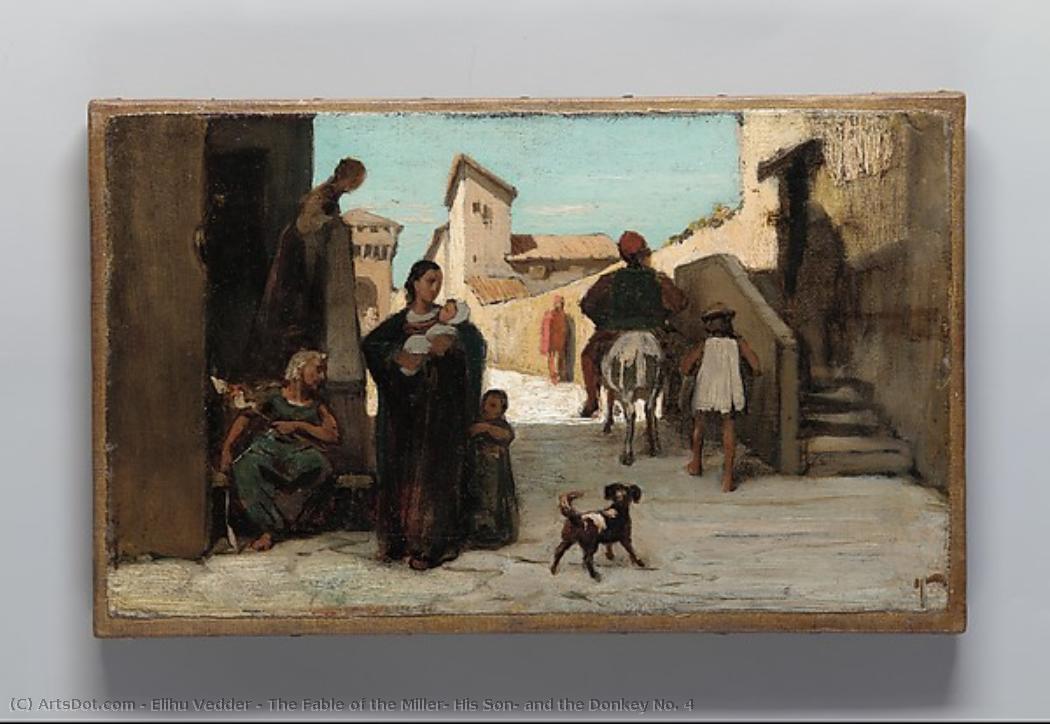
The Fable of the Miller, His Son, and the Donkey No. 4
 Oil On Canvas
- WallArt
- Symbolism
 1867
1867- 19th Century
 17.0 x 27.0 cm
 Metropolitan Museum of Art
 Read More
Giclée / Art Print
Museum-quality giclée or canvas print with fast production and flexible finish options. ( Buy Hand Made Painting Buy Image)




P118B $10

P118H $10

P118W $10

P438Z $10

P508JH $12

P508YH $12

P805H $10

P805Z $10

P919BZ $10

P919G $10

P919XJ $10

P959ZH $10

P968JZ $12

W106C $8

W218G $10

W218JH $8

W218Y $10

W307PJ $10

W316G $10

W316PJ $8

W316Y $10

W398PJ $8

W4111J $10

W500HY $15

W500JH $15

W692G $12

W849H $8

W940BG $15

W953PJ $8




Pick from our preset sizes that match the artwork's original proportions.

You may enter your own dimensions to fit a specific frame or space. If your selected size does not match the original image's proportions, we will either crop the artwork or extend the image with a mirrored or solid-fill edge. A digital mockup will be sent for your approval before production begins.
Please note that the on-screen preview does not reflect the actual cropping or extension. Only the mockup will accurately show the final composition.
While custom sizes are available, we recommend selecting a dimension from the predefined list to preserve the original proportions.
Worldwide Delivery () in 2 weeks instead of standard 4/5 weeks. (5 September)

Free Worldwide Express Shipping

High-Quality Linen Canvas

Full Shipping Insurance

Customs Tax Refund Guarantee

True Color Matching Guarantee

60-Day Return Policy (Defects Only)

100% Money-Back Guarantee

Bulk Discount Offer
 Glass option is only available in size under 110 CM

The Fable of the Miller, His Son, and the Donkey No. 4
Giclée / Art Print
Reproduction Size
-


Total Price
$ 63
A Testament to Human Fallibility: Elihu Vedder's Masterpiece
Elihu Vedder’s “The Fable of the Miller, His Son, and the Donkey No. 4,” painted in 1867, is more than just a depiction of Aesop’s timeless tale; it’s a profound meditation on human nature, societal judgment, and the inescapable consequences of our actions. Born amidst a complex family history – his parents cousins, his early years shaped by time spent in Cuba and between Schenectady and boarding school – Vedder’s artistic journey was fueled by an unwavering commitment to exploring the depths of the human psyche, often drawing inspiration from classical mythology and biblical narratives. This particular work, part of a series interpreting classic fables, stands as a poignant example of his signature style: a blend of realism tempered with Symbolist sensibilities, imbued with a melancholic beauty that lingers long after viewing.

A Scene from Rustic Italy: Composition and Technique
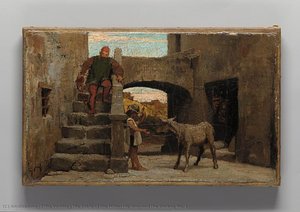
The painting unfolds within a meticulously rendered Italian landscape – a cobblestone street leading to modest buildings bathed in soft, diffused light. Vedder’s approach is distinctly realistic, yet subtly elevated; figures are presented with a flattened perspective, reminiscent of 19th-century Academic painting, but imbued with an emotional intensity that transcends mere representation. The composition is carefully structured, dividing the scene into distinct groups engaged in various activities: a central family group dominates the foreground, while other individuals – travelers, merchants, and onlookers – populate the background, creating a sense of bustling everyday life. Linear perspective guides the eye through the scene, defining architectural elements and outlining figures with precise detail. The artist’s impasto technique—the visible application of thick paint—adds texture and depth to the canvas, particularly evident in the rough surfaces of the buildings and the clothing worn by the characters. The muted color palette – earthy browns, ochres, and subtle blues – contributes to a sense of quiet contemplation and historical resonance.
Symbolism and Narrative Depth
Beyond its surface depiction of Aesop’s fable, “The Fable of the Miller, His Son, and the Donkey No. 4” carries profound symbolic weight. The story itself—a cautionary tale about the dangers of seeking approval and the futility of pleasing everyone—resonates deeply with human experience. The figures' attire – a blend of peasant garb and formal clothing – suggests a commentary on social hierarchies and the pressures of conformity. The donkey, central to the narrative, represents vulnerability and innocence, tragically sacrificed in the pursuit of external validation. Interestingly, Vedder’s choice to set the fable in Italy—a region steeped in artistic tradition and historical significance—adds another layer of meaning, evoking a sense of timelessness and universal themes. Furthermore, scholars have linked the painting's emotional core to Ivan the Terrible and His Son Ivan, a powerful depiction of paternal grief and regret that mirrors the tragic circumstances surrounding the Tsar’s death.
A Legacy of Visionary Art
Elihu Vedder (1836-1923) remains a pivotal figure in American art history, celebrated for his evocative Rubaiyat illustrations and dreamlike landscapes. His work reflects a deep engagement with Symbolism, Pre-Raphaelite influences, and the artistic legacy of the Italian Renaissance. “The Fable of the Miller, His Son, and the Donkey No. 4” exemplifies Vedder’s ability to seamlessly blend narrative storytelling with profound psychological insight. Today, reproductions of this captivating painting continue to inspire appreciation for its timeless themes and masterful execution, offering a window into the soul of one of America's most visionary artists.
Related Artworks
Artist Biography
Early Life and Artistic Training
- Born: February 26, 1836, New York City, United States
- Died: January 29, 1923, Rome, Italy
Elijah Vedder was born into a family with unique circumstances – his parents were cousins. His early life was shaped by diverse experiences including time spent in Cuba due to his father's relocation and periods between his maternal grandfather’s home in Schenectady and boarding school. Despite initial reservations from his father, Vedder's artistic ambitions were supported by his mother.
- Early Training: Vedder began formal training in New York City under Tompkins H. Matteson.
- European Studies: He furthered his studies in Paris with François-Édouard Picot and later in Italy, where he was profoundly influenced by the Italian Renaissance and the Macchiaioli painters.
- Italian Influence: His time in Italy fostered a deep emotional connection with fellow painter Giovanni Costa, leading to travels before financial constraints forced his return to America.
Career Highlights and Notable Works
Vedder’s career spanned various artistic disciplines, from painting and illustration to mural design and poetry. He cultivated friendships with prominent figures like Walt Whitman and Herman Melville.
- Illustrations for the Rubaiyat: Vedder is best known for his fifty-five illustrations accompanying Edward FitzGerald's translation of The Rubáiyát of Omar Khayyam (deluxe edition). These illustrations are considered masterpieces of Symbolist art.
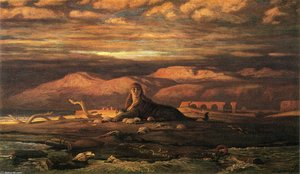
- Visionary Paintings: Notable paintings include "The Roc’s Egg," “The Fisherman and the Genii,” and “Lair of the Sea Serpent,” showcasing his visionary style and imaginative themes.
- Mural Work: He decorated the hallway of the Reading Room in the Washington Library of Congress with mural paintings.
- Tiffany Collaboration: Vedder collaborated with Louis Comfort Tiffany, designing glassware, mosaics, and statuettes for the Tiffany company.
Artistic Style and Influences
Vedder’s artistic style is characterized by its visionary nature, romantic imagery, and frequent incorporation of Oriental influences.
- Symbolism: Vedder was a key figure in the Symbolist movement, emphasizing emotion and individualism over strict realism.
- Pre-Raphaelites: His time in England exposed him to the Pre-Raphaelite Brotherhood, influencing his artistic style towards greater clarity and detail.
- English and Irish Mystics: He was influenced by the works of William Blake and William Butler Yeats, reflecting a fascination with mysticism and spirituality.
- Italian Renaissance & Macchiaioli: His studies in Italy shaped his understanding of form, color, and composition.
Legacy and Later Life
Vedder’s contributions to American art extended beyond painting. He helped establish the In Arte Libertas group in Italy and left behind a body of written work including autobiographical reflections and poetry.
- Membership: Vedder was a member of the American Academy of Arts and Letters.
- Literary Pursuits: He published The Digressions of V (1910), Miscellaneous Moods in Verse (1914), and Doubt and Other Things (1922).
- Later Years: Vedder spent his later years primarily in Italy, continuing to create art and write until his death in Rome in 1923. His legacy endures through his evocative paintings and illustrations that continue to captivate audiences today.
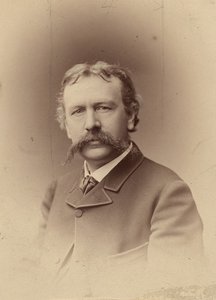
Elihu Vedder
1836 - 1923 , United States of America
Quick Facts
- Artistic Movement Or Style: Symbolism, Romanticism
- Artists Who Influenced This Artist:
- François-Édouard Picot
- Giovanni Costa
- William Blake
- William Butler Yeats
- Date Of Birth: February 26, 1836
- Date Of Death: January 29, 1923
- Full Name: Elihu Vedder
- Nationality: American
- Notable Artworks:
- The Roc’s Egg
- The Fisherman and the Genii
- Lair of the Sea Serpent
- Rubaiyat illustrations
- Place Of Birth: New York City, USA
Related Articles
Beyond Reality: Exploring the Mystical Depths of Symbolist Painting (1880-1910)
Explore the captivating world of Symbolist painting (1880-1910). Discover key artists like Moreau & Klimt, decode iconic motifs, and understand its lasting impact on modern art. Expert analysis for collectors.
Eugène Carrière: The 'Peintre d'Âme' & Symbolist Portraiture’s Intimate Vision
Explore the haunting world of Eugène Carrière, a pivotal French Symbolist artist known for his deeply intimate portraits & 'peinture d'âme'. Discover his life, style, and lasting influence on modern masters like Picasso. Shop high-quality reproductions at ArtsDot.
Giovanni Segantini: Capturing Alpine Light & Symbolist Visions
Explore the captivating world of Giovanni Segantini, master of Alpine landscapes & Symbolist art. Discover his innovative techniques, allegorical masterpieces like 'La Vita,' and enduring legacy. Learn about this pivotal 19th-century Italian painter.
The Evocative Realm of Symbolism: Exploring Meaning & Mysticism in Late 19th-Century Art
Explore the captivating world of Symbolism art! Discover key artists, defining themes & its lasting influence on modern movements. A deep dive into late 19th-century masterpieces.
Symbolism & the Subconscious: How 19th-Century Artists Painted Dreams and Emotion
Explore the evocative world of 19th-century Symbolism. Discover how masters like Gustave Moreau used dreams, myth, and metaphor to paint the subconscious, moving beyond realism to capture profound human emotion and spiritual truth.