 Preview
 Send
Send Share
Share
 Details

 Download
 Similars
 X-Ray
X-Ray Diaporama
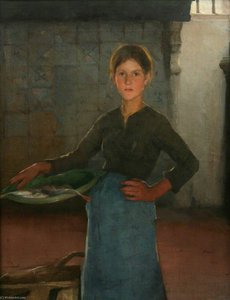
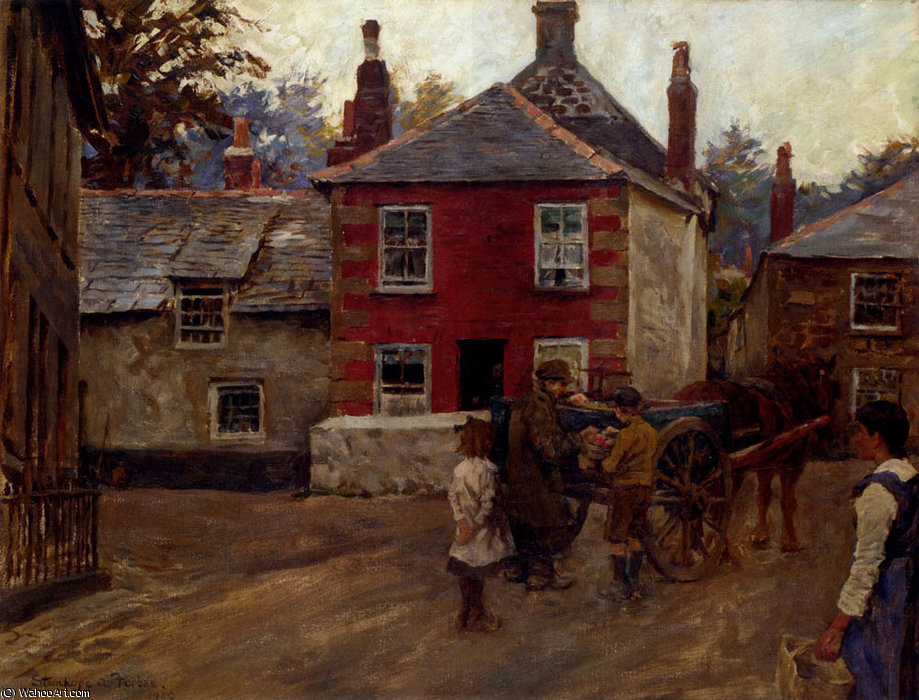
The Fruit Seller

 Read More
Hand Made Oil Reproduction
Hand-painted oil on canvas in your size and frame, made to order by our artists. ( Buy Print Buy Image)




































Pick from our preset sizes that match the artwork's original proportions.

You may enter your own dimensions to fit a specific frame or space. If your selected size does not match the original image's proportions, we will either crop the artwork or extend the painting with additional hand-painted elements. A digital mockup will be sent for your approval before production begins.
Please note that the on-screen preview does not reflect the actual cropping or extension. Only the mockup will accurately show the final composition.
While custom sizes are available, we recommend selecting a dimension from the predefined list to preserve the original proportions.
After order, ArtsDot.com team will email client for instructions and provide a mockup preview
Worldwide Delivery () in 3/4 weeks instead of standard 5 weeks. (17 August). No compromise on quality.

Free Worldwide Express Shipping

High-Quality Linen Canvas

Full Shipping Insurance

Customs Tax Refund Guarantee

True Color Matching Guarantee

60-Day Return Policy (Defects Only)

100% Money-Back Guarantee

Bulk Discount Offer
 Glass option is only available in size under 110 CM

The Fruit Seller
Reproduction Medium
Reproduction Size
-


Total Price
$ 263
Artwork Description
A Glimpse of Victorian Life: "The Fruit Seller" by Elizabeth Adela Stanhope Forbes
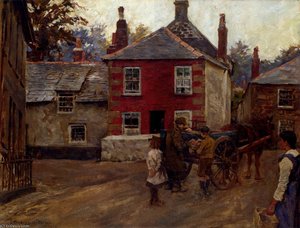
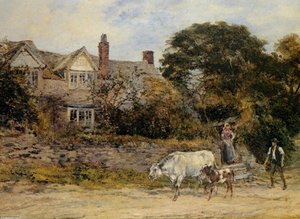
Elizabeth Adela Stanhope Forbes’s “The Fruit Seller” offers a captivating snapshot of everyday life in late 19th-century England. This evocative black and white work, rendered with skillful draughtsmanship, transports viewers to a bustling street scene where the rhythms of commerce and community intertwine. The painting depicts a man pulling a cart laden with fruit down a red brick street, likely as part of his daily trade. The presence of onlookers, horses, and the architectural backdrop all contribute to a sense of vibrant activity.
Style and Technique: Newlyn School Realism
Forbes was a prominent figure in the Newlyn School, a group of artists who settled in Cornwall, England, and dedicated themselves to depicting scenes of rural and coastal life with realism and sensitivity. Her work reflects this commitment, eschewing overly romanticized portrayals for honest observations of daily routines. The monochromatic palette—achieved through careful manipulation of light and shadow—adds a timeless quality to the scene, reminiscent of early photography while retaining the artistic expressiveness of drawing. Forbes’s skill in capturing texture – the rough brickwork, the worn fabric of the man's uniform, the gleam on the horses – is particularly noteworthy. The use of cross-hatching and subtle tonal variations creates a depth and dynamism that brings the scene to life.
Historical Context and Influences
Painted during the Victorian era (1837-1901), "The Fruit Seller" reflects a period of significant social change and industrial growth in Britain. The rise of urban centers led to increased trade and commerce, as depicted in this painting. Forbes was influenced by artists like James Abbott McNeill Whistler and Walter Sickert, both known for their innovative approaches to composition and tonal studies. Whistler’s emphasis on aesthetic harmony and Sickert's interest in depicting ordinary people contributed to Forbes’s artistic development. The scene itself speaks to the importance of local markets and street vendors in providing essential goods to urban populations.
Symbolism and Emotional Impact
While seemingly a straightforward depiction of daily life, "The Fruit Seller" carries subtle symbolic weight. The man’s uniform suggests a possible military connection, hinting at the broader social context of Victorian Britain—an era marked by imperial expansion and military service. The horses, symbols of both labor and transportation, further emphasize the industrious nature of the scene. Beyond its historical significance, the painting evokes a sense of quiet dignity and resilience in the face of everyday challenges. The viewer is invited to contemplate the lives of ordinary people and appreciate the simple beauty of their existence. The monochromatic palette contributes to a feeling of nostalgia and timelessness, allowing viewers to connect with a bygone era.
A Timeless Addition
“The Fruit Seller” by Elizabeth Adela Stanhope Forbes is more than just a depiction of a street scene; it’s a window into Victorian England. Its skillful execution, historical significance, and subtle emotional depth make it a compelling work for art lovers, collectors, and interior designers alike. A reproduction of this piece would bring a touch of understated elegance and historical charm to any space.
Related Artworks

Artist Biography
Early Life and Education
- Born: Kingston, Ontario, Canada (1859)
- Died: 1912
- Elizabeth Adela Forbes was the youngest child of William Armstrong, a government employee.
- She received private education in Canada before studying art in England with her mother as chaperone.
- Studied at the South Kensington Art School (now Royal College of Art) in London.
- In the early 1880s, she studied with J. Frank Currier and Frank Duveneck in Munich.
Artistic Development and Influences
- Early Style: Initially influenced by traditional academic painting.
- Brittany Period (1882): Explored plein air painting at Pont-Aven, Brittany, which significantly impacted her style.
- Key Influences:
- James Abbott McNeill Whistler – Particularly evident in her etchings.
- Walter Sickert – Contributed to her realist approach.
- French Realism - Shaped her depictions of daily life and rural scenes.
- Mediums: Worked primarily with oil, watercolour, pastels, and etching.
- Subject Matter: Frequently featured children, landscapes, and fishing scenes.
The Newlyn School and Notable Works
- Move to Cornwall (1885): Established a studio in Newlyn, Cornwall, becoming a prominent figure in the Newlyn Art Colony.
- Newlyn School: Associated with the Newlyn School of artists known for their realistic depictions of Cornish life and working-class people.
- Marriage to Stanhope Forbes (1889): Married fellow artist Stanhope Alexander Forbes, further solidifying her connection to the Newlyn art scene.
- Newlyn Art School: In 1899, she and her husband founded the Newlyn Art School, contributing significantly to artistic education in Cornwall.
- Notable Works:
- School is Out (one of her most popular works)
- Blackberry Gathering (1912)
- A Newlyn Maid
- Volendam, Holland, from the Zuidende (1895)
- Zandvoort Fishergirl
Achievements and Recognition
- Paris International Exhibition (1891): Won a medal.
- World's Columbian Exposition, Chicago (1893): Received a gold medal for an oil painting.
- Exhibitions: Participated in over 63 exhibitions in London between 1893 and 1899.
- Reputation: Dubbed "the Queen of Newlyn" due to her significant contributions to the art colony.
- Collections: Her paintings are held in collections of museums in Canada, the United States, and England.
Historical Significance
- Victorian Genre Painting: Forbes’ work exemplifies Victorian genre painting, capturing scenes of everyday life with realism and attention to detail.
- Newlyn School Legacy: She played a crucial role in establishing the Newlyn School as a significant artistic movement in Britain.
- Female Artist in a Male-Dominated Field: Forbes achieved considerable success as a female artist during a time when women faced numerous barriers in the art world.
- Art Education: Her involvement with the Newlyn Art School helped nurture and develop the talents of aspiring artists.
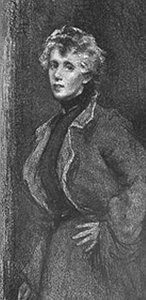
Elizabeth Adela Stanhope Forbes
1859 - 1912 , Canada
Quick Facts
- Artistic Movement Or Style: Newlyn School
- Artists Who Influenced This Artist:
- James Abbott McNeill Whistler
- Walter Sickert
- Date Of Birth: 1859
- Date Of Death: 1912
- Full Name: Elizabeth Adela Stanhope Forbes
- Nationality: Canadian
- Notable Artworks:
- School is Out
- Home-Along: Evening
- The Bride (Lady Forbes)
- Village Rendezvous
- On a Fine Day
- Zandvoort Fishergirl
- Volendam, Holland
- Blackberry Gathering
- A Newlyn Maid
- Place Of Birth: Kingston, Canada
Related Articles
Elizabeth Adela Forbes: A Pioneering Impressionist of the Newlyn School
Explore the life & art of Elizabeth Adela Forbes, a pioneering Impressionist of the Newlyn School. Discover her captivating paintings, unique style, and lasting legacy with ArtsDot.
Henry Scott Tuke: Sunlit Masculinity & the Pastoral Ideal in Victorian Painting
Explore the captivating world of Henry Scott Tuke's paintings – a master of British Impressionism renowned for his intimate depictions of youth and sunlit maritime scenes. Discover his legacy & aesthetic influence.
The Hague School: Realism, Atmosphere & the Dawn of Dutch Impressionism
Explore the Hague School's pivotal role in Dutch art history. Discover realism, atmospheric landscapes & its influence on Impressionism. Learn about key artists like Mauve & Maris with ArtsDot.

The Refined Aesthetic of Victorian Illustration: A Study in Narrative & Technique
Explore the captivating world of Victorian illustration! Discover Pre-Raphaelite influences, key artists like Rossetti & Stephens, and the era's rich narrative detail. A deep dive for art enthusiasts.
William Powell Frith: Narratives of Victorian Society & the Rise of Realist Painting
Explore the life & works of William Powell Frith, the 'greatest British painter of social scenes.' Discover his iconic Victorian genre paintings and learn about his lasting impact on realist art. Hand-painted reproductions available.