 Preview
 Send
Send Share
Share
 Details

 Download
 Similars
 X-Ray
X-Ray Diaporama
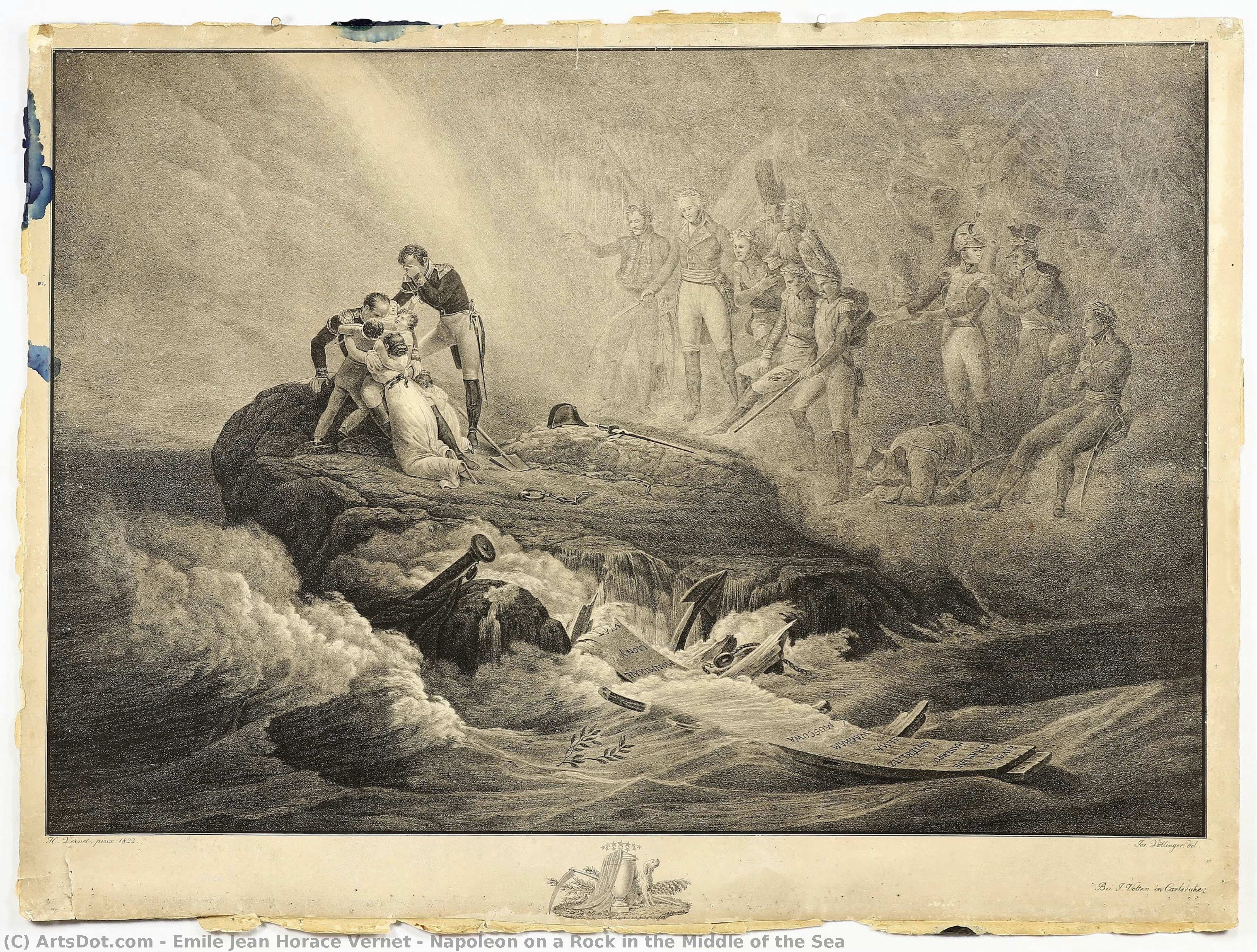
Napoleon on a Rock in the Middle of the Sea


 Read More
Hand Made Oil Reproduction
Hand-painted oil on canvas in your size and frame, made to order by our artists. ( Buy Print Buy Image)




P118B $10

P118H $10

P118W $10

P438Z $10

P508JH $12

P508YH $12

P805H $10

P805Z $10

P919BZ $10

P919G $10

P919XJ $10

P959ZH $10

P968JZ $12

W106C $8

W218G $10

W218JH $8

W218Y $10

W307PJ $10

W316G $10

W316PJ $8

W316Y $10

W398PJ $8

W4111J $10

W500HY $15

W500JH $15

W692G $12

W849H $8

W940BG $15

W953PJ $8




Pick from our preset sizes that match the artwork's original proportions.

You may enter your own dimensions to fit a specific frame or space. If your selected size does not match the original image's proportions, we will either crop the artwork or extend the painting with additional hand-painted elements. A digital mockup will be sent for your approval before production begins.
Please note that the on-screen preview does not reflect the actual cropping or extension. Only the mockup will accurately show the final composition.
While custom sizes are available, we recommend selecting a dimension from the predefined list to preserve the original proportions.
After order, ArtsDot.com team will email client for instructions and provide a mockup preview
Worldwide Delivery () in 3/4 weeks instead of standard 5 weeks. (5 September). No compromise on quality.

Free Worldwide Express Shipping

High-Quality Linen Canvas

Full Shipping Insurance

Customs Tax Refund Guarantee

True Color Matching Guarantee

60-Day Return Policy (Defects Only)

100% Money-Back Guarantee

Bulk Discount Offer
 Glass option is only available in size under 110 CM

Napoleon on a Rock in the Middle of the Sea
Reproduction Medium
Reproduction Size
-


Total Price
$ 263
A Moment Frozen in Time: The Drama of Napoleon on a Rock
In the turbulent annals of French history, few figures command as much awe and controversy as Napoleon Bonaparte, and few visual narratives capture his indomitable spirit quite like Emile Jean-Horace Vernet’s evocative lithograph, Napoleon on a Rock in the Middle of the Sea. This striking piece transports the viewer to a moment of profound tension, where the boundaries between man, nature, and destiny blur. The composition centers on the Emperor standing atop a rugged, isolated rock, an island of stability amidst a churning, unpredictable sea. Surrounded by a band of soldiers and sailors, some brandishing swords in preparation for conflict, the scene vibrates with the kinetic energy of an impending struggle. Even the presence of a loyal dog near the center-right adds a layer of grounded, earthly reality to this high-stakes maritime drama, creating a tableau that is as much about the raw instinct for survival as it is about imperial command.
The artistry of Vernet shines through in his departure from the rigid, idealized structures of academic Classicism. Instead of the polished, untouchable hero often seen in Davidian portraiture, Vernet offers a more visceral and contemporary interpretation of leadership. The lithographic technique allows for a rich interplay of light and shadow, capturing the salt-sprayed atmosphere and the weathered textures of the stone and fabric. There is a palpable sense of movement in the waves and the frantic gestures of the men, drawing the eye across the canvas in a rhythmic dance of light. For the discerning collector or interior designer, this work offers more than just historical documentation; it provides a focal point of intense character and atmospheric depth that can anchor a room with its storied complexity.
Historical Resonance and Aesthetic Grandeur
To understand this artwork is to understand the era of its creation. Born into an illustrious lineage of French painters, Vernet possessed a unique ability to blend the marine landscape traditions of his grandfather, Claude Joseph Vernet, with the contemporary political pulse of his time. Created around 1800, this piece reflects the burgeoning Napoleonic legend—a period defined by rapid expansion, military brilliance, and the sheer force of will. The subtle signs of aging present in the lithograph only serve to enhance its authenticity, lending a sense of "patina" that speaks to its survival through centuries of shifting political tides. It is a piece that carries the weight of history within its very fibers.
For those looking to integrate fine art into a sophisticated interior, Napoleon on a Rock in the Middle of the Sea serves as an extraordinary conversational piece. Its emotional impact lies in its ability to evoke both the loneliness of command and the collective bravery of the human spirit. Whether displayed in a study filled with leather-bound books or as a bold statement in a modern gallery-style living space, this reproduction brings a sense of epic scale and historical gravity. It is an invitation to contemplate the nature of resilience—standing firm against the tides of change, much like the figure at its heart.
Related Artworks
Artist Biography
Émile Jean-Horace Vernet: A Life in Paint
Early Life and Family Legacy
Émile Jean-Horace Vernet was born on June 30, 1789, in Paris, France – remarkably, within the Louvre Palace while his parents resided there during the French Revolution. He came from a distinguished artistic lineage; his father was Carle Vernet, also a renowned painter, and his grandfather was Claude Joseph Vernet, celebrated for his marine landscapes. This familial background profoundly shaped his early exposure to art and laid the foundation for his own career.Artistic Development and Early Influences
Vernet quickly developed a preference for depicting contemporary life rather than adhering to the high-minded seriousness of academic Classicism. He rejected idealized representations, favoring a more realistic and vernacular style. During Napoleon Bonaparte’s reign, he began portraying French soldiers with a newfound familiarity, diverging from the grand, Davidian approach. Early works like “The Taking of an Entrenched Camp” showcased his developing character and directness. His artistic development was also influenced by observing the realities of war and military life firsthand.Rise to Prominence During the Restoration
The Bourbon Restoration brought Vernet significant recognition. He secured a series of commissions from the Duc d'Orleans (the future King Louis-Philippe) for battle paintings. Critics were impressed by his speed and accuracy, noting that his works combined historical detail with compelling landscapes. His “Four Battles” series – including “The Battle of Jemappes,” “The Battle of Montmirail,” “The Battle of Hanau,” and “The Battle of Valmy” – established him as a leading battle painter of the era.Director of the French Academy in Rome
Vernet’s talent and reputation led to his appointment as director of the French Academy in Rome from 1829 to 1835. This period allowed him to study classical art and architecture, further refining his skills and broadening his artistic horizons. However, he remained committed to representing contemporary subjects upon his return to France.Patronage Under Louis-Philippe and the Second Empire
King Louis-Philippe became a prolific patron of Vernet, commissioning him to decorate the entire Constantine room at the Palace of Versailles within three years. These paintings depicted French colonization in Algeria, portraying scenes of military conquest and “civilizing” efforts. After the Revolution of 1848, Napoléon III also became a supporter, continuing Vernet’s commissions during the Second Empire. He continued to depict heroic representations of the French army, maintaining his commitment to realism.The Crimean War and Later Years
Vernet accompanied the French army during the Crimean War, producing paintings such as “The Battle of the Alma.” While not as well-received as his earlier works, these pieces demonstrated his dedication to documenting contemporary events. He famously refused a request to remove an unpopular general from one of his paintings, stating his commitment to historical truth.Major Achievements and Historical Significance
- Vernet’s realistic depictions of soldiers and battle scenes revolutionized military painting in France.
- His work provides valuable insights into 19th-century French society, politics, and colonial endeavors.
- He skillfully blended historical accuracy with artistic flair, creating compelling and visually striking compositions.
- His paintings served as powerful propaganda tools, shaping public perception of the French army and its campaigns.
Legacy
Émile Jean-Horace Vernet died in Paris on January 17, 1863. His work continues to be studied and admired for its historical significance and artistic merit. He is also a curious footnote in popular culture as the alleged relative of Sherlock Holmes (according to Arthur Conan Doyle’s story “The Adventure of the Greek Interpreter”). Vernet's legacy lies in his ability to capture the spirit of 19th-century France through vivid, realistic, and often dramatic depictions of war, colonialism, and everyday life.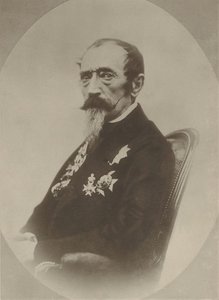
emile jean horace vernet
1789 - 1863
Quick Facts
- Birth Date: 1789
- Death Date: 1863
- Influenced By:
- Carle Vernet
- Claude Joseph Vernet
- Movement:
- Romanticism
- Orientalism
- Name: Émile Jean-Horace Vernet
- Nationality: French
- Notable Works:
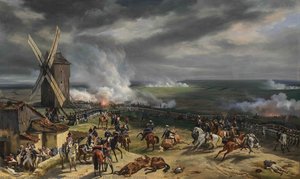
- The Battle of Valmy
- Polish Prometheus
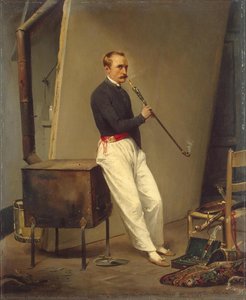
- The Artist's Studio
- Angel of Death
Related Articles
Top 10 Lithographs That Revolutionized Art | ArtsDot
Explore 10 legendary lithographs by Toulouse-Lautrec, Munch & Picasso that redefined art! Discover the stories behind these iconic prints and find museum-quality reproductions for your home decor at ArtsDot.com. Explore the full collection online.

Josef Kriehuber: A Life Immersed in Viennese Topography – From Lithographic Precision to Romantic Observation
Explore the life and work of Josef Kriehuber, a master lithographer who captured 19th-century Vienna. Discover his portraits of nobility, landscapes, & artistic techniques. A guide for collectors & art enthusiasts.

Cézanne's Masterpieces: 25 Iconic Artworks to Transform Your Space
Journey through 25 iconic artworks by Paul Cézanne – a master of Impressionism and Post-Impressionism. Explore his landscapes, still lifes, and the stories behind these timeless masterpieces. Discover museum-quality reproductions & curated decor at ArtsDot.com.
Honoré Daumier: Social Commentary & Artistic Innovation in 19th-Century France
Explore the life & work of Honoré Daumier, a master of 19th-century French realism and satire. Discover his powerful lithographs, paintings, and sculptures critiquing society – and his lasting influence on modern art.
Thomas Butterworth (1768–1842): Navigating the Aesthetics of British Marine Painting
Explore the captivating maritime art of Thomas Butterworth (1768–1842). Discover his stunning depictions of Napoleonic naval battles and life at sea, commissioned works for the East India Company, and enduring legacy. Learn more today!