 Preview
 Send
Send Share
Share
 Details

 Download
 Similars
 X-Ray
X-Ray Diaporama
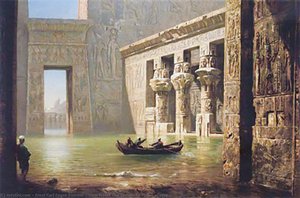
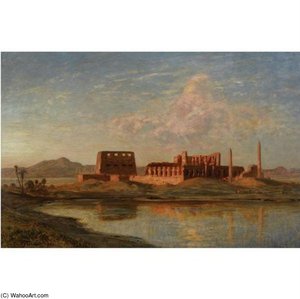
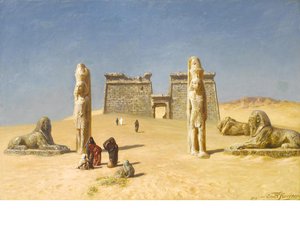
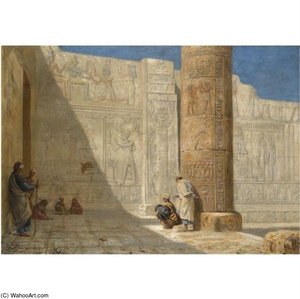
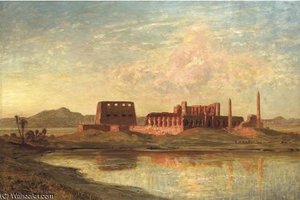
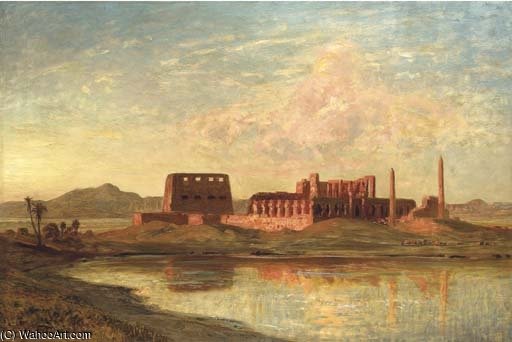
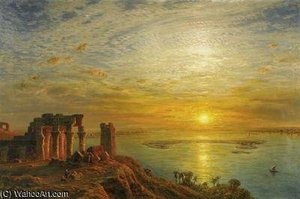
Ancient Ruins On The Banks Of The Nile

 Read More
Hand Made Oil Reproduction
Hand-painted oil on canvas in your size and frame, made to order by our artists. ( Buy Print Buy Image)




































Pick from our preset sizes that match the artwork's original proportions.

You may enter your own dimensions to fit a specific frame or space. If your selected size does not match the original image's proportions, we will either crop the artwork or extend the painting with additional hand-painted elements. A digital mockup will be sent for your approval before production begins.
Please note that the on-screen preview does not reflect the actual cropping or extension. Only the mockup will accurately show the final composition.
While custom sizes are available, we recommend selecting a dimension from the predefined list to preserve the original proportions.
After order, ArtsDot.com team will email client for instructions and provide a mockup preview
Worldwide Delivery () in 3/4 weeks instead of standard 5 weeks. (17 August). No compromise on quality.

Free Worldwide Express Shipping

High-Quality Linen Canvas

Full Shipping Insurance

Customs Tax Refund Guarantee

True Color Matching Guarantee

60-Day Return Policy (Defects Only)

100% Money-Back Guarantee

Bulk Discount Offer
 Glass option is only available in size under 110 CM

Ancient Ruins On The Banks Of The Nile
Reproduction Medium
Reproduction Size
-


Total Price
$ 263
Related Artworks
Artist Biography
Ernst Carl Eugen Koerner – A Pioneer of Egyptian Landscape Painting
Ernst Karl Eugen Koerner (3 November 1846, Stibbe near Marienwerder – 30 July 1927, Berlin) was a German landscape painter who achieved international renown for his meticulously detailed depictions of Egypt and its surrounding landscapes. His artistic vision combined scientific observation with Romantic sensibility, establishing him as one of the foremost artists of his era to capture the grandeur and mystery of ancient Egypt.Early Life and Family Background
Koerner’s formative years were marked by a privileged upbringing within a family steeped in intellectual pursuits. Born into the estate of Mlewiec, near Toruń (then Marienwerder), Prussia, he descended from a lineage of landowners and scholars—a heritage that profoundly shaped his worldview and artistic inclinations. His father, Johann Jakob Friedrich Koerner, was an economist with academic credentials from Heidelberg, while his mother, Annelise, née Koerner, hailed from a distant Berlin branch of the family. Notably, Ernst Frideryk Konrad Koerner’s grandfather, Theodor Eduard Koerner, served as Lord Mayor of Thorn (Marienwerder) between 1842 and 1871, demonstrating a tradition of civic engagement and intellectual curiosity. This familial influence instilled in him a deep appreciation for both art and science—a duality that would permeate his artistic endeavors throughout his life. He had two well-known great grandfathers; one was the Lord Mayor of Thorn 1842–1871, Theodor Eduard Koerner (1810–1891; LL.D., University of Berlin, 1835), the other the Berlin orientalist painter Ernst Carl Eugen Koerner (1846–1927).Education and Artistic Training
Koerner’s artistic education commenced at the Gymnasium of Krefeld, where he excelled academically. Recognizing his talent for painting, he sought guidance from Hermann Eschke and Karl Steffeck, mastering techniques that would become hallmarks of his distinctive style. He traveled extensively during his formative years, immersing himself in diverse cultures and absorbing inspiration from landscapes across Europe—a journey that honed his observational skills and broadened his artistic horizons. His father’s influence extended beyond economics; he instilled in Koerner a passion for botany and encouraged him to study the natural world with meticulous detail. This dedication to scientific observation would prove invaluable in informing his artistic representations of Egypt, where he painstakingly recreated geological formations and vegetation patterns with unparalleled accuracy.The Egyptian Period: A Synthesis of Observation and Imagination
Koerner’s fascination with Egypt culminated in a series of expeditions that transformed him into one of the most celebrated artists of his time to portray the pyramids and temples of ancient civilization. From 1873 to 1886, he undertook numerous journeys to Egypt and the Middle East, documenting the landscape with extraordinary precision—a testament to his unwavering commitment to scientific rigor. Simultaneously, Koerner infused his paintings with Romantic sensibilities, conveying a profound emotional response to the sublime beauty of Egyptian vistas. His canvases capture not merely visual impressions but also an intangible sense of awe and wonder—reflecting the spirit of exploration that characterized the era. The Temple Of Karnak At Luxor and The Temple Of Seti I, Abydos are two iconic artworks that exemplify his artistic prowess and ability to translate scientific observation into evocative imagery.Legacy and Influence
Ernst Koerner’s contribution to landscape painting is undeniable. His meticulous attention to detail—combined with a masterful command of color and composition—established him as a pioneer in capturing the grandeur and mystery of Egyptian landscapes. He influenced subsequent generations of artists, fostering a tradition of scientific observation blended with artistic imagination. His legacy continues to inspire admiration for his ability to transform geological formations and vegetation patterns into breathtaking visual experiences. Koerner’s work stands as a testament to the enduring power of art to illuminate the natural world and convey profound emotional resonance—a timeless achievement that secures his place among the most significant figures in 19th-century art history.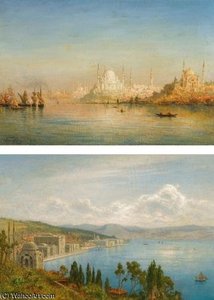
ernst carl eugen koerner
1846 - 1927 , Germany
Quick Facts
- Artistic Movement Or Style: Landscape Art
- Artists Or Movements Influenced By This Artist: ['Romanticism']
- Artists Who Influenced This Artist: ['Eduard Hildebrandt']
- Date Of Birth: November 3, 1846
- Date Of Death: July 30, 1927
- Full Name: Ernst Karl Eugen Koerner
- Nationality: German
- Notable Artworks:
- The Temple Of Seti I, Abydos
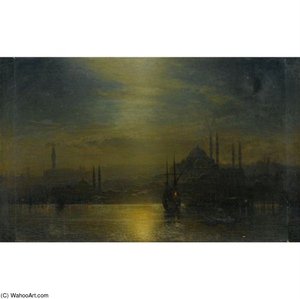
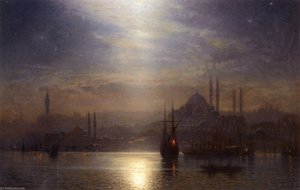
- The Golden Horn - A Nocturne
- Place Of Birth: Stibbe near Marienwerder, Germany
Related Articles

John Varley I: Intimate Observation & the British Romantic Landscape
Explore the serene landscapes of John Varley I, a key figure in British Romanticism. Discover his unique watercolour style, collaboration with William Blake & lasting artistic legacy. Learn about collecting Varley's work.
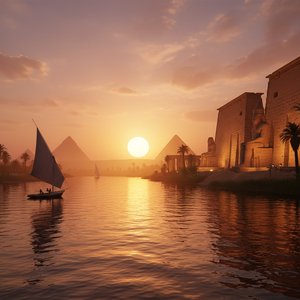
Golden Hour on the Nile: Symbolism & Artistic Legacy of Egyptian Sunsets
Explore the rich symbolism of Egyptian sunset paintings & their artistic legacy. Discover how color, ritual, and landscape shaped ancient beliefs – a guide for discerning collectors.

The Sublime and the Picturesque: Exploring Emotion & Nature in Romantic Landscape Painting
Explore the emotional power of Romantic landscape painting! Discover the sublime & picturesque aesthetics, key artists like Friedrich & Cole, and lasting influence on art history. Find your perfect piece at ArtsDot.

James Ward: A Study in British Romantic Landscape and Animal Painting
Explore the captivating world of James Ward (1769-1859), a master of British Romantic landscape & animal painting. Discover his iconic 'Gordale Scar' and exquisite portraits – a timeless art investment. Learn about his influences, style, and enduring legacy.
Giovanni Battista Piranesi: Visionary of Ruins & Architect of Imagination
Explore the life & work of Giovanni Battista Piranesi, master etcher of Roman views & creator of the haunting 'Carceri d'Invenzione'. Discover his architectural vision and lasting influence on art history.