 Preview
 Send
Send Share
Share
 Details

 Download
 Similars
 X-Ray
X-Ray Diaporama
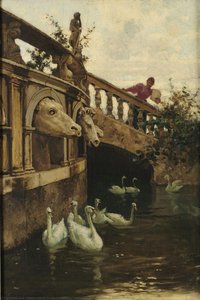
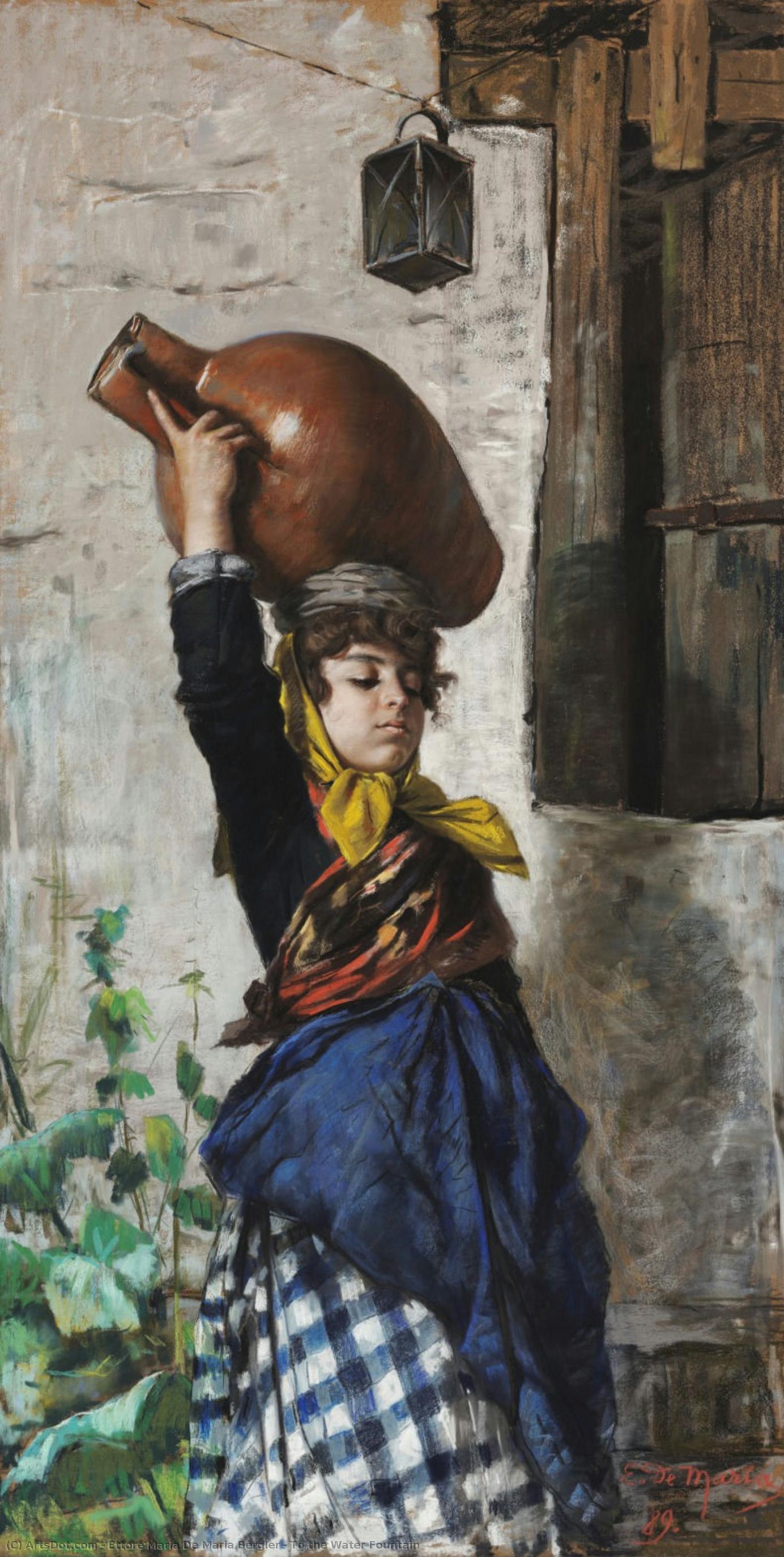
To the Water Fountain


 Read More
Giclée / Art Print
Museum-quality giclée or canvas print with fast production and flexible finish options. ( Buy Hand Made Painting Buy Image)




































Pick from our preset sizes that match the artwork's original proportions.

You may enter your own dimensions to fit a specific frame or space. If your selected size does not match the original image's proportions, we will either crop the artwork or extend the image with a mirrored or solid-fill edge. A digital mockup will be sent for your approval before production begins.
Please note that the on-screen preview does not reflect the actual cropping or extension. Only the mockup will accurately show the final composition.
While custom sizes are available, we recommend selecting a dimension from the predefined list to preserve the original proportions.
Worldwide Delivery () in 2 weeks instead of standard 4/5 weeks. (29 August)

Free Worldwide Express Shipping

High-Quality Linen Canvas

Full Shipping Insurance

Customs Tax Refund Guarantee

True Color Matching Guarantee

60-Day Return Policy (Defects Only)

100% Money-Back Guarantee

Bulk Discount Offer
 Glass option is only available in size under 110 CM

To the Water Fountain
Giclée / Art Print
Reproduction Size
-


Total Price
$ 63
Related Artworks
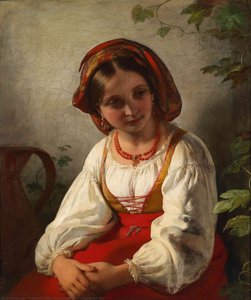
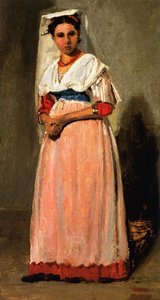
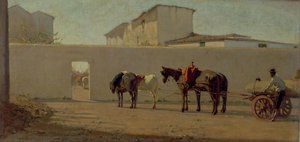
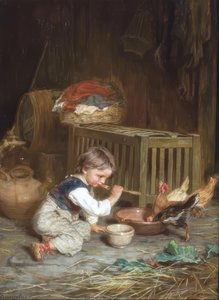
Artist Biography
The Lyrical Vision of Ettore Maria De Maria Bergler
Ettore Maria De Maria Bergler stands as a luminous figure in the tapestry of Italian art, an artist whose brush captured the delicate transition from academic tradition to the flowing, organic elegance of the Art Nouveau movement. Born in Naples in 1850, Bergler’s early life was shaped by a rich cultural duality; his father served as a town mayor in Sicily, while his mother brought the refined sensibilities of her native Vienna to his upbringing. This unique heritage provided him with a foundation that blended classical Italian discipline with a cosmopolitan appreciation for modern European aesthetics. His formative years were spent under the watchful eyes of masters such as Antonio Leto and Francesco Luminous Lojacono, mentors who instilled in him a rigorous command over composition, light, and the fundamental truths of figurative painting.
As his career matured, Bergler moved beyond the strictures of his early training to become a leading practitioner of Stile Liberty, the Italian iteration of Art Nouveau. This stylistic evolution allowed him to infuse his work with a sense of rhythmic movement and botanical grace. His mastery was not limited to a single genre; rather, he possessed a versatile talent that allowed him to navigate seamlessly between the grandeur of monumental frescoes and the intimate charm of landscape and portraiture. In Palermo, his artistic presence became part of the very architecture of the city’s most prestigious landmarks. He left an indelible mark on the Villa Malfitano Whitaker and the magnificent Teatro Massimo, where his work in the royal box showcased a sophisticated ability to marry decorative beauty with structural elegance.
A Legacy Written in Light and Flora
The essence of Bergler’s oeuvre lies in its profound connection to the natural world and the atmospheric light of the Mediterranean. His landscapes are more than mere topographical records; they are emotive explorations of Sicilian vistas, often bathed in a golden, ethereal glow that suggests a moment suspended in time. This fascination with organic forms reached its zenith in his decorative commissions, such as the floral-themed frescoes for the Grand Hotel Villa Igiea in 1908. In these works, the sinuous lines and vibrant palettes characteristic of Art Nouveau are used to create an immersive environment where art and architecture become one.
Beyond his individual creative output, Bergler’s influence extended into the next generation of Italian painters through his dedicated role as an educator. From 1913 to 1931, he taught figurative painting at the Academy of Fine Arts in Palermo, passing on the technical precision and soulful observation that defined his own practice. Among those who studied under his guidance was Michele Dixitdomino, ensuring that Bergler’s commitment to craftsmanship would endure. His life, spanning from the mid-nineteenth century to the dawn of the mid-twentieth, serves as a bridge between eras, embodying the transition from the structured academicism of the past to the decorative, fluid modernism that would redefine European visual culture.
To reflect on the breadth of his contributions, one might consider the following pillars of his career:
- Mastery of Stile Liberty: His ability to integrate the flowing, organic motifs of Art Nouveau into both large-scale frescoes and intimate genre scenes.
- Architectural Decoration: Significant contributions to Sicilian landmarks, including the Teatro Massimo and Villa Igiea, which elevated public spaces through art.
- Pedagogical Impact: A long tenure at the Academy of Fine Arts in Palermo, shaping the technical foundations of future Italian artists.
- Versatile Subject Matter: An accomplished range of work spanning landscapes, portraits, and complex figurative compositions.
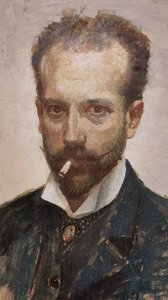
ettore maria de maria bergler
1850 - 1938 , Italy
Quick Facts
- Artistic Movement Or Style: Art Nouveau
- Artists Or Movements Influenced By This Artist: ['Simone Martini']
- Artists Who Influenced This Artist:
- Antonio Leto
- Francesco Lojacono
- Date Of Birth: Naples, Italy (1850)
- Date Of Death: 1938
- Full Name: ettore maria de maria bergler
- Nationality: Italian
- Notable Artworks:
- Frescoes for Villa Malfitano Whitaker
- Swans in the fountain of Piazza Pretoria
- Sicilian woman in the traditional costume of Piana degli Albanesi
- Place Of Birth: Naples
Related Articles

The Enduring Legacy of Oil on Canvas: Technique, History & Aesthetic Impact
Explore the rich history & techniques of oil painting – from Renaissance masters to Impressionism. Discover pigments, layering methods, and why this timeless medium endures. Expert insights for artists & art enthusiasts.

Oil on Canvas: A Historical & Technical Exploration of a Timeless Artistic Medium
Explore the rich history & enduring techniques of oil painting on canvas. Discover the science behind its longevity, conservation practices, and contemporary relevance. Expert insights for art enthusiasts.

The Enduring Power of Painting: A Historical & Contemporary Exploration of Form and Emotion
Explore the rich history & enduring techniques of oil painting with ArtsDot. Discover masterpieces, learn about art collecting, and find authentic handmade reproductions crafted by skilled artists.

The Enduring Legacy of Oil on Canvas: Technique, History & Contemporary Practice
Explore the rich history & enduring techniques of oil painting on canvas. Discover the science behind its longevity, conservation practices, and contemporary relevance. Expert insights for art enthusiasts.
The Enduring Legacy of Oil Paint: Technique, History & Emotional Resonance in Western Art
Explore the rich history & techniques of oil painting! Discover Renaissance masters, scientific principles behind color, and emotional resonance in art. Learn about glazing, layering, and atmospheric perspective – a guide for enthusiasts & collectors.