 Preview
 Send
Send Share
Share
 Details

 Download
 Similars
 X-Ray
X-Ray Diaporama
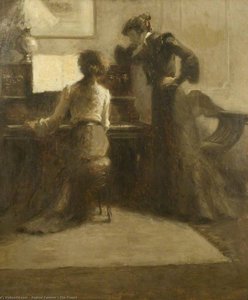
The Pianist
 Oil On Canvas
- WallArt
- Symbolism
 1900
1900 105.0 x 89.0 cm
 Bristol Museum - Art Gallery
 Read More
Hand Made Oil Reproduction
Hand-painted oil on canvas in your size and frame, made to order by our artists. ( Buy Print Buy Image)




P118B $10

P118H $10

P118W $10

P438Z $10

P508JH $12

P508YH $12

P805H $10

P805Z $10

P919BZ $10

P919G $10

P919XJ $10

P959ZH $10

P968JZ $12

W106C $8

W218G $10

W218JH $8

W218Y $10

W307PJ $10

W316G $10

W316PJ $8

W316Y $10

W398PJ $8

W4111J $10

W500HY $15

W500JH $15

W692G $12

W849H $8

W940BG $15

W953PJ $8




Pick from our preset sizes that match the artwork's original proportions.

You may enter your own dimensions to fit a specific frame or space. If your selected size does not match the original image's proportions, we will either crop the artwork or extend the painting with additional hand-painted elements. A digital mockup will be sent for your approval before production begins.
Please note that the on-screen preview does not reflect the actual cropping or extension. Only the mockup will accurately show the final composition.
While custom sizes are available, we recommend selecting a dimension from the predefined list to preserve the original proportions.
After order, ArtsDot.com team will email client for instructions and provide a mockup preview
Worldwide Delivery () in 3/4 weeks instead of standard 5 weeks. (17 August). No compromise on quality.

Free Worldwide Express Shipping

High-Quality Linen Canvas

Full Shipping Insurance

Customs Tax Refund Guarantee

True Color Matching Guarantee

60-Day Return Policy (Defects Only)

100% Money-Back Guarantee

Bulk Discount Offer
 Glass option is only available in size under 110 CM

The Pianist
Reproduction Medium
Reproduction Size
-


Total Price
$ 288
Artwork Description
A Moment of Quietude: Unveiling Eugène Carrière’s “The Pianist”
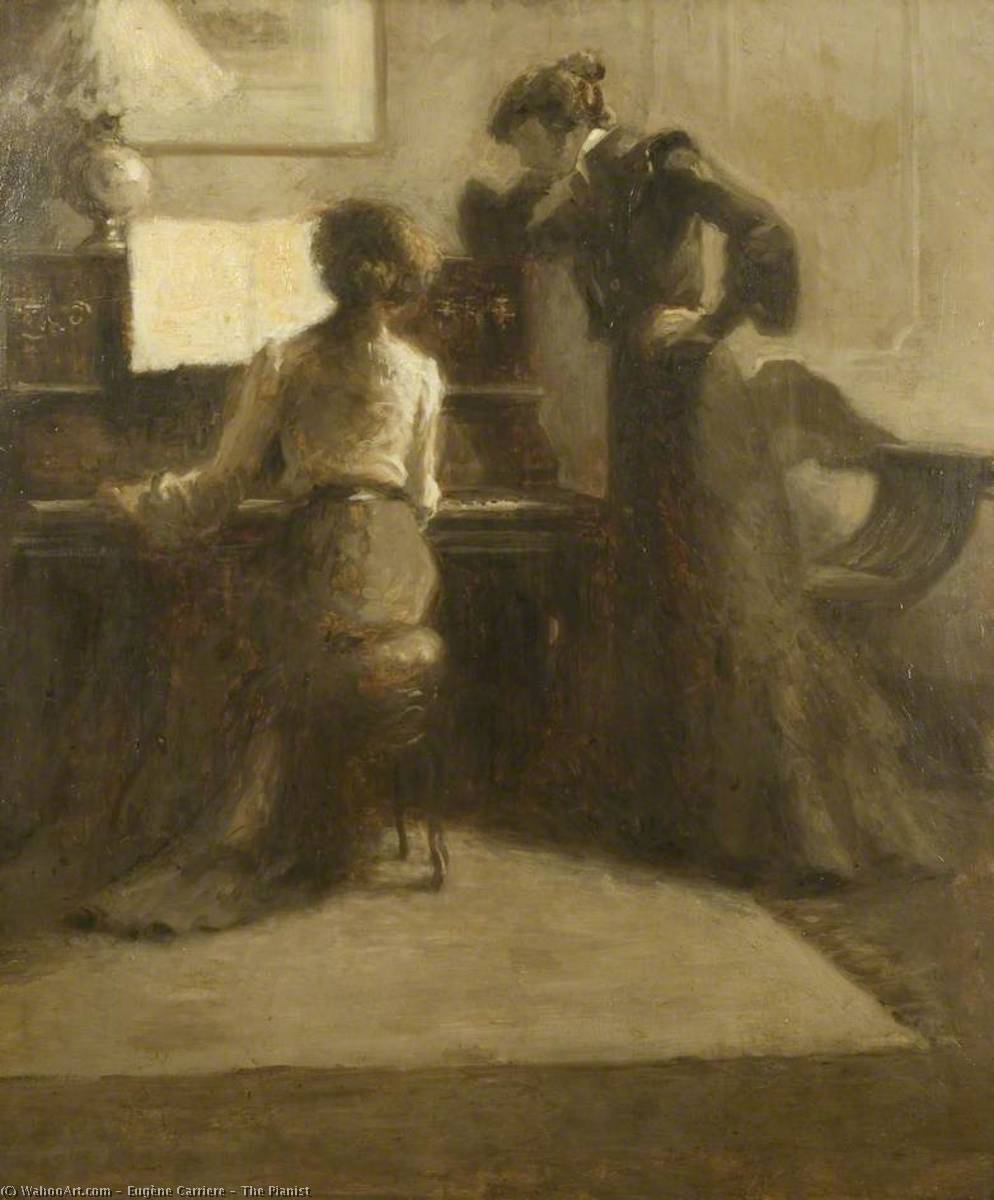
Eugène Anatole Carrière's "The Pianist," painted in 1900, isn’t merely a depiction of two women; it’s a carefully constructed tableau of intimacy and unspoken emotion. This oil on canvas, measuring a modest 105 x 89 cm, transports the viewer to a dimly lit parlor—a space both familiar and subtly melancholic. Carrière, a pivotal figure in French Symbolism, masterfully employs muted browns, creams, and grays, punctuated by hints of yellow and beige, creating an atmosphere thick with quiet contemplation. The painting’s power lies not in dramatic gesture or vibrant color, but in the nuanced portrayal of human connection—a shared glance, a subtle shift in posture that speaks volumes about their private conversation.
Carrière's style is characterized by a distinctive blend of realism and impressionism. While the forms are grounded in recognizable shapes – the furniture, the figures themselves – he achieves this through loose brushstrokes and a deliberate blurring of details. This technique lends the scene an ethereal quality, as if viewed through a soft haze. Lines primarily define the edges of objects and bodies, providing structure without creating sharp boundaries; this contributes to the painting’s intimate and enveloping atmosphere. The use of shading is subtle yet effective, suggesting fabric textures – the velvet upholstery, perhaps, or the folds of a dress – and adding depth to the scene.
The Symbolist Palette: Exploring Color and Mood
Carrière's choice of color palette is central to the painting’s emotional resonance. The predominance of browns and grays evokes a sense of subdued elegance, reflecting the quiet dignity of the setting. These earthy tones are not oppressive, however; they are softened by the warm yellows and beiges, creating a feeling of warmth and comfort within the room. This careful orchestration of color contributes to the painting’s overall mood—one of gentle melancholy and private reflection. The limited palette also draws attention to the subtle details of the scene, emphasizing the importance of observation and interpretation.
Furthermore, the monochromatic nature of the work aligns perfectly with the Symbolist movement's fascination with exploring inner states of mind through visual imagery. Rather than depicting a literal reality, Carrière uses color to convey emotions—a sense of longing, perhaps, or a quiet understanding between the two women. The painting invites viewers to project their own feelings and experiences onto the scene, making it a deeply personal and evocative work.
A Glimpse into Early 20th-Century Domesticity
“The Pianist” offers a fascinating window into early 20th-century domestic life. The setting—a parlor or study—was the heart of the home, a space for conversation, relaxation, and social interaction. The woman seated at the desk, seemingly engrossed in writing or reading, embodies the role of the educated woman in that era – a figure of intellect and refinement. Her companion, standing nearby, observes her with a thoughtful expression, suggesting a shared understanding or perhaps a quiet admiration. The painting captures a moment of intimacy within this carefully constructed domestic sphere.
Discovering Carrière’s Legacy: Reproduction Options
Eugène Anatole Carrière's work continues to resonate with audiences today, and ArtsDot offers high-quality reproductions that capture the essence of “The Pianist.” Whether you are an art collector, interior designer seeking a touch of understated elegance, or simply someone drawn to the beauty of Symbolist painting, a reproduction of this evocative artwork is sure to bring a sense of quiet contemplation to your space. Explore our range of sizes and framing options to find the perfect addition to your collection – Order yours today.
Related Artworks
Artist Biography
**early life and training**
eugène anatole carrière, a renowned french symbolist artist, was born on january 16, 1849, in gournay-sur-marne, seine-saint-denis. he studied at the école des beaux-arts in paris and later under cabanel, laying the foundation for his future artistic endeavors.**artistic style and influences**
carrière's paintings are best known for their distinctive brown monochrome palette, which has been a subject of fascination for many art enthusiasts. his work was influenced by the art of peter paul rubens, which he was exposed to during his time as a prisoner in dresden. this influence is evident in the glowing colors of his early paintings. **the young mother (1879)**, one of carrière's earliest notable works, is now housed at the musée des beaux-arts de rouen. this piece marked the beginning of his domestic life themes, which would become a hallmark of his artistic style.**notable works and exhibitions**
* **the sick child (montargis)** * **the first communion (toulon)** * **portrait of louis-henri devillez (1887)**, a highly praised work showcasing carrière's skill in capturing the essence of his subjects. these works, among others, have been exhibited at the société nationale des beaux-arts, which carrière helped establish. his contributions to the art world extend beyond his paintings, as he also played an influential role as an art teacher at académie de la palette.**legacy and influence on modern art**
carrière's monochrome style has been seen in the works of pablo picasso, particularly during his blue period. this influence is a testament to carrière's lasting impact on modern art.- view more of carrière's works at ArtsDot.com/eugène anatole carrière
- explore the musée des beaux-arts de rouen, which houses some of carrière's early pieces, at discovering the musée des beaux-arts de carcassonne (france)
- learn more about symbolism and its influence on art at the symbolism art movement
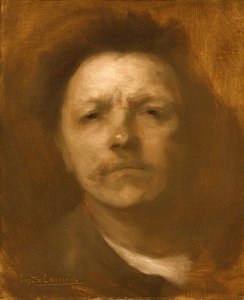
Eugène Anatole Carrière
1849 - 1906 , France
Quick Facts
- Artistic Movement Or Style: Symbolism, Monochrome
- Artists Or Movements Influenced By This Artist: ['Picasso (Blue Period)']
- Artists Who Influenced This Artist: ['Rubens']
- Date Of Birth: January 16, 1849
- Date Of Death: March 27, 1906
- Full Name: Eugène Anatole Carrière
- Nationality: French
- Notable Artworks:
- The Sick Child
- Young Mother
- First Communion
- Place Of Birth: Gournay-sur-Marne, France
Related Articles
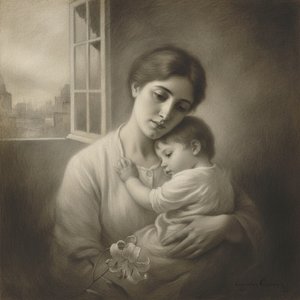
Eugène Carrière: The 'Peintre d'Âme' & Symbolist Portraiture’s Intimate Vision
Explore the haunting world of Eugène Carrière, a pivotal French Symbolist artist known for his deeply intimate portraits & 'peinture d'âme'. Discover his life, style, and lasting influence on modern masters like Picasso. Shop high-quality reproductions at ArtsDot.

The Enduring Legacy of Oil on Canvas: Technique, History & Aesthetic Impact
Explore the rich history & techniques of oil painting – from Renaissance masters to Impressionism. Discover pigments, layering methods, and why this timeless medium endures. Expert insights for artists & art enthusiasts.

Oil on Canvas: A Historical & Technical Exploration of a Timeless Artistic Medium
Explore the rich history & enduring techniques of oil painting on canvas. Discover the science behind its longevity, conservation practices, and contemporary relevance. Expert insights for art enthusiasts.

The Enduring Power of Painting: A Historical & Contemporary Exploration of Form and Emotion
Explore the rich history & enduring techniques of oil painting with ArtsDot. Discover masterpieces, learn about art collecting, and find authentic handmade reproductions crafted by skilled artists.

The Enduring Legacy of Oil on Canvas: Technique, History & Contemporary Practice
Explore the rich history & enduring techniques of oil painting on canvas. Discover the science behind its longevity, conservation practices, and contemporary relevance. Expert insights for art enthusiasts.