 Preview
 Send
Send Share
Share
 Details

 Download
 Similars
 X-Ray
X-Ray Diaporama
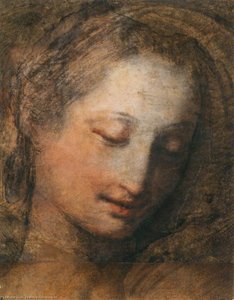
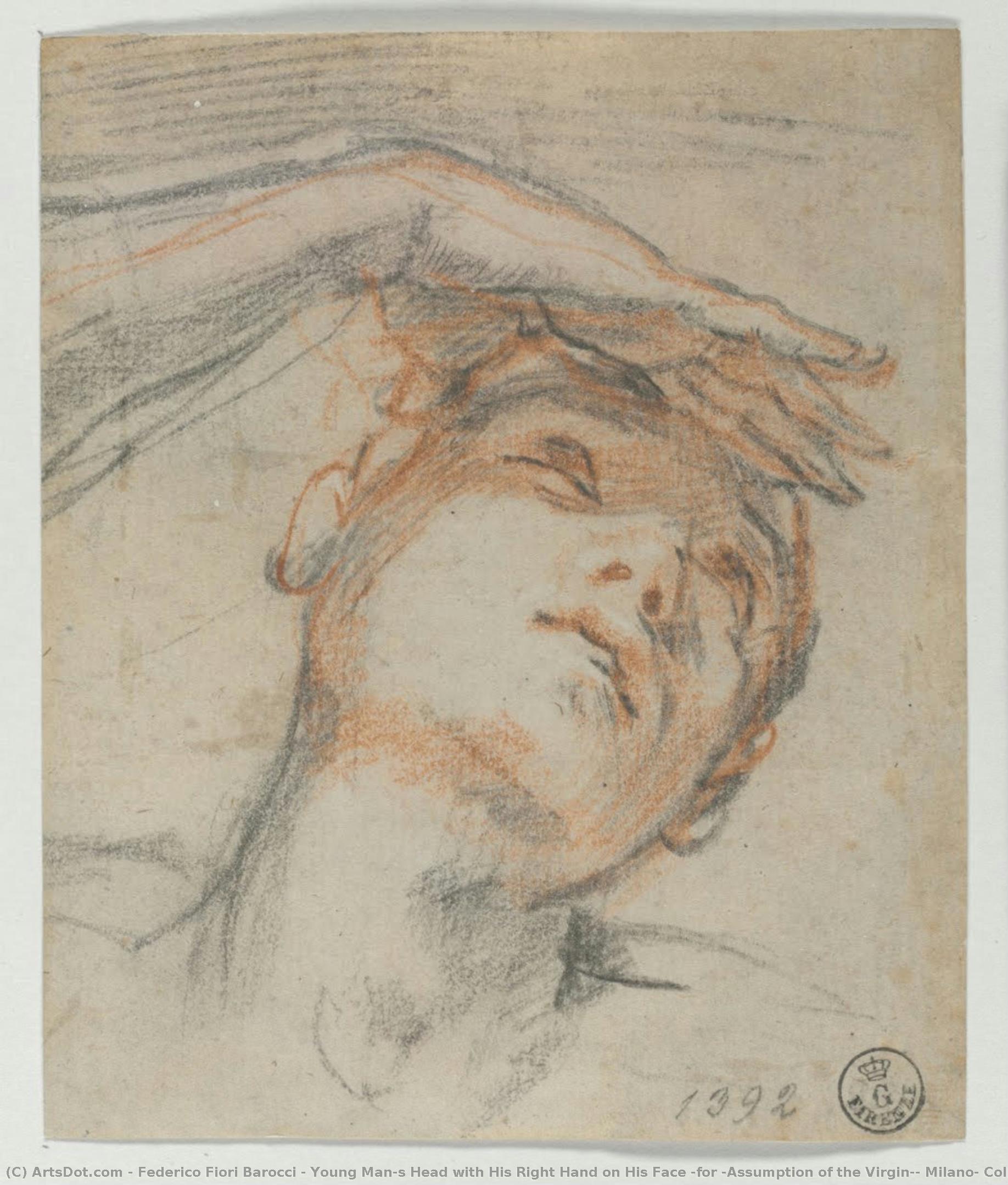
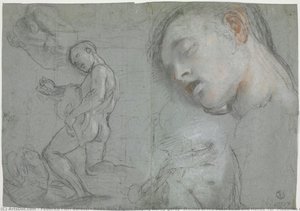
Young Man’s Head with His Right Hand on His Face (for “Assumption of the Virgin”, Milano, Collezione Castelbarco Albani)
 Acrylic On Canvas
- WallArt
- Baroque
 1612
1612 11.0 x 9.0 cm
 Galleria degli Uffizi
 Read More
Giclée / Art Print
Museum-quality giclée or canvas print with fast production and flexible finish options. ( Buy Hand Made Painting Buy Image)




P118B $10

P118H $10

P118W $10

P438Z $10

P508JH $12

P508YH $12

P805H $10

P805Z $10

P919BZ $10

P919G $10

P919XJ $10

P959ZH $10

P968JZ $12

W106C $8

W218G $10

W218JH $8

W218Y $10

W307PJ $10

W316G $10

W316PJ $8

W316Y $10

W398PJ $8

W4111J $10

W500HY $15

W500JH $15

W692G $12

W849H $8

W940BG $15

W953PJ $8




Pick from our preset sizes that match the artwork's original proportions.

You may enter your own dimensions to fit a specific frame or space. If your selected size does not match the original image's proportions, we will either crop the artwork or extend the image with a mirrored or solid-fill edge. A digital mockup will be sent for your approval before production begins.
Please note that the on-screen preview does not reflect the actual cropping or extension. Only the mockup will accurately show the final composition.
While custom sizes are available, we recommend selecting a dimension from the predefined list to preserve the original proportions.
Worldwide Delivery () in 2 weeks instead of standard 4/5 weeks. (26 August)

Free Worldwide Express Shipping

High-Quality Linen Canvas

Full Shipping Insurance

Customs Tax Refund Guarantee

True Color Matching Guarantee

60-Day Return Policy (Defects Only)

100% Money-Back Guarantee

Bulk Discount Offer
 Glass option is only available in size under 110 CM

Young Man’s Head with His Right Hand on His Face (for “Assumption of the Virgin”, Milano, Collezione Castelbarco Albani)
Giclée / Art Print
Reproduction Size
-


Total Price
$ 63
Collectible Description
The Haunting Portrait: Federico Barocci's Exploration of Inner Turmoil
Federico Fiori Barocci’s “Young Man’s Head with His Right Hand on His Face” – often referred to as “Assumption of the Virgin, Milano, Collezione Castelbarco Albani” – is not merely a portrait; it's a distilled essence of human vulnerability and a poignant meditation on mortality. Painted in 1612 during a period of profound artistic transition from Mannerism to Baroque, this intimate work offers a glimpse into the soul of its subject, rendered with an arresting blend of technical mastery and emotional depth. The painting’s power lies not in grand gestures or dramatic narratives, but in the quiet intensity of a single gesture – the young man's hand shielding his face, a pose that speaks volumes about unspoken anxieties and perhaps even despair.
A Master at Work: Technique and the Baroque Legacy
Barocci, a pivotal figure bridging the Renaissance and the burgeoning Baroque style, demonstrates his exceptional skill in this remarkably small yet intensely detailed work. Executed primarily in oil paint on panel, the portrait showcases a delicate layering of glazes that create an astonishingly luminous surface – a hallmark of Barocci’s technique. Notice the subtle shifts in tone, particularly around the face and hands, where he masterfully captures the texture of skin and fabric. The use of pastel shades, though limited here, hints at his later explorations of this medium, foreshadowing the ethereal quality that would become synonymous with his style. The composition is carefully balanced, drawing the eye to the central figure while subtly incorporating elements of the surrounding bed – a detail that anchors the portrait within a domestic setting and reinforces the sense of intimacy.
- Oil on Panel: The choice of medium contributes significantly to the painting’s luminous quality.
- Glaze Technique: Layered glazes create depth, richness, and subtle variations in tone.
- Pastel Hints: A precursor to Barocci's later pastel studies, suggesting a fascination with soft, atmospheric effects.
Echoes of the Renaissance and Beyond
“Young Man’s Head” is deeply rooted in the artistic traditions of the Italian Renaissance, particularly the work of artists like Raphael and Leonardo da Vinci – both known for their psychological insight and ability to capture human emotion. However, Barocci transcends mere imitation; he infuses his portrait with a distinctly Baroque sensibility. The painting's focus on inner states, its dramatic use of light and shadow (chiaroscuro), and the overall sense of melancholy align perfectly with the emerging Baroque aesthetic, which prioritized emotional intensity and dynamism over purely classical ideals. The reference to “Assumption of the Virgin” suggests a religious context, adding another layer of meaning to the portrait – perhaps representing contemplation on mortality or the acceptance of suffering.
Symbolism and Emotional Resonance
The young man’s gesture—covering his face with his hand—is laden with symbolic weight. It can be interpreted as a shield against an overwhelming world, a sign of grief, introspection, or perhaps even a premonition of impending doom. The closed eyes suggest a state of deep thought or sorrow. The simplicity of the setting – a bed in a darkened room – further amplifies the sense of isolation and vulnerability. This painting is not simply a likeness; it’s an invitation to contemplate the complexities of human experience, a poignant reminder of our shared capacity for both joy and suffering. It's a testament to Barocci's ability to capture the essence of a moment—a fleeting expression that speaks volumes about the inner life of his subject.
Related Artworks
Artist Biography
Early Life and Training
- Born: Urbino, Italy (1535)
- Died: 1612
- Federico Fiori Barocci, an Italian Renaissance painter and printmaker, was born in 1535 in Urbino, Italy.
- His original name was Federico Fiori, and he was nicknamed "il Baroccio," which means a two-wheel cart drawn by oxen in northwestern Italian dialects.
- Barocci received his earliest apprenticeship with his father, Ambrogio Barocci, a sculptor of some local eminence.
- He was then apprenticed with the painter Battista Franco in Urbino. This training laid the foundation for his future success.
Artistic Career and Influences
- Barocci's work was highly esteemed and influential, foreshadowing the Baroque style of Peter Paul Rubens.
- He worked in the pre-eminent studio of Taddeo and Federico Zuccari in Rome, where he was exposed to various artistic influences.
- His first notable work was a "St. Margaret" executed for the confraternity of the Holy Sacrament.
- He was invited by Pope Pius IV to assist in the decoration of the Vatican Belvedere Palace at Rome, where he painted the Virgin Mary and infant, with several saints and a ceiling in fresco, representing the Annunciation.
- Barocci's style was characterized by a mix of Mannerism and Baroque elements.
Notable Works and Legacy
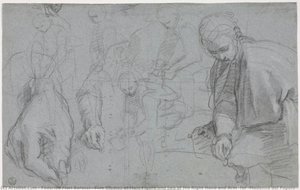
- Five Studies of Male Figure and two of His Right Hand and Arm (Uffizi Gallery, Florence, Italy) - A testament to Barocci’s skill in capturing the human form.
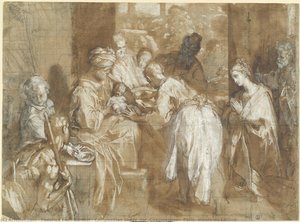
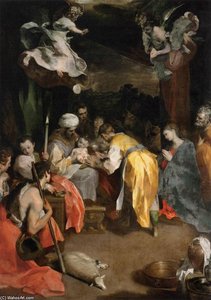
- Composition Study (for “Circumcision”, Paris, Musée du Louvre) – Demonstrates his ability to balance composition and emotion.
- Man’s Head (for “Calling of Saint Andrew”, Bruxelles, Musées Royaux des Beaux-Arts de Belgique) - Showcases Barocci's attention to detail and expression.
- The Nativity (1597 oil painting at the Prado).
- Madonna del Popolo (Uffizi Gallery, Florence, Italy).
- The Madonna of the Cat (La Madonna del Gatto)
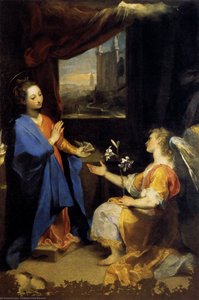
- Annunciation (1582)
Artistic Impact and Followers
- Barocci's influence can be seen in the work of various artists, including Peter Paul Rubens, who was inspired by Barocci’s dramatic and emotive brushwork.
- His legacy continues to be celebrated through his numerous works, now housed in museums such as the Uffizi Gallery (Florence, Italy) and the Musée du Louvre (Paris, France).
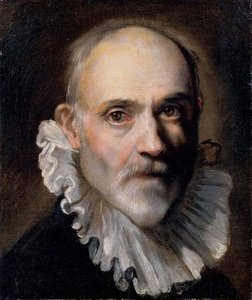
Federico Fiori Barocci
1535 - 1612 , Italy
Quick Facts
- Artistic Movement Or Style: Renaissance, Baroque
- Artists Or Movements Influenced By This Artist: ['Peter Paul Rubens']
- Artists Who Influenced This Artist: ['Battista Franco']
- Date Of Birth: 1535
- Date Of Death: 1612
- Full Name: Federico Fiori Barocci
- Nationality: Italian
- Notable Artworks:
- The Nativity
- Madonna del Popolo
- Annunciation
- Stigmatization of Saint Francis
- Rest on the Flight to Egypt
- Place Of Birth: Urbino, Italy
Related Articles

Leonardo da Vinci's Masterpieces: Explore 25 Iconic Artworks for Your Home | ArtsDot
Journey through Leonardo da Vinci's genius with our curated selection of 25 iconic artworks. Explore the stories behind Mona Lisa, The Last Supper & more Renaissance masterpieces. Find museum-quality art reproductions for your home at ArtsDot.com.
Modigliani's Masterpieces: 25 Iconic Paintings & Sculptures | ArtsDot
Explore 25 iconic artworks by Amedeo Modigliani, from his haunting portraits to captivating sculptures. Discover the stories behind these masterpieces of early 20th-century art & find museum-quality reproductions at ArtsDot.com.

Martin Johnson Heade: Luminism, American Identity & the Poetic Still Life
Explore the captivating world of Martin Johnson Heade, a master of Luminism. Discover his serene landscapes, vibrant still lifes & profound connection to American identity. Learn about his techniques and legacy.
Federico Zandomeneghi: Bridging Venetian Tradition & Parisian Impressionism
Discover Federico Zandomeneghi (1841-1917), a captivating Italian Impressionist bridging Venetian tradition and Parisian modernity. Explore his intimate scenes, unique style & legacy with ArtsDot.
Francis Bacon's Masterpieces: Exploring 25 Iconic Paintings | ArtsDot
Delve into the haunting world of Francis Bacon with ArtsDot. Explore 25 iconic paintings, from his visceral portraits to powerful triptychs. Discover the stories behind these masterpieces & find museum-quality art reproductions for your home. Explore the full collection online!