 Preview
 Send
Send Share
Share
 Details

 Download
 Similars
 X-Ray
X-Ray Diaporama
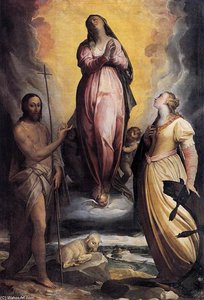
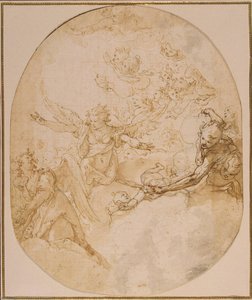
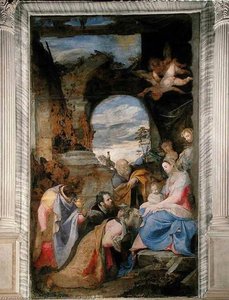
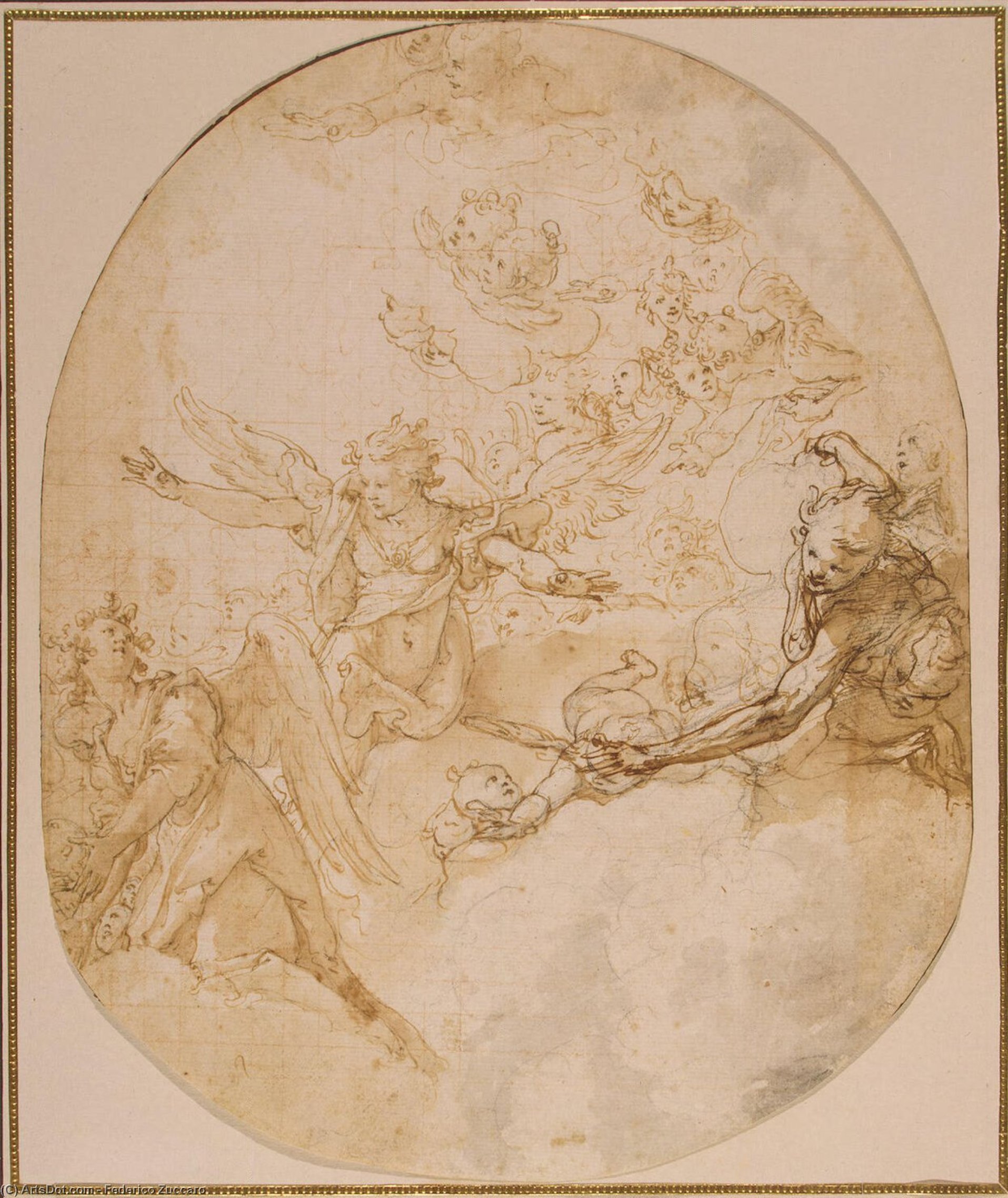
Angels and Cherubim Among Clouds
 Oil On Canvas
- WallArt
- Mannerism
 1566
1566 305.0 x 247.0 cm
 Hermitage Museum
 Read More
Giclée / Art Print
Museum-quality giclée or canvas print with fast production and flexible finish options. ( Buy Hand Made Painting Buy Image)




P118B $10

P118H $10

P118W $10

P438Z $10

P508JH $12

P508YH $12

P805H $10

P805Z $10

P919BZ $10

P919G $10

P919XJ $10

P959ZH $10

P968JZ $12

W106C $8

W218G $10

W218JH $8

W218Y $10

W307PJ $10

W316G $10

W316PJ $8

W316Y $10

W398PJ $8

W4111J $10

W500HY $15

W500JH $15

W692G $12

W849H $8

W940BG $15

W953PJ $8




Pick from our preset sizes that match the artwork's original proportions.

You may enter your own dimensions to fit a specific frame or space. If your selected size does not match the original image's proportions, we will either crop the artwork or extend the image with a mirrored or solid-fill edge. A digital mockup will be sent for your approval before production begins.
Please note that the on-screen preview does not reflect the actual cropping or extension. Only the mockup will accurately show the final composition.
While custom sizes are available, we recommend selecting a dimension from the predefined list to preserve the original proportions.
Worldwide Delivery () in 2 weeks instead of standard 4/5 weeks. (23 August)

Free Worldwide Express Shipping

High-Quality Linen Canvas

Full Shipping Insurance

Customs Tax Refund Guarantee

True Color Matching Guarantee

60-Day Return Policy (Defects Only)

100% Money-Back Guarantee

Bulk Discount Offer
 Glass option is only available in size under 110 CM

Angels and Cherubim Among Clouds
Giclée / Art Print
Reproduction Size
-


Total Price
$ 63
Collectible Description
A Celestial Vision in Mannerist Splendor
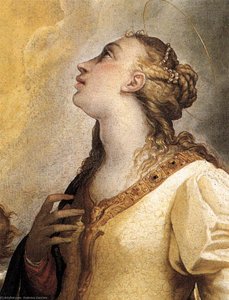
To gaze upon Angels and Cherubim Among Clouds is to step across the threshold of earthly concerns and into a realm painted with divine light. This magnificent canvas, dating from 1566, does not merely depict heavenly beings; it invites the viewer into an experience of sublime transcendence. Federico Zuccaro masterfully orchestrates a gathering of angels and cherubim amidst billowing clouds, creating a scene that is at once overwhelmingly grand and intimately peaceful. The composition draws the eye through layers of ethereal figures—some floating weightlessly, others standing upon luminous vapor—all converging around a central human figure who seems caught in the very breath of divine revelation. It is a quintessential embodiment of Baroque yearning rendered with the sophisticated grace characteristic of Roman Mannerism.
The Hand of Federico Zuccaro: Mastery and Movement
Federico Zuccaro, known for his versatility as an architect, historian, and painter, brought a unique intellectual rigor to his art. In this piece, one can observe how his training in classical proportion merges with the dramatic energy of the High Renaissance's later developments. The technique employed suggests a rich understanding of oil on canvas, allowing Zuccaro to build up luminosity through delicate gradations of color and shadow. Notice the interplay between the solid forms of the figures and the seemingly weightless quality of the clouds; this contrast is key to the painting’s dynamic tension. His handling of drapery, for instance, suggests movement caught mid-gesture, lending an almost sculptural vitality to the celestial subjects.
Symbolism of Ascent and Harmony
The symbolism woven into Angels and Cherubim Among Clouds is rich with theological meaning. The angels and cherubim traditionally serve as intermediaries between the divine and humanity, representing purity, praise, and eternal wisdom. Their presence amidst clouds speaks directly to themes of ascension and the mystery of the afterlife—a journey upward toward enlightenment. The inclusion of the human figure grounds this celestial spectacle, suggesting a moment of profound spiritual encounter or revelation for humankind. It is an artwork that speaks eloquently of humanity's yearning for connection with something greater than itself, achieving a breathtaking harmony between the earthly observer and the heavenly choir.
Bringing Heaven Home: Decorating with Divine Grace
For the discerning collector or designer, this reproduction offers more than just wall art; it offers an atmosphere. Imagine this piece gracing a grand salon or a library designed for contemplation. The soft, luminous palette—the pearlescent whites, gentle blues, and warm flesh tones—will diffuse light beautifully, lending an air of timeless, sophisticated serenity to any interior space. Owning a reproduction allows one to incorporate the drama and sublime narrative power of Zuccaro’s genius into contemporary life, transforming a room into a sanctuary echoing with heavenly whispers.
Related Artworks

Artist Biography
The Architect of Roman Mannerism
Federico Zuccaro stands as a pivotal figure in the Italian Renaissance, specifically within the burgeoning Roman Mannerist movement. He was far more than a mere painter; he was an architect, a historian, and a champion of artistic innovation—a rare combination of talents that cemented his legacy as one of the era's most influential creators. Born around 1539, Zuccaro’s early life was deeply rooted in the traditions of the masters. He received a robust artistic education from his father, Giovanni Zuccaro, a celebrated sculptor and painter. This familial connection instilled within Federico a profound appreciation for classical ideals, establishing him firmly on a path toward mastering the delicate balance between painting, sculpture, and structural design.
His formative years were spent honing his skills in Florence, where he studied under the legendary Andrea Palladio. From Palladio, Zuccaro absorbed a meticulous attention to proportion and architectural harmony, principles that would later define his grander compositions. He quickly gained recognition for his breathtaking frescoes, particularly those adorning the Palazzo Vecchio, which demonstrated an exceptional ability to convey deep emotion and narrative complexity within a restrained, sophisticated stylistic framework. As his reputation grew, so did his reach, with commissions flowing from wealthy Florentine families and eventually extending into the heart of Rome.
A Legacy of Collaboration and Innovation
One cannot discuss the brilliance of Federico Zuccaro without acknowledging the profound influence of his brother, Taddeo Zuccaro. Together, the brothers formed an unparalleled creative partnership that pushed the boundaries of Mannerist aesthetics. While Taddeo’s mastery of sculpture provided a structural strength to their shared visions, Federico’s painting prowess brought them to life with ethereal light and movement. Their collaborative spirit yielded masterpieces such as “The Holy Family” in Palazzo Vecchio, a work that serves as a testament to their unified artistic language.
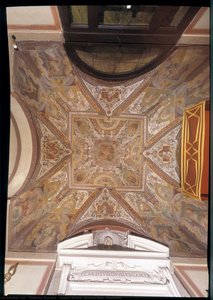
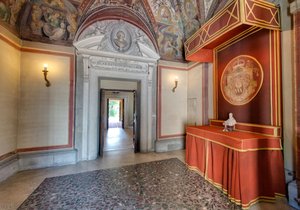
Zuccaro's versatility allowed him to transcend the canvas. As an architect, he undertook ambitious projects throughout Rome and Italy, designing palaces, churches, and villas that reflected his deep understanding of classical space. His architectural achievements were not merely functional but were intended to elevate the very status of the artist. This ambition is perhaps most tangibly felt in Casa Zuccari in Florence, a residence built around 1578. Conceived as an emblem of lineage and creative emancipation, this architectural jewel was inspired by the pioneering spirit of Giorgio Vasari, transforming a private sanctuary into a stage for intellectual and aesthetic triumph.
The Spirit of Mannerist Mastery
The true essence of Zuccaro’s work lies in his ability to blend the physical with the divine. In works such as “Angels and Cherubim Among Clouds,” dating from 1566, one can witness a celestial vision painted with sublime transcendence. He masterfully orchestrated gatherings of heavenly beings amidst billowing clouds, creating scenes that were simultaneously grand and intimately peaceful. His technique involved building luminosity through delicate gradations of color and shadow, allowing for a dynamic tension between solid forms and weightless vapor.
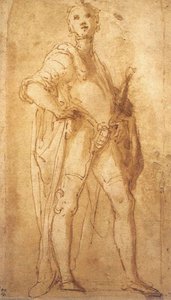
Beyond the grandeur of his large-scale frescoes, Zuccaro possessed a remarkable ability to capture quiet, spiritual introspection. His drawings, such as the exquisite “St Mennas,” reveal a master of light and shadow, where figures appear suspended between the earthly realm and the divine. This intellectual rigor and technical versatility allowed him to leave an indelible mark on the history of art, influencing generations of artists across Italy, Spain, France, and England. Through his leadership in founding the Accademia di San Luca, he ensured that the principles of classical beauty and artistic discipline would endure long after his passing in 1609.
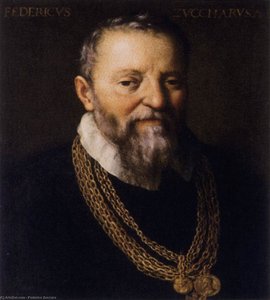
federico zuccaro
1539 - 1609
Quick Facts
- Artistic Movement Or Style: Mannerism
- Artists Or Movements Influenced By This Artist: ['Bartolomeo Carducci']
- Artists Who Influenced This Artist:
- Giorgio Vasari
- Taddei Zuccaro
- Date Of Birth: 1539
- Date Of Death: 1609
- Full Name: Federico Zuccaro
- Nationality: Italian
- Notable Artworks:
- The Last Judgment
- Saint Jerome in His Study
- Place Of Birth: Rome, Italy
Related Articles
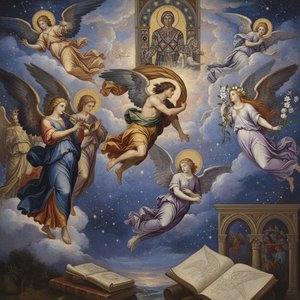
Celestial Messengers: Angels in Painting – A Historical & Artistic Exploration
Explore the captivating history of angels in painting! Discover symbolism, iconic Renaissance & Byzantine masterpieces, and renowned artists. Expert insights for art lovers & collectors at ArtsDot.
Celestial Messengers: A Comprehensive Exploration of Angelic Representation in Art History
Explore the captivating history of angels in art! Discover symbolism, iconic Renaissance masterpieces & renowned artists. Expert insights for art lovers & collectors at ArtsDot.
Baroque Classicism: Reconciling Drama & Order in 17th-Century Art
Explore the captivating world of Baroque Classicism! Discover its history, key artists like Caravaggio & Rubens, and defining characteristics. Expert insights & high-quality reproductions at ArtsDot.

Baroque Drama: Bringing Opulence & Emotion into Contemporary Interiors
Explore the opulent world of Baroque interior design! Discover key elements, modern applications & how to bring dramatic elegance into your home with 's authentic reproductions.

Baroque Masterpieces: 10 Paintings That Defined an Era |
Journey through the drama & grandeur of Baroque art! Explore 10 masterpieces by Caravaggio, Rembrandt, Rubens & more. Discover stunning oil paintings, rich colors & timeless stories. Find museum-quality reproductions at .