 Preview
 Send
Send Share
Share
 Details

 Download
 Similars
 X-Ray
X-Ray Diaporama
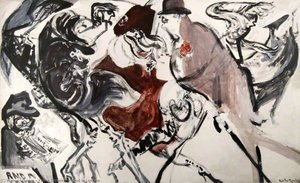
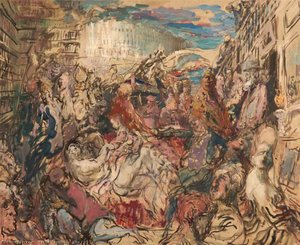
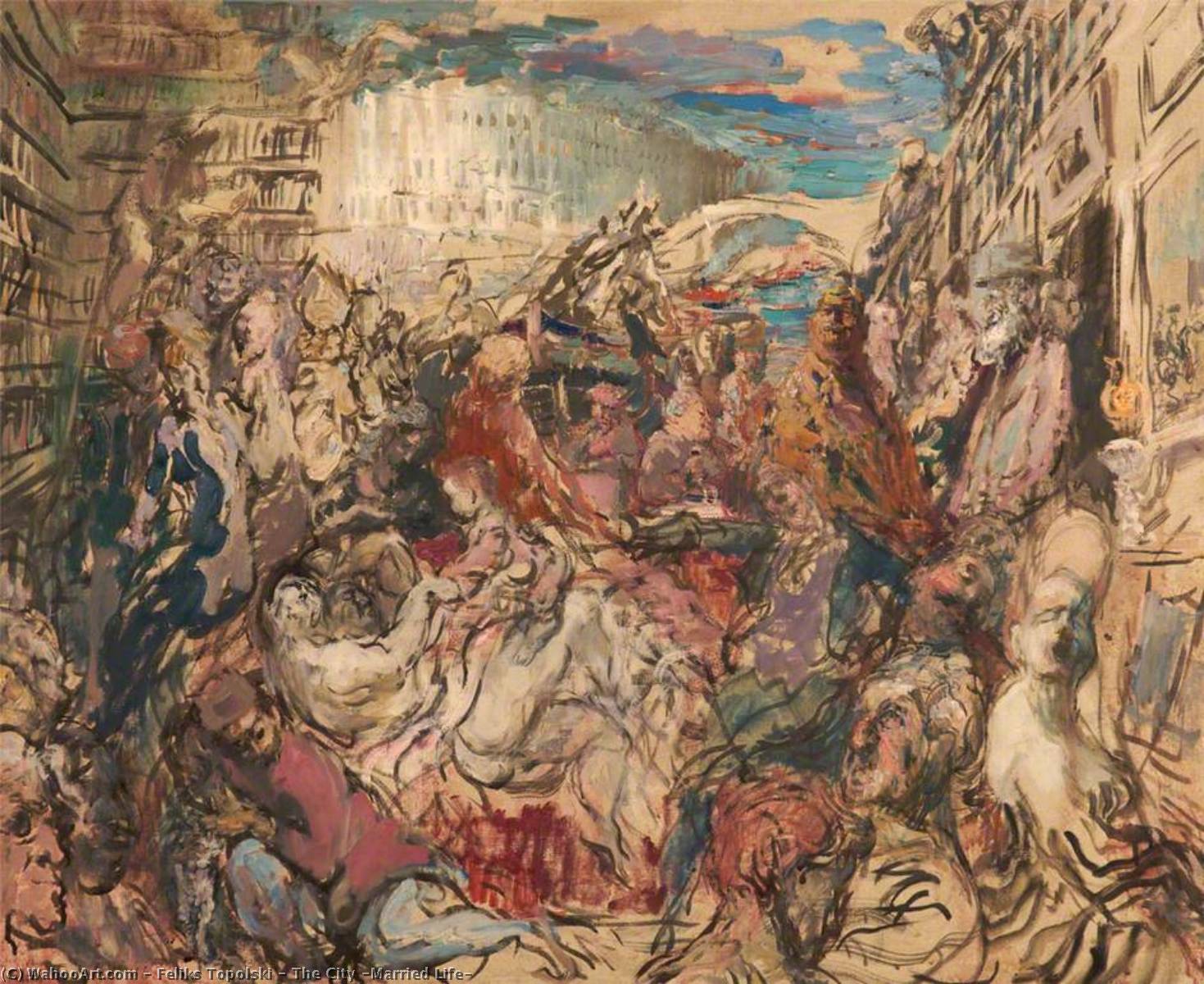
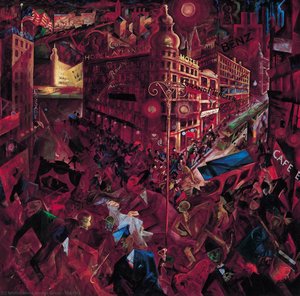
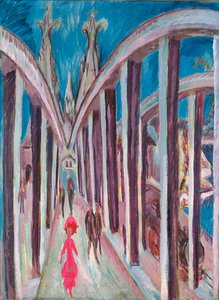
The City (Married Life)
 Expressionism
 1946
1946 83.0 x 102.0 cm
 Read More
Giclée / Art Print
Museum-quality giclée or canvas print with fast production and flexible finish options. ( Buy Hand Made Painting Buy Image)




































Pick from our preset sizes that match the artwork's original proportions.

You may enter your own dimensions to fit a specific frame or space. If your selected size does not match the original image's proportions, we will either crop the artwork or extend the image with a mirrored or solid-fill edge. A digital mockup will be sent for your approval before production begins.
Please note that the on-screen preview does not reflect the actual cropping or extension. Only the mockup will accurately show the final composition.
While custom sizes are available, we recommend selecting a dimension from the predefined list to preserve the original proportions.
Worldwide Delivery () in 2 weeks instead of standard 4/5 weeks. (25 August)

Free Worldwide Express Shipping

High-Quality Linen Canvas

Full Shipping Insurance

Customs Tax Refund Guarantee

True Color Matching Guarantee

60-Day Return Policy (Defects Only)

100% Money-Back Guarantee

Bulk Discount Offer
 Glass option is only available in size under 110 CM

The City (Married Life)
Giclée / Art Print
Reproduction Size
-


Total Price
$ 63
Related Artworks
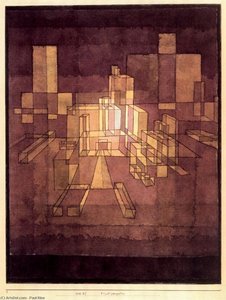
Artist Biography
A Chronicle of Polish Expressionism and Wartime Witness
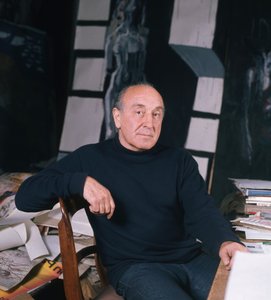
Feliks Topolski stands as a pivotal figure in the tapestry of twentieth-century art, embodying the raw spirit of Expressionism while serving as a profound witness to the tumultuous realities of his era. Born on 14 August 1907 in Warsaw, Poland, his life was inextricably linked to the dramatic shifts of European history. His early years were shaped by the political instability of a burgeoning Poland, a backdrop that would later infuse his work with an unparalleled sense of urgency and emotional depth. Topolski’s journey was not merely one of aesthetic exploration but a lifelong mission to document the human condition amidst chaos.
His artistic foundation was laid at the Academy of Fine Arts in Warsaw, where he honed his skills in drawing and painting under the guidance of Eugeniusz Lorenz Wertheimer. Yet, the true spark of his creative identity ignited through his encounter with the masters of psychological intensity. The haunting, emotional landscapes of Edvard Munch provided him with a conceptual framework for conveying existential anxiety, while the unflinching social realism of Käthe Kollwitz instilled in him a lifelong commitment to portraying the hardships of ordinary people. This fusion of styles allowed Topolski to move beyond mere representation, seeking instead to capture the very pulse of life through expressive lines and visceral textures.
From Warsaw to the Heart of London
Topolski’s trajectory took him far beyond the borders of his homeland. After studying and working in Italy and France, he moved to Britain in 1935, a transition prompted by a prestigious commission to record the silver jubilee of King George V. This move marked the beginning of a significant chapter in his career as he established himself within the British art scene. He famously opened a studio near Waterloo station, a space that would evolve from a creative sanctuary into an exhibition hub and eventually a vibrant café-bar known as Bar Topolski, which showcased his panoramic visions of the twentieth century.
During the dark years of the Second World War, Topolski’s role shifted from observer to official war artist. This period demanded a rapid, almost journalistic application of his talent, as he used sketches and paintings to capture the kinetic energy of conflict and survival. His work during this time is characterized by a certain expressive realism—a style that prioritized the emotional truth of a moment over meticulous detail. Whether through the chaotic energy of charcoal on paper or the rich, symbolic depth of oil on canvas, he sought to translate the fragmentation of war into a cohesive visual narrative.
Legacy and Artistic Mastery
The breadth of Topolski’s oeuvre is reflected in his ability to navigate diverse subjects, from intimate portraits to sprawling urban landscapes. His notable works serve as windows into different facets of the human experience:
- The City (Married Life): A dynamic 1946 oil painting that captures the raw energy and social unrest of post-war urban life through a lens of symbolic depth.
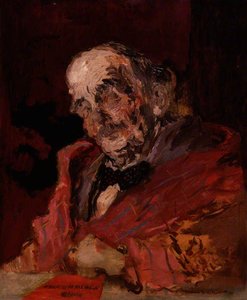
- George Bernard Shaw Portrait: A poignant 1939 study that showcases his mastery of Post-Impressionist techniques, capturing the reflection and gravity of the legendary playwright.
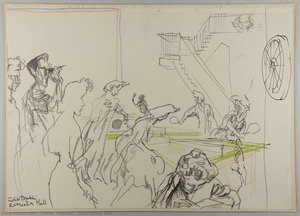
- Recreation Hall: A striking 1957 sketch that utilizes charcoal to convey a sense of chaotic movement and emotional weight, reminiscent of his wartime documentation.
Ultimately, Feliks Topolski’s significance lies in his dual identity as both an artist and a chronicler. He did not merely paint scenes; he recorded the soul of a century. His legacy persists not only in the galleries that house his works but in the way he bridged the gap between the personal and the political, ensuring that the triumphs and tragedies of his time were etched permanently into the annals of art history.
Quick Facts
- Artistic Movement Or Style: Expressionist
- Date Of Birth: August 14, 1907
- Full Name: Feliks Topolski
- Nationality: Polish
- Notable Artworks:
- Recreation Hall
- The City (Married Life)
- George Bernard Shaw
- Place Of Birth: Warsaw, Poland
Related Articles
The Gilded Age Reimagined: Exploring the Aesthetic Principles & Enduring Legacy of Art Deco
Explore the captivating world of Art Deco! Discover its origins, defining features, cultural impact & enduring legacy. Expert insights for collectors and design enthusiasts. Shop handmade reproductions at ArtsDot.
Concrete Narratives: Exploring Urban Life in Modern & Contemporary Art
Explore the evolution of cityscape painting with ArtsDot. Discover key artists from Realism to contemporary movements & invest in timeless urban visions. Expert guidance, museum-quality reproductions.
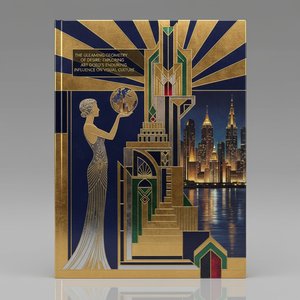
The Gleaming Geometry of Desire: Exploring Art Deco's Enduring Influence on Visual Culture
Explore the captivating world of Art Deco! Discover its history, key characteristics, enduring influence on design & collecting with expert insights from ArtsDot.com.
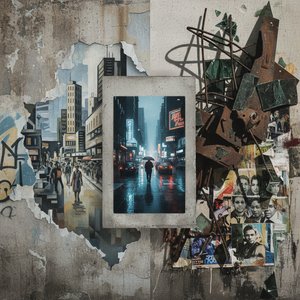
Concrete Visions: Exploring Representations of Urban Life in Modern & Contemporary Art
Explore the evolution of cityscape painting from Realism to contemporary art. Discover key artists & invest in timeless urban visions with ArtsDot's expert guidance and museum-quality reproductions.
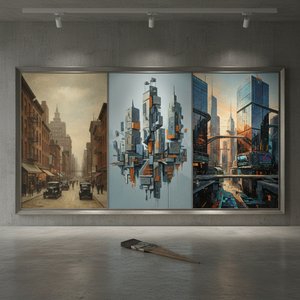
Concrete Visions: Exploring the Urban Landscape in Painting – From Realism to Contemporary Art
Explore the evolution of cityscape painting from Realism to contemporary art with ArtsDot. Discover key artists & invest in timeless urban visions. Expert guidance, museum-quality reproductions.