 Preview
 Send
Send Share
Share
 Details

 Download
 Similars
 X-Ray
X-Ray Diaporama
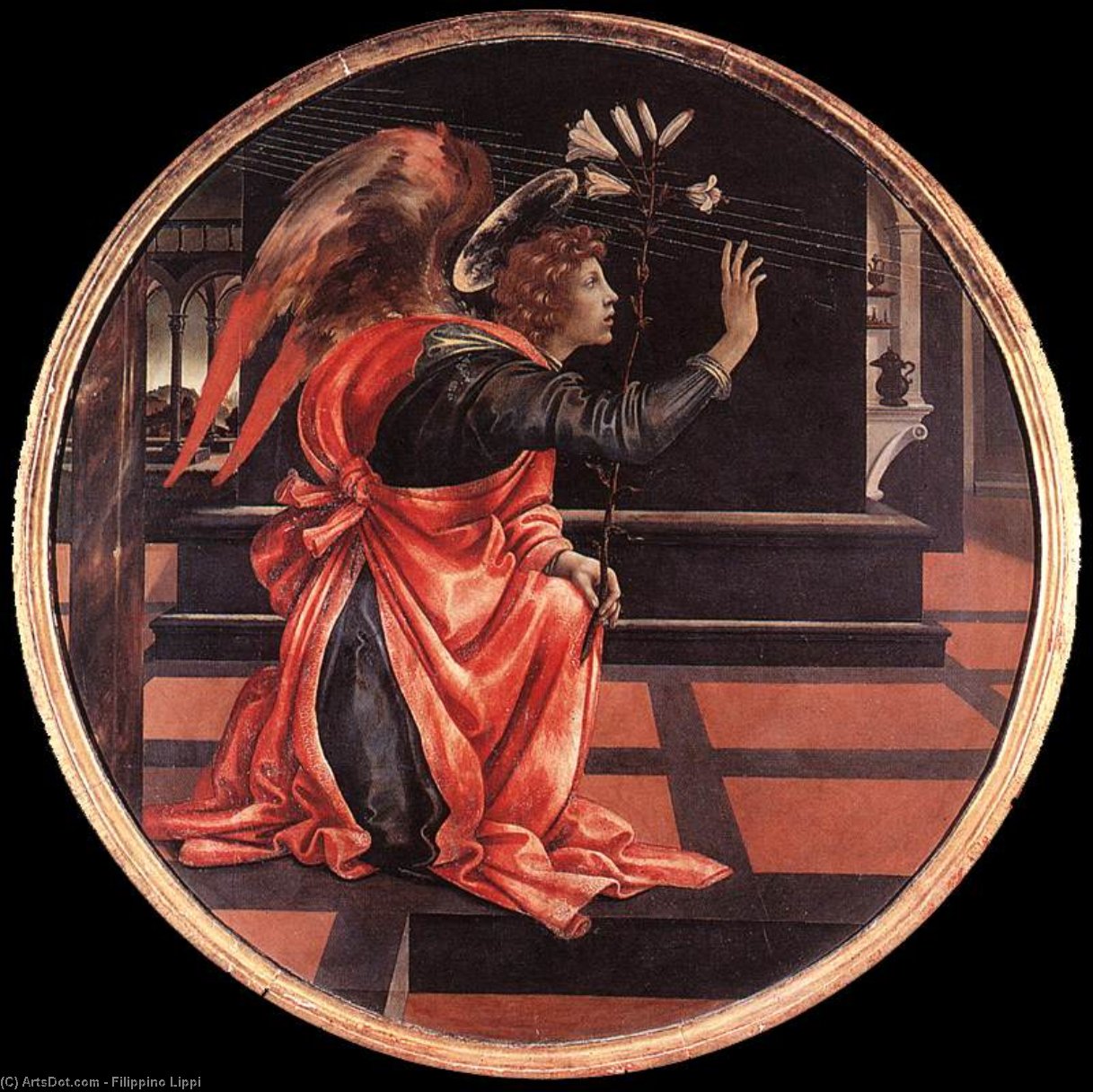
Gabriel from the Annunciation
 Oil On Canvas
- WallArt
- Early Renaissance
 1483
1483- Renaissance
 110.0 x 110.0 cm
 Museo Civico
 Read More
Hand Made Oil Reproduction
Hand-painted oil on canvas in your size and frame, made to order by our artists. ( Buy Print Buy Image)




P118B $10

P118H $10

P118W $10

P438Z $10

P508JH $12

P508YH $12

P805H $10

P805Z $10

P919BZ $10

P919G $10

P919XJ $10

P959ZH $10

P968JZ $12

W106C $8

W218G $10

W218JH $8

W218Y $10

W307PJ $10

W316G $10

W316PJ $8

W316Y $10

W398PJ $8

W4111J $10

W500HY $15

W500JH $15

W692G $12

W849H $8

W940BG $15

W953PJ $8




Pick from our preset sizes that match the artwork's original proportions.

You may enter your own dimensions to fit a specific frame or space. If your selected size does not match the original image's proportions, we will either crop the artwork or extend the painting with additional hand-painted elements. A digital mockup will be sent for your approval before production begins.
Please note that the on-screen preview does not reflect the actual cropping or extension. Only the mockup will accurately show the final composition.
While custom sizes are available, we recommend selecting a dimension from the predefined list to preserve the original proportions.
After order, ArtsDot.com team will email client for instructions and provide a mockup preview
Worldwide Delivery () in 3/4 weeks instead of standard 5 weeks. (17 August). No compromise on quality.

Free Worldwide Express Shipping

High-Quality Linen Canvas

Full Shipping Insurance

Customs Tax Refund Guarantee

True Color Matching Guarantee

60-Day Return Policy (Defects Only)

100% Money-Back Guarantee

Bulk Discount Offer
 Glass option is only available in size under 110 CM

Gabriel from the Annunciation
Reproduction Medium
Reproduction Size
-


Total Price
$ 263
Artwork Description
Gabriel from the Annunciation – A Moment of Serene Revelation
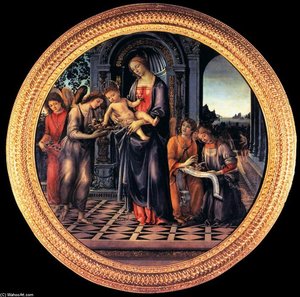
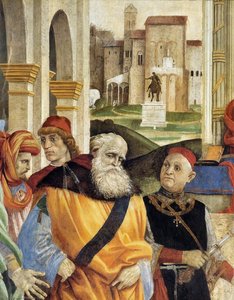
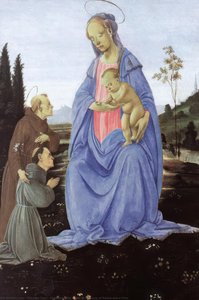
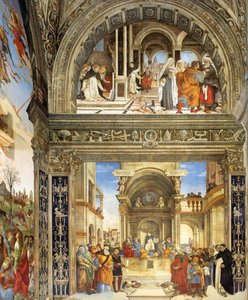
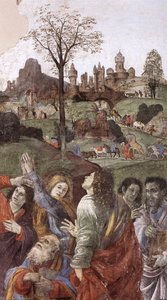
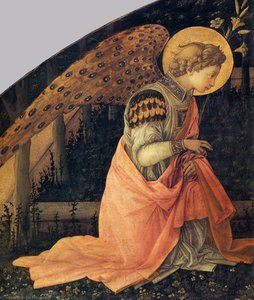
Filippino Lippi’s “Gabriel from the Annunciation,” painted in 1483, is more than just a depiction of an angel; it's a carefully constructed tableau brimming with religious significance and humanist observation. Executed during a pivotal moment in Renaissance art – a time when artists were striving to capture not merely outward appearances but also the inner lives of their subjects – this work offers a poignant glimpse into the heart of the Annunciation narrative. Measuring 110 x 110 cm, the painting’s intimate scale draws the viewer into its serene world, fostering a sense of quiet contemplation.
- Subject and Narrative: The central figure, Gabriel, embodies the divine messenger tasked with announcing to Mary the miraculous conception of Jesus. His posture – seated on the ground, hand gently holding a flower – suggests humility and reverence, while his gaze directed upwards speaks to the profound spiritual event unfolding above him.
- The Woman’s Reach: The woman depicted reaching out towards Gabriel is not merely a passive recipient of divine news; she represents humanity's yearning for grace and connection with the sacred. Her gesture invites participation in this momentous revelation, blurring the lines between observer and participant.
- Symbolic Details: The inclusion of the bench adds an element of domestic tranquility, grounding the celestial encounter within a recognizable human setting. The vase and birds further enrich the scene, potentially symbolizing purity, hope, or the fleeting nature of earthly beauty – all elements interwoven into the larger theological message.
Filippino Lippi’s Artistic Evolution
Filippino Lippi's artistic journey is intrinsically linked to the vibrant Florentine art scene of the late 15th century. Initially trained by his renowned father, Fra Filippo Lippi, Filippino quickly established himself as a skilled and innovative painter. His early works, such as those attributed to “amico di Sandro,” demonstrate a nascent style characterized by a certain naiveté, typical of artists in their formative years. However, as evidenced by masterpieces like *The Journeys of Tobias*, Filippino rapidly evolved, developing a more personal and assured approach – one that would ultimately define his contribution to the High Renaissance.
His collaboration with masters like Perugino, Ghirlandaio, and Botticelli on frescoes for Lorenzo de' Medici’s villa showcases his ability to synthesize diverse artistic influences while maintaining a distinct stylistic voice. Furthermore, his involvement in completing Masaccio’s unfinished decoration in the Brancacci Chapel alongside Masolino highlights his technical prowess and understanding of perspective and composition – skills he masterfully employed in “Gabriel from the Annunciation.”
Technique and Materials
“Gabriel from the Annunciation” is executed in oil on panel, a technique favored by Lippi during this period. The artist demonstrates a remarkable command of color and texture, utilizing subtle gradations to create a sense of depth and realism. Note the delicate rendering of Gabriel’s drapery, achieved through careful layering of paint and meticulous attention to detail. The use of gold leaf – likely in the halo surrounding Gabriel – would have further enhanced the painting's luminosity and spiritual impact. Lippi’s brushwork is characterized by a confident fluidity, reflecting his mastery of the medium.
Emotional Impact and Historical Significance
Beyond its technical brilliance, “Gabriel from the Annunciation” possesses a profound emotional resonance. The scene evokes a sense of wonder, humility, and spiritual awakening – feelings that have captivated viewers for centuries. As a work created during a period of intense religious and intellectual ferment, it reflects the humanist values of the Renaissance, emphasizing human potential and the importance of faith. This painting stands as a testament to Filippino Lippi’s artistic genius and his pivotal role in shaping the course of Florentine art.
Related Artworks
Artist Biography
Early Life and Training
- Born: April 1457, Prato, Italy
- Died: April 1504
- Parents: Fra Filippo Lippi (painter) and Lucrezia Buti
- Filippino was the illegitimate son of a renowned painter.
- Early training under his father laid the foundation for his artistic career.
Artistic Career and Development
- Early Period (1475-1480): Initial works, such as Madonnas, showed a less refined style. These were initially attributed to an anonymous artist known as "amico di Sandro."
- Evolution (1480-1485): Development of a more personal and effective approach in works like the *Journeys of Tobias*.
- Maturity (1485-1504): Mastery of the High Renaissance style, exemplified by *The Apparition of Christ to the Virgin*.
Major Works and Collaborations
- Collaboration with Perugino, Ghirlandaio, and Botticelli on frescoes at Lorenzo de' Medici’s villa.
- Completion of Masaccio's unfinished decoration in the Brancacci Chapel alongside Masolino.
- Notable works include: *The Coronation of the Virgin*, *Tobias and the Angel*, *St Jerome*, and *Scene from the Life of St Thomas Aquinas*.
Influences and Artistic Style
- Early Influences: Sandro Botticelli, Fra Filippo Lippi.
- Style Characteristics: Animated form and line, warm colorism, detailed landscapes, expressive figures, and a blend of perspective geometry with intimate interiors.
- Roman Antiquities: Studies after Roman antiquities during his time in Rome influenced his work, incorporating an antique vocabulary into his art.
Historical Significance and Legacy
- A leading Florentine exponent of the tradition of great fresco cycles.
- His influence on the High Renaissance is undeniable.
- Works are found in museums worldwide, including the Uffizi Gallery in Florence.
- Known for bridging the gap between earlier Renaissance styles and the emerging High Renaissance aesthetic.
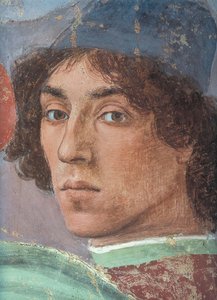
Filippino Lippi
1457 - 1504 , Italy
Quick Facts
- Artistic Movement Or Style: High Renaissance
- Artists Or Movements Influenced By This Artist: ['Raffaellino del Garbo']
- Artists Who Influenced This Artist:
- Fra Filippo Lippi
- Sandro Botticelli
- Date Of Birth: April 1457
- Date Of Death: April 1504
- Full Name: Filippino Lippi
- Nationality: Italian
- Notable Artworks:
- The Coronation of the Virgin
- Tobias and the Angel
- Scene from the Life of St Thomas Aquinas
- St Jerome
- Place Of Birth: Prato, Italy
Related Articles
Dante Gabriel Rossetti's 25 Masterpieces: A Journey Through Victorian Art & Symbolism | ArtsDot
Explore 25 iconic artworks by Dante Gabriel Rossetti, a leading Pre-Raphaelite artist. Discover the stories behind masterpieces like 'Proserpine' & 'Beata Beatrix'. Find museum-quality art reproductions and elevate your home decor with ArtsDot.com.
Celestial Messengers: Angels in Painting – A Historical & Artistic Exploration
Explore the captivating history of angels in painting! Discover symbolism, iconic Renaissance & Byzantine masterpieces, and renowned artists. Expert insights for art lovers & collectors at ArtsDot.
Celestial Messengers: A Comprehensive Exploration of Angelic Representation in Art History
Explore the captivating history of angels in art! Discover symbolism, iconic Renaissance masterpieces & renowned artists. Expert insights for art lovers & collectors at ArtsDot.
Filippino Lippi: Renaissance Innovation Bridging Faith & Humanism
Explore the captivating world of Filippino Lippi, a Renaissance master bridging faith & humanism through innovative art. Discover his key works, influences, and lasting legacy with ArtsDot.
Filippo Lippi: Bridging Renaissance Devotion & Artistic Innovation
Explore the life & revolutionary art of Filippo Lippi, a pivotal Renaissance painter. Discover his masterpieces, influence on Botticelli, and investment potential. Expert analysis at ArtsDot.