 Preview
 Send
Send Share
Share
 Details

 Download
 Similars
 X-Ray
X-Ray Diaporama
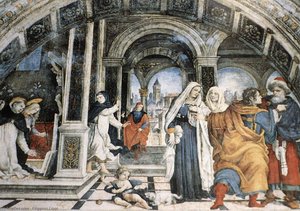
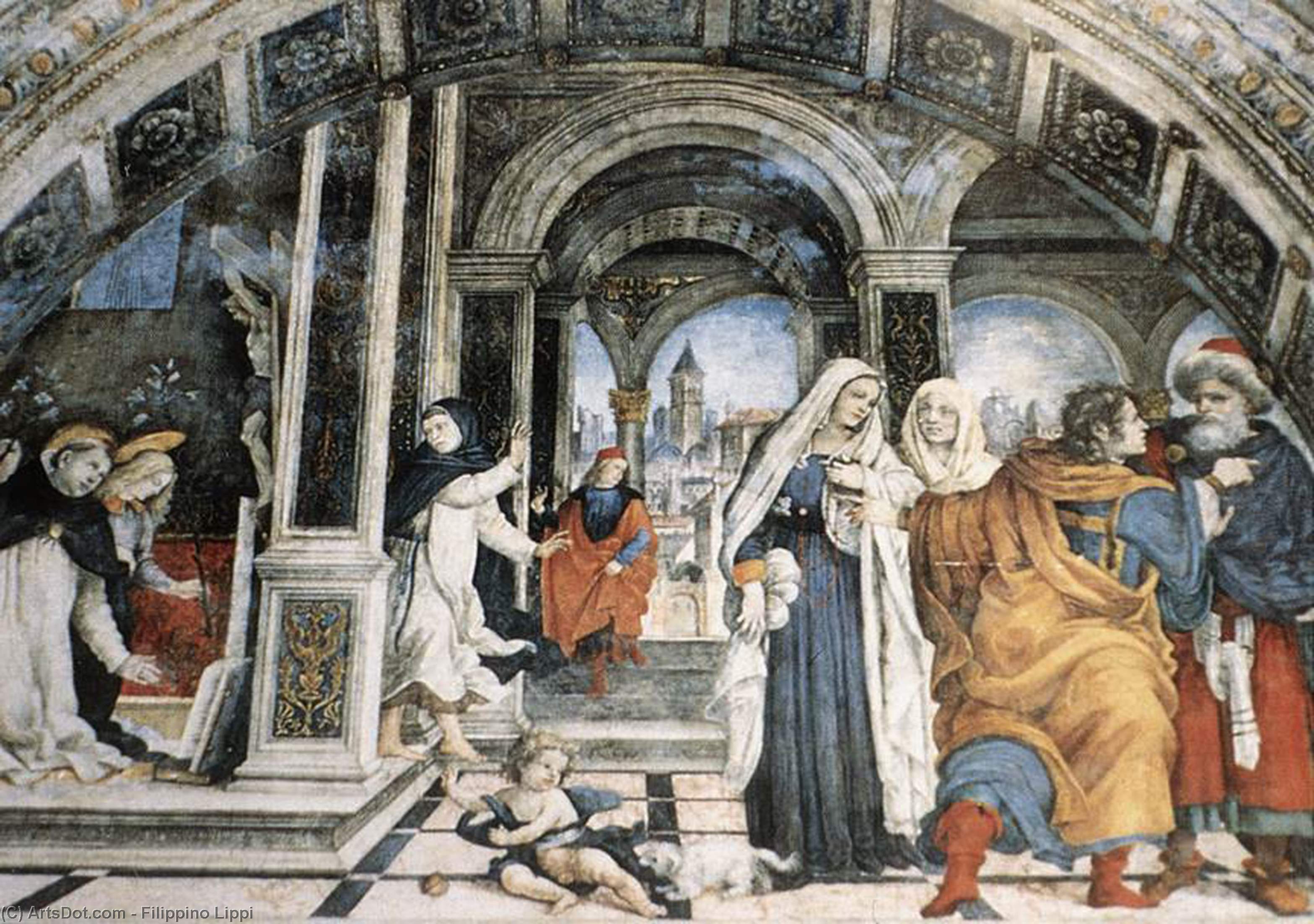
Miracle of St Thomas Aquinas


 Read More
Hand Made Oil Reproduction
Hand-painted oil on canvas in your size and frame, made to order by our artists. ( Buy Print Buy Image)




P118B $10

P118H $10

P118W $10

P438Z $10

P508JH $12

P508YH $12

P805H $10

P805Z $10

P919BZ $10

P919G $10

P919XJ $10

P959ZH $10

P968JZ $12

W106C $8

W218G $10

W218JH $8

W218Y $10

W307PJ $10

W316G $10

W316PJ $8

W316Y $10

W398PJ $8

W4111J $10

W500HY $15

W500JH $15

W692G $12

W849H $8

W940BG $15

W953PJ $8




Pick from our preset sizes that match the artwork's original proportions.

You may enter your own dimensions to fit a specific frame or space. If your selected size does not match the original image's proportions, we will either crop the artwork or extend the painting with additional hand-painted elements. A digital mockup will be sent for your approval before production begins.
Please note that the on-screen preview does not reflect the actual cropping or extension. Only the mockup will accurately show the final composition.
While custom sizes are available, we recommend selecting a dimension from the predefined list to preserve the original proportions.
After order, ArtsDot.com team will email client for instructions and provide a mockup preview
Worldwide Delivery () in 3/4 weeks instead of standard 5 weeks. (21 August). No compromise on quality.

Free Worldwide Express Shipping

High-Quality Linen Canvas

Full Shipping Insurance

Customs Tax Refund Guarantee

True Color Matching Guarantee

60-Day Return Policy (Defects Only)

100% Money-Back Guarantee

Bulk Discount Offer
 Glass option is only available in size under 110 CM

Miracle of St Thomas Aquinas
Reproduction Medium
Reproduction Size
-


Total Price
$ 263
Artwork Description
The Miracle of St. Thomas Aquinas: A Glimpse into Florentine High Renaissance Faith
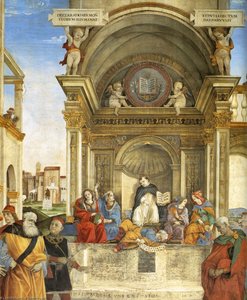
Filippino Lippi’s “Miracle of St. Thomas Aquinas” is more than just a fresco; it's a vibrant tableau vivant, a meticulously crafted window into the intellectual and spiritual heart of 15th-century Florence. Completed in 1489 for the Carafa Chapel within Santa Maria sopra Minerva, this monumental work transcends mere religious illustration, becoming a profound meditation on faith, reason, and the enduring legacy of one of history’s greatest thinkers. The scene unfolds within an intricately designed Gothic archway, immediately transporting the viewer to a space brimming with both earthly grandeur and divine illumination – a testament to Lippi's masterful command of perspective and his ability to fuse architectural ambition with human drama.
At the center of this captivating composition stands St. Thomas Aquinas himself, depicted not as a remote sage but as an active participant in a pivotal moment. He’s surrounded by a carefully chosen group of figures – women representing Philosophy, Astronomy, Theology, and Grammar, each embodying a key aspect of his intellectual pursuits. Their gestures are animated, their expressions thoughtful, suggesting a lively exchange of ideas. The surrounding crowd is equally compelling: a diverse array of individuals engaged in scholarly activities—sorting through books, debating concepts, and seemingly wrestling with the complexities of knowledge. This isn’t a static depiction of theological doctrine; it's a dynamic representation of learning, debate, and the pursuit of truth.
A Renaissance Synthesis: Style and Technique
Lippi’s style is deeply rooted in the Florentine High Renaissance, yet infused with a distinctly personal vision. He skillfully blends elements of tempera on plaster—the traditional medium for fresco painting—with oil-based pigments to achieve an astonishing level of detail and luminosity. The colors are rich and vibrant – deep reds, blues, and golds dominate, creating a dramatic visual impact that draws the eye across the expansive surface. Notice particularly the meticulous rendering of fabrics, the subtle gradations of light and shadow, and the expressive faces of the figures. Lippi’s technique is characterized by a remarkable ability to create a sense of depth and realism, while simultaneously maintaining an idealized beauty—a hallmark of Renaissance art.
The fresco's composition is carefully structured around geometric principles, reflecting the humanist interest in mathematics and proportion that flourished during this period. The archway itself serves as a visual anchor, framing the central scene and creating a sense of stability and order. Lippi’s use of perspective—particularly evident in the depiction of the cityscape visible through the arch – demonstrates his mastery of linear techniques, further enhancing the illusion of depth and realism. The overall effect is one of breathtaking grandeur and intellectual stimulation.
Symbolism and Historical Context
The “Miracle of St. Thomas Aquinas” isn’t simply a biographical portrait; it's laden with symbolic meaning. The miracle itself—depicted as Aquinas triumphing over the heretics – represents the victory of reason and faith, a central theme in his philosophical system. Each woman surrounding him embodies a key element of his intellectual framework: Philosophy guides the path to truth, Astronomy provides a cosmic perspective, Theology offers divine guidance, and Grammar ensures clarity of expression. The defeated heretics, identifiable by their distinctive attire and gestures, symbolize the errors and falsehoods that Aquinas sought to refute through rigorous scholarship.
The fresco was commissioned for the Carafa Chapel, named after the influential Caracciolo family who were patrons of the arts in Florence. The chapel itself is located within Santa Maria sopra Minerva, a church with a rich history dating back to the 6th century. The commission reflects the growing importance of humanist learning and the patronage of the arts by wealthy families like the Carafa—a period marked by intellectual ferment and artistic innovation. It’s important to note that Lippi was working during a time when the Dominican Order, to which he belonged, was actively promoting scholasticism – a method of philosophical reasoning based on logic and observation.
Emotional Resonance and Lasting Legacy
Beyond its historical and intellectual significance, “Miracle of St. Thomas Aquinas” possesses a powerful emotional resonance. The scene evokes a sense of wonder, curiosity, and the enduring quest for knowledge. The figures’ expressions—ranging from thoughtful contemplation to animated debate—suggest a vibrant intellectual community engaged in a shared pursuit of truth. The fresco invites viewers to join this conversation, prompting reflection on the nature of faith, reason, and the role of learning in shaping human understanding.
Reproductions of this masterpiece offer a remarkable opportunity to experience Lippi’s artistic genius firsthand. The intricate details, vibrant colors, and dynamic composition are faithfully captured in high-quality reproductions, allowing art lovers, collectors, and interior designers alike to bring the spirit of the High Renaissance into their homes or offices. It remains a testament to the enduring power of art to inspire, educate, and transport us across time and space.
Related Artworks
Artist Biography
Early Life and Training
- Born: April 1457, Prato, Italy
- Died: April 1504
- Parents: Fra Filippo Lippi (painter) and Lucrezia Buti
- Filippino was the illegitimate son of a renowned painter.
- Early training under his father laid the foundation for his artistic career.
Artistic Career and Development
- Early Period (1475-1480): Initial works, such as Madonnas, showed a less refined style. These were initially attributed to an anonymous artist known as "amico di Sandro."
- Evolution (1480-1485): Development of a more personal and effective approach in works like the *Journeys of Tobias*.
- Maturity (1485-1504): Mastery of the High Renaissance style, exemplified by *The Apparition of Christ to the Virgin*.
Major Works and Collaborations
- Collaboration with Perugino, Ghirlandaio, and Botticelli on frescoes at Lorenzo de' Medici’s villa.
- Completion of Masaccio's unfinished decoration in the Brancacci Chapel alongside Masolino.
- Notable works include: *The Coronation of the Virgin*, *Tobias and the Angel*, *St Jerome*, and *Scene from the Life of St Thomas Aquinas*.
Influences and Artistic Style
- Early Influences: Sandro Botticelli, Fra Filippo Lippi.
- Style Characteristics: Animated form and line, warm colorism, detailed landscapes, expressive figures, and a blend of perspective geometry with intimate interiors.
- Roman Antiquities: Studies after Roman antiquities during his time in Rome influenced his work, incorporating an antique vocabulary into his art.
Historical Significance and Legacy
- A leading Florentine exponent of the tradition of great fresco cycles.
- His influence on the High Renaissance is undeniable.
- Works are found in museums worldwide, including the Uffizi Gallery in Florence.
- Known for bridging the gap between earlier Renaissance styles and the emerging High Renaissance aesthetic.
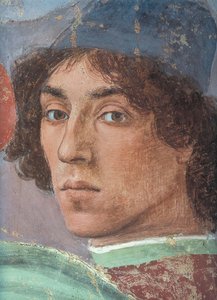
Filippino Lippi
1457 - 1504 , Italy
Quick Facts
- Artistic Movement Or Style: High Renaissance
- Artists Or Movements Influenced By This Artist: ['Raffaellino del Garbo']
- Artists Who Influenced This Artist:
- Fra Filippo Lippi
- Sandro Botticelli
- Date Of Birth: April 1457
- Date Of Death: April 1504
- Full Name: Filippino Lippi
- Nationality: Italian
- Notable Artworks:
- The Coronation of the Virgin
- Tobias and the Angel
- Scene from the Life of St Thomas Aquinas
- St Jerome
- Place Of Birth: Prato, Italy
Related Articles

The Fresco as Family Legacy: Preserving Heritage Through Wall Art
Explore the rich history & enduring legacy of fresco painting. Discover how to preserve family heritage through stunning wall art. Expert insights & restoration guidance.
Filippino Lippi: Renaissance Innovation Bridging Faith & Humanism
Explore the captivating world of Filippino Lippi, a Renaissance master bridging faith & humanism through innovative art. Discover his key works, influences, and lasting legacy with ArtsDot.

The Enduring Legacy of Fresco Painting: Techniques, History & Contemporary Relevance
Explore the rich history & enduring artistry of fresco painting – from Giotto to Michelangelo! Discover techniques, conservation efforts, & modern applications. Learn how ArtsDot brings this timeless art form to your home.
The Enduring Legacy of Fresco: Technique, History & Artistic Expression Across Cultures
Explore the rich history & enduring legacy of fresco painting! Discover ancient techniques, Giotto's masterpieces, and modern applications. Expert insights for art lovers & professionals.
Art That Lives With You: The Emotional Power of a Custom Interior Fresco
Discover the emotional power & timeless beauty of custom interior frescoes. Explore history, design tips & expert guidance from – creating lasting legacies.