 Preview
 Send
Send Share
Share
 Details

 Download
 Similars
 X-Ray
X-Ray Diaporama
Pieta


 Read More
Hand Made Oil Reproduction
Hand-painted oil on canvas in your size and frame, made to order by our artists. ( Buy Print Buy Image)




P118B $10

P118H $10

P118W $10

P438Z $10

P508JH $12

P508YH $12

P805H $10

P805Z $10

P919BZ $10

P919G $10

P919XJ $10

P959ZH $10

P968JZ $12

W106C $8

W218G $10

W218JH $8

W218Y $10

W307PJ $10

W316G $10

W316PJ $8

W316Y $10

W398PJ $8

W4111J $10

W500HY $15

W500JH $15

W692G $12

W849H $8

W940BG $15

W953PJ $8




Pick from our preset sizes that match the artwork's original proportions.

You may enter your own dimensions to fit a specific frame or space. If your selected size does not match the original image's proportions, we will either crop the artwork or extend the painting with additional hand-painted elements. A digital mockup will be sent for your approval before production begins.
Please note that the on-screen preview does not reflect the actual cropping or extension. Only the mockup will accurately show the final composition.
While custom sizes are available, we recommend selecting a dimension from the predefined list to preserve the original proportions.
After order, ArtsDot.com team will email client for instructions and provide a mockup preview
Worldwide Delivery () in 3/4 weeks instead of standard 5 weeks. (17 August). No compromise on quality.

Free Worldwide Express Shipping

High-Quality Linen Canvas

Full Shipping Insurance

Customs Tax Refund Guarantee

True Color Matching Guarantee

60-Day Return Policy (Defects Only)

100% Money-Back Guarantee

Bulk Discount Offer
 Glass option is only available in size under 110 CM

Pieta
Reproduction Medium
Reproduction Size
-


Total Price
$ 263
Artwork Description
A Vision of Divine Sorrow: Exploring Filippino Lippi's Pieta
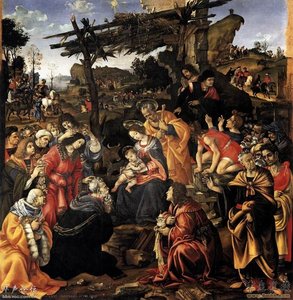
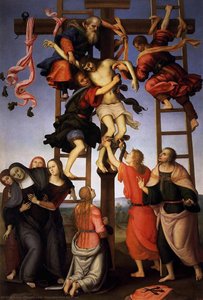
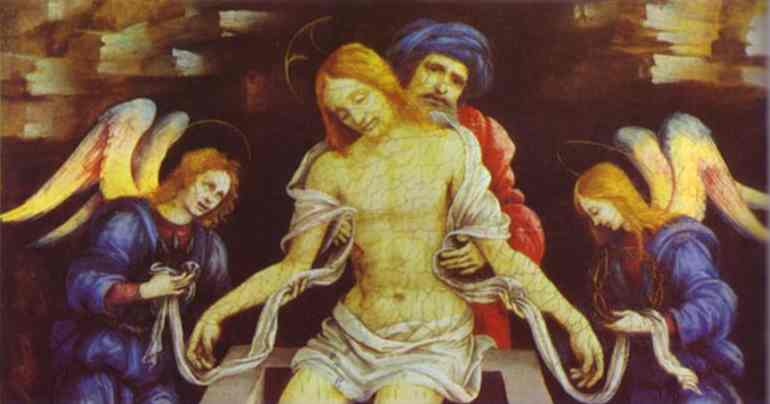
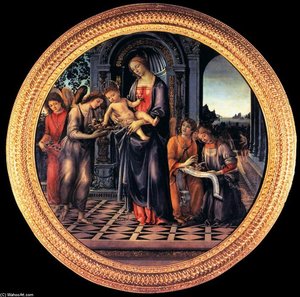
To stand before this depiction, titled Pieta, is to be enveloped in an atmosphere thick with profound, sacred sorrow. The scene immediately arrests the viewer with its intricate composition and palpable emotional weight. While the subject matter—the tender aftermath of Christ’s sacrifice—is eternally resonant, Filippino Lippi imbues it with a unique luminosity characteristic of his mature style. One cannot help but feel the weight of history and devotion emanating from the painted surface. The central focus remains undeniably on the divine figures, yet the surrounding elements, including the presence of angels and even the subtle inclusion of a donkey near the lower edge, weave a complex tapestry of narrative piety.
Mastery in High Renaissance Emotion
Painted around 1490, this work places us squarely within the vibrant crucible of the Italian Renaissance. Filippino Lippi, whose early training under his father provided a solid foundation, had blossomed into an artist capable of capturing both technical brilliance and deep human feeling. His style, particularly evident in works from his maturity period, moves beyond mere imitation; it achieves a soulful resonance. The handling of the figures suggests a mastery over oil or fresco techniques that allows for delicate gradations of shadow and light, giving the drapery a tangible weight while simultaneously lending an ethereal quality to the celestial beings surrounding the central drama. It is a testament to his ability to synthesize the grandeur of High Renaissance ideals with an almost intimate emotional touch.
Symbolism Woven into Sacred Form
The symbolism within this Pieta is rich and multi-layered, inviting contemplation from every angle. The grouping of figures—Jesus at the heart, supported by angels positioned on either side—creates a visual dialogue between earthly suffering and heavenly solace. Each angel seems to bear witness, their gazes guiding the viewer's eye back to the core mystery. The inclusion of the donkey, an animal often symbolizing humility or service in religious iconography, grounds the otherwise celestial event in relatable, terrestrial reality. These elements do not merely decorate; they participate in the narrative, enriching the theological weight and inviting a deeper meditation on sacrifice and resurrection.
An Heirloom for the Modern Sanctuary
For the collector, the art enthusiast, or the designer seeking to imbue a space with profound cultural depth, this reproduction offers an unparalleled opportunity. Owning a piece echoing Lippi’s genius means bringing home not just paint on canvas, but a segment of Renaissance devotion. The intricate detail and the palpable sense of narrative drama make it a breathtaking focal point for any chapel, study, or grand hall. It speaks to a sophisticated appreciation for art history, offering viewers a moment of quiet contemplation amidst the bustle of modern life—a beautiful echo of divine sorrow rendered with unparalleled grace.
Related Artworks
![The Passion [detail] — Hans Holbein The Younger, Northern Renaissance](/media/artworks/images/thumbnails/05/7f/057f8051c622487fae8ae052bf714363.jpg)
Artist Biography
Early Life and Training
- Born: April 1457, Prato, Italy
- Died: April 1504
- Parents: Fra Filippo Lippi (painter) and Lucrezia Buti
- Filippino was the illegitimate son of a renowned painter.
- Early training under his father laid the foundation for his artistic career.
Artistic Career and Development
- Early Period (1475-1480): Initial works, such as Madonnas, showed a less refined style. These were initially attributed to an anonymous artist known as "amico di Sandro."
- Evolution (1480-1485): Development of a more personal and effective approach in works like the *Journeys of Tobias*.
- Maturity (1485-1504): Mastery of the High Renaissance style, exemplified by *The Apparition of Christ to the Virgin*.
Major Works and Collaborations
- Collaboration with Perugino, Ghirlandaio, and Botticelli on frescoes at Lorenzo de' Medici’s villa.
- Completion of Masaccio's unfinished decoration in the Brancacci Chapel alongside Masolino.
- Notable works include: *The Coronation of the Virgin*, *Tobias and the Angel*, *St Jerome*, and *Scene from the Life of St Thomas Aquinas*.
Influences and Artistic Style
- Early Influences: Sandro Botticelli, Fra Filippo Lippi.
- Style Characteristics: Animated form and line, warm colorism, detailed landscapes, expressive figures, and a blend of perspective geometry with intimate interiors.
- Roman Antiquities: Studies after Roman antiquities during his time in Rome influenced his work, incorporating an antique vocabulary into his art.
Historical Significance and Legacy
- A leading Florentine exponent of the tradition of great fresco cycles.
- His influence on the High Renaissance is undeniable.
- Works are found in museums worldwide, including the Uffizi Gallery in Florence.
- Known for bridging the gap between earlier Renaissance styles and the emerging High Renaissance aesthetic.
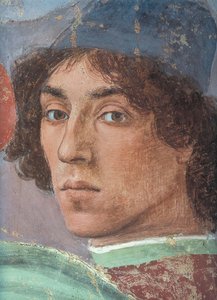
Filippino Lippi
1457 - 1504 , Italy
Quick Facts
- Artistic Movement Or Style: High Renaissance
- Artists Or Movements Influenced By This Artist: ['Raffaellino del Garbo']
- Artists Who Influenced This Artist:
- Fra Filippo Lippi
- Sandro Botticelli
- Date Of Birth: April 1457
- Date Of Death: April 1504
- Full Name: Filippino Lippi
- Nationality: Italian
- Notable Artworks:
- The Coronation of the Virgin
- Tobias and the Angel
- Scene from the Life of St Thomas Aquinas
- St Jerome
- Place Of Birth: Prato, Italy
Related Articles
Celestial Messengers: Angels in Painting – A Historical & Artistic Exploration
Explore the captivating history of angels in painting! Discover symbolism, iconic Renaissance & Byzantine masterpieces, and renowned artists. Expert insights for art lovers & collectors at ArtsDot.
Filippino Lippi: Renaissance Innovation Bridging Faith & Humanism
Explore the captivating world of Filippino Lippi, a Renaissance master bridging faith & humanism through innovative art. Discover his key works, influences, and lasting legacy with ArtsDot.
Celestial Messengers: A Comprehensive Exploration of Angelic Representation in Art History
Explore the captivating history of angels in art! Discover symbolism, iconic Renaissance masterpieces & renowned artists. Expert insights for art lovers & collectors at ArtsDot.
Filippo Lippi: Bridging Renaissance Devotion & Artistic Innovation
Explore the life & revolutionary art of Filippo Lippi, a pivotal Renaissance painter. Discover his masterpieces, influence on Botticelli, and investment potential. Expert analysis at ArtsDot.

Fra Angelico's Masterpieces: 25 Renaissance Paintings for Your Home | ArtsDot
Explore 25 breathtaking masterpieces by Fra Angelico, a Renaissance master. Discover the stories behind his iconic frescoes, Annunciations & religious art. Find museum-quality reproductions and elevate your home decor with ArtsDot.com.