 Preview
 Send
Send Share
Share
 Details

 Download
 Similars
 X-Ray
X-Ray Diaporama
Portrait of a Youth
 Oil
Oil- WallArt
- High Renaissance
 1485
1485- Renaissance
 91.0 x 72.0 cm
 Read More
Hand Made Oil Reproduction
Hand-painted oil on canvas in your size and frame, made to order by our artists. ( Buy Print Buy Image)




P118B $10

P118H $10

P118W $10

P438Z $10

P508JH $12

P508YH $12

P805H $10

P805Z $10

P919BZ $10

P919G $10

P919XJ $10

P959ZH $10

P968JZ $12

W106C $8

W218G $10

W218JH $8

W218Y $10

W307PJ $10

W316G $10

W316PJ $8

W316Y $10

W398PJ $8

W4111J $10

W500HY $15

W500JH $15

W692G $12

W849H $8

W940BG $15

W953PJ $8




Pick from our preset sizes that match the artwork's original proportions.

You may enter your own dimensions to fit a specific frame or space. If your selected size does not match the original image's proportions, we will either crop the artwork or extend the painting with additional hand-painted elements. A digital mockup will be sent for your approval before production begins.
Please note that the on-screen preview does not reflect the actual cropping or extension. Only the mockup will accurately show the final composition.
While custom sizes are available, we recommend selecting a dimension from the predefined list to preserve the original proportions.
After order, ArtsDot.com team will email client for instructions and provide a mockup preview
Worldwide Delivery () in 3/4 weeks instead of standard 5 weeks. (16 August). No compromise on quality.

Free Worldwide Express Shipping

High-Quality Linen Canvas

Full Shipping Insurance

Customs Tax Refund Guarantee

True Color Matching Guarantee

60-Day Return Policy (Defects Only)

100% Money-Back Guarantee

Bulk Discount Offer
 Glass option is only available in size under 110 CM

Portrait of a Youth
Reproduction Medium
Reproduction Size
-


Total Price
$ 263
Artwork Description
A Glimpse into the Renaissance Soul
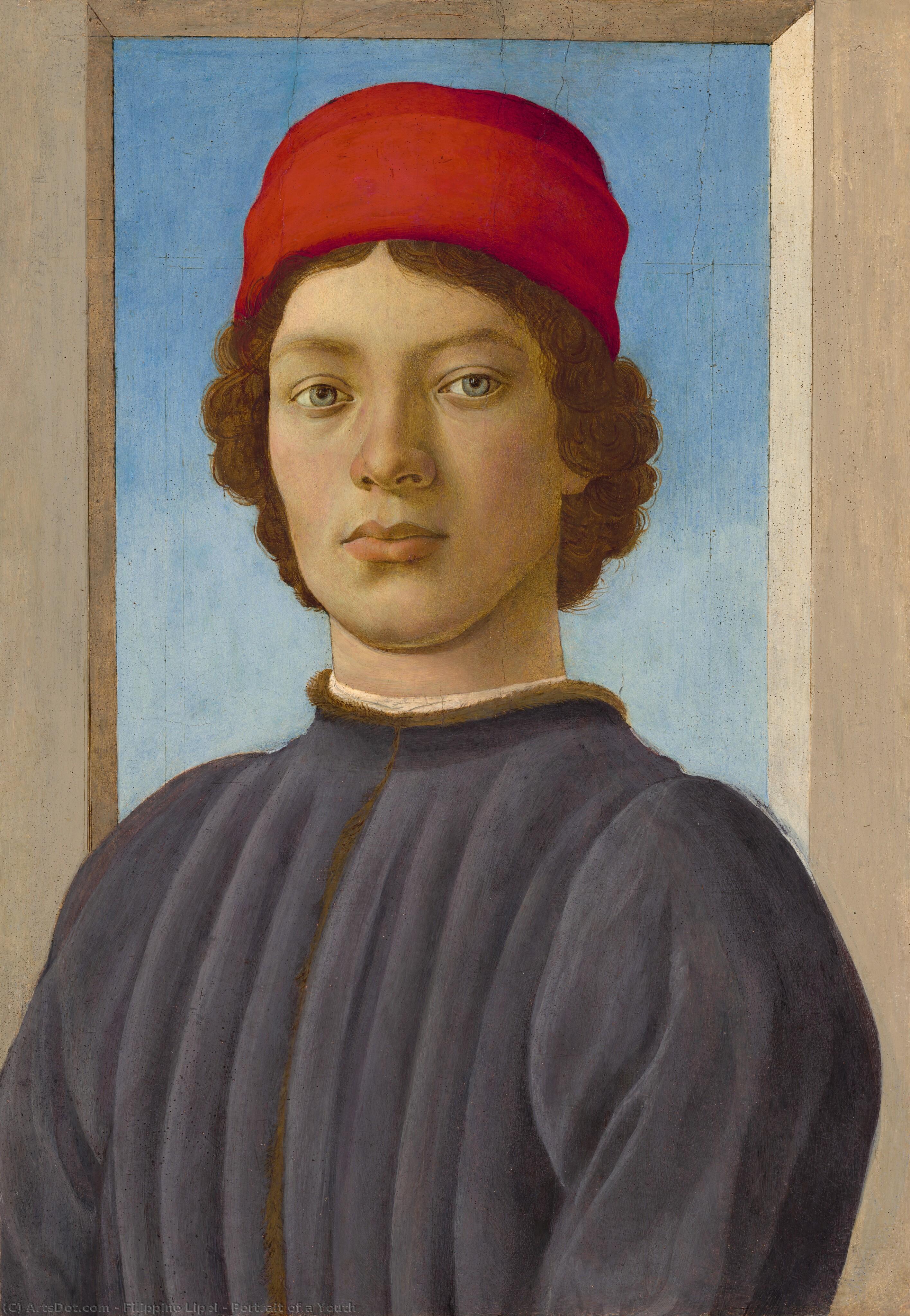
In the quiet mastery of Filippino Lippi’s Portrait of a Youth, painted around 1485, we are invited to meet a figure who seems to bridge the gap between the earthly and the eternal. This vertical masterpiece captures more than just a likeness; it captures an era of profound transition in the Italian Renaissance. The subject, a young man with pale, luminous skin and wide-set, piercing blue eyes, gazes directly at the viewer with an intensity that is both vulnerable and commanding. His presence is framed by a stone window, a classic Renaissance motif that serves as a threshold between the intimate interior of the portrait and the infinite expanse of a vivid blue sky. This clever use of composition creates a breathtaking sense of depth, pulling the observer into his personal space while simultaneously offering a window into the boundless possibilities of the natural world.
The technical brilliance of Lippi is evident in the delicate rendering of textures and light. The artist employs a sophisticated palette where the deep, regal crimson of the youth’s brimless cap contrasts strikingly against the cool, slate-blue of his jacket. One can almost feel the tactile richness of the garment, with its soft fur lining and meticulously painted vertical pleats that suggest both luxury and weight. Lippi’s ability to manipulate light—allowing it to catch the curve of a rounded nose or the fullness of light pink lips—demonstrates the refined skill he inherited from his father, Fra Filippo Lippi, and honed through his collaborations with masters like Botticelli. The smooth, porcelain-like finish of the skin reflects the High Renaissance ideal of beauty, where grace and anatomical precision meet in perfect harmony.
Symbolism and the Elegance of Presence
Beyond the mere depiction of a sitter, this portrait serves as a profound study of character and status. The attire of the young man—the heavy, fur-trimmed jacket and the structured cap—speaks to a certain social standing, suggesting a subject of importance within the Florentine or broader Italian society of the late 15th century. Yet, there is an underlying softness in his expression, a youthful innocence that prevents the portrait from feeling purely ceremonial. The window behind him acts as a powerful symbol of clarity and enlightenment; the bright, unobstructed sky represents the intellectual and spiritual awakening that defined the period. This interplay between the solid, architectural elements of the stone frame and the ethereal lightness of the atmosphere creates an emotional resonance that is both grounding and uplifting.
For the discerning collector or interior designer, a reproduction of this work offers more than just a decorative element; it provides a focal point of historical gravity and aesthetic sophistication. The painting’s balanced composition and rich, jewel-toned colors make it an ideal centerpiece for spaces that value classical elegance and contemplative moods. Whether placed in a sunlit gallery or a moody, library-style study, the Portrait of a Youth brings with it the enduring spirit of the Renaissance—a reminder of a time when art sought to capture the very essence of human dignity and the infinite beauty of the world around us.
Related Artworks
Artist Biography
Early Life and Training
- Born: April 1457, Prato, Italy
- Died: April 1504
- Parents: Fra Filippo Lippi (painter) and Lucrezia Buti
- Filippino was the illegitimate son of a renowned painter.
- Early training under his father laid the foundation for his artistic career.
Artistic Career and Development
- Early Period (1475-1480): Initial works, such as Madonnas, showed a less refined style. These were initially attributed to an anonymous artist known as "amico di Sandro."
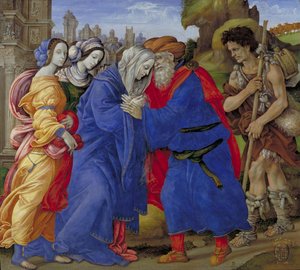
- Evolution (1480-1485): Development of a more personal and effective approach in works like the *Journeys of Tobias*.
- Maturity (1485-1504): Mastery of the High Renaissance style, exemplified by *The Apparition of Christ to the Virgin*.
Major Works and Collaborations
- Collaboration with Perugino, Ghirlandaio, and Botticelli on frescoes at Lorenzo de' Medici’s villa.
- Completion of Masaccio's unfinished decoration in the Brancacci Chapel alongside Masolino.
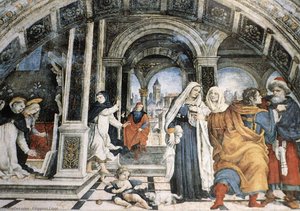
- Notable works include: *The Coronation of the Virgin*, *Tobias and the Angel*, *St Jerome*, and *Scene from the Life of St Thomas Aquinas*.
Influences and Artistic Style
- Early Influences: Sandro Botticelli, Fra Filippo Lippi.
- Style Characteristics: Animated form and line, warm colorism, detailed landscapes, expressive figures, and a blend of perspective geometry with intimate interiors.
- Roman Antiquities: Studies after Roman antiquities during his time in Rome influenced his work, incorporating an antique vocabulary into his art.
Historical Significance and Legacy
- A leading Florentine exponent of the tradition of great fresco cycles.
- His influence on the High Renaissance is undeniable.
- Works are found in museums worldwide, including the Uffizi Gallery in Florence.
- Known for bridging the gap between earlier Renaissance styles and the emerging High Renaissance aesthetic.
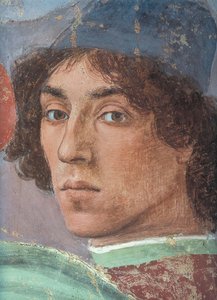
Filippino Lippi
1457 - 1504 , Italy
Quick Facts
- Artistic Movement Or Style: High Renaissance
- Artists Or Movements Influenced By This Artist: ['Raffaellino del Garbo']
- Artists Who Influenced This Artist:
- Fra Filippo Lippi
- Sandro Botticelli
- Date Of Birth: April 1457
- Date Of Death: April 1504
- Full Name: Filippino Lippi
- Nationality: Italian
- Notable Artworks:
- The Coronation of the Virgin
- Tobias and the Angel
- Scene from the Life of St Thomas Aquinas
- St Jerome
- Place Of Birth: Prato, Italy
Related Articles
Slate Blue Masterpieces: 10 Iconic Paintings & Timeless Home Decor Ideas
Immerse yourself in the captivating world of slate blue! Explore 10 iconic paintings by Monet, Van Gogh & Renoir. Discover their stories, techniques & find museum-quality art reproductions for your home at .

Crimson Threads of Narrative: Exploring Symbolism & Representation in Artworks Featuring the Red Dress
Explore the rich symbolism of the red dress in art history! From ancient power displays to iconic portraits like Cézanne’s 'Madame Cezanne', discover the cultural and artistic significance behind this captivating color. Expert analysis & insights.
The Allure of Azure: Exploring the Symbolic & Aesthetic Depths of Blue in Art History
Explore the rich history of blue in art! Discover its symbolism, from ancient pigments to modern masterpieces by Kandinsky & Seurat. Uncover the psychological impact and cultural meanings behind this captivating hue.

Henri Matisse's Masterpieces: Explore 25 Iconic Paintings & Art Decor Ideas
Journey through Henri Matisse's 25 most iconic paintings! Explore Fauvism, vibrant colors & the stories behind masterpieces like 'The Dance'. Find museum-quality art reproductions and curated decor ideas to elevate your space. Discover all masterpieces on ArtsDot.com.

Azure Visions: Exploring Representations of the Blue Dress in Western Art History
Explore the rich history of the blue dress in Western art! Discover its symbolism, from Renaissance masterpieces to modern interpretations by artists like Martin & Schiele. Uncover cultural meanings and artistic techniques.