 Preview
 Send
Send Share
Share
 Details

 Download
 Similars
 X-Ray
X-Ray Diaporama
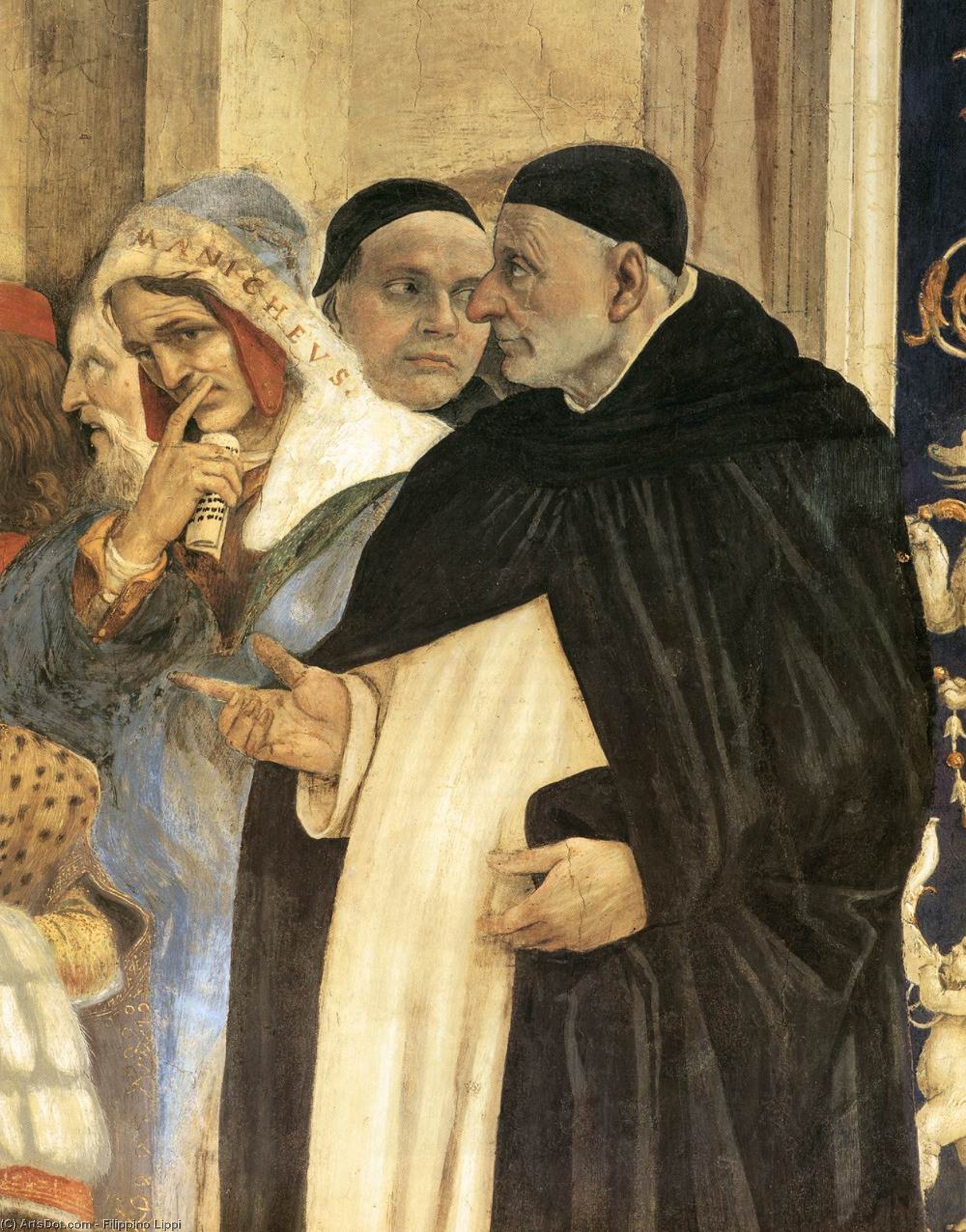
Triumph of St Thomas Aquinas over the Heretics (detail)


 Read More
Hand Made Oil Reproduction
Hand-painted oil on canvas in your size and frame, made to order by our artists. ( Buy Print Buy Image)




P118B $10

P118H $10

P118W $10

P438Z $10

P508JH $12

P508YH $12

P805H $10

P805Z $10

P919BZ $10

P919G $10

P919XJ $10

P959ZH $10

P968JZ $12

W106C $8

W218G $10

W218JH $8

W218Y $10

W307PJ $10

W316G $10

W316PJ $8

W316Y $10

W398PJ $8

W4111J $10

W500HY $15

W500JH $15

W692G $12

W849H $8

W940BG $15

W953PJ $8




Pick from our preset sizes that match the artwork's original proportions.

You may enter your own dimensions to fit a specific frame or space. If your selected size does not match the original image's proportions, we will either crop the artwork or extend the painting with additional hand-painted elements. A digital mockup will be sent for your approval before production begins.
Please note that the on-screen preview does not reflect the actual cropping or extension. Only the mockup will accurately show the final composition.
While custom sizes are available, we recommend selecting a dimension from the predefined list to preserve the original proportions.
After order, ArtsDot.com team will email client for instructions and provide a mockup preview
Worldwide Delivery () in 3/4 weeks instead of standard 5 weeks. (17 August). No compromise on quality.

Free Worldwide Express Shipping

High-Quality Linen Canvas

Full Shipping Insurance

Customs Tax Refund Guarantee

True Color Matching Guarantee

60-Day Return Policy (Defects Only)

100% Money-Back Guarantee

Bulk Discount Offer
 Glass option is only available in size under 110 CM

Triumph of St Thomas Aquinas over the Heretics (detail)
Reproduction Medium
Reproduction Size
-


Total Price
$ 313
Artwork Description
A Renaissance Drama of Faith and Reason
Filippino Lippi’s “Triumph of St Thomas Aquinas over the Heretics (detail)” is not merely a painting; it's a meticulously crafted theatrical scene frozen in oil paint, a vibrant testament to the intellectual and spiritual battles shaping 15th-century Europe. This particular section, recently rediscovered and brought back into focus through careful restoration, offers a profound glimpse into the complex world of scholastic theology and the burgeoning humanist movement. The work, originally part of a larger fresco cycle within the Carafa Chapel in Rome, immediately commands attention with its dramatic lighting, rich textures, and the intense expressions etched onto the faces of its figures.
The composition is strikingly tight, focusing on a small group of monks engaged in what appears to be a heated debate. At the heart of this scene stands St. Thomas Aquinas himself – not depicted as a serene sage, but as a forceful advocate, his hand firmly grasping a scroll bearing the damning words “I will destroy the wisdom of the wise.” This assertion encapsulates the central conflict: the clash between established theological doctrine and emerging philosophical thought. The figures surrounding him are equally compelling; on the left, we see Arius, a proponent of monotheism who argued that Jesus was subordinate to God, and his followers, while on the right stand those representing other heretical viewpoints – a visual representation of the intellectual challenges Aquinas faced in defending orthodox Christian belief.
The Language of Renaissance Art
Lippi’s style is deeply rooted in the Early Italian Renaissance, yet it possesses a unique dynamism and expressive power. The figures are rendered with remarkable realism, paying close attention to anatomical detail and capturing subtle nuances of emotion. Note the furrowed brows, clenched fists, and determined gazes – each expression conveying the intensity of the theological argument unfolding before us. The use of linear perspective creates a sense of depth and spatial arrangement, drawing the viewer into the scene. The artist masterfully employs chiaroscuro—the dramatic interplay of light and shadow—to sculpt the forms and heighten the emotional impact. The meticulous rendering of fabrics, particularly the monks’ robes, demonstrates Lippi's technical skill and his commitment to portraying the textures and details of everyday life.
- Technique: Oil on wood panel – a hallmark of Renaissance painting, allowing for rich colors, subtle gradations of tone, and detailed rendering.
- Composition: A tightly framed scene emphasizing the drama and conflict between opposing viewpoints.
- Color Palette: Dominated by earth tones—browns, creams, ochres—creating a solemn and contemplative atmosphere.
Symbolism and Historical Context
Beyond its immediate depiction of theological debate, “Triumph of St Thomas Aquinas” is laden with symbolism. The figures representing heresy are deliberately rendered as shadowy and indistinct, suggesting their flawed reasoning and ultimately, their defeat. The placement of the figures within an elaborate architectural setting—a stylized representation of a Roman basilica—references the authority of the Church and its role in preserving divine truth. The inclusion of putti (cherubic figures) adds a layer of allegorical meaning, representing virtues and intellectual pursuits. This painting was created during a period of intense religious and intellectual upheaval, as the Renaissance witnessed a renewed interest in classical learning alongside a reaffirmation of Christian faith. The work reflects this tension between tradition and innovation, highlighting the ongoing struggle to reconcile reason and revelation.
A Window into the Soul
Ultimately, “Triumph of St Thomas Aquinas over the Heretics (detail)” is more than just a historical artifact; it’s a powerful expression of human conviction and intellectual passion. The painting invites us to contemplate the nature of truth, the importance of critical thinking, and the enduring legacy of St. Thomas Aquinas—a towering figure in the history of Western thought. Reproductions of this work offer a remarkable opportunity to bring this dramatic scene into your home or office, serving as a constant reminder of the complexities and rewards of intellectual inquiry.
Related Artworks
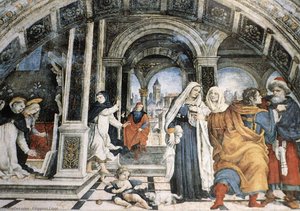
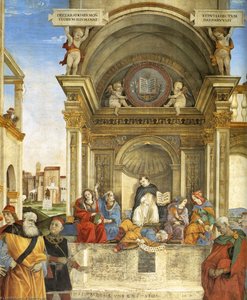
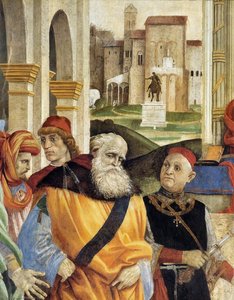
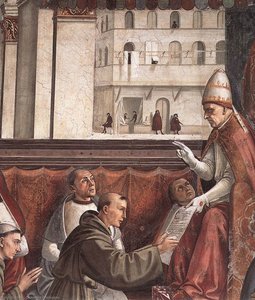
Artist Biography
Early Life and Training
- Born: April 1457, Prato, Italy
- Died: April 1504
- Parents: Fra Filippo Lippi (painter) and Lucrezia Buti
- Filippino was the illegitimate son of a renowned painter.
- Early training under his father laid the foundation for his artistic career.
Artistic Career and Development
- Early Period (1475-1480): Initial works, such as Madonnas, showed a less refined style. These were initially attributed to an anonymous artist known as "amico di Sandro."
- Evolution (1480-1485): Development of a more personal and effective approach in works like the *Journeys of Tobias*.
- Maturity (1485-1504): Mastery of the High Renaissance style, exemplified by *The Apparition of Christ to the Virgin*.
Major Works and Collaborations
- Collaboration with Perugino, Ghirlandaio, and Botticelli on frescoes at Lorenzo de' Medici’s villa.
- Completion of Masaccio's unfinished decoration in the Brancacci Chapel alongside Masolino.
- Notable works include: *The Coronation of the Virgin*, *Tobias and the Angel*, *St Jerome*, and *Scene from the Life of St Thomas Aquinas*.
Influences and Artistic Style
- Early Influences: Sandro Botticelli, Fra Filippo Lippi.
- Style Characteristics: Animated form and line, warm colorism, detailed landscapes, expressive figures, and a blend of perspective geometry with intimate interiors.
- Roman Antiquities: Studies after Roman antiquities during his time in Rome influenced his work, incorporating an antique vocabulary into his art.
Historical Significance and Legacy
- A leading Florentine exponent of the tradition of great fresco cycles.
- His influence on the High Renaissance is undeniable.
- Works are found in museums worldwide, including the Uffizi Gallery in Florence.
- Known for bridging the gap between earlier Renaissance styles and the emerging High Renaissance aesthetic.
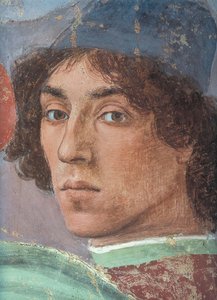
Filippino Lippi
1457 - 1504 , Italy
Quick Facts
- Artistic Movement Or Style: High Renaissance
- Artists Or Movements Influenced By This Artist: ['Raffaellino del Garbo']
- Artists Who Influenced This Artist:
- Fra Filippo Lippi
- Sandro Botticelli
- Date Of Birth: April 1457
- Date Of Death: April 1504
- Full Name: Filippino Lippi
- Nationality: Italian
- Notable Artworks:
- The Coronation of the Virgin
- Tobias and the Angel
- Scene from the Life of St Thomas Aquinas
- St Jerome
- Place Of Birth: Prato, Italy
Related Articles
Filippino Lippi: Renaissance Innovation Bridging Faith & Humanism
Explore the captivating world of Filippino Lippi, a Renaissance master bridging faith & humanism through innovative art. Discover his key works, influences, and lasting legacy with ArtsDot.
Filippo Lippi: Bridging Renaissance Devotion & Artistic Innovation
Explore the life & revolutionary art of Filippo Lippi, a pivotal Renaissance painter. Discover his masterpieces, influence on Botticelli, and investment potential. Expert analysis at ArtsDot.

El Greco's Masterpieces: Explore 25 Iconic Paintings & Spiritual Visions | ArtsDot
Journey through El Greco's 25 most iconic paintings! Explore the spiritual depth & dramatic beauty of this Spanish Renaissance master. Discover art history, techniques & find museum-quality reproductions for your home at ArtsDot.com.

Giotto's Masterpieces: 25 Renaissance Artworks for Your Home | ArtsDot
Explore 25 breathtaking artworks by Giotto di Bondone, a Renaissance master. Discover the stories behind iconic frescoes & paintings like the Scrovegni Chapel cycle. Find museum-quality Giotto reproductions and elevate your home decor with ArtsDot.com.

Fra Angelico's Masterpieces: 25 Renaissance Paintings for Your Home | ArtsDot
Explore 25 breathtaking masterpieces by Fra Angelico, a Renaissance master. Discover the stories behind his iconic frescoes, Annunciations & religious art. Find museum-quality reproductions and elevate your home decor with ArtsDot.com.