 Preview
 Send
Send Share
Share
 Details

 Download
 Similars
 X-Ray
X-Ray Diaporama
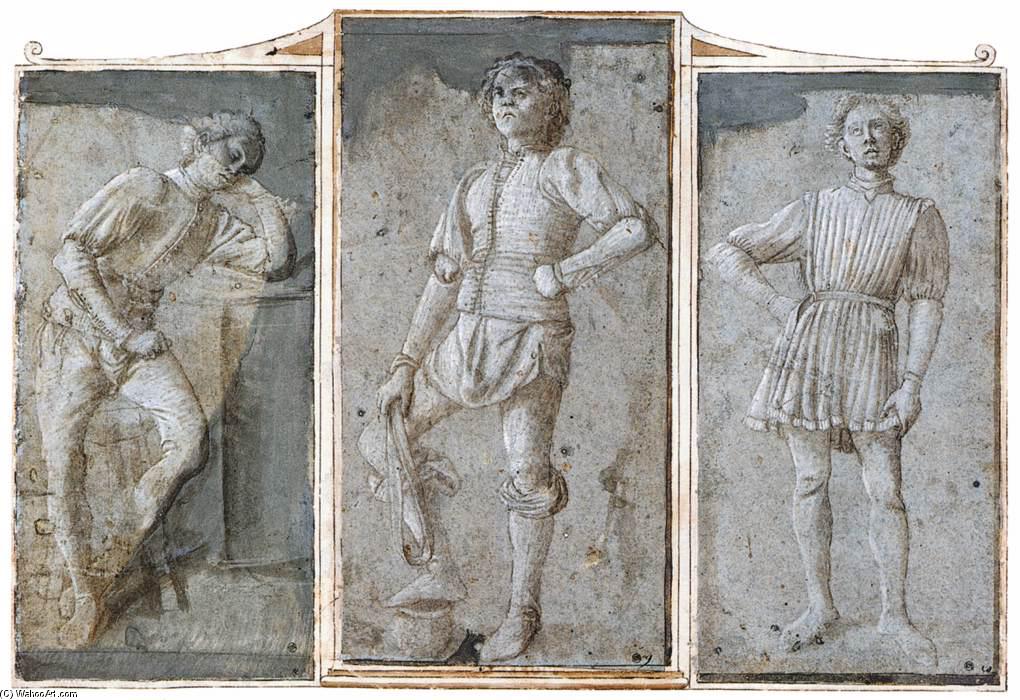
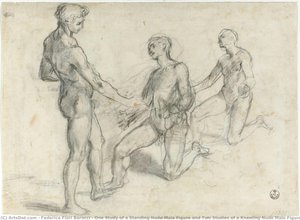
Study of David and Two Figures


 Read More
Hand Made Oil Reproduction
Hand-painted oil on canvas in your size and frame, made to order by our artists. ( Buy Print Buy Image)




P118B $10

P118H $10

P118W $10

P438Z $10

P508JH $12

P508YH $12

P805H $10

P805Z $10

P919BZ $10

P919G $10

P919XJ $10

P959ZH $10

P968JZ $12

W106C $8

W218G $10

W218JH $8

W218Y $10

W307PJ $10

W316G $10

W316PJ $8

W316Y $10

W398PJ $8

W4111J $10

W500HY $15

W500JH $15

W692G $12

W849H $8

W940BG $15

W953PJ $8




Pick from our preset sizes that match the artwork's original proportions.

You may enter your own dimensions to fit a specific frame or space. If your selected size does not match the original image's proportions, we will either crop the artwork or extend the painting with additional hand-painted elements. A digital mockup will be sent for your approval before production begins.
Please note that the on-screen preview does not reflect the actual cropping or extension. Only the mockup will accurately show the final composition.
While custom sizes are available, we recommend selecting a dimension from the predefined list to preserve the original proportions.
After order, ArtsDot.com team will email client for instructions and provide a mockup preview
Worldwide Delivery () in 3/4 weeks instead of standard 5 weeks. (17 August). No compromise on quality.

Free Worldwide Express Shipping

High-Quality Linen Canvas

Full Shipping Insurance

Customs Tax Refund Guarantee

True Color Matching Guarantee

60-Day Return Policy (Defects Only)

100% Money-Back Guarantee

Bulk Discount Offer
 Glass option is only available in size under 110 CM

Study of David and Two Figures
Reproduction Medium
Reproduction Size
-


Total Price
$ 313
Artwork Description
A Study in Contemplation: Fra Carnevale’s “Study of David and Two Figures”
Fra Carnevale's "Study of David and Two Figures," painted around 1450, isn’t merely a depiction of biblical narrative; it’s a profound meditation on human form, emotion, and the very act of artistic observation. Emerging from the shadowy workshops of Renaissance Urbino, this triptych—a remarkably intimate work considering its scale—offers a rare glimpse into the mind of an artist deliberately obscured by history. It's a piece that whispers secrets of patronage, architectural ambition, and the quiet intensity of a man wrestling with his craft.
The painting immediately draws the eye to its stark simplicity: three figures arranged vertically within a restrained, almost monastic frame. A seated figure, clearly an interpretation of David, rests his head upon his hand—a gesture laden with melancholy and introspection. Beside him stands another, clasped in prayerful hands, radiating a sense of composure and quiet faith. The third figure, also standing, holds one hand on their hip, projecting an air of confident observation. These aren’t grand heroes or dramatic scenes; they are figures caught in moments of private reflection, inviting the viewer to share in their unspoken thoughts.
The Architect's Eye: Technique and Composition
Carnevale’s mastery lies not in flamboyant display but in a meticulously controlled technique. Executed primarily in monochrome—a deliberate choice that emphasizes form and texture—the painting relies heavily on subtle gradations of gray, achieved through masterful shading and the delicate application of charcoal or pen and ink. The figures are rendered with an astonishing anatomical accuracy, reflecting Carnevale’s deep understanding of human anatomy, honed perhaps by his own architectural pursuits. Note the careful modeling of drapery, the precise rendering of hands and faces—each element imbued with a sense of weight and volume.
The composition itself is remarkably restrained. The figures are placed within a shallow space, almost as if viewed through a window, creating a sense of intimacy and immediacy. The architectural background, subtly receding into the distance, isn’t merely decorative; it's integral to the painting’s meaning. Carnevale was deeply interested in architecture, and this element—a simplified representation of a building—suggests his desire to integrate art and design, mirroring the principles he applied to his own architectural projects. The use of perspective is deliberate, creating an illusion of depth that anchors the figures within their environment.
A Renaissance Enigma: Context and Symbolism
Understanding Carnevale’s work requires delving into the context of 15th-century Urbino—a city at the heart of the Italian Renaissance. Urbino was a center for both artistic innovation and political intrigue, ruled by the powerful Montefeltro family who fostered an environment of patronage and intellectual exchange. Carnevale's association with figures like Guido Bonclerici, vicar general to the Bishop Giovanni Battista Mellini, and Matteo di Cataneis—members of Urbino’s elite—highlights his position within this complex social landscape.
The painting’s symbolism is layered and open to interpretation. David’s pose, with its head resting on his hand, evokes a sense of sorrow or contemplation – perhaps reflecting the artist's own struggles with recognition and artistic fulfillment. The figure in prayer suggests faith and devotion, while the standing figure embodies observation and judgment. The triptych format itself—a common device in Renaissance art—suggests a deliberate exploration of themes related to human experience, inviting viewers to engage in a dialogue with the figures depicted.
Echoes of the Masters: Influence and Legacy
Despite the scarcity of surviving works attributed to Carnevale, his influence on subsequent generations of artists is undeniable. Giorgio Vasari, in his “Lives of the Artists,” famously championed Carnevale’s work, attributing significant architectural innovations to him—a claim that continues to be debated by scholars today. The painting's debt to Piero della Francesca is readily apparent in its use of linear perspective and its emphasis on anatomical accuracy. The influence of Lippi, who taught Carnevale at the Florentine workshop, can also be discerned in his careful rendering of drapery and his restrained palette.
“Study of David and Two Figures” remains a poignant testament to the quiet power of observation and the enduring appeal of human emotion. It’s a work that rewards close study, inviting viewers to contemplate not only the figures depicted but also the artist's own complex and enigmatic life—a true masterpiece of Renaissance introspection.
Related Artworks
Artist Biography
The Enigmatic Architect of Urbino’s Renaissance
In the shadowed corridors of the Quattrocento, few figures possess the haunting allure of Fra Carnevale. A name whispered with both reverence and mystery, Bartolomeo di Giovanni Corradino—known to history by his monastic title—remains one of the most elusive masters of the Italian Renaissance. Born in Urbino around 1420, his life was a delicate tapestry woven from the threads of spiritual devotion and profound artistic innovation. As a member of the Dominican Order, Carnevale occupied a unique space where the contemplative silence of the cloister met the burgeoning intellectual rigor of humanism. Though only nine works can be definitively attributed to his hand today, each surviving piece serves as a window into a mind that sought to harmonize the divine with the mathematical precision of the physical world.
The trajectory of Carnevale’s artistry was shaped by the great artistic crucibles of his era. His formative years in Urbino under the guidance of Jacopo Veneto instilled in him an early fascination with perspective, a skill that would become the hallmark of his mature style. However, it was his journey to Florence around 1445 that truly ignited his creative spirit. Immersed in the vibrant Florentine atmosphere, he studied under the influential Antonio Alberti and entered the prestigious workshop of Filippo Lippi. This apprenticeship was transformative; from Lippi, Carnevale inherited a masterful command of color and a delicate approach to composition, learning to breathe life into figures through subtle tonal shifts and emotional depth.
A Mastery of Space and Sacred Narrative
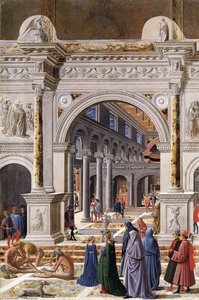
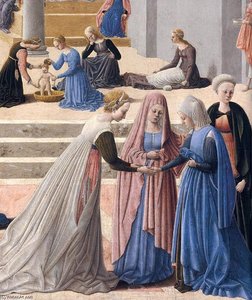
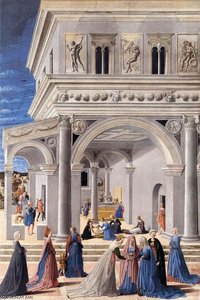
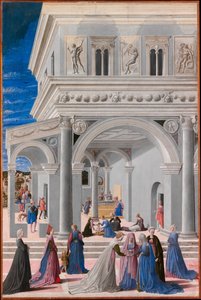
What distinguishes the work of Fra Carnevale from his contemporaries is his unparalleled ability to integrate complex architectural settings with sacred narratives. He did not merely paint backgrounds; he constructed worlds. His canvases often feature imposing, classically inspired structures that reflect the humanist ideals of the age, echoing the grandeur of the Ducal Palace at Urbino and the theoretical treatises of Leon Battista Alberti. In works such as The Birth of the Virgin, one observes a breathtaking marriage of medieval detail and Renaissance spatial logic. The architectural depth achieved in these panels suggests a profound understanding of geometry, creating a stage where the miraculous feels grounded in a tangible, measurable reality.
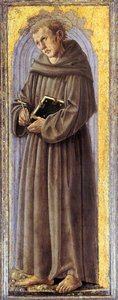
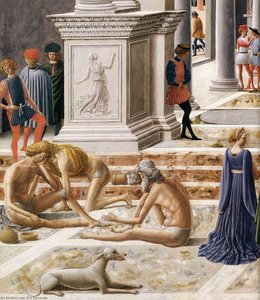
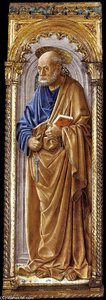
His technical repertoire was as diverse as his influences, ranging from the luminous clarity of tempera to the rich textures of oil painting. In pieces like St Peter, he utilized light and shadow to evoke a sense of solemnity and divine presence, while his Allegorical Scene showcases a daring use of nude figures within classical settings, reflecting the era's fascination with rediscovered Greco-Roman ideals. This ability to navigate between the pious requirements of his Dominican vocation and the sophisticated aesthetic demands of patrons like Federico Montefeltro allowed him to create art that was simultaneously devotional and intellectually stimulating.
Legacy and Historical Resonance
Though the scarcity of his surviving oeuvre has often led scholars to debate the authenticity of certain works, the historical significance of Fra Carnevale cannot be overstated. He acted as a vital bridge between the early experiments of the 15th century and the High Renaissance perfection achieved by masters like Bramante and Raphael. His preoccupation with architectural perspective and the integration of classical motifs provided a foundational blueprint for the next generation of Italian artists. To study Carnevale is to witness the very moment when the spiritual intensity of the Middle Ages began to merge with the structured, human-centric vision of the Renaissance.
Today, the legacy of this enigmatic monk lives on through the rare, precious fragments of his vision that remain. He stands as a testament to the power of the "architectural painter," an artist who saw the divine not just in the faces of saints, but in the very proportions of the space they inhabited. His life, though shrouded in much historical uncertainty, continues to inspire awe, reminding us that even the most elusive figures can leave an indelible mark on the soul of art history.
Fra Carnevale
1420 - 1484 , Italy
Quick Facts
- Artistic Movement Or Style: Quattrocento
- Artists Or Movements Influenced By This Artist:
- Filippo Lippi
- Piero della Francesca
- Artists Who Influenced This Artist:
- Antonio Alberti
- Dominico Veneziano
- Date Of Birth: c. 1420
- Date Of Death: 1484
- Full Name: Bartolomeo di Giovanni Corradini
- Nationality: Italian
- Notable Artworks:
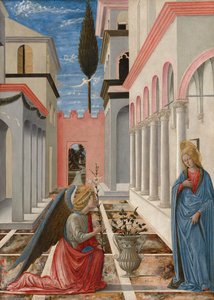
- The Annunciation
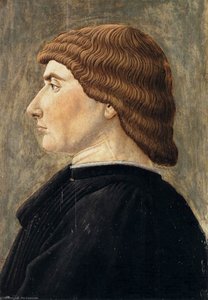
- Portrait of a Man
- Place Of Birth: Urbino, Italy
Related Articles

Stephen Chaplin: A Study in Light, Form & Emotional Space in Contemporary Landscape Painting
Explore the captivating landscape paintings of Stephen Chaplin, renowned for his 'Treatment in Minors' series & unique blend of Pop Art and historical realism. Discover his artistic journey & emotional depth.

From Snapshot to Legacy: Commissioning an Oil Reproduction for Your Anniversary – A Study in Personalized Art & Enduring Emotional Value
Transform cherished memories into timeless art with ArtsDot's hand-painted oil reproductions. Commission a personalized anniversary gift that reflects your unique love story and becomes a lasting heirloom. Expert artistry & guaranteed satisfaction.
Denis Maurice: A Study in Post-War French Figuration & the Poetics of Everyday Life
Explore the life & work of Maurice Denis, pivotal French painter bridging Impressionism to modern art. Discover his Nabis symbolism, theories on 'ideation,' and profound commitment to sacred art. A deep dive for art enthusiasts.
Fra Angelico's Masterpieces: 25 Renaissance Paintings for Your Home | ArtsDot
Explore 25 breathtaking masterpieces by Fra Angelico, a Renaissance master. Discover the stories behind his iconic frescoes, Annunciations & religious art. Find museum-quality reproductions and elevate your home decor with ArtsDot.com.
Nostalgia Rendered: Oil Paintings as Vessels of Childhood Memory – A Study in Emotional Reconstruction & Artistic Legacy
Transform cherished photos into timeless oil paintings with ArtsDot’s expert craftsmanship. Preserve your family's story & create a lasting legacy piece for generations. Hand-painted, museum-quality art – start your journey today!