 Preview
 Send
Send Share
Share
 Details

 Download
 Similars
 X-Ray
X-Ray Diaporama
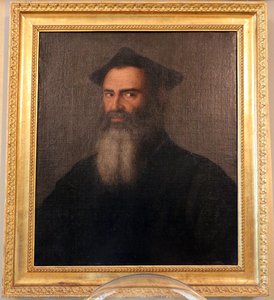
Carlo Rimbotti (1518–1591)
 Mannerist Portrait
 1548
1548 53.0 x 42.0 cm
 Metropolitan Museum of Art
 Read More
Giclée / Art Print
Museum-quality giclée or canvas print with fast production and flexible finish options. ( Buy Hand Made Painting Buy Image)




P118B $10

P118H $10

P118W $10

P438Z $10

P508JH $12

P508YH $12

P805H $10

P805Z $10

P919BZ $10

P919G $10

P919XJ $10

P959ZH $10

P968JZ $12

W106C $8

W218G $10

W218JH $8

W218Y $10

W307PJ $10

W316G $10

W316PJ $8

W316Y $10

W398PJ $8

W4111J $10

W500HY $15

W500JH $15

W692G $12

W849H $8

W940BG $15

W953PJ $8




Pick from our preset sizes that match the artwork's original proportions.

You may enter your own dimensions to fit a specific frame or space. If your selected size does not match the original image's proportions, we will either crop the artwork or extend the image with a mirrored or solid-fill edge. A digital mockup will be sent for your approval before production begins.
Please note that the on-screen preview does not reflect the actual cropping or extension. Only the mockup will accurately show the final composition.
While custom sizes are available, we recommend selecting a dimension from the predefined list to preserve the original proportions.
Worldwide Delivery () in 2 weeks instead of standard 4/5 weeks. (4 September)

Free Worldwide Express Shipping

High-Quality Linen Canvas

Full Shipping Insurance

Customs Tax Refund Guarantee

True Color Matching Guarantee

60-Day Return Policy (Defects Only)

100% Money-Back Guarantee

Bulk Discount Offer
 Glass option is only available in size under 110 CM

Carlo Rimbotti (1518–1591)
Giclée / Art Print
Reproduction Size
-


Total Price
$ 63
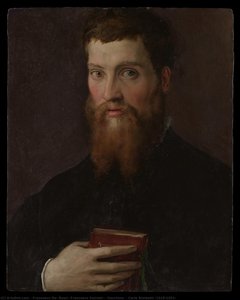
A Portrait of Renaissance Intellect: Carlo Rimbotti by Francesco Salviati
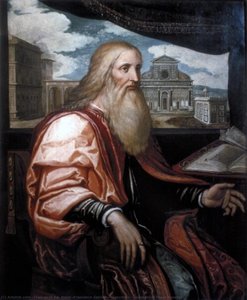
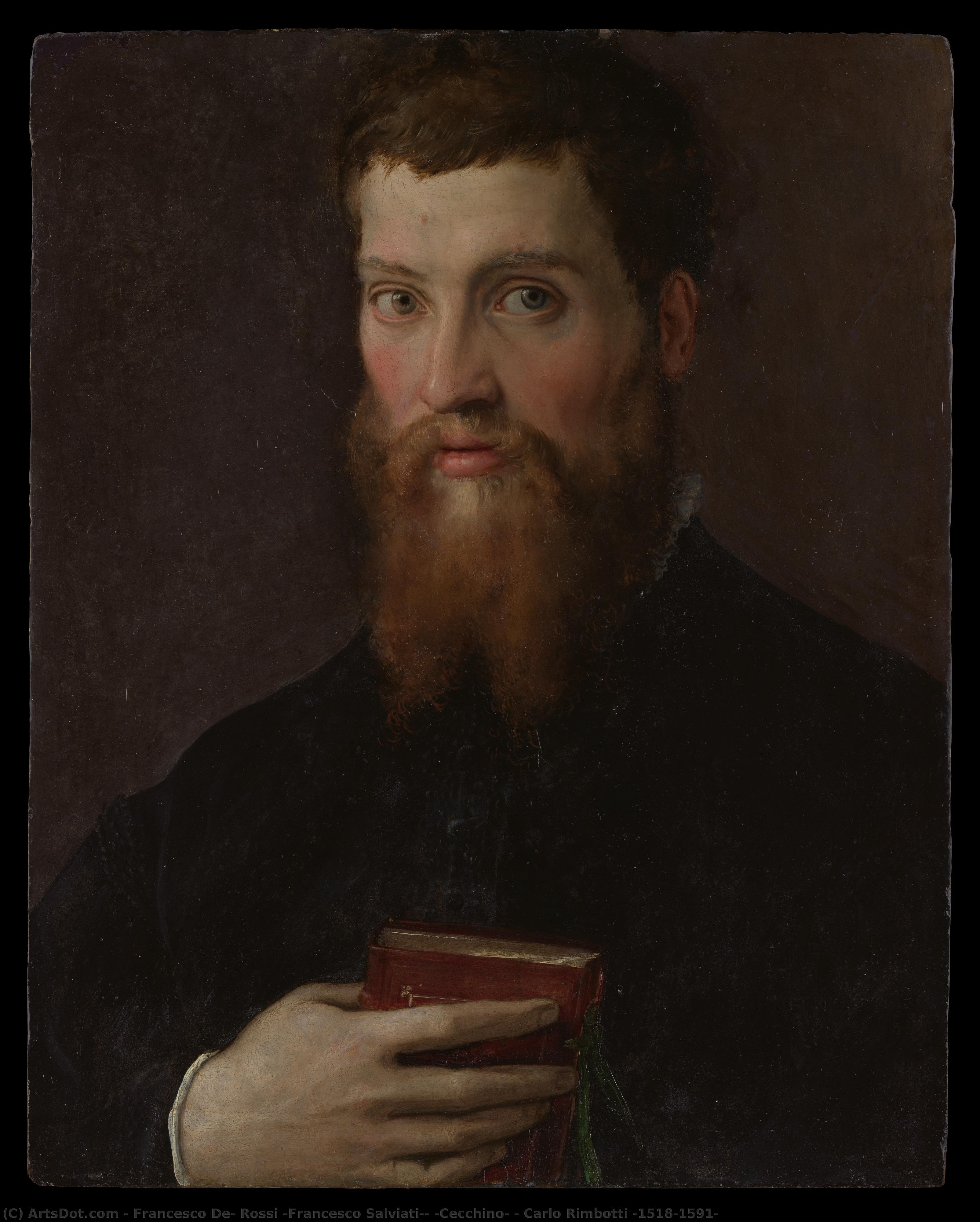
The year is 1548. Florence pulses with the energy of the High Renaissance, yet beneath the surface of opulent palaces and grand commissions, a quieter world of scholarship and philosophical discourse thrives within the walls of the Accademia Fiorentina. It’s here that Francesco Salviati, already establishing himself as one of the era's most daring Mannerist painters, captured the essence of Carlo Rimbotti – a physician, humanist, and dedicated member of this influential intellectual circle. This intimate portrait, now housed within the Metropolitan Museum of Art (object number 2017.401), offers a rare glimpse into the life and mind of a man deeply engaged with the complexities of his time.
Salviati’s masterful handling of oil paint on wood creates an arresting visual experience. The surface is remarkably smooth, achieved through painstaking layering – a technique known as *glazure*, where thin, translucent washes of color are applied over dry underlayers. This method lends the painting an ethereal quality, almost as if the light itself seems to emanate from within the figure. The muted palette—primarily deep browns, ochres, and subtle blues—contrasts dramatically with the vibrant colors often associated with Renaissance portraiture, reflecting a deliberate shift towards the introspective and psychologically charged aesthetic of Mannerism.
A Symbol of Knowledge and Humanism
Rimbotti himself is depicted in a pose that speaks volumes about his intellectual pursuits. He’s seated, holding a small book open before him – a clear reference to *petrarchini*, short poems by Petrarch, the celebrated poet and humanist. The placement of the book directly over his heart is particularly significant. It's a potent symbol of knowledge, virtue, and the connection between intellect and emotion—a core tenet of Renaissance humanism. The gesture suggests an active engagement with learning, a constant striving for understanding that defined Rimbotti’s life.
Beyond the immediate symbolism, Salviati employs a sophisticated use of perspective and spatial arrangement to draw the viewer into the scene. The slightly off-center composition creates a sense of dynamism and movement, as if Rimbotti is actively engaged in his studies. The careful rendering of folds in his clothing and the subtle modeling of his face demonstrate Salviati’s remarkable ability to capture not just physical likeness but also the character and personality of his subject.
The Painter's Context: Francesco Salviati and the Florentine Academy
Understanding Salviati requires understanding the context of the Florentine Academy. Founded in 1540, it was a haven for intellectuals, artists, and scholars—a space where humanist ideals were debated, artistic techniques were refined, and new visual languages were explored. Salviati himself was deeply involved in the Academy’s activities, serving as its architect of visual drama. He wasn't simply a painter; he was a conceptual artist who sought to evoke emotion and psychological intensity through his compositions.
Salviati’s artistic lineage is equally important. He apprenticed under masters like Giuliano Bugiardini and Andrea del Brescianino, absorbing their technical skills while forging his own distinctive style—one characterized by elongated figures, dramatic lighting, and a focus on emotional expression. His collaboration with Carlo Rimbotti exemplifies this dynamic interplay between tradition and innovation.
A Timeless Portrait of Humanistic Engagement
“Carlo Rimbotti” is more than just a portrait; it’s a testament to the intellectual ferment of the Renaissance. Salviati's masterful technique, combined with his profound understanding of humanist ideals, has created an enduring work of art that continues to resonate today. The painting invites us to contemplate the pursuit of knowledge, the importance of human connection, and the power of art to capture the essence of a complex individual. It remains a poignant reminder of a time when intellect and beauty intertwined in the heart of Florence.
Related Artworks
Artist Biography
Francesco Salviati: The Architect of Mannerist Drama
Francesco Salviati, a name often intertwined with Cecchino del Salviati and Francesco Rossi, stands as a pivotal figure in the vibrant tapestry of 16th-century Italian art. Born in Florence around 1510 and tragically dying in Rome in 1563, his life was a journey through artistic apprenticeship, patronage, and ultimately, mastery over the dramatic complexities of Mannerism. More than simply a painter, Salviati was an architect of visual experience, meticulously crafting scenes brimming with movement, psychological intensity, and a profound sense of theatricality – qualities that cemented his legacy as one of the era’s most innovative artists.- Early Influences & Training: Salviati's artistic foundation began under the tutelage of several prominent Florentine masters. He initially apprenticed with Giuliano Bugiardini, Baccio Bandinelli, and Andrea del Brescianino, absorbing techniques and stylistic nuances from each. However, it was his time with Andrea del Sarto that proved particularly formative, providing him with a solid grounding in classical principles and realistic representation. Crucially, he also encountered the burgeoning influence of Michelangelo and Raphael during his sojourn in Rome, experiences which would profoundly shape his later artistic vision.
- Rome: A Crucible of Innovation: Salviati’s relocation to Rome in 1531 marked a turning point, transforming him from a promising Florentine apprentice into a dynamic participant within the city's thriving artistic scene. Here, he immersed himself in the Mannerist style, absorbing its characteristic elongated figures, distorted perspectives, and heightened emotionalism. His early work, notably the *Visitation* fresco in the Oratory of San Giovanni Battista Decollato (1537-38), demonstrates this influence vividly – a complex composition teeming with swirling drapery, exaggerated gestures, and an almost claustrophobic sense of drama.
The Medici Patronage & The Sala dell’Udienza
Salviati's career reached its zenith during his long tenure as a court painter for the Grand Duke Cosimo I de’ Medici in Florence. This period witnessed the creation of some of his most ambitious and celebrated works, culminating in the magnificent *Triumph of Camillus* fresco adorning the Sala dell’Udienza (Audience Hall) of the Palazzo Vecchio (1543-1545). This monumental undertaking showcased Salviati's unparalleled skill in managing complex compositions, orchestrating a multitude of figures and narratives within a single space. The fresco is not merely a historical depiction; it’s a carefully constructed stage set, brimming with symbolism and designed to project an image of Medici power and authority. The sheer scale and intricate detail of the *Triumph of Camillus* established Salviati as a leading decorator of his time, solidifying his reputation for dramatic flair and technical virtuosity.- Tapestry Design: Beyond fresco painting, Salviati’s talents extended to tapestry design. He created cartoons for the Medici Arazzeria, producing iconic images such as *Ecce Homo*, *The Resurrection*, and *Joseph explains the Pharaoh's dreams*. These tapestries further demonstrated his ability to translate complex narratives into visually arresting forms, showcasing his mastery of color, composition, and decorative detail.
Mannerist Techniques & Artistic Style
Salviati’s artistic style is characterized by a distinctive blend of influences – the realism of del Sarto, the dynamism of Michelangelo, and the elegance of Raphael, all filtered through the lens of Mannerism. His figures are often elongated and contorted, their poses imbued with an almost theatrical intensity. He employed dramatic lighting effects to heighten the sense of drama and create a palpable atmosphere of psychological tension. Salviati’s use of color is equally striking – rich, saturated hues juxtaposed against muted tones to draw attention to key elements within the composition. His compositions are frequently crowded with figures, creating a sense of visual density that mirrors the emotional turmoil he sought to convey.- Portraiture: While primarily known for his frescoes and decorative works, Salviati also excelled as a portrait painter. His portraits often capture subjects in moments of intense emotion or dramatic action, reflecting his broader artistic concerns.
Legacy & Historical Significance
Francesco Salviati’s impact on the development of Italian Mannerism is undeniable. He pushed the boundaries of traditional painting techniques, embracing distortion and exaggeration to create works that were both visually arresting and psychologically profound. His influence can be seen in the work of subsequent generations of artists, including Giulio Romano and Pontormo. His frescoes continue to captivate viewers with their dramatic intensity and masterful execution, offering a window into the turbulent and transformative era of 16th-century Italy. He remains a testament to the power of art to evoke emotion, challenge conventions, and shape our understanding of history.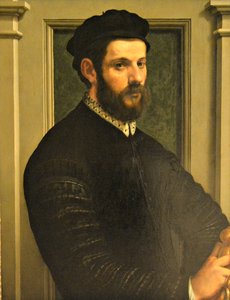
francesco de rossi (francesco salviati) (cecchino)
1510 - 1563 , Italy
Quick Facts
- Artistic Movement Or Style: Mannerism”
- Artists Or Movements Influenced By This Artist:
- Giulio Romano
- Giorgio Vasari
- Cecchino Del Salviati: Date of birth": "1510, Florence, Italy
- Date Of Death: 1563, Rome, Italy
- Full Name: Francesco de' Rossi / Francesco Salviati”
- Late Renaissance: Notable artworks": [ "Triumph of Camillus”, "Wedding at Cana”, "Deposition”
- Nationality: Italian
- Parmigianino: Andrea del Sarto
- Place Of Birth: Florence, Italy
- Visitation: Artists who influenced this artist": [ "Michelangelo”
Related Articles

Goya's Masterpieces: Explore 25 Iconic Paintings & Art Prints | ArtsDot
Delve into the world of Francisco Goya with ArtsDot. Explore 25 iconic paintings – from 'The Third of May' to his haunting Black Paintings. Discover the stories, techniques & emotions behind these Spanish masterpieces. Find museum-quality art reproductions for your home at ArtsDot.com!

About Us
Discover our story! We bring world-class art into your life through expert curation, personalized creations, and free previews. Trusted by individuals and businesses since 2000.
Pieter de Hooch: Illuminating Dutch Domestic Life & Golden Age Charm
Explore the captivating world of Pieter de Hooch, a master of Dutch Golden Age painting. Discover his innovative use of light, intimate domestic scenes, and lasting influence on art history. Learn more at ArtsDot.
Águeda Ruiz de la Prada: A Study of Eclecticism & Emotional Resonance in Contemporary Spanish Painting
Discover the vibrant world of Ágatha Ruiz de la Prada, a leading figure in contemporary Spanish art. Explore her eclectic style, emotional depth & legacy – a must-read for discerning collectors.
Philip de László: A Portrait of Aristocratic Society & the Cosmopolitan Painter's Evolution
Explore the life & art of Philip de László, master portraitist of European aristocracy. Discover his stunning paintings, royal commissions, and enduring legacy. A guide for discerning collectors.