Preview
 Send
Send Share
Share
 Details

 Download
 Similars
 X-Ray
X-Ray Diaporama
Scenes from the Life of Saint Jerome - Predella

 Read More
Hand Made Oil Reproduction
Hand-painted oil on canvas in your size and frame, made to order by our artists. ( Buy Print Buy Image)




































Pick from our preset sizes that match the artwork's original proportions.

You may enter your own dimensions to fit a specific frame or space. If your selected size does not match the original image's proportions, we will either crop the artwork or extend the painting with additional hand-painted elements. A digital mockup will be sent for your approval before production begins.
Please note that the on-screen preview does not reflect the actual cropping or extension. Only the mockup will accurately show the final composition.
While custom sizes are available, we recommend selecting a dimension from the predefined list to preserve the original proportions.
After order, ArtsDot.com team will email client for instructions and provide a mockup preview
Worldwide Delivery () in 3/4 weeks instead of standard 5 weeks. (28 August). No compromise on quality.

Free Worldwide Express Shipping

High-Quality Linen Canvas

Full Shipping Insurance

Customs Tax Refund Guarantee

True Color Matching Guarantee

60-Day Return Policy (Defects Only)

100% Money-Back Guarantee

Bulk Discount Offer
 Glass option is only available in size under 110 CM

Scenes from the Life of Saint Jerome - Predella
Reproduction Medium
Reproduction Size
-


Total Price
$ 263
A Glimpse into Saint Jerome's World: "Scenes from the Life of Saint Jerome - Predella"
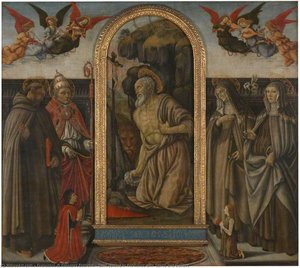
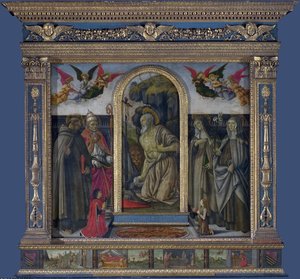
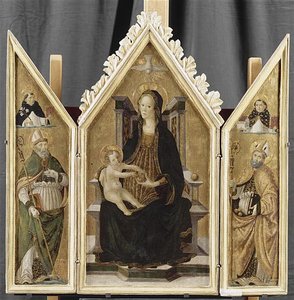
This captivating painting, “Scenes from the Life of Saint Jerome – Predella,” by Francesco di Giovanni Botticini, offers a poignant and intimate portrayal of one of Christianity’s most revered figures. Originally part of a larger altarpiece, this predella (the decorative base beneath an altarpiece) presents a series of vignettes that illuminate key moments in the life of Saint Jerome, a scholar, theologian, and translator of the Bible into Latin.
Style & Technique: Early Renaissance Flourishes
Botticini’s work exemplifies the hallmarks of Early Renaissance painting. The style is characterized by its graceful linearity, delicate color palette, and meticulous attention to detail. Botticini studied under masters like Neri di Bicci and Andrea del Verrocchio, absorbing their techniques while developing his own distinct voice. The use of tempera paint on panel allows for a luminous quality and precise rendering of forms. Notice the careful depiction of fabrics, architectural details, and facial expressions – hallmarks of Botticini’s skill. The composition is carefully balanced, with each scene flowing seamlessly into the next, creating a narrative sequence that draws the viewer in.
Historical Context & Symbolism
Painted around 1475-1480, this predella reflects the religious fervor and artistic innovation of Florence during the late Quattrocento. Saint Jerome’s life was rich with symbolic meaning; he is often depicted with a lion (representing his ability to tame wild beasts through faith), a skull (a memento mori reminding viewers of mortality), and a Bible (symbolizing his dedication to scholarship). The scenes likely depict moments such as Jerome's retreat into the desert, encounters with hermits, and his translation work. The inclusion of everyday objects like books, clocks, and vases grounds these sacred events in a recognizable world, making them relatable to contemporary viewers.
Emotional Impact & Narrative Depth
Beyond its historical significance, this predella evokes a sense of quiet contemplation and spiritual devotion. Botticini masterfully captures the inner life of Saint Jerome – his solitude, his intellectual pursuits, and his unwavering faith. The gentle expressions on the figures’ faces convey a range of emotions, from introspection to compassion. The scenes are not dramatic or overtly emotional; instead, they offer a subtle yet profound exploration of human spirituality. This piece invites viewers to reflect on themes of repentance, scholarship, and the pursuit of divine knowledge.
A Timeless Treasure for Discerning Collectors
“Scenes from the Life of Saint Jerome – Predella” is more than just a beautiful painting; it’s a window into the artistic and religious landscape of Renaissance Florence. Its exquisite detail, narrative richness, and enduring emotional power make it a compelling addition to any art collection or interior space seeking a touch of historical elegance and spiritual depth.
Related Artworks
Artist Biography
The Florentine Master: The Life and Legacy of Francesco Botticini
In the vibrant, sun-drenched streets of 15th-century Florence, amidst the burgeoning intellect of the Early Renaissance, lived a painter whose brush captured the profound spiritual essence of an era. Francesco di Giovanni Botticini, born around 1446, was far more than a mere contemporary to the giants of his age; he was a vital thread in the rich tapestry of Florentine art. While history often casts the spotlight on the monumental shadows of Leonardo da Vinci or Michelangelo, Botticini’s work offers a window into a period of exquisite transition, where the rigid structures of medieval devotion began to melt into the humanistic grace of the Renaissance.
Botticini’s journey into the heart of artistry was predestined by his lineage. Born into a family steeped in the traditions of the craft, he was the son of Giovanni di Domenico di Piero, a skilled painter of playing cards. This early exposure to the meticulous demands of pigment and design laid the groundwork for a career defined by precision and devotion. His formal education began in the prestigious workshop of Neri di Bicci, where, as an apprentice in 1459, he absorbed the foundational principles of fresco and the collaborative spirit of the Florentine studio system. However, it was his subsequent immersion in the atelier of the legendary Andrea del Verrocchio that truly transformed his vision. Within Verrocchio’s workshop—the same crucible that nurtured Leonardo da Vinci—Botticini learned to marry the sculptural depth of three-dimensional form with the ethereal beauty of tempera painting.
A Symphony of Devotion and Technique
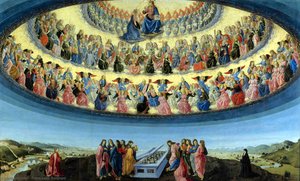
The oeuvre of Botticini is a testament to his ability to evoke the divine through the tangible. His style, heavily influenced by the lyrical elegance of Botticelli and the structural clarity of Filippino Lippi, often centered on religious narratives that invited deep contemplation. One cannot discuss his mastery without reflecting on his monumental achievement, "The Assumption of the Virgin." This large-scale tempera on wood panel, now housed in the National Gallery in London, serves as a breathtaking display of his technical prowess. In this work, the heavens open to reveal a celestial hierarchy of angels, while the earthly realm is populated by disciples and donors, all rendered with a delicate balance of movement and stillness.
Botticini’s talent extended beyond grand altarpieces into the intimate realm of small-scale religious panels and portraits. His ability to manipulate light and shadow allowed him to create scenes of profound intimacy, such as his "Virgin and Child Enthroned," where the boundaries between the sacred and the human seem to dissolve. His technique often utilized the traditional medium of tempera, which lent a luminous, almost translucent quality to the skin of his holy figures, making them appear as though they were radiating an inner, spiritual light. Whether depicting the scholarly weight of Saint Jerome or the tender grace of the Madonna, Botticini possessed a unique gift for capturing the emotional gravity of his subjects.
Historical Significance and Rediscovery
The historical trajectory of Francesco Botticini is as poignant as the art he produced. For centuries, much of his contribution was obscured by the overwhelming legacies of his more famous peers. Many of his works were once attributed to other masters, lost in the shifting tides of art historical attribution. It is only through the meticulous efforts of modern scholars—reconstructing his oeuvre through stylistic analysis and archival research—that Botticini has been reclaimed as a significant voice of the Quattrocento.
Today, we recognize Botticini not merely as a student of Verrocchio or a follower of the Florentine tradition, but as an artist who contributed a distinct sense of serenity and spiritual depth to the Renaissance. His legacy resides in:
- The integration of sculptural form: Bringing a sense of weight and presence to religious figures through his training under Verrocchio.
- Mastery of the Florentine style: Contributing to the aesthetic language of grace, line, and luminosity that defined the era.
- Spiritual storytelling: Creating works that served as both educational tools for the faithful and profound objects of meditation.
As we gaze upon his surviving panels, we see more than just paint on wood; we see the enduring spirit of a master who, though he lived in the shadow of giants, left an indelible mark upon the soul of Florence.
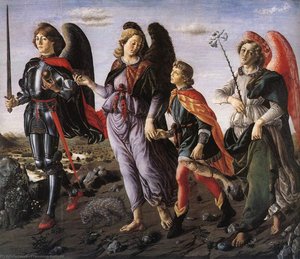
francesco di giovanni botticini
1446 - 1498
Quick Facts
- Artistic Movement Or Style: Early Renaissance
- Artists Who Influenced This Artist:
- Neri di Bicci
- Andrea del Verrocchio
- Date Of Death: 1498
- Full Name: Francesco di Giovanni Botticini
- Nationality: Italian
- Notable Artworks:
- Assumption of the Virgin
- Sacrament Tabernacle
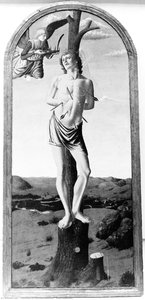
- Saint Sebastian
- Saint Cecilia Between Saint Valerian and Saint Tiburtius with a Donor
- Place Of Birth: Florence, Italy
Related Articles
Discover the Divine: Inspiring Saint Anthony Artworks to Elevate Your Home Decor
Transform your home with the profound beauty of Saint Anthony artworks. Explore exquisite Baroque reproductions by Murillo and Zurbarán, hand-painted on 100% cotton canvas to bring divine serenity and timeless elegance to your interior design.
Sacred Narratives on Canvas: Exploring Religious Painting Through History
Explore the rich history of religious painting with ArtsDot.com! Discover iconic artworks, symbolism & techniques from antiquity to the Renaissance. Enhance your art appreciation today.
Sacred Narratives Embodied: A Comprehensive Exploration of Religious Iconography in Art History
Explore the rich history of religious iconography in art! Discover symbolism, movements & masterpieces from Byzantine to Renaissance periods. Expert insights for collectors and enthusiasts at ArtsDot.

Sacred Narratives on Canvas: Exploring Devotional Imagery Across Art History
Explore the rich history of devotional art! Discover iconic masterpieces, symbolism & techniques from antiquity to the Renaissance. Expert insights for collectors & enthusiasts at ArtsDot.

Fra Angelico's Masterpieces: 25 Renaissance Paintings for Your Home | ArtsDot
Explore 25 breathtaking masterpieces by Fra Angelico, a Renaissance master. Discover the stories behind his iconic frescoes, Annunciations & religious art. Find museum-quality reproductions and elevate your home decor with ArtsDot.com.