 Preview
 Send
Send Share
Share
 Details

 Download
 Similars
 X-Ray
X-Ray Diaporama
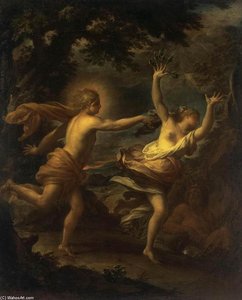
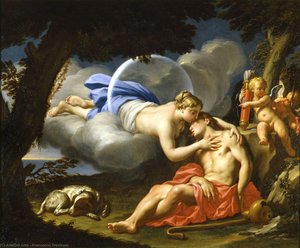
Apollo and Daphne
 Oil On Canvas
- WallArt
- Baroque
 Early Modern
 73.0 x 60.0 cm
 Hermitage Museum
 Read More
Hand Made Oil Reproduction
Hand-painted oil on canvas in your size and frame, made to order by our artists. ( Buy Print Buy Image)




P118B $10

P118H $10

P118W $10

P438Z $10

P508JH $12

P508YH $12

P805H $10

P805Z $10

P919BZ $10

P919G $10

P919XJ $10

P959ZH $10

P968JZ $12

W106C $8

W218G $10

W218JH $8

W218Y $10

W307PJ $10

W316G $10

W316PJ $8

W316Y $10

W398PJ $8

W4111J $10

W500HY $15

W500JH $15

W692G $12

W849H $8

W940BG $15

W953PJ $8




Pick from our preset sizes that match the artwork's original proportions.

You may enter your own dimensions to fit a specific frame or space. If your selected size does not match the original image's proportions, we will either crop the artwork or extend the painting with additional hand-painted elements. A digital mockup will be sent for your approval before production begins.
Please note that the on-screen preview does not reflect the actual cropping or extension. Only the mockup will accurately show the final composition.
While custom sizes are available, we recommend selecting a dimension from the predefined list to preserve the original proportions.
After order, ArtsDot.com team will email client for instructions and provide a mockup preview
Worldwide Delivery () in 3/4 weeks instead of standard 5 weeks. (22 August). No compromise on quality.

Free Worldwide Express Shipping

High-Quality Linen Canvas

Full Shipping Insurance

Customs Tax Refund Guarantee

True Color Matching Guarantee

60-Day Return Policy (Defects Only)

100% Money-Back Guarantee

Bulk Discount Offer
 Glass option is only available in size under 110 CM

Apollo and Daphne
Reproduction Medium
Reproduction Size
-


Total Price
$ 263
Artwork Description
A Moment Frozen in Transformation
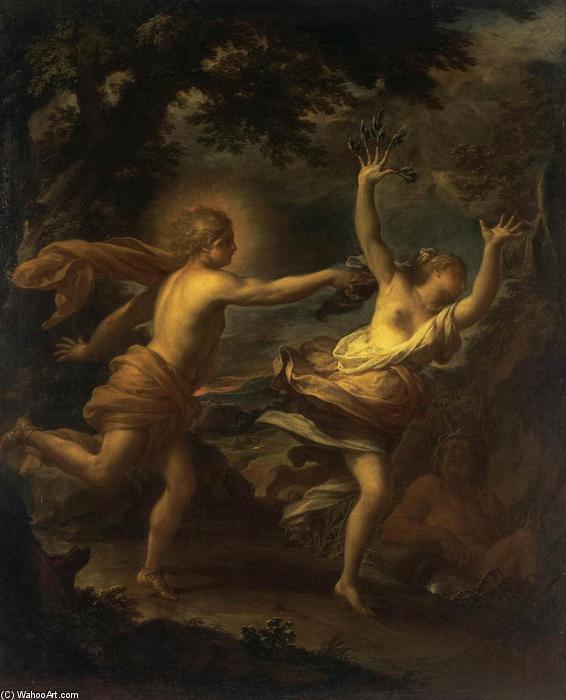
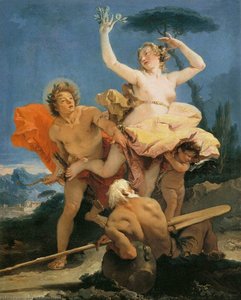
In the grand theater of Baroque art, few moments possess the visceral tension found in Francesco Trevisani’s Apollo and Daphne. This evocative oil on canvas, created between 1685 and 1690, captures the very heartbeat of a mythic crisis. As the sun god Apollo pursues the nymph Daphne, we witness the precise second where divine obsession meets mortal desperation. The painting does not merely depict a chase; it captures a metamorphosis in progress. Inspired by the legendary tales within Ovid’s Metamorphoses, Trevisani masterfully illustrates the climax of the pursuit, where the terror of being caught drives Daphne to seek refuge in the only way possible: by shedding her humanity and rooting herself into the earth as a laurel tree.
The composition is a triumph of dramatic movement and structural balance. Utilizing a classic pyramidal arrangement, Trevisani directs the viewer's eye through the swirling energy of the figures. Apollo, a figure of muscular strength and unyielding intent, looms over the scene, his presence commanding and heavy. In stark contrast, Daphne occupies a lower, more vulnerable position within the frame, her body twisting in an attempt to break free from his grasp. This physical hierarchy serves to heighten the emotional stakes, making the viewer feel the weight of Apollo's pursuit and the frantic, breathless flight of the nymph.
The Mastery of Light and Shadow
To behold this masterpiece is to experience the profound power of chiaroscuro. Trevisani employs a sophisticated interplay of light and shadow to sculpt the figures from the darkness of the landscape. A luminous, warm glow illuminates Apollo’s torso and the pale, terrified visage of Daphne, pulling them forward from a somber, atmospheric background. This technique does more than create three-dimensionality; it imbues the scene with a sense of theatrical urgency, as if a single spotlight has been cast upon this divine tragedy.
The artist’s technical precision is particularly evident in his treatment of texture and naturalism. Every detail—from the flowing, silken strands of Daphne’s hair to the delicate, emerging foliage of the laurel branches—is rendered with meticulous care. This commitment to realism serves a deeper purpose: by making the transformation feel tangible and physically real, Trevisani bridges the gap between the mythological and the human. For the collector or designer, such detail offers a profound depth that rewards close inspection, bringing a sense of classical elegance and narrative complexity to any curated space.
A Legacy of Emotional Resonance
Beyond its technical brilliance, Apollo and Daphne resonates through its deep symbolic layers. The painting explores the duality of passion—the destructive force of Apollo’s unrequited desire versus the desperate preservation of self found in Daphne's transformation. The laurel tree itself becomes a symbol of enduring memory and triumph, forever linked to the god who lost his love but gained a sacred emblem. This tension between pursuit and escape, between life and metamorphosis, provides an emotional gravity that transcends the era of its creation.
For those looking to integrate a piece of this magnitude into an interior, Trevisani’s work offers more than mere decoration; it offers a conversation. Whether placed in a sunlit gallery or a moody, sophisticated study, the painting acts as a focal point of dramatic storytelling. A high-quality reproduction of this Baroque treasure allows the timeless struggle of light against shadow and desire against flight to breathe new life into contemporary surroundings, inviting all who gaze upon it to contemplate the beautiful, often turbulent, nature of change.
Related Artworks
Artist Biography
Nicolas de Largillière: The Master of Gentle Portraits
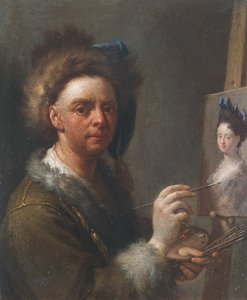
Born in Paris in 1656 and passing away in the same city in 1746, Nicolas de Largillière stands as a pivotal figure in the history of French portraiture. While often overshadowed by the titans of his era – Rigaud and Le Brun – Largillière carved out a unique niche, specializing in exquisitely rendered portraits of the wealthy middle class, capturing their dignity, grace, and quiet moments with an unparalleled sensitivity. His career spanned over six decades, marked by consistent success and a prodigious output, solidifying his reputation as one of the most accomplished artists of his time.
Largillière’s early artistic development unfolded in Antwerp, where he received his initial training under Antoine Goubeau. This period proved crucial, exposing him to the vibrant artistic scene of the Low Countries and fostering a deep appreciation for classical ideals. Following this formative experience, he journeyed to England, working briefly with Lely and Verrio – encounters that undoubtedly influenced his technique and understanding of portraiture. It was in Paris, however, that Largillière truly established himself as a leading artist, quickly gaining recognition for his refined style and ability to capture the essence of his subjects.
Unlike many artists of his time who sought fame through grand historical or religious paintings, Largillière focused almost exclusively on portraiture. This dedication allowed him to hone his skills with remarkable precision. His portraits are characterized by a meticulous attention to detail – from the texture of fabrics and the sheen of jewelry to the subtle expressions in his subjects’ eyes. He employed a technique known as ‘clárriage,’ a method of applying paint thinly over a ground prepared with chalk, creating a luminous surface that enhanced the richness and depth of color. His use of light and shadow was particularly masterful, subtly defining forms and conveying a sense of atmosphere within each portrait.
Largillière’s subjects were predominantly members of the Parisian bourgeoisie – merchants, lawyers, doctors, and other prominent figures of the day. He depicted them in intimate settings, often engaged in everyday activities such as reading, playing musical instruments, or conversing with family members. These scenes weren't merely representations of wealth; they revealed a deep understanding of human nature and an ability to capture the quiet dignity and understated elegance of his subjects’ lives. His portraits were not simply likenesses; they were windows into the souls of those he depicted.
Despite his considerable success, Largillière's career was marked by a remarkable longevity. He remained active as an artist well into his eighties, serving as director of the Académie Royale de Paris from 1734 to 1756. This extended tenure speaks volumes about his standing within the artistic community and his continued relevance as a teacher and mentor. His output was astonishing – contemporary sources estimate that he painted approximately 1,500 portraits throughout his career. Beyond portraiture, Largillière also produced religious works, still lifes, and landscapes, though these genres never achieved the same level of recognition as his celebrated portraits.
Influences and Artistic Style
Largillière’s artistic style was a synthesis of influences from various sources. His early training in Antwerp exposed him to the Baroque traditions of the Low Countries, characterized by dramatic lighting and dynamic compositions. His time in England introduced him to the refined portraiture of Lely, known for his elegant brushwork and ability to capture the beauty of his subjects. However, Largillière’s style evolved beyond these influences, developing a distinctly French sensibility marked by restraint, subtlety, and an emphasis on psychological realism.
He was particularly influenced by Caravaggio's use of chiaroscuro – the dramatic contrast between light and shadow – which he skillfully employed to create depth and atmosphere in his portraits. Largillière’s compositions were typically balanced and harmonious, reflecting a classical aesthetic rooted in Renaissance ideals. He avoided excessive ornamentation or theatrical gestures, preferring to focus on capturing the quiet dignity and inner character of his subjects.
Major Works
While Largillière produced an enormous number of portraits, several stand out as particularly noteworthy examples of his skill and artistry. Among his most celebrated works are *Portrait of a Young Woman*, *Portrait of Monsieur de la Rochefoucauld*, and *Portrait of Madame de Montesqui*. These paintings exemplify his mastery of technique, his ability to capture the nuances of human expression, and his profound understanding of his subjects’ personalities.
*Portrait of a Young Woman* (circa 1685) is particularly admired for its delicate rendering of the subject's features and the subtle play of light on her skin. *Portrait of Monsieur de la Rochefoucauld* (1703) showcases his ability to convey both intellectual depth and aristocratic bearing. And *Portrait of Madame de Montesqui* (1724), a later work, demonstrates his continued skill and refinement throughout his long career.
Historical Significance
Nicolas de Largillière’s contribution to the history of French portraiture is significant for several reasons. He was one of the last artists to maintain a high level of artistic excellence into old age, demonstrating remarkable dedication and perseverance. His portraits offer invaluable insights into the lives and customs of the Parisian bourgeoisie during the 17th and 18th centuries. Furthermore, Largillière’s emphasis on psychological realism – his ability to capture the inner character of his subjects – set a new standard for portraiture in France.
Often described as the “French Van Dyck,” Largillière's work continues to be admired for its elegance, subtlety, and profound humanity. He remains a testament to the enduring power of portraiture as a means of capturing beauty, dignity, and the essence of human experience. His legacy endures through his remarkable body of work, which provides a captivating glimpse into a bygone era.
francesco trevisani
1656 - 1746 , Italy
Quick Facts
- Artistic Movement Or Style: Portraiture
- Artists Or Movements Influenced By This Artist: ['Van Dyck']
- Artists Who Influenced This Artist:
- Lely
- Verrio
- Date Of Birth: 1656
- Date Of Death: 1746
- Full Name: Nicolas de Largillière
- Nationality: French
- Notable Artworks:
- The Old Man and the Young Woman
- The Scholar at his Books
- Place Of Birth: Paris, France
Related Articles

Baroque Masterpieces: 10 Paintings That Defined an Era |
Journey through the drama & grandeur of Baroque art! Explore 10 masterpieces by Caravaggio, Rembrandt, Rubens & more. Discover stunning oil paintings, rich colors & timeless stories. Find museum-quality reproductions at .

Giclée Prints: Archival Quality & Aesthetic Nuances for the Discerning Collector
Explore the world of giclée prints with ArtsDot. Learn about archival quality, aesthetic nuances & investment potential. Expert guidance for discerning art collectors seeking museum-quality reproductions and lasting value.
Baroque Painting's Greatest Hits: 10 Masterpieces for Your Home | ArtsDot
Journey through Baroque painting's glory! Explore 10 masterpieces by Caravaggio, Rembrandt & Vermeer. Discover dramatic lighting, rich colors & timeless stories. Find museum-quality art reproductions for your home at ArtsDot.com.

Hokusai's Masterpieces: 25 Iconic Prints & Paintings for Art Lovers | ArtsDot
Journey through Katsushika Hokusai’s 25 most iconic artworks, including *The Great Wave*. Explore the ukiyo-e master's history, style & timeless Japanese woodblock prints. Find museum-quality reproductions for your home at ArtsDot.com.

The Enduring Legacy of Fine Art Prints: Technique, History & Aesthetic Impact
Explore the rich history & techniques of fine art prints. Discover investment potential, assess authenticity, and learn how to preserve your collection with expert guidance. Trusted insights for discerning collectors.