 Send
Send Share
Share
 Details

 Download
 Similars
 Diaporama
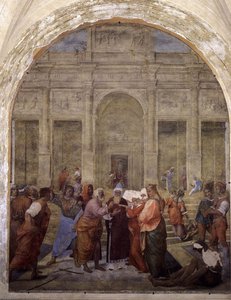
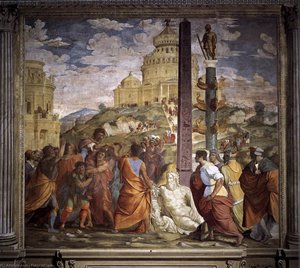
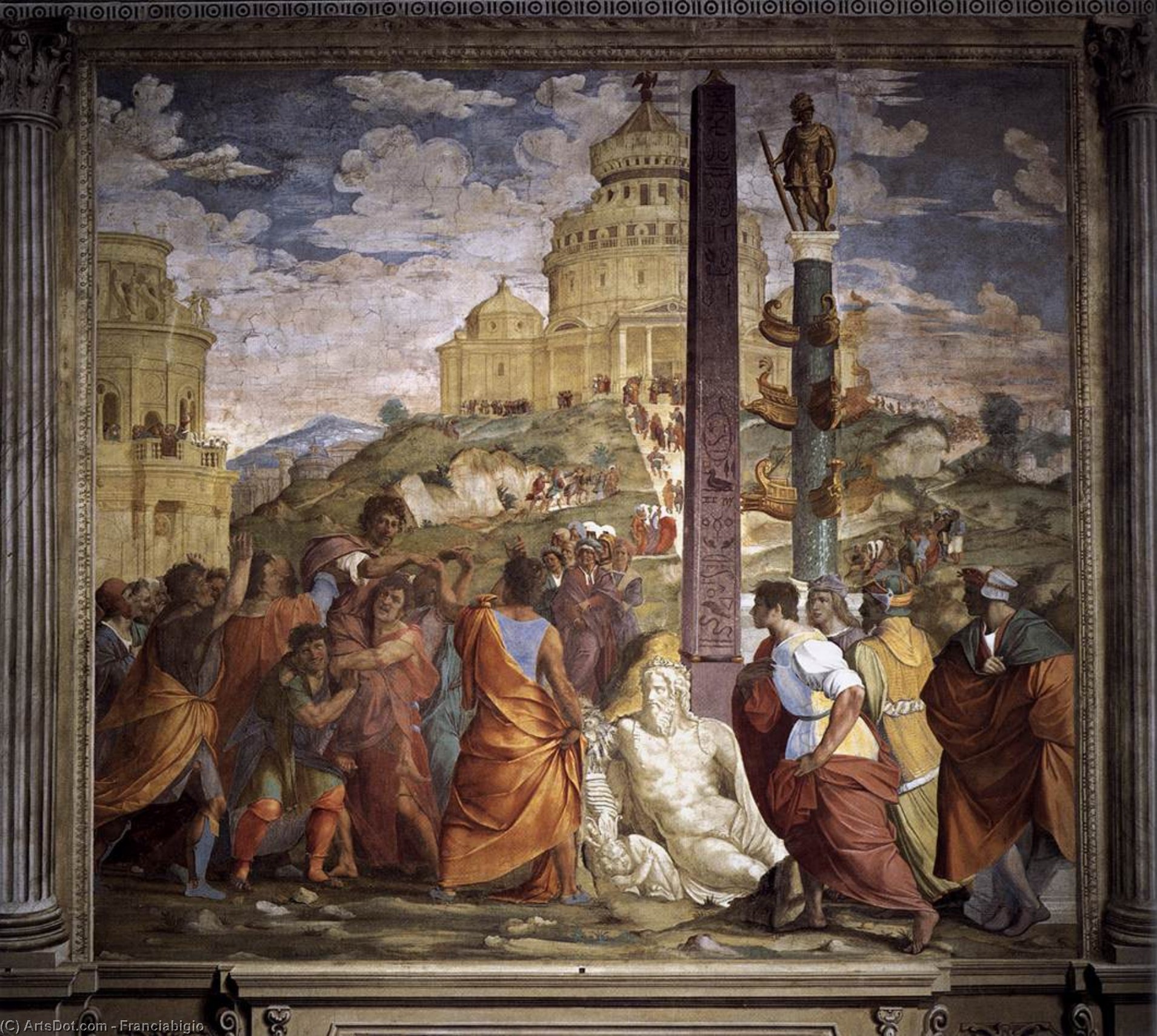
The Triumph of Cicero
 Fresco
- High Renaissance
 1520
1520- Renaissance
 580.0 x 530.0 cm
 Villa Medici
 Read More
Hand Made Oil Reproduction
Hand-painted oil on canvas in your size and frame, made to order by our artists. ( Buy Print Buy Image)




































Pick from our preset sizes that match the artwork's original proportions.

You may enter your own dimensions to fit a specific frame or space. If your selected size does not match the original image's proportions, we will either crop the artwork or extend the painting with additional hand-painted elements. A digital mockup will be sent for your approval before production begins.
Please note that the on-screen preview does not reflect the actual cropping or extension. Only the mockup will accurately show the final composition.
While custom sizes are available, we recommend selecting a dimension from the predefined list to preserve the original proportions.
After order, ArtsDot.com team will email client for instructions and provide a mockup preview
Worldwide Delivery () in 3/4 weeks instead of standard 5 weeks. (22 August). No compromise on quality.

Free Worldwide Express Shipping

High-Quality Linen Canvas

Full Shipping Insurance

Customs Tax Refund Guarantee

True Color Matching Guarantee

60-Day Return Policy (Defects Only)

100% Money-Back Guarantee

Bulk Discount Offer
 Glass option is only available in size under 110 CM

The Triumph of Cicero
Reproduction Medium
Reproduction Size
-


Total Price
$ 263
Artwork Description
A Grand Spectacle of Florentine Glory
In the sweeping expanse of The Triumph of Cicero, the viewer is transported into the heart of a Renaissance celebration, where the boundaries between historical myth and painted reality dissolve. This magnificent fresco, executed around 1520 by the Florentine master Franciabigio, captures a moment of profound civic and personal exaltation. At its center sits the venerable orator, draped in the symbols of authority, receiving a crown that signifies not just victory, but the enduring power of wisdom and eloquence. The composition is a masterful dance of human emotion and architectural grandeur, pulling the observer into a procession that feels both ancient and immediate.
The scene unfolds before a monumental structure, its classical lines providing a sense of stability and permanence to the fleeting moment of triumph. Surrounding the central figure, a diverse assembly of people—some kneeling in reverence, others standing in jubilant witness—creates a rhythmic movement that guides the eye across the vast 580 x 530 cm surface. The inclusion of a horse and the distant, castle-like silhouette nestled against a rugged mountainous landscape suggests a narrative of conquest and the expansion of civilization, grounding the human drama within a larger, epic geography.
Mastery of Technique and Chromatic Brilliance
Franciabigio, having refined his craft in the prestigious studio of Andrea del Sarto, brings a sophisticated command of color and light to this work. The technique employed in this fresco allows for a vividness that remains striking centuries later. The artist utilizes a palette of rich, saturated tones that breathe life into the skin of the figures and the heavy fabrics of their ceremonial attire. Through subtle gradations of shadow and light, he achieves a sculptural quality, giving weight to the bodies and depth to the architectural elements.
For the discerning collector or interior designer, this piece offers an unparalleled opportunity to introduce a sense of historical gravitas and classical elegance into a space. The intricate details—from the glint of the scepter to the delicate expressions of the onlookers—provide endless points of visual interest. As a reproduction, the painting serves as a profound focal point, capable of anchoring a room with its monumental scale and the sophisticated interplay of light and shadow characteristic of the High Renaissance.
Symbolism and Emotional Resonance
Beyond its aesthetic splendor, The Triumph of Cicero is steeped in the intellectual currents of 16th-century Florence. The painting serves as an allegory for the triumph of intellect over brute force, a theme deeply resonant with the humanist ideals of the era. The crown and scepter are not merely ornaments of power but symbols of the legitimacy granted by virtue and civic duty. Every element, from the kneeling figures to the distant, watchful mountains, contributes to a narrative of order, achievement, and the celebration of human potential.
To live with such an artwork is to be surrounded by an atmosphere of inspiration and triumph. It evokes a sense of timelessness, making it an ideal selection for those seeking to curate environments that reflect sophistication, strength, and a deep appreciation for the historical triumphs of the human spirit. Whether placed in a grand library, a formal dining hall, or a contemporary gallery space, this masterpiece continues to command attention and stir the soul.
Related Artworks

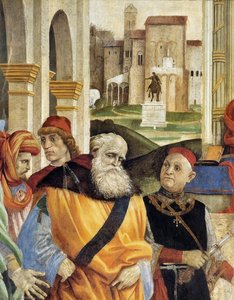
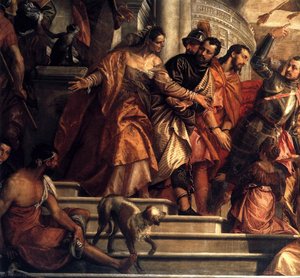
Artist Biography
The Florentine Soul: The Life and Legacy of Franciabigio
In the golden era of the High Renaissance, amidst the bustling workshops and marble-clad streets of Florence, there lived a painter whose brush captured the very essence of human emotion. Franciabigio, born Francesco di Cristofano around 1482, was not merely a chronicler of faces but a master of the psychological landscape. While history often shines its brightest light upon the monumental figures of his era, Franciabigio carved out a singular niche through his ability to infuse portraiture with a palpable, breathing naturalism. His life, though relatively brief—concluding in January 1525—was a testament to the vibrant, evolving spirit of Florentine art, bridging the gap between the balanced perfection of the High Renaissance and the expressive tension of the emerging Mannerist style.
The foundations of his artistry were laid under the guidance of Alberto Altramonte, but it was his transition into the studio of Andrea del Sarto around 1506 that would fundamentally reshape his creative trajectory. This period of apprenticeship and subsequent partnership became a cornerstone of his career. Together, they established a workshop in the Piazza del Gradino, creating a crucible of innovation that drew in other luminaries such as Rosso Fiorentino and Pontormo. Within this collaborative atmosphere, Franciabigio refined a technique that favored the delicate nuances of light and shadow, learning to navigate the complex interplay of color and form that defined the Sarto school.
Mastery of Fresco and the Art of Expression
While many of his contemporaries sought glory through massive religious altarpieces or grand mythological cycles, Franciabigio found his greatest triumph in the demanding medium of fresco. He possessed a rare dexterity for this technique, earning a reputation that often surpassed his peers in the execution of wall paintings. His skill lay not just in the technical application of pigment to wet plaster, but in his ability to use the expansive surface of a fresco to convey profound narrative depth. In the Cloister of Santa Maria della Annunziata, his contributions alongside Andrea del Sarto demonstrate a sophisticated command over composition and atmosphere.
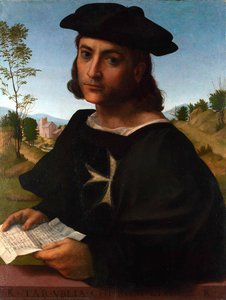
However, it is perhaps in his portraiture that his true genius resides. Moving away from the rigid, idealized archetypes common in earlier decades, Franciabigio embraced a more intimate approach to the human subject. His portraits are characterized by:
- Psychological Depth: A profound ability to capture the internal life and subtle moods of his sitters.
- Naturalistic Detail: An unwavering commitment to representing the textures of skin, fabric, and light with lifelike precision.
- Proto-Mannerist Elements: A subtle introduction of elongated forms and more complex, emotive gestures that hinted at the stylistic shifts of the coming decades.
A Lasting Impression on the Renaissance Canvas
The historical significance of Franciabigio lies in his role as a vital link in the evolution of Italian painting. He stood at the crossroads of tradition and innovation, absorbing the classical harmony of Raphael while pushing toward the more experimental, emotive boundaries that would define the later 16th century. Though some of his most ambitious projects were overshadowed by the monumental achievements of his mentor, del Sarto, his individual voice remains unmistakable to the discerning eye.
To study a work by Franciabigio is to witness a moment of transition captured in pigment. He reminds us that the history of art is not only written by those who commanded the largest stages, but by those who possessed the sensitivity to capture the quiet, flickering truths of the human condition. His legacy survives in every nuanced expression and every masterful stroke of fresco, serving as a poignant reminder of the enduring power of the Florentine Renaissance.
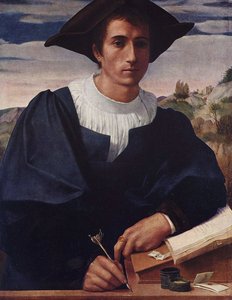
Franciabigio
1482 - 1525 , Italy
Quick Facts
- Artistic Movement Or Style: Renaissance
- Artists Or Movements Influenced By This Artist: ['Renaissance']
- Artists Who Influenced This Artist:
- Andrea del Sarto
- Raphael Sanzio
- Date Of Birth: Florence, Italy (1482)
- Date Of Death: January 24, 1525
- Full Name: Francesco Cristofano
- Nationality: Italian
- Notable Artworks:
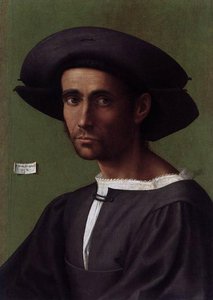
- Portrait of a Man
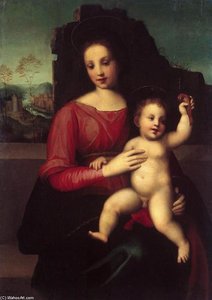
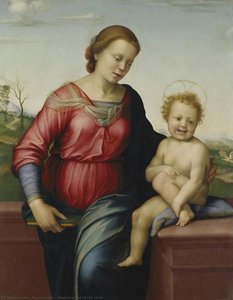
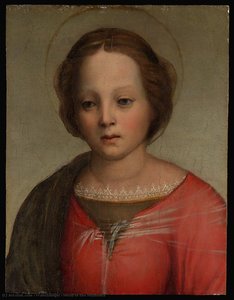
- Head of the Madonna
- Angel
- St Job Altarpiece
- Marriage of the Virgin
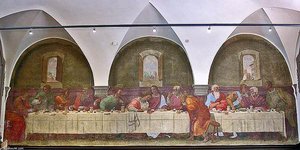
- Last Supper
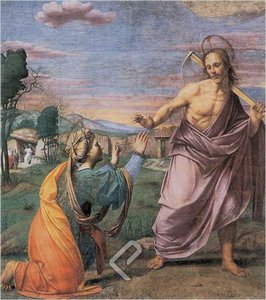
- Departure of John the Baptist
- Meeting of John the Baptiste
- Triumph of Cicero
- Vertumnus and Pomona
- Place Of Birth: Florence
Related Articles

The Fresco as Family Legacy: Preserving Heritage Through Wall Art
Explore the rich history & enduring legacy of fresco painting. Discover how to preserve family heritage through stunning wall art. Expert insights & restoration guidance.

The Enduring Legacy of Fresco Painting: Techniques, History & Contemporary Relevance
Explore the rich history & enduring artistry of fresco painting – from Giotto to Michelangelo! Discover techniques, conservation efforts, & modern applications. Learn how ArtsDot brings this timeless art form to your home.

The Enduring Legacy of Fresco: Technique, History & Artistic Expression Across Cultures
Explore the rich history & enduring legacy of fresco painting! Discover ancient techniques, Giotto's masterpieces, and modern applications. Expert insights for art lovers & professionals.

Art That Lives With You: The Emotional Power of a Custom Interior Fresco
Discover the emotional power & timeless beauty of custom interior frescoes. Explore history, design tips & expert guidance from – creating lasting legacies.
The Enduring Legacy of Fresco: Technique, History & Artistic Expression
Explore the rich history & enduring artistry of fresco painting. Discover techniques from Giotto to Michelangelo, conservation efforts, & modern applications. Learn how ArtsDot brings this timeless art form to your home.