 Preview
 Send
Send Share
Share
 Details

 Download
 Similars
 X-Ray
X-Ray Diaporama
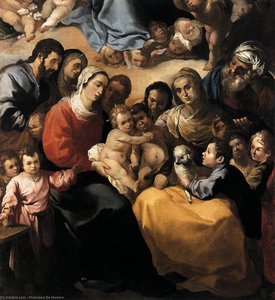
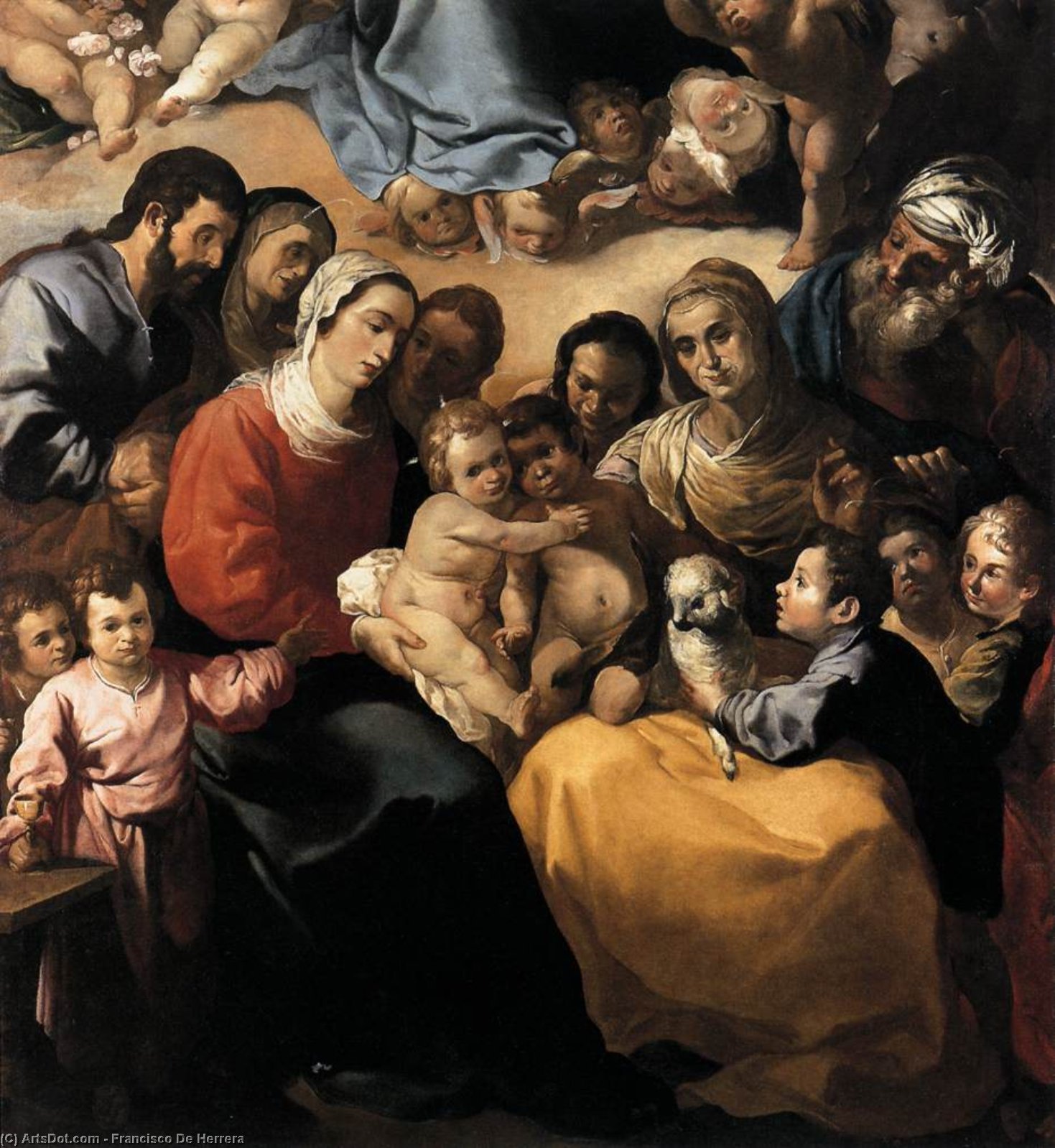
The Holy Family
 Oil On Canvas
- WallArt
- Baroque
 1636
1636- Early Modern
 194.0 x 177.0 cm
 Museo de Bellas Artes
 Read More
Hand Made Oil Reproduction
Hand-painted oil on canvas in your size and frame, made to order by our artists. ( Buy Print Buy Image)




P118B $10

P118H $10

P118W $10

P438Z $10

P508JH $12

P508YH $12

P805H $10

P805Z $10

P919BZ $10

P919G $10

P919XJ $10

P959ZH $10

P968JZ $12

W106C $8

W218G $10

W218JH $8

W218Y $10

W307PJ $10

W316G $10

W316PJ $8

W316Y $10

W398PJ $8

W4111J $10

W500HY $15

W500JH $15

W692G $12

W849H $8

W940BG $15

W953PJ $8




Pick from our preset sizes that match the artwork's original proportions.

You may enter your own dimensions to fit a specific frame or space. If your selected size does not match the original image's proportions, we will either crop the artwork or extend the painting with additional hand-painted elements. A digital mockup will be sent for your approval before production begins.
Please note that the on-screen preview does not reflect the actual cropping or extension. Only the mockup will accurately show the final composition.
While custom sizes are available, we recommend selecting a dimension from the predefined list to preserve the original proportions.
After order, ArtsDot.com team will email client for instructions and provide a mockup preview
Worldwide Delivery () in 3/4 weeks instead of standard 5 weeks. (17 August). No compromise on quality.

Free Worldwide Express Shipping

High-Quality Linen Canvas

Full Shipping Insurance

Customs Tax Refund Guarantee

True Color Matching Guarantee

60-Day Return Policy (Defects Only)

100% Money-Back Guarantee

Bulk Discount Offer
 Glass option is only available in size under 110 CM

The Holy Family
Reproduction Medium
Reproduction Size
-


Total Price
$ 263
Artwork Description
A Divine Gathering: Exploring The Holy Family by Francisco de Herrera
To stand before this magnificent depiction of The Holy Family is to be enveloped in an atmosphere of profound reverence and warm human connection. Painted in 1636, this work by Francisco de Herrera transports the viewer into a moment steeped in sacred narrative yet rendered with such palpable humanity that it feels both timeless and intimately personal. It is more than just a religious tableau; it is a celebration of familial devotion, masterfully orchestrated through paint and pigment.
Composition and Narrative Detail
The central focus, naturally, rests upon the Holy Family—the tender depiction of the infant Jesus held by Mary, with Joseph standing protectively nearby. Yet, Herrera expands this sacred core into a vibrant community gathering. The surrounding figures, a rich tapestry of adults, children, and ethereal beings perhaps representing angels or saints, populate the scene, suggesting that the divine narrative is one shared by all humanity. Notice the subtle details that anchor the composition: the presence of two watchful dogs, lending an unexpected touch of domestic realism to the sacred space, and the inclusion of a chair on the left, hinting at a gathering or celebration taking place. These elements ground the miraculous in the tangible world.
Mastery of Technique and Atmosphere
Herrera’s technique here speaks to the high drama and rich color palettes characteristic of the period. The handling of light is particularly noteworthy; it seems to emanate from an unseen, divine source, illuminating faces with gentle grace while lending depth to the folds of richly colored garments. One can almost feel the texture of the fabrics and the soft glow on the skin tones. This level of meticulous detail, combined with a warm, welcoming overall atmosphere, suggests an artist deeply skilled in both devotional art and naturalistic portraiture.
Symbolism and Emotional Resonance
The symbolism woven throughout is rich: the Holy Family represents the core tenets of Christian faith, while the surrounding crowd speaks to the universal reception of grace. The inclusion of diverse figures invites contemplation on community and shared belief. Emotionally, the painting achieves a remarkable balance—it possesses the solemnity required for sacred art, yet it radiates an undeniable warmth. It is an invitation to pause, reflect, and feel connected to something enduring and beautiful.
Bringing Sacred Art Home
For those seeking to incorporate such profound artistry into their living space, a high-quality reproduction of this piece offers an unparalleled opportunity. Owning this work allows one to curate an environment that is not merely decorated, but elevated by history, devotion, and masterful craftsmanship. It serves as a focal point for contemplation, transforming any room into a sanctuary echoing the gentle grandeur of Herrera’s vision.
Related Artworks
Artist Biography
Carel Fabritius: A Master of Illusion and Early Tragedy
Carel Pietersz. Fabritius, a name tragically etched in the annals of art history, remains one of the most compelling figures of the Dutch Golden Age. Born in Middenbeemster, Netherlands, on February 27, 1622, his life was cut short at just 32 years old by the devastating explosion of a gunpowder magazine in Delft, leaving behind a legacy of only thirteen known paintings – a heartbreakingly small number for an artist whose unique vision and technical brilliance were undeniably profound. His work, characterized by startling realism, meticulous detail, and a masterful manipulation of perspective and light, has captivated viewers for centuries, prompting ongoing speculation about the potential greatness he might have achieved had fate been kinder.
Fabritius’s artistic journey began within a family steeped in creative tradition. His father, Pieter Carelsz Fabritius, was himself an amateur painter and schoolteacher, providing young Carel with his initial exposure to the world of art. This familial connection instilled in him a deep appreciation for visual representation, but it was undoubtedly Rembrandt van Rijn who served as his most formative influence. From approximately 1641 until around 1646, Fabritius spent several years working as an assistant in Rembrandt’s studio in Amsterdam, absorbing the master's techniques and developing his own distinctive style. This period of apprenticeship proved crucial, allowing him to hone his skills and experiment with various approaches before establishing his independent voice.
The Delft Period and Revolutionary Techniques
Around 1650, Fabritius relocated to Delft, a city renowned for its burgeoning art scene and skilled artisans. It was here that he began to develop the techniques that would define his artistic identity – most notably, what is now recognized as ‘trompe-l’oeil,’ or ‘fooling the eye.’ This technique involved creating an illusion of three-dimensionality on a two-dimensional surface, often by depicting objects with such meticulous detail and realistic lighting that they appeared to exist in the same space as the viewer. Fabritius's use of broad brushstrokes, combined with careful attention to texture and reflection, produced remarkably convincing effects. Consider *The Goldfinch*, perhaps his most famous work; the seemingly solid wall behind the bird appears to be crumbling, complete with falling plaster – a detail that adds an extraordinary sense of realism and immediacy.
Fabritius’s approach extended beyond mere optical illusion. He frequently incorporated elements of everyday life into his compositions, depicting ordinary objects—a lute, a game of backgammon, a still life of fruit—with remarkable precision and attention to detail. His paintings often featured figures engaged in mundane activities, yet he imbued these scenes with a sense of drama and psychological depth. This ability to transform the commonplace into something captivating is a hallmark of his genius.
Notable Works and Influences
Among Fabritius’s most celebrated works are *The Goldfinch* (1654), *The Sentry* (1654), and *Young Man Singing* (1622). *The Goldfinch*, with its seemingly solid wall and the vibrant plumage of the bird, exemplifies his mastery of trompe-l’oeil. *The Sentry*, a portrait of a young soldier, showcases his ability to capture human emotion and psychological complexity. *Young Man Singing*, painted early in his career, demonstrates his burgeoning talent for depicting figures with a sense of movement and vitality.
Fabritius's work was undoubtedly influenced by Rembrandt’s techniques, particularly his use of light and shadow (chiaroscuro). However, Fabritius developed his own unique style, characterized by a greater emphasis on realism and detail. He also drew inspiration from the works of other Dutch masters, such as Frans Hals and Pieter Lastman, incorporating elements of their styles into his own compositions.
A Tragic Legacy and Enduring Significance
The untimely death of Carel Fabritius in 1654, along with the destruction of much of his work during the Delft explosion, represents one of the greatest tragedies in art history. It is impossible to know for certain what heights he might have reached had he lived longer. Nevertheless, the thirteen paintings that survive offer a tantalizing glimpse into the extraordinary talent of this remarkable artist. His innovative techniques, meticulous attention to detail, and profound understanding of human psychology continue to inspire artists and captivate viewers today. Fabritius’s legacy endures not only through his surviving works but also through the ongoing fascination with his life and art – a testament to the enduring power of a brief but brilliant career cut tragically short.
francisco de herrera
1622 - 1685 , France
Quick Facts
- Artistic Movement Or Style: Delft School, Dutch Golden Age
- Artists Or Movements Influenced By This Artist: ['Rembrandt']
- Artists Who Influenced This Artist: ['Rembrandt van Rijn']
- Date Of Birth: 27 Feb 1622
- Date Of Death: 12 Oct 1654
- Full Name: Carel Pietersz Fabritius
- Nationality: Dutch
- Notable Artworks:
- The Goldfinch
- The Sentry
- Young Lovers
- Place Of Birth: Middenbeemster, Netherlands
Related Articles

The Golden Age Reforged: Dramatic Realism & Religious Zeal in Spanish Baroque Art
Explore the dramatic world of Spanish Baroque art! Discover masters like Zurbarán & the powerful influence of religious zeal on painting techniques – a guide for collectors and enthusiasts.

The Dramatic Flourish: Exploring the Baroque Movement's Enduring Legacy in Art History
Explore the dramatic world of Baroque art! Discover iconic artists like Caravaggio & Rubens, defining techniques, and its lasting impact on art history. Expert insights for collectors & enthusiasts at ArtsDot.

Baroque Masterpieces: 10 Paintings That Defined an Era |
Journey through the drama & grandeur of Baroque art! Explore 10 masterpieces by Caravaggio, Rembrandt, Rubens & more. Discover stunning oil paintings, rich colors & timeless stories. Find museum-quality reproductions at .

Theatricality & Triumph: Baroque Drama in Painting & Sculpture
Explore the dramatic world of Baroque art! Discover its history, defining characteristics, & lasting influence on painting & sculpture. Expert insights into Caravaggio, Zurbarán, and Bernini – plus high-quality reproductions at ArtsDot.

The Visceral Stage: Exploring Dramatic Narratives & Emotional Intensity in Baroque Art
Explore the dramatic world of Baroque art! Discover iconic masters like Caravaggio & Rembrandt, their techniques, and the movement's lasting impact. Expert insights for collectors & enthusiasts at ArtsDot.