 Preview
 Send
Send Share
Share
 Details

 Download
 Similars
 X-Ray
X-Ray Diaporama
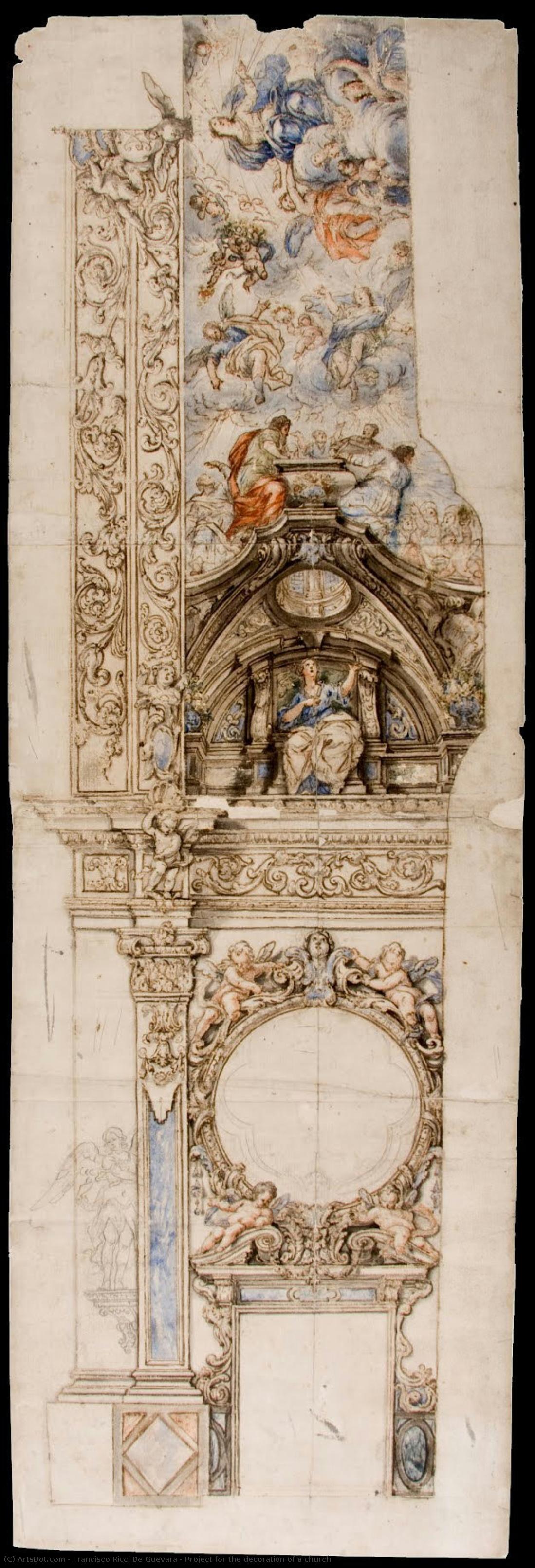
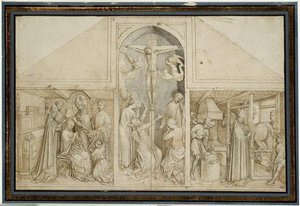
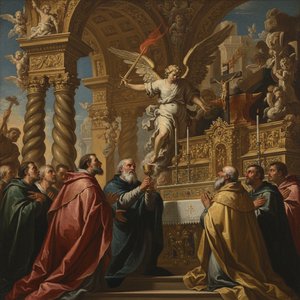
Project for the decoration of a church


 Read More
Hand Made Oil Reproduction
Hand-painted oil on canvas in your size and frame, made to order by our artists. ( Buy Print Buy Image)




































Pick from our preset sizes that match the artwork's original proportions.

You may enter your own dimensions to fit a specific frame or space. If your selected size does not match the original image's proportions, we will either crop the artwork or extend the painting with additional hand-painted elements. A digital mockup will be sent for your approval before production begins.
Please note that the on-screen preview does not reflect the actual cropping or extension. Only the mockup will accurately show the final composition.
While custom sizes are available, we recommend selecting a dimension from the predefined list to preserve the original proportions.
After order, ArtsDot.com team will email client for instructions and provide a mockup preview
Worldwide Delivery () in 3/4 weeks instead of standard 5 weeks. (24 August). No compromise on quality.

Free Worldwide Express Shipping

High-Quality Linen Canvas

Full Shipping Insurance

Customs Tax Refund Guarantee

True Color Matching Guarantee

60-Day Return Policy (Defects Only)

100% Money-Back Guarantee

Bulk Discount Offer
 Glass option is only available in size under 110 CM

Project for the decoration of a church
Reproduction Medium
Reproduction Size
-


Total Price
$ 263
Artwork Description
Related Artworks

Artist Biography
Francisco Ricci de Guevara: A Baroque Visionary of Faith and Patronage
Francisco Ricci de Guevara (1614-1685) stands as a pivotal figure in Spanish Baroque art, embodying the grandeur of royal patronage and the fervent devotion to religious iconography that characterized the era. Born in Madrid, his lineage traced back to Italian artistic traditions—his father, Antonio Ricci, was himself an accomplished painter who had established a workshop at El Escorial, the Habsburg monarchy’s ceremonial palace—providing him with invaluable formative experiences. This early exposure instilled within him a profound understanding of disegno, the humanist approach to art championed by Michelangelo and Raphael, which would profoundly influence his stylistic choices throughout his prolific career.- Early Training & Artistic Influences: Ricci's formal artistic education commenced under Vicente Carducho, a leading exponent of Mannerism in Madrid, who instilled in him meticulous observation and compositional control. Carducho’s emphasis on idealized forms and subtle expressive gestures served as a crucial counterbalance to the exuberant dynamism of Caravaggio, whose dramatic chiaroscuro technique captivated Ricci’s imagination.
- Royal Patronage & Artistic Output: Recognizing his talent early on, Ricci swiftly gained favor with Philip IV and Mariana Habsburg—the Spanish monarchs—securing commissions for monumental altarpieces and decorative frescoes within churches across Spain. Notably, he undertook the ambitious project of adorning the Basilica of San Lorenzo de El Escorial with a series of paintings depicting biblical scenes and royal portraits, cementing his reputation as one of the court’s foremost artists.
- Notable Works: Ricci's artistic legacy includes masterpieces such as “The Immaculate Conception” (Museo Nacional Prado), showcasing his masterful handling of color and texture—a testament to his dedication to capturing ethereal beauty—and “Saint Jerome in Prayer,” a poignant depiction of contemplative piety executed with remarkable psychological insight. His frescoes within the Cathedral of Toledo further exemplify his artistic prowess, demonstrating his ability to convey complex narratives through visual storytelling.
- Stage Design & Artistic Versatility: Beyond painting, Ricci demonstrated considerable versatility as a stage designer, contributing significantly to theatrical productions during Philip IV’s reign. This collaborative endeavor honed his understanding of spatial illusion and dramatic composition—skills that undoubtedly enriched his artistic sensibilities.
- Legacy & Historical Significance: Francisco Ricci de Guevara's work represents the apex of Spanish Baroque art, reflecting the intellectual fervor and spiritual conviction of the Habsburg court. His paintings continue to inspire admiration for their technical brilliance and emotive power, serving as enduring symbols of religious piety and royal splendor—a testament to his indelible contribution to artistic history.
Exploring Ricci’s Artistic Style: Mannerist Echoes & Baroque Innovation
Ricci's artistic style is characterized by a harmonious blend of Mannerist refinements and Baroque dynamism. While acknowledging Carducho’s influence—evident in the careful rendering of drapery folds and idealized figures—he skillfully incorporated Baroque techniques, notably dramatic lighting and expressive gestures, to heighten emotional impact. His compositions often prioritize grandeur and monumentality, reflecting the aspirations of the Habsburg monarchy to project an image of majesty and spiritual authority. Ricci's meticulous attention to detail—particularly in portraying textures and surfaces—underscores his commitment to achieving visual realism while simultaneously conveying profound psychological depth.The Basilica of San Lorenzo de El Escorial: A Monumental Undertaking
Ricci’s involvement in the decoration of San Lorenzo de El Escorial stands as a defining achievement of his artistic career. This ambitious project demanded an unprecedented level of technical skill and creative vision—a challenge that Ricci embraced with unwavering determination. The basilica's interior walls were adorned with monumental frescoes depicting biblical narratives and royal portraits, transforming the space into a powerful testament to Habsburg piety and dynastic grandeur. Ricci’s masterful use of color and perspective created an immersive experience for viewers, conveying not only visual splendor but also profound spiritual contemplation.Influence & Artistic Contemporaries
Ricci's artistic trajectory intersected with that of several prominent contemporaries—including Diego Velázquez and Juan Carreño de Vélez—who shared a commitment to humanist ideals and stylistic innovation. While Velázquez’s realism prioritized observation and psychological nuance, Ricci pursued a more stylized approach—emphasizing idealized forms and expressive gestures—reflecting the prevailing aesthetic sensibilities of the Baroque period. Studying alongside Carducho fostered a dialogue between artistic traditions, shaping Ricci's distinctive visual language and cementing his place within the broader context of Spanish Baroque art history.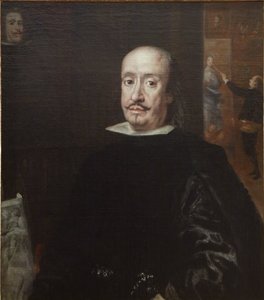
francisco ricci de guevara
1614 - 1685 , Spain
Quick Facts
- Artistic Movement Or Style: Baroque
- Artists Or Movements Influenced By This Artist: ['Italian Baroque']
- Artists Who Influenced This Artist: ['Vicente Carducho']
- Date Of Birth: April 9th, 1614
- Date Of Death: August 2nd, 1685
- Full Name: Francisco Ricci de Guevara
- Nationality: Spanish
- Notable Artworks: ['The J. Paul Getty Museum Collection']
- Place Of Birth: Madrid, Spain
Related Articles
The Golden Age Reforged: Dramatic Realism & Religious Zeal in Spanish Baroque Art
Explore the dramatic world of Spanish Baroque art! Discover masters like Zurbarán & the powerful influence of religious zeal on painting techniques – a guide for collectors and enthusiasts.
Decoding Baroque Grandeur: A Guide to the Drama and Emotion of 17th-Century Art
Explore the breathtaking drama of 17th-century Baroque art. Our expert guide decodes the use of chiaroscuro, emotional intensity, and historical grandeur to help you appreciate and curate timeless masterpieces for your collection.

The Dramatic Flourish: Exploring the Baroque Movement's Enduring Legacy in Art History
Explore the dramatic world of Baroque art! Discover iconic artists like Caravaggio & Rubens, defining techniques, and its lasting impact on art history. Expert insights for collectors & enthusiasts at ArtsDot.

Baroque Classicism: Reconciling Drama & Order in 17th-Century Art
Explore the captivating world of Baroque Classicism! Discover its history, key artists like Caravaggio & Rubens, and defining characteristics. Expert insights & high-quality reproductions at ArtsDot.

Baroque Masterpieces: 10 Paintings That Defined an Era |
Journey through the drama & grandeur of Baroque art! Explore 10 masterpieces by Caravaggio, Rembrandt, Rubens & more. Discover stunning oil paintings, rich colors & timeless stories. Find museum-quality reproductions at .