 Preview
 Send
Send Share
Share
 Details

 Download
 Similars
 X-Ray
X-Ray Diaporama
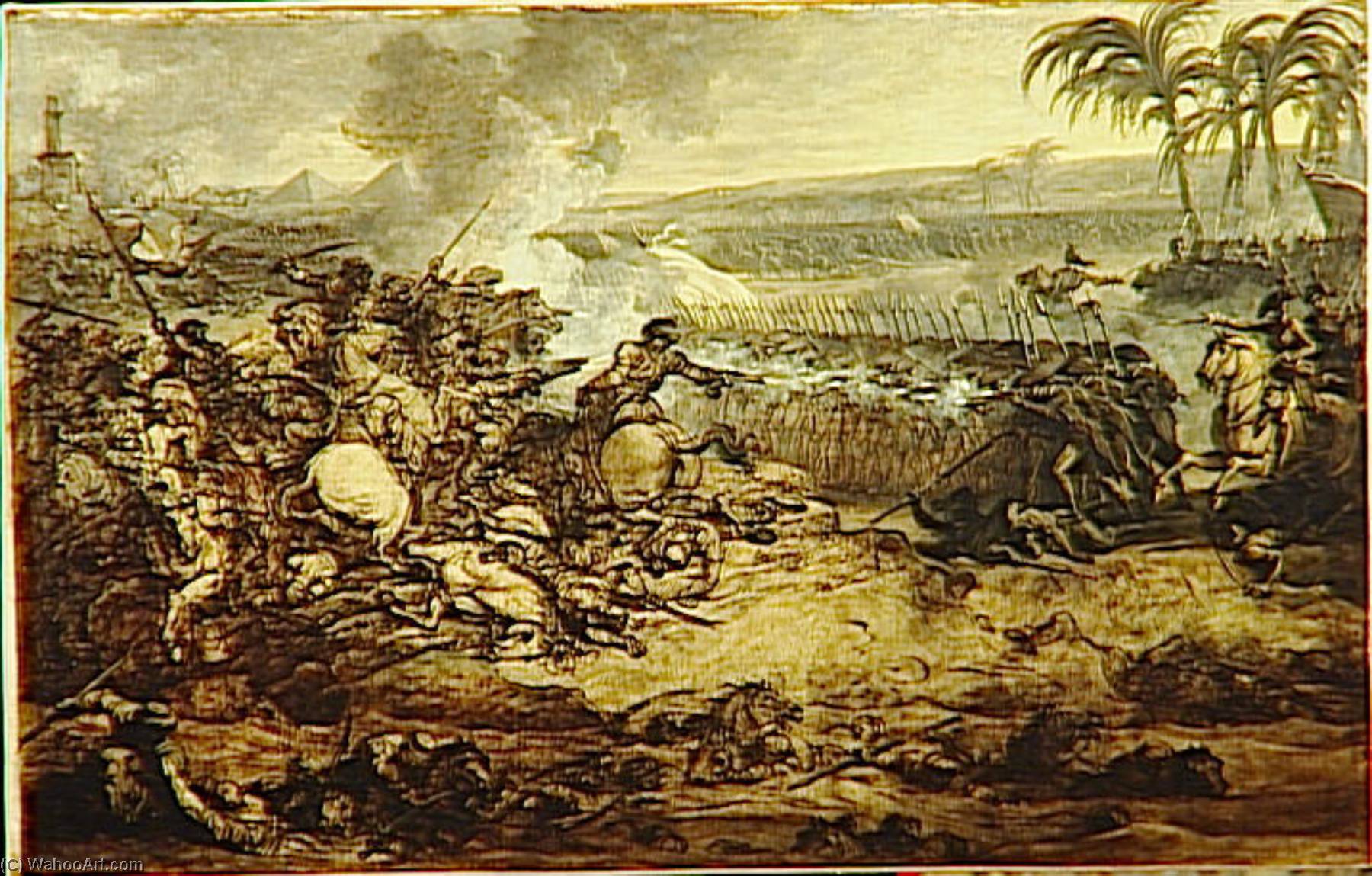
LA BATAILLE DES PYRAMIDES


 Read More
Hand Made Oil Reproduction
Hand-painted oil on canvas in your size and frame, made to order by our artists. ( Buy Print Buy Image)




P118B $10

P118H $10

P118W $10

P438Z $10

P508JH $12

P508YH $12

P805H $10

P805Z $10

P919BZ $10

P919G $10

P919XJ $10

P959ZH $10

P968JZ $12

W106C $8

W218G $10

W218JH $8

W218Y $10

W307PJ $10

W316G $10

W316PJ $8

W316Y $10

W398PJ $8

W4111J $10

W500HY $15

W500JH $15

W692G $12

W849H $8

W940BG $15

W953PJ $8




Pick from our preset sizes that match the artwork's original proportions.

You may enter your own dimensions to fit a specific frame or space. If your selected size does not match the original image's proportions, we will either crop the artwork or extend the painting with additional hand-painted elements. A digital mockup will be sent for your approval before production begins.
Please note that the on-screen preview does not reflect the actual cropping or extension. Only the mockup will accurately show the final composition.
While custom sizes are available, we recommend selecting a dimension from the predefined list to preserve the original proportions.
After order, ArtsDot.com team will email client for instructions and provide a mockup preview
Worldwide Delivery () in 3/4 weeks instead of standard 5 weeks. (17 August). No compromise on quality.

Free Worldwide Express Shipping

High-Quality Linen Canvas

Full Shipping Insurance

Customs Tax Refund Guarantee

True Color Matching Guarantee

60-Day Return Policy (Defects Only)

100% Money-Back Guarantee

Bulk Discount Offer
 Glass option is only available in size under 110 CM

LA BATAILLE DES PYRAMIDES
Reproduction Medium
Reproduction Size
-


Total Price
$ 438
Artwork Description
LA BATAILLE DES PYRAMIDES
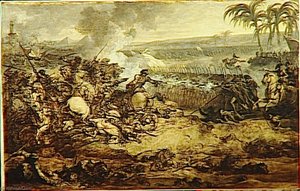
François André Vincent’s “La Bataille des Pyramides” stands as a monumental testament to the fervor of Neoclassicism and its engagement with the grandeur of antiquity, capturing not merely an event but also the psychological drama inherent in historical confrontation. Executed around 1800, this ambitious canvas—measuring approximately 465 x 847 mm—was commissioned by Lucien Bonaparte, Napoleon’s brother-in-law, as part of a larger project intended to commemorate the decisive victory over the Mamluks at Pyramids in July 1798. Vincent's decision to depict this pivotal moment wasn’t simply driven by patriotic duty; it represented an attempt to elevate the narrative of military triumph into a sublime experience—a pursuit that aligns perfectly with the aesthetic sensibilities of his time and distinguishes him from his rival, Jacques-Louis David.\n The painting immediately commands attention with its overwhelming scale and dramatic composition. Vincent employs a horizontal format, emphasizing the breadth of the battlefield and establishing a visual rhythm that mirrors the relentless advance of the French army against the fortified Mamluk positions. The foreground is dominated by fallen soldiers—a visceral depiction of sacrifice and loss—while the central expanse showcases the intense engagement between cavalry and infantry, conveying a palpable sense of urgency and conflict. Yet, amidst this turbulent melee, Vincent skillfully incorporates the pyramids themselves into the background landscape, serving as a grounding element that simultaneously symbolizes ancient history and underscores the clash between European ambition and Eastern resistance.\n Vincent’s artistic technique is characterized by loose brushwork—a deliberate departure from the meticulous detail favored by David—that prioritizes capturing atmosphere and conveying emotion over precise representation. The color palette leans heavily into earthy tones: browns, tans, ochres, and muted yellows—a chromatic scheme that reflects the dust-laden conditions of the battlefield and contributes to the painting’s overall mood of solemn grandeur. Light is diffused and subdued, eschewing dramatic highlights in favor of a monochromatic aesthetic that amplifies the painting's contemplative quality.\n Beyond its formal achievements, “La Bataille des Pyramides” resonates with profound symbolic significance. The pyramids themselves embody the legacy of Egypt—a civilization revered by Enlightenment thinkers as embodying reason and order—and represent the formidable challenge posed by Napoleon’s forces to established hierarchies. Vincent’s portrayal captures not only the tactical maneuvers of the battle but also its psychological impact on both soldiers and commanders, conveying a sense of heroic struggle against overwhelming odds. The painting's enduring power lies in its ability to evoke contemplation about the nature of courage, duty, and the transformative potential of historical experience—a legacy that continues to inspire artists and scholars alike.\n The artwork’s medium is oil paint on canvas, executed with meticulous attention to texture—the rough surface mirroring the physicality of the battlefield and reinforcing Vincent's commitment to conveying a sense of immediacy. The artist’s technique involved layering pigments onto primed canvas, utilizing brushstrokes that are deliberately expressive rather than rigidly controlled. This approach aligns perfectly with the stylistic conventions of Neoclassicism, which sought to emulate the idealized forms and monumental scale of classical sculpture.\n- Artist: François André Vincent
- Born Year: 1746
- Death Year: 1816
- Birth City: Paris
- Birth Country: France
Related Artworks
Artist Biography
The Neoclassical Vision of François-André Vincent
In the vibrant and turbulent landscape of late eighteenth-century France, few artists captured the transition from aristocratic elegance to revolutionary solemnity as masterfully as François-André Vincent. Born in Paris in 1746 into a lineage of artistic distinction—his father, François-Elie Vincent, was a renowned miniaturist—Vincent was destined for a life defined by the brush and the canvas. His early training under the esteemed Joseph-Marie Vien provided him with a rigorous foundation in the academic tradition, yet it was his innate ability to bridge the gap between the refined grace of the Rococo and the burgeoning discipline of Neoclassicism that would eventually secure his place in art history.
Vincent’s artistic soul was profoundly shaped by his transformative journey to Rome. Upon winning the prestigious Prix de Rome with his commanding work, Germanicus Calms Sedition, he gained unprecedented access to the timeless treasures of classical antiquity. Living and working within the historic Palazzo Mancini, Vincent immersed himself in the study of Raphael and the sculptural precision of ancient masters. This period was not merely an academic exercise but a spiritual awakening; it allowed him to infuse his compositions with a sense of monumental dignity and a harmonious balance that became his hallmark. While he drew deep inspiration from the classical past, he remained acutely aware of the living world around him, often blending historical grandeur with the subtle nuances of contemporary life.
A Master of Portraiture and Historical Narrative
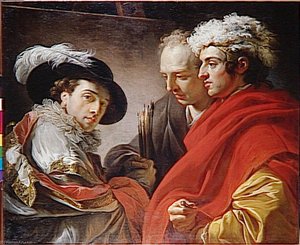
The breadth of Vincent’s oeuvre is a testament to his versatility as a storyteller. He was equally adept at capturing the intimate psychological depth of an individual as he was at depicting the sweeping chaos of historical conflict. In his portraiture, one finds a remarkable ability to convey character through smooth brushstrokes and delicate tonal gradations. His portraits of contemporaries, including the legendary Jean-Honoré Fragonard, reflect a certain dynamism and elegance that suggest a deep connection to the stylistic fluidity of his era. These works serve as windows into the social fabric of pre-revolutionary France, capturing the poise and presence of the era's most notable figures.
However, it was in the realm of history painting where Vincent truly asserted his command over the Neoclassical idiom. His ability to translate complex historical narratives into visually arresting scenes allowed him to participate in the grandest dialogues of his time. A striking example is found in La Bataille des Pyramides, an impressive oil on canvas that commemorates Napoleon's decisive victory in 1798. In this work, Vincent moves away from static composition, instead utilizing loose brushstrokes and earthy tones to evoke the dust, movement, and atmospheric tension of a battlefield set against the backdrop of ancient Egyptian monuments. This capacity to blend the epic scale of history with an almost visceral sense of atmosphere distinguishes him from his more rigid contemporaries.
Legacy and Historical Significance
Throughout his career, Vincent occupied a unique position within the French art hierarchy. Often viewed as a sophisticated rival to Jacques-Louis David, he offered a stylistic alternative that was perhaps less dogmatic and more attuned to the subtle interplay of light and life. While David pushed toward a starker, more austere Neoclassicism, Vincent maintained a connection to the grace and fluidity inherited from his predecessors, creating a bridge between the old world and the new. His contributions to the institutionalization of art were equally significant, as he stood as a founding figure of the Académie des Beaux-Arts, helping to shape the pedagogical standards for generations of French painters.
The enduring legacy of François-André Vincent lies in his ability to harmonize contradictions: the ancient and the modern, the monumental and the intimate, the disciplined and the expressive. His work remains a vital touchstone for understanding the evolution of French art during one of its most transformative epochs. Through his meticulous technique and profound historical insight, Vincent did more than just record history; he breathed life into it, ensuring that the spirit of the Neoclassical era would continue to resonate long after the revolution had passed.
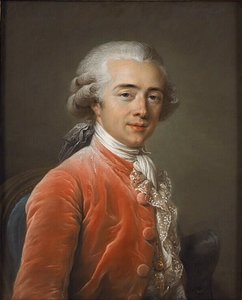
françois andré vincent
1746 - 1816 , France
Quick Facts
- Artistic Movement Or Style: Neoclassical
- Artists Or Movements Influenced By This Artist: ['Jacques-Louis David']
- Artists Who Influenced This Artist:
- Joseph-Marie Vien
- Jean-Honoré Fragonard
- Raphael
- Date Of Birth: December 30, 1746
- Date Of Death: August 4, 1816
- Full Name: François André Vincent
- Nationality: French
- Notable Artworks:
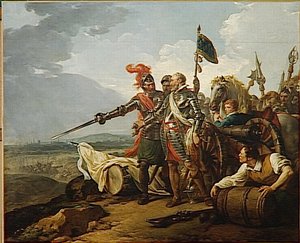
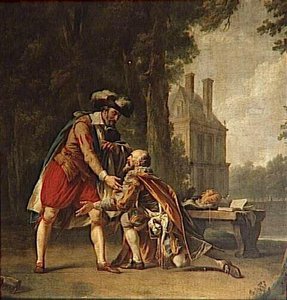
- Henri IV et Sully à Fontainebleau
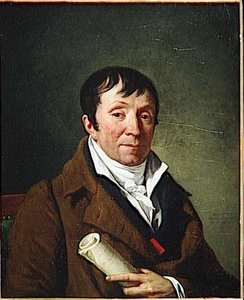
- Portrait de Pierre Rousseau
- The Ploughing Lesson
- Place Of Birth: Paris, France
Related Articles
Neoclassical Art: 10 Masterpieces That Shaped History |
Explore 10 defining Neoclassical masterpieces by David, Ingres & Canova. Discover the history, symbolism & artistry behind these iconic paintings and sculptures. Find museum-quality art reproductions at – elevate your home with timeless beauty.

Golden Hour on the Nile: Symbolism & Artistic Legacy of Egyptian Sunsets
Explore the rich symbolism of Egyptian sunset paintings & their artistic legacy. Discover how color, ritual, and landscape shaped ancient beliefs – a guide for discerning collectors.

The Revival of Antiquity: Exploring Neoclassical Art's Ideals & Enduring Legacy
Explore the revival of classical ideals in Neoclassical art! Discover Jacques-Louis David & the movement's impact on painting, sculpture & architecture. Expert insights & high-quality reproductions at ArtsDot.

The Revival of Antiquity: Exploring the Neoclassical Movement & its Enduring Legacy
Explore the revival of classical art with our deep dive into Neoclassicism! Discover key artists like Jacques-Louis David, Enlightenment influences & lasting impact on art history. High-quality reproductions at ArtsDot.
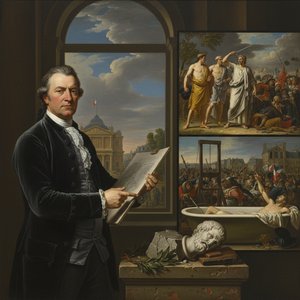
Jacques-Louis David: Neoclassical Ideals & Revolutionary Witness
Explore the life & art of Jacques-Louis David, leading Neoclassical painter of the French Revolution. Discover iconic works like 'The Death of Marat' and his lasting impact on art history. Expert analysis & high-quality reproductions at ArtsDot.