 Preview
 Send
Send Share
Share
 Details

 Download
 Similars
 X-Ray
X-Ray Diaporama
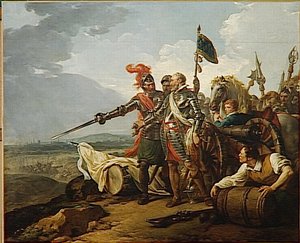
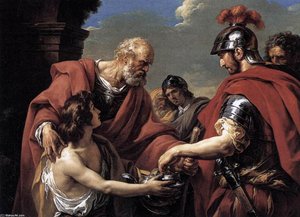
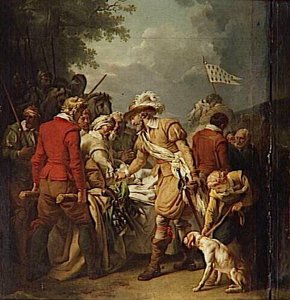
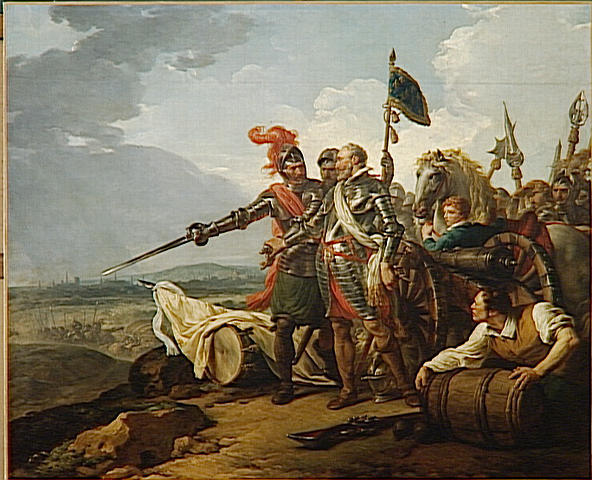
HENRI IV FAISANT ENTRER DES VIVRES DANS PARIS


 Read More
Hand Made Oil Reproduction
Hand-painted oil on canvas in your size and frame, made to order by our artists. ( Buy Print Buy Image)




P118B $10

P118H $10

P118W $10

P438Z $10

P508JH $12

P508YH $12

P805H $10

P805Z $10

P919BZ $10

P919G $10

P919XJ $10

P959ZH $10

P968JZ $12

W106C $8

W218G $10

W218JH $8

W218Y $10

W307PJ $10

W316G $10

W316PJ $8

W316Y $10

W398PJ $8

W4111J $10

W500HY $15

W500JH $15

W692G $12

W849H $8

W940BG $15

W953PJ $8




Pick from our preset sizes that match the artwork's original proportions.

You may enter your own dimensions to fit a specific frame or space. If your selected size does not match the original image's proportions, we will either crop the artwork or extend the painting with additional hand-painted elements. A digital mockup will be sent for your approval before production begins.
Please note that the on-screen preview does not reflect the actual cropping or extension. Only the mockup will accurately show the final composition.
While custom sizes are available, we recommend selecting a dimension from the predefined list to preserve the original proportions.
After order, ArtsDot.com team will email client for instructions and provide a mockup preview
Worldwide Delivery () in 3/4 weeks instead of standard 5 weeks. (22 August). No compromise on quality.

Free Worldwide Express Shipping

High-Quality Linen Canvas

Full Shipping Insurance

Customs Tax Refund Guarantee

True Color Matching Guarantee

60-Day Return Policy (Defects Only)

100% Money-Back Guarantee

Bulk Discount Offer
 Glass option is only available in size under 110 CM

HENRI IV FAISANT ENTRER DES VIVRES DANS PARIS
Reproduction Medium
Reproduction Size
-


Total Price
$ 313
Artwork Description
François André Vincent: A Neoclassical Pioneer Bridging Antiquity and Contemporary Life
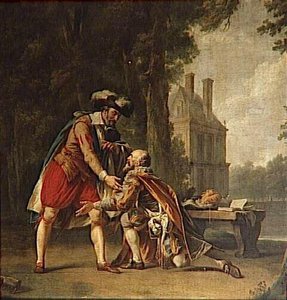
François-André Vincent (1746 – 1816) occupies a unique position within the artistic panorama of late eighteenth-century France, representing the zenith of Neoclassicism while simultaneously absorbing influences from classical antiquity and the revitalized Italian Renaissance. Born into a family deeply rooted in artistic heritage—his father, François-Elie Vincent, was a celebrated miniaturist—Vincent’s upbringing instilled within him an unwavering dedication to meticulous detail and refined craftsmanship that would permeate his entire artistic career. He honed his skills under Joseph-Marie Vien, a monumental figure who championed École Royale des Éleves Protégés, shaping Vincent's artistic vision and firmly establishing him amongst the dominant stylistic currents of his era. Vincent’s pilgrimage to Rome in 1768 proved decisive, securing him the prestigious Prix de Rome with Germanicus Calms Sedition—a commission that catapulted him into the spotlight and solidified his allegiance to Neoclassicism's core tenets. This patronage afforded him unparalleled access to Roman artistic treasures, fostering a profound appreciation for sculptural grandeur and idealized forms – elements which would subsequently infuse his own paintings with an unmistakable aura of timeless elegance. The artwork itself, “Henri IV faisant entrer des vivres dans Paris,” exemplifies Vincent’s masterful command of Neoclassical technique. Executed on canvas using oil paints—a medium favored by the École Royale—the painting showcases a breathtaking level of realism achieved through painstaking brushwork and a deliberate manipulation of chiaroscuro. Lines delineate the contours of armored figures, horses, and architectural elements with unwavering precision, conveying both structural integrity and dynamic movement. The artist skillfully employs geometric shapes – squares and rectangles for armor plating, circles for wheels—to create visual harmony and reinforce the painting’s compositional balance. Furthermore, Vincent's textured brushstrokes imbue the canvas with palpable physicality, mirroring the ruggedness of the battlefield depicted and lending an impressionistic quality to the monumental scene. The historical context surrounding “Henri IV faisant entrer des vivres dans Paris” is inextricably linked to the tumultuous years preceding Louis XIV’s reign. The siege of Paris by Huguenots in 1590 presented a formidable challenge to royal authority, necessitating resourceful measures to ensure the city's sustenance and bolstering morale amidst adversity. Vincent captures this pivotal moment with theatrical grandeur, portraying Henry IV as a triumphant leader overseeing the arrival of provisions—a symbolic gesture representing not merely physical survival but also spiritual resilience. Symbolically, the painting resonates deeply with themes of victory, fortitude, and divine providence. The central figure’s raised sword serves as an emblem of martial prowess and unwavering resolve, while the fallen soldier in the foreground underscores the sacrifices inherent in securing liberty—a poignant reminder of the human cost of political upheaval. The distant cityscape—Paris—underscores the magnitude of Henry IV's achievement, demonstrating his ability to safeguard his kingdom against external threats. Vincent’s masterful orchestration of color—primarily warm hues of browns, reds, and golds accented by blues—further amplifies the painting’s emotional impact, conveying a sense of solemn grandeur and inspiring awe in the viewer. Ultimately, “Henri IV faisant entrer des vivres dans Paris” transcends mere historical representation; it embodies the ideals of Neoclassicism – rationality, order, and moral virtue – transforming a specific event into an enduring testament to human courage and artistic brilliance. Its meticulous execution and evocative symbolism continue to captivate audiences today, cementing Vincent’s legacy as one of France's foremost painters and securing his place amongst the luminaries of Western art history.Related Artworks
Artist Biography
The Neoclassical Vision of François-André Vincent
In the vibrant and turbulent landscape of late eighteenth-century France, few artists captured the transition from aristocratic elegance to revolutionary solemnity as masterfully as François-André Vincent. Born in Paris in 1746 into a lineage of artistic distinction—his father, François-Elie Vincent, was a renowned miniaturist—Vincent was destined for a life defined by the brush and the canvas. His early training under the esteemed Joseph-Marie Vien provided him with a rigorous foundation in the academic tradition, yet it was his innate ability to bridge the gap between the refined grace of the Rococo and the burgeoning discipline of Neoclassicism that would eventually secure his place in art history.
Vincent’s artistic soul was profoundly shaped by his transformative journey to Rome. Upon winning the prestigious Prix de Rome with his commanding work, Germanicus Calms Sedition, he gained unprecedented access to the timeless treasures of classical antiquity. Living and working within the historic Palazzo Mancini, Vincent immersed himself in the study of Raphael and the sculptural precision of ancient masters. This period was not merely an academic exercise but a spiritual awakening; it allowed him to infuse his compositions with a sense of monumental dignity and a harmonious balance that became his hallmark. While he drew deep inspiration from the classical past, he remained acutely aware of the living world around him, often blending historical grandeur with the subtle nuances of contemporary life.
A Master of Portraiture and Historical Narrative
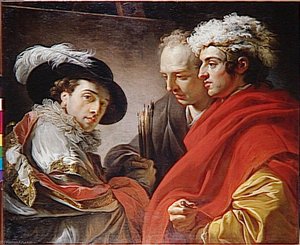
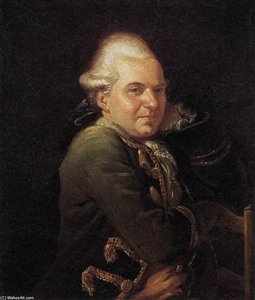
The breadth of Vincent’s oeuvre is a testament to his versatility as a storyteller. He was equally adept at capturing the intimate psychological depth of an individual as he was at depicting the sweeping chaos of historical conflict. In his portraiture, one finds a remarkable ability to convey character through smooth brushstrokes and delicate tonal gradations. His portraits of contemporaries, including the legendary Jean-Honoré Fragonard, reflect a certain dynamism and elegance that suggest a deep connection to the stylistic fluidity of his era. These works serve as windows into the social fabric of pre-revolutionary France, capturing the poise and presence of the era's most notable figures.
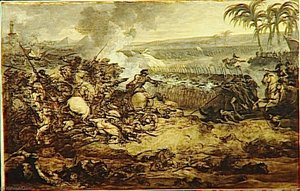
However, it was in the realm of history painting where Vincent truly asserted his command over the Neoclassical idiom. His ability to translate complex historical narratives into visually arresting scenes allowed him to participate in the grandest dialogues of his time. A striking example is found in La Bataille des Pyramides, an impressive oil on canvas that commemorates Napoleon's decisive victory in 1798. In this work, Vincent moves away from static composition, instead utilizing loose brushstrokes and earthy tones to evoke the dust, movement, and atmospheric tension of a battlefield set against the backdrop of ancient Egyptian monuments. This capacity to blend the epic scale of history with an almost visceral sense of atmosphere distinguishes him from his more rigid contemporaries.
Legacy and Historical Significance
Throughout his career, Vincent occupied a unique position within the French art hierarchy. Often viewed as a sophisticated rival to Jacques-Louis David, he offered a stylistic alternative that was perhaps less dogmatic and more attuned to the subtle interplay of light and life. While David pushed toward a starker, more austere Neoclassicism, Vincent maintained a connection to the grace and fluidity inherited from his predecessors, creating a bridge between the old world and the new. His contributions to the institutionalization of art were equally significant, as he stood as a founding figure of the Académie des Beaux-Arts, helping to shape the pedagogical standards for generations of French painters.
The enduring legacy of François-André Vincent lies in his ability to harmonize contradictions: the ancient and the modern, the monumental and the intimate, the disciplined and the expressive. His work remains a vital touchstone for understanding the evolution of French art during one of its most transformative epochs. Through his meticulous technique and profound historical insight, Vincent did more than just record history; he breathed life into it, ensuring that the spirit of the Neoclassical era would continue to resonate long after the revolution had passed.
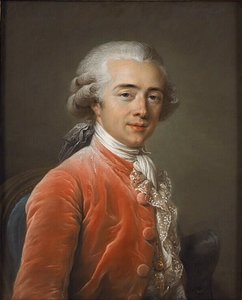
françois andré vincent
1746 - 1816 , France
Quick Facts
- Artistic Movement Or Style: Neoclassical
- Artists Or Movements Influenced By This Artist: ['Jacques-Louis David']
- Artists Who Influenced This Artist:
- Joseph-Marie Vien
- Jean-Honoré Fragonard
- Raphael
- Date Of Birth: December 30, 1746
- Date Of Death: August 4, 1816
- Full Name: François André Vincent
- Nationality: French
- Notable Artworks:
- Henri IV et Sully à Fontainebleau
- Portrait de Pierre Rousseau
- The Ploughing Lesson
- Place Of Birth: Paris, France
Related Articles
Henri Matisse's Masterpieces: Explore 25 Iconic Paintings & Art Decor Ideas
Journey through Henri Matisse's 25 most iconic paintings! Explore Fauvism, vibrant colors & the stories behind masterpieces like 'The Dance'. Find museum-quality art reproductions and curated decor ideas to elevate your space. Discover all masterpieces on ArtsDot.com.
Fauvism's Boldest Visions: 10 Masterpieces That Revolutionized Modern Art | ArtsDot
Explore 10 Fauvist masterpieces by Matisse, Derain & Vlaminck that ignited Modern Art! Discover bold colors, expressionist landscapes & the history of this revolutionary movement. Find museum-quality prints at ArtsDot.com.
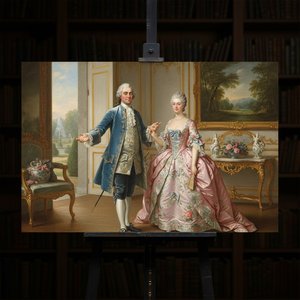
Charles-André van Loo: A Study in Rococo Portraiture & the French Court's Artistic Dynamics
Explore the elegant world of Charles-André van Loo, a master of Rococo portraiture at the French court. Discover his life, techniques, and enduring influence on 18th-century art. Hand-painted reproductions available.

Henri-Joseph Harpignies: Capturing the Poetic Essence of the French Landscape
Explore the serene landscapes of Henri-Joseph Harpignies, a master of the Barbizon School. Discover his atmospheric paintings, recurring themes & enduring legacy in 19th-century French art. Learn more at ArtsDot.
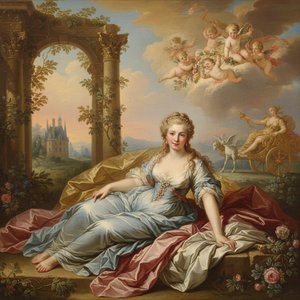
François Boucher: Rococo Master of Myth, Sensuality, and the French Court
Explore the captivating world of François Boucher, master of Rococo painting! Discover his iconic works, aristocratic patronage, and lasting influence on French art history. Learn more at ArtsDot.