 Preview
 Send
Send Share
Share
 Details

 Download
 Similars
 X-Ray
X-Ray Diaporama
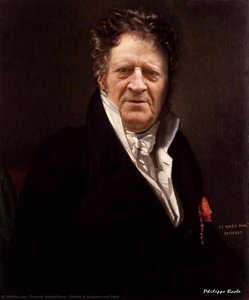
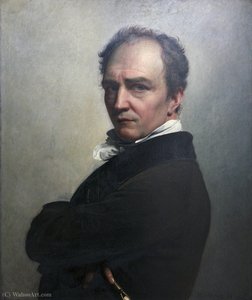
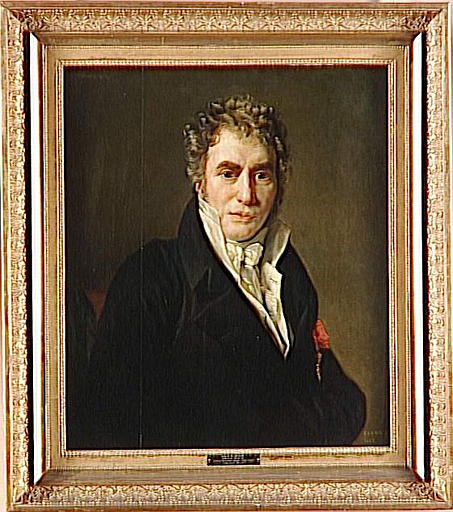
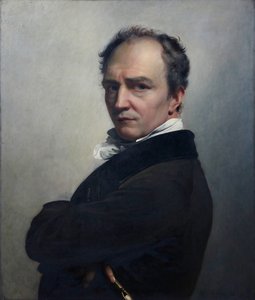
PORTRAIT DU PEINTRE LOUIS DAVID


 Read More
Hand Made Oil Reproduction
Hand-painted oil on canvas in your size and frame, made to order by our artists. ( Buy Print Buy Image)




P118B $10

P118H $10

P118W $10

P438Z $10

P508JH $12

P508YH $12

P805H $10

P805Z $10

P919BZ $10

P919G $10

P919XJ $10

P959ZH $10

P968JZ $12

W106C $8

W218G $10

W218JH $8

W218Y $10

W307PJ $10

W316G $10

W316PJ $8

W316Y $10

W398PJ $8

W4111J $10

W500HY $15

W500JH $15

W692G $12

W849H $8

W940BG $15

W953PJ $8




Pick from our preset sizes that match the artwork's original proportions.

You may enter your own dimensions to fit a specific frame or space. If your selected size does not match the original image's proportions, we will either crop the artwork or extend the painting with additional hand-painted elements. A digital mockup will be sent for your approval before production begins.
Please note that the on-screen preview does not reflect the actual cropping or extension. Only the mockup will accurately show the final composition.
While custom sizes are available, we recommend selecting a dimension from the predefined list to preserve the original proportions.
After order, ArtsDot.com team will email client for instructions and provide a mockup preview
Worldwide Delivery () in 3/4 weeks instead of standard 5 weeks. (16 August). No compromise on quality.

Free Worldwide Express Shipping

High-Quality Linen Canvas

Full Shipping Insurance

Customs Tax Refund Guarantee

True Color Matching Guarantee

60-Day Return Policy (Defects Only)

100% Money-Back Guarantee

Bulk Discount Offer
 Glass option is only available in size under 110 CM

PORTRAIT DU PEINTRE LOUIS DAVID
Reproduction Medium
Reproduction Size
-


Total Price
$ 263
Artwork Description
Portrait du Peintre Louis David – A Neoclassical Masterpiece
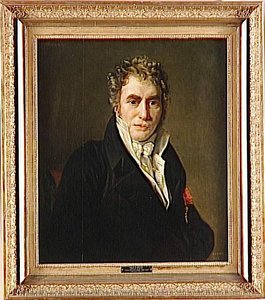
François Joseph Navez’s “Portrait du Peintre Louis David” offers a captivating glimpse into the world of 19th-century French art and the character of one of its most prominent figures. This meticulously rendered three-quarter view portrait, executed with a masterful understanding of Neoclassical principles, transcends mere likeness to evoke a sense of dignified intellect and quiet confidence. The painting’s enduring appeal lies not just in David's recognizable features but also in Navez’s skillful manipulation of light, color, and form – elements that speak volumes about the artistic sensibilities of the era.
Composition & Technique: A Study in Form
- Classic Portraiture: The composition adheres to the established conventions of portraiture, centering David's head and shoulders within a balanced frame. This traditional approach immediately establishes a sense of formality and respect – essential qualities for a portrait intended to represent an esteemed artist.
- Layered Oil Painting: Navez’s technique is characterized by careful layering of oil paint, creating subtle gradations in tone and texture that lend the image remarkable depth and realism. The smooth skin tones, achieved through meticulous brushwork, contrast beautifully with the richer textures of his coat and the crispness of his white shirt.
- Soft Lines & Organic Shapes: Noticeable are the soft lines defining David’s features and the gentle curves of his clothing. These organic shapes contribute to a sense of roundedness and approachability, preventing the portrait from feeling overly stiff or imposing.
Color Palette & Symbolism – Earth Tones & Subtle Hints
The color palette is deliberately restrained, dominated by subdued earth tones—deep blues, blacks, creams, and pinks—that evoke a sense of classical restraint. The dark coat, accented with white and red, draws the eye to David’s figure while subtly referencing the political allegiances prevalent during his time as a prominent member of the French Academy. The gold frame isn't merely decorative; it elevates the portrait, reflecting the prestige associated with artistic achievement and reinforcing the Neoclassical style’s emphasis on grandeur and order. The red rosette on David’s lapel is particularly intriguing – often interpreted as a symbol of political affiliation (specifically, the Jacobin party), adding another layer of meaning to the composition.
Historical Context & Artistic Influence
Created in the 19th century, this portrait exemplifies the Neoclassical movement's revival of classical ideals. Navez’s work directly reflects the influence of Jacques-Louis David, with whom he studied extensively during his time in Paris and Rome. This mentorship instilled a deep appreciation for realism, detail, and formal composition – hallmarks of Neoclassical art. The portrait stands as a testament to this artistic lineage, offering a tangible connection to a pivotal period in French art history and showcasing the enduring power of classical ideals within the context of 19th-century aesthetics.
Related Artworks
Artist Biography
François-Joseph Navez: A Life in Neoclassical Art
Early Life and Education
- Born: Charleroi, Belgium, November 16, 1787.
- Navez came from a privileged background, allowing him to dedicate himself fully to artistic pursuits from a young age.
- He began his formal training at the Royal Academy of Fine Arts in Brussels from 1803 to 1808, studying under Pierre Joseph Célestin François.
- In 1810, he co-founded the “Société des amateurs d'arts,” demonstrating an early commitment to fostering artistic community.
Paris and Rome: Influences and Development
- Navez received first prize for history painting in 1812, which enabled him to travel to Paris.
- Key Influence: From 1813 to 1816, he studied with Jacques-Louis David, a pivotal figure in Neoclassical art. This mentorship profoundly shaped his style and approach.
- He continued his artistic journey in Rome from 1817 to 1822, where he encountered Jean-Auguste-Dominique Ingres and further refined his skills within the classical tradition.
- His time in Italy instilled a deep appreciation for classical forms and themes, which would become hallmarks of his work.
Career and Artistic Style
- Upon returning to Belgium, Navez established a successful studio and quickly gained recognition as a talented portraitist.
- Artistic Focus: He excelled in portraits, historical scenes, and mythological subjects, all executed with meticulous detail and elegant composition.
- His style is characterized by its clarity of form, balanced compositions, and restrained emotional expression – hallmarks of Neoclassicism.
- He was a master of capturing the likeness and character of his sitters in portraiture.
Leadership at the Royal Academy
- Navez’s influence extended beyond his own artistic practice. He became Director of the Académie Royale des Beaux-Arts in Brussels between 1835 and 1862.
- Educational Impact: In this role, he played a crucial part in shaping the next generation of Belgian artists.
- Among his notable pupils were Jean-François Portaels (who also became his son-in-law) and Jean Carolus.
Major Works and Legacy
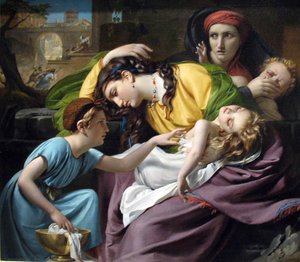
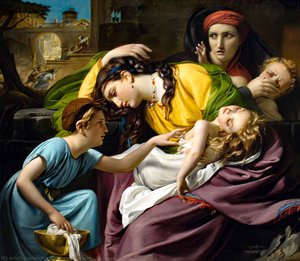
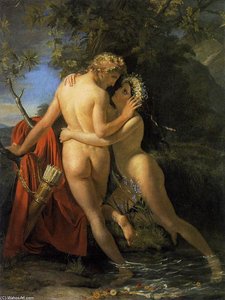
- Notable Paintings: Some of his most celebrated works include “Massacre of the Innocents,” “The Nymph Salmacis and Hermaphroditus”, “Women Spinning in Fondi” and his portrait of Jacques-Louis David.
- His paintings are held in prominent museum collections, showcasing their enduring artistic value.
- Historical Significance: Navez stands as a leading figure in Belgian Neoclassical painting. He bridged the gap between the classical tradition and emerging Romantic tendencies of the 19th century.
- He died in Brussels on October 12, 1869, leaving behind a rich artistic legacy that continues to inspire and captivate audiences today.
françois joseph navez
1787 - 1869 , Belgium
Quick Facts
- Birth Date: 1787
- Birth Place: Charleroi, Belgium
- Death Date: 1869
- Influenced:
- Jean-François Portaels
- Jean Carolus
- Influenced By: Jacques-Louis David
- Movement: Neoclassicism
- Name: François-Joseph Navez
- Nationality: Belgian
- Notable Works:
- Massacre of the Innocents
- The Nymph Salmacis and Hermaphroditus
- Portrait of Jacques-Louis David
Related Articles
Jacques-Louis David: Neoclassical Ideals & Revolutionary Witness
Explore the life & art of Jacques-Louis David, leading Neoclassical painter of the French Revolution. Discover iconic works like 'The Death of Marat' and his lasting impact on art history. Expert analysis & high-quality reproductions at ArtsDot.
The Revival of Antiquity: Exploring Ideals of Beauty & Power in Neoclassical Portraiture
Explore the captivating world of Neoclassical portraiture! Discover the power & ideals behind masterpieces by David, Girodet & more. Expert analysis, custom reproductions & art appraisal at ArtsDot.
Anne-Louis Girodet: Bridging Neoclassicism & Romanticism with Emotional Truth
Explore the captivating world of Anne-Louis Girodet, a pivotal figure bridging Neoclassicism & Romanticism. Discover his masterpieces and unique artistic vision with ArtsDot.
Ferdinand du Puigaudeau: Bridging Impressionism & Symbolism in Breton Landscapes
Discover Ferdinand du Puigaudeau's captivating Breton landscapes – a bridge between Impressionism & Symbolism. Explore his life, unique style, and enduring legacy with ArtsDot.
Morris Louis: Pioneering Color Field Painting & Abstract Expressionism's Legacy
Explore the groundbreaking abstract expressionism of Morris Louis, a pioneer of Color Field painting. Discover his innovative techniques, influential series & lasting legacy in post-war American art. Learn more at ArtsDot.