 Preview
 Send
Send Share
Share
 Details

 Download
 Similars
 X-Ray
X-Ray Diaporama
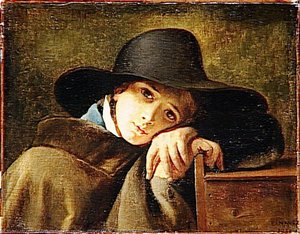
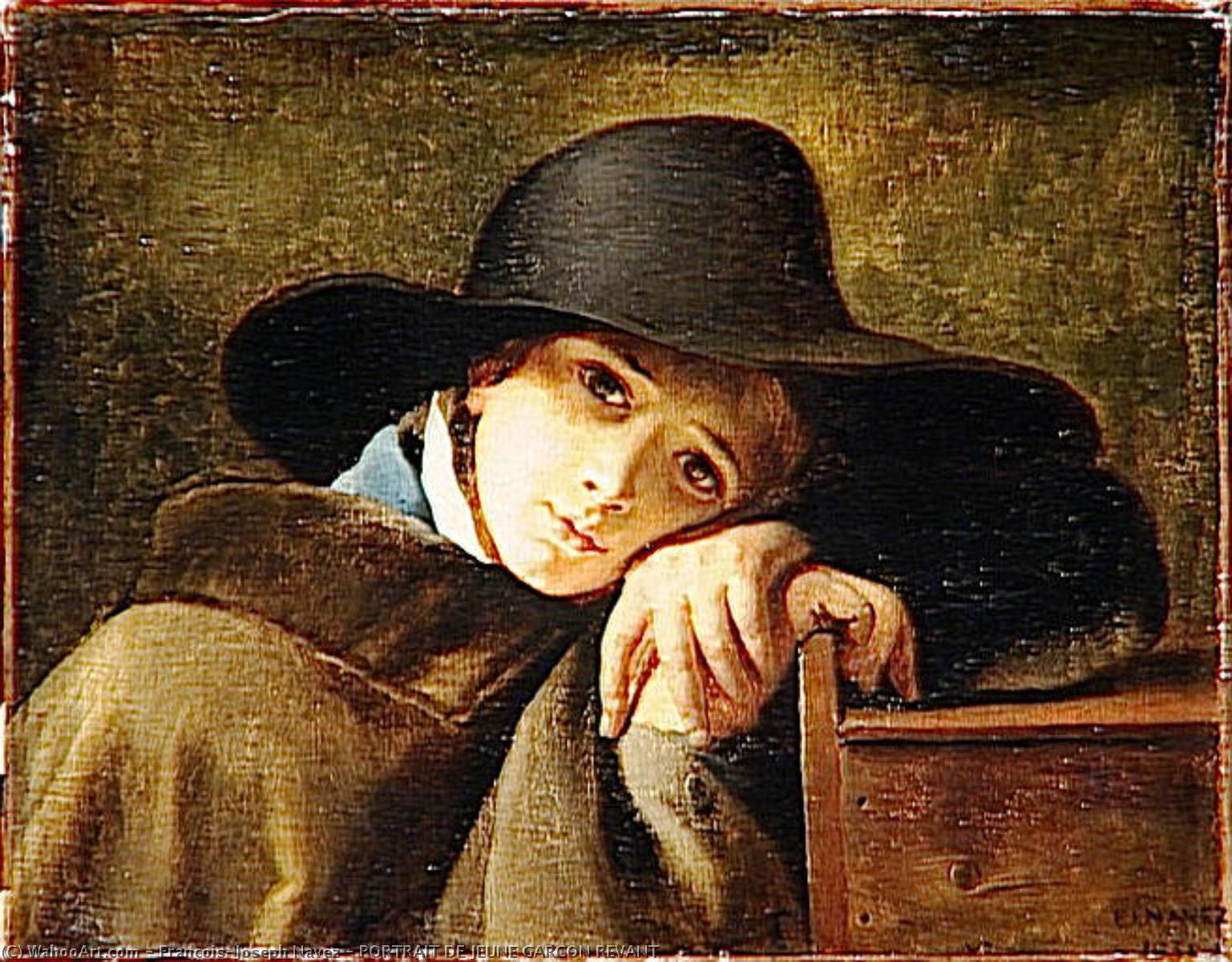
PORTRAIT DE JEUNE GARCON REVANT


 Read More
Hand Made Oil Reproduction
Hand-painted oil on canvas in your size and frame, made to order by our artists. ( Buy Print Buy Image)




P118B $10

P118H $10

P118W $10

P438Z $10

P508JH $12

P508YH $12

P805H $10

P805Z $10

P919BZ $10

P919G $10

P919XJ $10

P959ZH $10

P968JZ $12

W106C $8

W218G $10

W218JH $8

W218Y $10

W307PJ $10

W316G $10

W316PJ $8

W316Y $10

W398PJ $8

W4111J $10

W500HY $15

W500JH $15

W692G $12

W849H $8

W940BG $15

W953PJ $8




Pick from our preset sizes that match the artwork's original proportions.

You may enter your own dimensions to fit a specific frame or space. If your selected size does not match the original image's proportions, we will either crop the artwork or extend the painting with additional hand-painted elements. A digital mockup will be sent for your approval before production begins.
Please note that the on-screen preview does not reflect the actual cropping or extension. Only the mockup will accurately show the final composition.
While custom sizes are available, we recommend selecting a dimension from the predefined list to preserve the original proportions.
After order, ArtsDot.com team will email client for instructions and provide a mockup preview
Worldwide Delivery () in 3/4 weeks instead of standard 5 weeks. (17 August). No compromise on quality.

Free Worldwide Express Shipping

High-Quality Linen Canvas

Full Shipping Insurance

Customs Tax Refund Guarantee

True Color Matching Guarantee

60-Day Return Policy (Defects Only)

100% Money-Back Guarantee

Bulk Discount Offer
 Glass option is only available in size under 110 CM

PORTRAIT DE JEUNE GARCON REVANT
Reproduction Medium
Reproduction Size
-


Total Price
$ 263
Artwork Description
A Moment of Quiet Contemplation: François-Joseph Navez’s “Portrait de Jeune Garçon Revant”
François-Joseph Navez's "Portrait de Jeune Garçon Revant" (Portrait of a Young Boy Pensive) is more than just a depiction of a young boy; it’s a carefully constructed tableau of melancholy, introspection, and the subtle beauty found in quiet observation. Painted circa 1831, this oil on canvas work embodies the lingering influence of Neoclassicism while simultaneously hinting at the burgeoning Romanticism that would soon dominate European art. Navez masterfully captures a fleeting moment – a young boy lost in thought, leaning against what appears to be a weathered wooden railing or table edge – creating an image brimming with emotional resonance and technical sophistication.
The painting’s composition is deceptively simple yet profoundly effective. The subject, positioned slightly off-center, immediately draws the viewer's eye. His gaze, direct and unwavering, establishes a palpable connection, inviting us to share in his quiet contemplation. The prominent black hat, casting dramatic shadows across his face, isn’t merely an accessory; it acts as a visual anchor, emphasizing the boy’s youth and perhaps hinting at a certain formality or social standing. Navez skillfully utilizes lines – the strong curves of the hat's brim contrasting with the softer contours of the boy’s features – to guide our eye and create a sense of depth within the relatively flat perspective.
The Palette of Earth and Shadow
Navez’s color palette is deliberately restrained, dominated by earthy tones: browns, tans, and muted greens. These subdued hues evoke a sense of timelessness and quiet dignity, while subtle accents of white and black add depth and definition. The overall effect isn't one of vibrancy but rather of warmth and intimacy – as if we’ve stumbled upon a private moment within the boy’s world. The artist’s use of glazing—applying thin, translucent layers of paint over dried underlayers—creates a remarkable luminosity and allows for nuanced tonal variations, particularly noticeable in the subtle shifts of light across the boy's face and clothing.
Technique and Texture: A Study in Brushwork
A close examination reveals Navez’s meticulous technique. Visible brushstrokes, indicative of an impasto approach in certain areas, contribute to a rich textural surface. The rough grain of the wooden structure he leans against is rendered with deliberate detail, contrasting with the smoother application of paint used for his skin. This variation in texture not only adds realism but also subtly conveys the boy’s physical presence and the tactile quality of the environment around him. The layering of brushstrokes, combined with the careful manipulation of light and shadow, speaks to a deep understanding of how color and form interact to create a convincing illusion of reality.
Symbolism and Emotional Resonance
Beyond its technical merits, “Portrait de Jeune Garçon Revant” is imbued with symbolic weight. The boy’s melancholic expression – a slight downturn of the mouth, a thoughtful gaze – immediately evokes a sense of introspection and quiet sadness. This isn't a portrait of joy or exuberance; it’s a portrayal of a young soul grappling with something beyond his years. Considering the historical context—the early 19th century—and Navez’s own life experiences, marked by loss and personal struggles, this painting can be interpreted as an exploration of universal themes: childhood, memory, and the bittersweet beauty of fleeting moments. The identification of the model with Léon-Pierre Suys, a young boy from a prominent Belgian family, adds another layer of intrigue, suggesting a connection to aristocratic circles while simultaneously highlighting the shared experience of human emotion.
A Timeless Masterpiece – Perfect for Reproduction
ArtsDot.com is proud to offer meticulously crafted hand-painted reproductions of François-Joseph Navez’s “Portrait de Jeune Garçon Revant.” These reproductions capture not only the painting's visual details but also its emotional depth and atmospheric quality, allowing you to bring this evocative work into your home or office. Whether you are an art enthusiast, a collector, or simply seeking a piece of timeless beauty, our reproduction provides a faithful representation of Navez’s masterpiece – a poignant reminder of the quiet power of observation and the enduring allure of human emotion.
Related Artworks
Artist Biography
François-Joseph Navez: A Life in Neoclassical Art
Early Life and Education
- Born: Charleroi, Belgium, November 16, 1787.
- Navez came from a privileged background, allowing him to dedicate himself fully to artistic pursuits from a young age.
- He began his formal training at the Royal Academy of Fine Arts in Brussels from 1803 to 1808, studying under Pierre Joseph Célestin François.
- In 1810, he co-founded the “Société des amateurs d'arts,” demonstrating an early commitment to fostering artistic community.
Paris and Rome: Influences and Development
- Navez received first prize for history painting in 1812, which enabled him to travel to Paris.
- Key Influence: From 1813 to 1816, he studied with Jacques-Louis David, a pivotal figure in Neoclassical art. This mentorship profoundly shaped his style and approach.
- He continued his artistic journey in Rome from 1817 to 1822, where he encountered Jean-Auguste-Dominique Ingres and further refined his skills within the classical tradition.
- His time in Italy instilled a deep appreciation for classical forms and themes, which would become hallmarks of his work.
Career and Artistic Style
- Upon returning to Belgium, Navez established a successful studio and quickly gained recognition as a talented portraitist.
- Artistic Focus: He excelled in portraits, historical scenes, and mythological subjects, all executed with meticulous detail and elegant composition.
- His style is characterized by its clarity of form, balanced compositions, and restrained emotional expression – hallmarks of Neoclassicism.
- He was a master of capturing the likeness and character of his sitters in portraiture.
Leadership at the Royal Academy
- Navez’s influence extended beyond his own artistic practice. He became Director of the Académie Royale des Beaux-Arts in Brussels between 1835 and 1862.
- Educational Impact: In this role, he played a crucial part in shaping the next generation of Belgian artists.
- Among his notable pupils were Jean-François Portaels (who also became his son-in-law) and Jean Carolus.
Major Works and Legacy
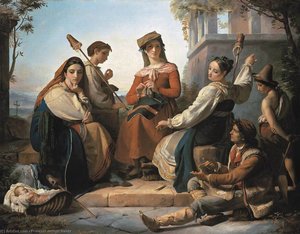
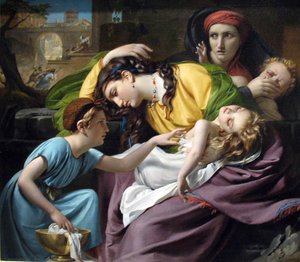
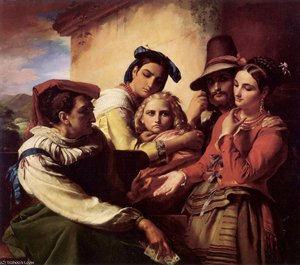
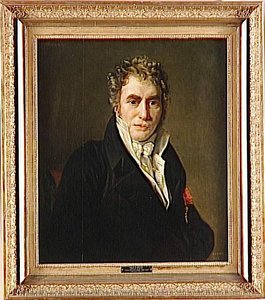
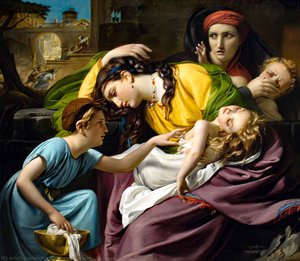
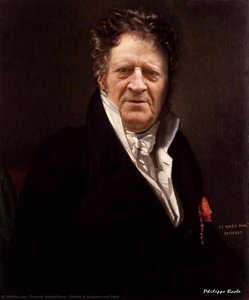
- Notable Paintings: Some of his most celebrated works include “Massacre of the Innocents,” “The Nymph Salmacis and Hermaphroditus”, “Women Spinning in Fondi” and his portrait of Jacques-Louis David.
- His paintings are held in prominent museum collections, showcasing their enduring artistic value.
- Historical Significance: Navez stands as a leading figure in Belgian Neoclassical painting. He bridged the gap between the classical tradition and emerging Romantic tendencies of the 19th century.
- He died in Brussels on October 12, 1869, leaving behind a rich artistic legacy that continues to inspire and captivate audiences today.
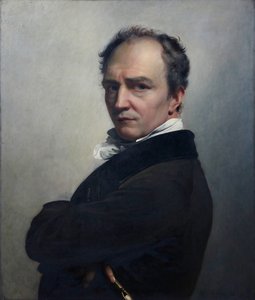
françois joseph navez
1787 - 1869 , Belgium
Quick Facts
- Birth Date: 1787
- Birth Place: Charleroi, Belgium
- Death Date: 1869
- Influenced:
- Jean-François Portaels
- Jean Carolus
- Influenced By: Jacques-Louis David
- Movement: Neoclassicism
- Name: François-Joseph Navez
- Nationality: Belgian
- Notable Works:
- Massacre of the Innocents
- The Nymph Salmacis and Hermaphroditus
- Portrait of Jacques-Louis David
Related Articles

The Enduring Legacy of Oil on Canvas: Technique, History & Aesthetic Impact
Explore the rich history & techniques of oil painting – from Renaissance masters to Impressionism. Discover pigments, layering methods, and why this timeless medium endures. Expert insights for artists & art enthusiasts.

Oil on Canvas: A Historical & Technical Exploration of a Timeless Artistic Medium
Explore the rich history & enduring techniques of oil painting on canvas. Discover the science behind its longevity, conservation practices, and contemporary relevance. Expert insights for art enthusiasts.

The Enduring Power of Painting: A Historical & Contemporary Exploration of Form and Emotion
Explore the rich history & enduring techniques of oil painting with ArtsDot. Discover masterpieces, learn about art collecting, and find authentic handmade reproductions crafted by skilled artists.

The Enduring Legacy of Oil on Canvas: Technique, History & Contemporary Practice
Explore the rich history & enduring techniques of oil painting on canvas. Discover the science behind its longevity, conservation practices, and contemporary relevance. Expert insights for art enthusiasts.
Turn Your Digital Art Into Hand‑Painted Oil Masterpieces—Earn Big on Every Sale and Build an Enduring Legacy
Transform your NFT collection into hand‑painted oil masterpieces with ArtsDot’s expert artisans. Enjoy museum‑grade quality, free worldwide shipping, and a 100% satisfaction guarantee—turn digital art into a lasting legacy that earns you real value.