 Preview
 Send
Send Share
Share
 Details

 Download
 Similars
 X-Ray
X-Ray Diaporama
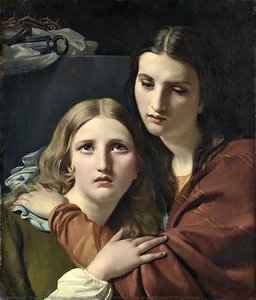
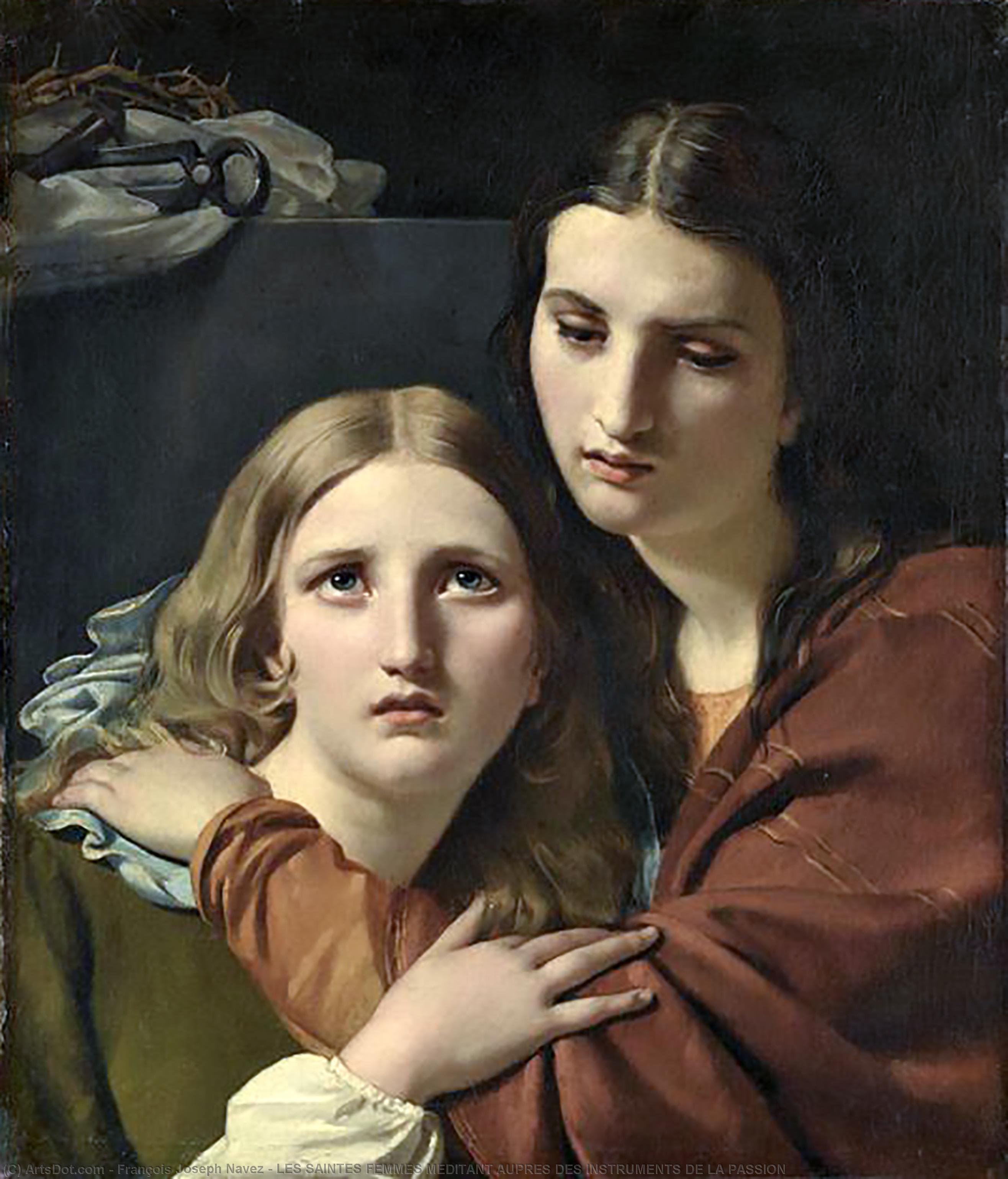
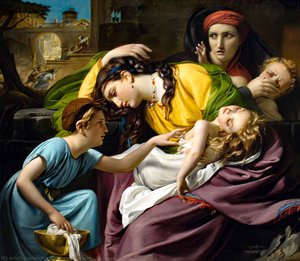
LES SAINTES FEMMES MEDITANT AUPRES DES INSTRUMENTS DE LA PASSION


 Read More
Hand Made Oil Reproduction
Hand-painted oil on canvas in your size and frame, made to order by our artists. ( Buy Print Buy Image)




P118B $10

P118H $10

P118W $10

P438Z $10

P508JH $12

P508YH $12

P805H $10

P805Z $10

P919BZ $10

P919G $10

P919XJ $10

P959ZH $10

P968JZ $12

W106C $8

W218G $10

W218JH $8

W218Y $10

W307PJ $10

W316G $10

W316PJ $8

W316Y $10

W398PJ $8

W4111J $10

W500HY $15

W500JH $15

W692G $12

W849H $8

W940BG $15

W953PJ $8




Pick from our preset sizes that match the artwork's original proportions.

You may enter your own dimensions to fit a specific frame or space. If your selected size does not match the original image's proportions, we will either crop the artwork or extend the painting with additional hand-painted elements. A digital mockup will be sent for your approval before production begins.
Please note that the on-screen preview does not reflect the actual cropping or extension. Only the mockup will accurately show the final composition.
While custom sizes are available, we recommend selecting a dimension from the predefined list to preserve the original proportions.
After order, ArtsDot.com team will email client for instructions and provide a mockup preview
Worldwide Delivery () in 3/4 weeks instead of standard 5 weeks. (17 August). No compromise on quality.

Free Worldwide Express Shipping

High-Quality Linen Canvas

Full Shipping Insurance

Customs Tax Refund Guarantee

True Color Matching Guarantee

60-Day Return Policy (Defects Only)

100% Money-Back Guarantee

Bulk Discount Offer
 Glass option is only available in size under 110 CM

LES SAINTES FEMMES MEDITANT AUPRES DES INSTRUMENTS DE LA PASSION
Reproduction Medium
Reproduction Size
-


Total Price
$ 263
Artwork Description
A Portrait of Faith and Reflection: Exploring François Joseph Navez’s “Les Saintes Femmes Méditant Aupres des Instruments de la Passion”
“Les Saintes Femmes Méditant Aupres des Instruments de la Passion,” painted by François Joseph Navez in 1822, stands as a testament to the enduring influence of Neoclassical ideals and a poignant meditation on Christian piety. This captivating portrait transcends mere representation; it embodies an aspiration for spiritual contemplation within the framework of artistic excellence.Subject Matter and Composition
Navez’s subject matter centers around two women—likely idealized depictions inspired by biblical narratives—seated beside musical instruments, primarily a violin and guitar. The positioning is deliberate: the woman on the left leans slightly towards her companion, conveying intimacy and shared devotion, while the woman on the right gazes upwards with serene contemplation. This dynamic interplay of posture reflects the broader humanist ethos prevalent in Romantic art, albeit filtered through the disciplined lens of Neoclassicism. The inclusion of instruments serves not merely as decorative elements but symbolizes harmony and spiritual resonance—the pursuit of divine beauty mirroring the artistry of musical expression.Style and Technique: Embracing Classical Precision
Navez’s artistic style adheres rigorously to the precepts of Jacques-Louis David, his mentor during a formative period in Rome. Like David, Navez championed meticulous detail and idealized form, prioritizing clarity and balance over expressive distortion. The painting employs smooth brushstrokes and subtle tonal gradations—characteristic techniques of Neoclassical painters—to achieve an ethereal luminescence that illuminates the faces of the women. Careful attention to anatomical accuracy underscores the artist’s commitment to portraying human beauty with reverence and intellectual rigor.Historical Context: Romantic Aspirations Within Classical Boundaries
Painted during a period marked by burgeoning Romantic sentiment, “Les Saintes Femmes Méditant Aupres des Instruments de la Passion” represents an intriguing convergence of artistic movements. While David's influence instilled a profound respect for classical tradition—evident in the composition and stylistic choices—the painting nevertheless captures the yearning for spiritual transcendence that defined the Romantic era. The depiction aligns with broader discussions about feminine virtue and contemplation, reflecting societal anxieties surrounding female piety during the early 19th century.Symbolism: Echoes of Biblical Narrative and Spiritual Reflection
The central symbolism resides in the contemplative gaze of the women and their association with musical instruments. These instruments symbolize harmony, divine beauty, and the pursuit of spiritual enlightenment—mirroring the artist’s own intellectual convictions. The woman on the right's upward glance evokes images of Mary contemplating the crucifixion, referencing a prominent devotional motif within Christian iconography. This subtle allusion elevates the portrait beyond mere visual pleasure, inviting viewers to engage in introspection and contemplate the profound mysteries of faith.Emotional Impact: A Momentary Pause for Contemplation
Ultimately, “Les Saintes Femmes Méditant Aupres des Instruments de la Passion” succeeds in conveying a palpable sense of serenity and spiritual contemplation. The luminous palette and harmonious composition instill tranquility, while the expressive faces capture the inner depths of faith—creating an artwork that resonates with viewers on an emotional level. It serves as a poignant reminder of the enduring power of art to inspire reflection and elevate the human spirit.Related Artworks
Artist Biography
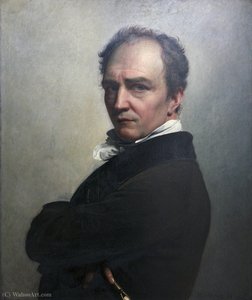
François-Joseph Navez: A Life in Neoclassical Art
Early Life and Education
- Born: Charleroi, Belgium, November 16, 1787.
- Navez came from a privileged background, allowing him to dedicate himself fully to artistic pursuits from a young age.
- He began his formal training at the Royal Academy of Fine Arts in Brussels from 1803 to 1808, studying under Pierre Joseph Célestin François.
- In 1810, he co-founded the “Société des amateurs d'arts,” demonstrating an early commitment to fostering artistic community.
Paris and Rome: Influences and Development
- Navez received first prize for history painting in 1812, which enabled him to travel to Paris.
- Key Influence: From 1813 to 1816, he studied with Jacques-Louis David, a pivotal figure in Neoclassical art. This mentorship profoundly shaped his style and approach.
- He continued his artistic journey in Rome from 1817 to 1822, where he encountered Jean-Auguste-Dominique Ingres and further refined his skills within the classical tradition.
- His time in Italy instilled a deep appreciation for classical forms and themes, which would become hallmarks of his work.
Career and Artistic Style
- Upon returning to Belgium, Navez established a successful studio and quickly gained recognition as a talented portraitist.
- Artistic Focus: He excelled in portraits, historical scenes, and mythological subjects, all executed with meticulous detail and elegant composition.
- His style is characterized by its clarity of form, balanced compositions, and restrained emotional expression – hallmarks of Neoclassicism.
- He was a master of capturing the likeness and character of his sitters in portraiture.
Leadership at the Royal Academy
- Navez’s influence extended beyond his own artistic practice. He became Director of the Académie Royale des Beaux-Arts in Brussels between 1835 and 1862.
- Educational Impact: In this role, he played a crucial part in shaping the next generation of Belgian artists.
- Among his notable pupils were Jean-François Portaels (who also became his son-in-law) and Jean Carolus.
Major Works and Legacy
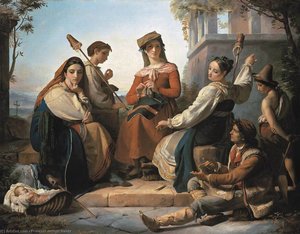
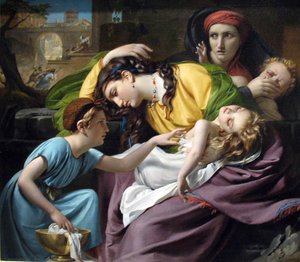
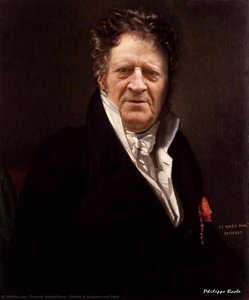
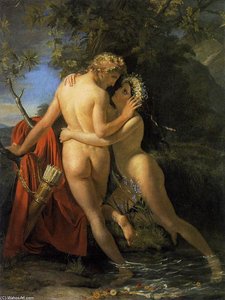
- Notable Paintings: Some of his most celebrated works include “Massacre of the Innocents,” “The Nymph Salmacis and Hermaphroditus”, “Women Spinning in Fondi” and his portrait of Jacques-Louis David.
- His paintings are held in prominent museum collections, showcasing their enduring artistic value.
- Historical Significance: Navez stands as a leading figure in Belgian Neoclassical painting. He bridged the gap between the classical tradition and emerging Romantic tendencies of the 19th century.
- He died in Brussels on October 12, 1869, leaving behind a rich artistic legacy that continues to inspire and captivate audiences today.
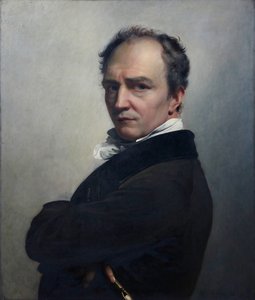
françois joseph navez
1787 - 1869 , Belgium
Quick Facts
- Birth Date: 1787
- Birth Place: Charleroi, Belgium
- Death Date: 1869
- Influenced:
- Jean-François Portaels
- Jean Carolus
- Influenced By: Jacques-Louis David
- Movement: Neoclassicism
- Name: François-Joseph Navez
- Nationality: Belgian
- Notable Works:
- Massacre of the Innocents
- The Nymph Salmacis and Hermaphroditus
- Portrait of Jacques-Louis David
Related Articles
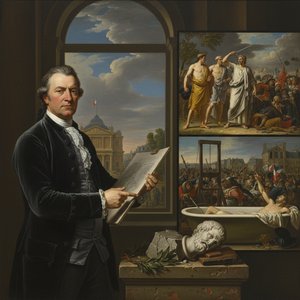
Jacques-Louis David: Neoclassical Ideals & Revolutionary Witness
Explore the life & art of Jacques-Louis David, leading Neoclassical painter of the French Revolution. Discover iconic works like 'The Death of Marat' and his lasting impact on art history. Expert analysis & high-quality reproductions at ArtsDot.
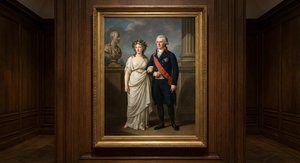
The Revival of Antiquity: Exploring Ideals of Beauty & Power in Neoclassical Portraiture
Explore the captivating world of Neoclassical portraiture! Discover the power & ideals behind masterpieces by David, Girodet & more. Expert analysis, custom reproductions & art appraisal at ArtsDot.
Neoclassical Art: 10 Masterpieces That Shaped History |
Explore 10 defining Neoclassical masterpieces by David, Ingres & Canova. Discover the history, symbolism & artistry behind these iconic paintings and sculptures. Find museum-quality art reproductions at – elevate your home with timeless beauty.
The Enduring Legacy of Neoclassical Art: Order, Reason & Antiquity's Revival
Explore the enduring legacy of Neoclassical art! Discover masterpieces by David, Girodet & Garnier. Expert analysis, custom reproductions & art appraisal at ArtsDot.

The Revival of Antiquity: Exploring Neoclassical Art's Ideals & Enduring Legacy
Explore the revival of classical ideals in Neoclassical art! Discover Jacques-Louis David & the movement's impact on painting, sculpture & architecture. Expert insights & high-quality reproductions at ArtsDot.