 Preview
 Send
Send Share
Share
 Details

 Download
 Similars
 X-Ray
X-Ray Diaporama
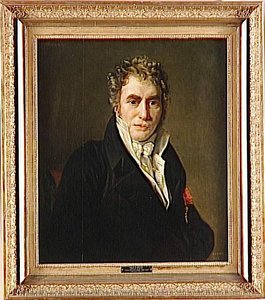
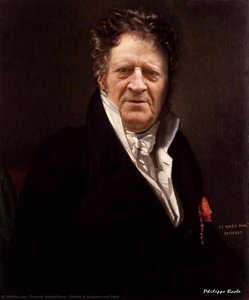
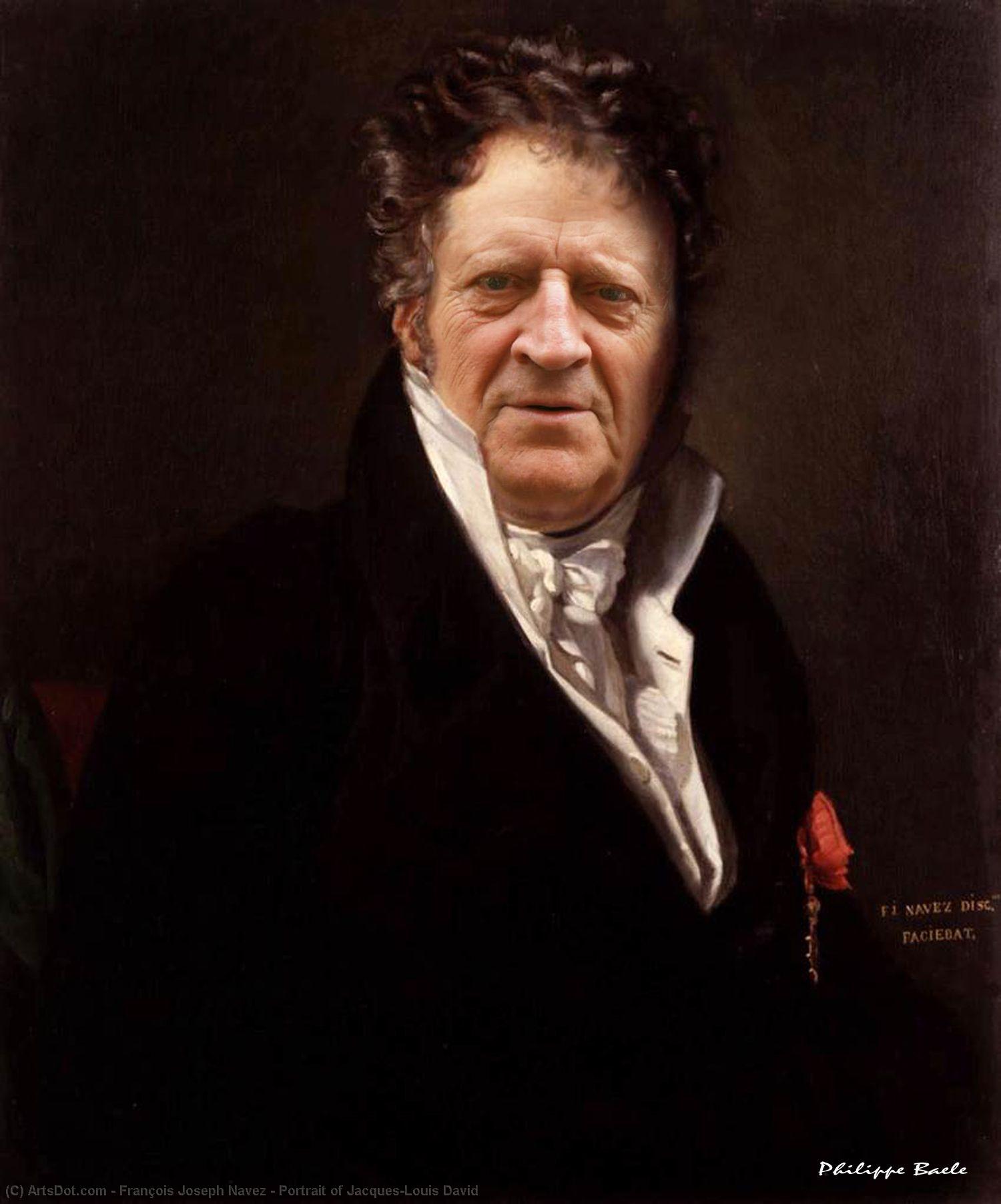
Portrait of Jacques-Louis David
 1817
1817- Renaissance
 67.0 x 56.0 cm
 Read More
Hand Made Oil Reproduction
Hand-painted oil on canvas in your size and frame, made to order by our artists. ( Buy Print Buy Image)




P118B $10

P118H $10

P118W $10

P438Z $10

P508JH $12

P508YH $12

P805H $10

P805Z $10

P919BZ $10

P919G $10

P919XJ $10

P959ZH $10

P968JZ $12

W106C $8

W218G $10

W218JH $8

W218Y $10

W307PJ $10

W316G $10

W316PJ $8

W316Y $10

W398PJ $8

W4111J $10

W500HY $15

W500JH $15

W692G $12

W849H $8

W940BG $15

W953PJ $8




Pick from our preset sizes that match the artwork's original proportions.

You may enter your own dimensions to fit a specific frame or space. If your selected size does not match the original image's proportions, we will either crop the artwork or extend the painting with additional hand-painted elements. A digital mockup will be sent for your approval before production begins.
Please note that the on-screen preview does not reflect the actual cropping or extension. Only the mockup will accurately show the final composition.
While custom sizes are available, we recommend selecting a dimension from the predefined list to preserve the original proportions.
After order, ArtsDot.com team will email client for instructions and provide a mockup preview
Worldwide Delivery () in 3/4 weeks instead of standard 5 weeks. (17 August). No compromise on quality.

Free Worldwide Express Shipping

High-Quality Linen Canvas

Full Shipping Insurance

Customs Tax Refund Guarantee

True Color Matching Guarantee

60-Day Return Policy (Defects Only)

100% Money-Back Guarantee

Bulk Discount Offer
 Glass option is only available in size under 110 CM

Portrait of Jacques-Louis David
Reproduction Medium
Reproduction Size
-


Total Price
$ 263
Artwork Description
A Portrait Steeped in Neo-Classical Grace
This captivating portrait, rendered with meticulous detail and imbued with the spirit of the early 19th century, presents a study in restrained elegance and intellectual depth. The subject, a gentleman of discerning taste, is depicted in profile against a subtly textured background – a hallmark of the Neoclassical style that sought to emulate the clarity and order of ancient Roman art. The artist, François-Joseph Navez, masterfully employs a limited palette of muted earth tones – ochres, browns, and creams – creating a sense of timelessness and gravitas. Notice the careful modelling of the face, capturing not just likeness but also an underlying sense of thoughtful contemplation.
Technique and Materials: A Window into the Artist’s Craft
Navez's skill is evident in his precise brushwork and masterful use of glazing techniques. Layers of translucent oil paint were built up gradually to achieve a rich, luminous surface – a technique perfected during Navez’s time studying with Jacques-Louis David in Paris. The canvas itself, likely prepared with gesso, provides an ideal support for the delicate nuances of color and texture. The use of fine sable brushes allowed for incredibly detailed rendering of fabrics like the coat and shirt, showcasing a deep understanding of how light interacts with different materials. This level of technical precision was highly valued within the Neoclassical movement, which prioritized accuracy and observation.
Historical Context: The Rise of Neoclassicism
Painted in 1817, this portrait emerged during a pivotal moment in European art history – the rise of Neoclassicism. Following the Rococo style’s emphasis on frivolity and ornamentation, artists like David championed a return to the ideals of classical Greece and Rome. This revival was fueled by Enlightenment thought, which valued reason, order, and civic virtue. The subject's attire—the formal coat and shirt—reflects the societal norms of the time, emphasizing respectability and intellectual pursuits. The portrait’s composition deliberately evokes the formality of Roman portraiture, reinforcing its connection to a revered past.
Symbolism and Emotional Resonance
Beyond mere representation, this portrait carries subtle symbolic weight. The subject's direct gaze invites the viewer into his world, suggesting intelligence, self-assurance, and perhaps even a touch of melancholy. The restrained expression avoids overt sentimentality, aligning with the Neoclassical emphasis on objectivity and intellectual detachment. The overall effect is one of quiet dignity and contemplative seriousness – an image designed to inspire admiration and respect for both the subject and the artistic skill involved in its creation. It’s a portrait that speaks not just of appearance but of character and intellect.
Related Artworks
Artist Biography
François-Joseph Navez: A Life in Neoclassical Art
Early Life and Education
- Born: Charleroi, Belgium, November 16, 1787.
- Navez came from a privileged background, allowing him to dedicate himself fully to artistic pursuits from a young age.
- He began his formal training at the Royal Academy of Fine Arts in Brussels from 1803 to 1808, studying under Pierre Joseph Célestin François.
- In 1810, he co-founded the “Société des amateurs d'arts,” demonstrating an early commitment to fostering artistic community.
Paris and Rome: Influences and Development
- Navez received first prize for history painting in 1812, which enabled him to travel to Paris.
- Key Influence: From 1813 to 1816, he studied with Jacques-Louis David, a pivotal figure in Neoclassical art. This mentorship profoundly shaped his style and approach.
- He continued his artistic journey in Rome from 1817 to 1822, where he encountered Jean-Auguste-Dominique Ingres and further refined his skills within the classical tradition.
- His time in Italy instilled a deep appreciation for classical forms and themes, which would become hallmarks of his work.
Career and Artistic Style
- Upon returning to Belgium, Navez established a successful studio and quickly gained recognition as a talented portraitist.
- Artistic Focus: He excelled in portraits, historical scenes, and mythological subjects, all executed with meticulous detail and elegant composition.
- His style is characterized by its clarity of form, balanced compositions, and restrained emotional expression – hallmarks of Neoclassicism.
- He was a master of capturing the likeness and character of his sitters in portraiture.
Leadership at the Royal Academy
- Navez’s influence extended beyond his own artistic practice. He became Director of the Académie Royale des Beaux-Arts in Brussels between 1835 and 1862.
- Educational Impact: In this role, he played a crucial part in shaping the next generation of Belgian artists.
- Among his notable pupils were Jean-François Portaels (who also became his son-in-law) and Jean Carolus.
Major Works and Legacy
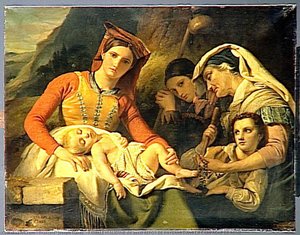
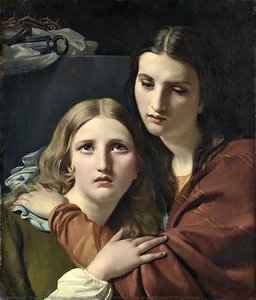
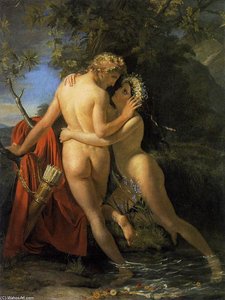
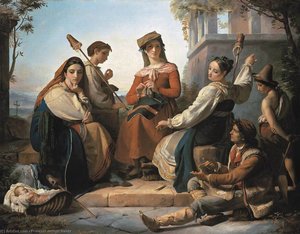
- Notable Paintings: Some of his most celebrated works include “Massacre of the Innocents,” “The Nymph Salmacis and Hermaphroditus”, “Women Spinning in Fondi” and his portrait of Jacques-Louis David.
- His paintings are held in prominent museum collections, showcasing their enduring artistic value.
- Historical Significance: Navez stands as a leading figure in Belgian Neoclassical painting. He bridged the gap between the classical tradition and emerging Romantic tendencies of the 19th century.
- He died in Brussels on October 12, 1869, leaving behind a rich artistic legacy that continues to inspire and captivate audiences today.
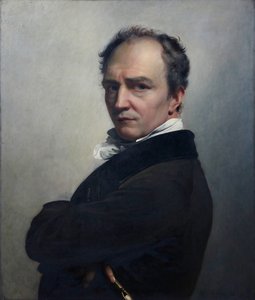
françois joseph navez
1787 - 1869 , Belgium
Quick Facts
- Birth Date: 1787
- Birth Place: Charleroi, Belgium
- Death Date: 1869
- Influenced:
- Jean-François Portaels
- Jean Carolus
- Influenced By: Jacques-Louis David
- Movement: Neoclassicism
- Name: François-Joseph Navez
- Nationality: Belgian
- Notable Works:
- Massacre of the Innocents
- The Nymph Salmacis and Hermaphroditus
- Portrait of Jacques-Louis David