 Preview
 Send
Send Share
Share
 Details

 Download
 Similars
 X-Ray
X-Ray Diaporama
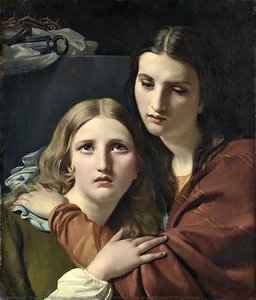
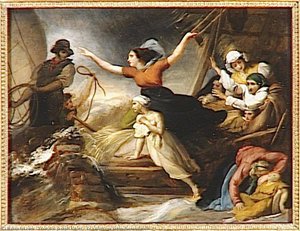
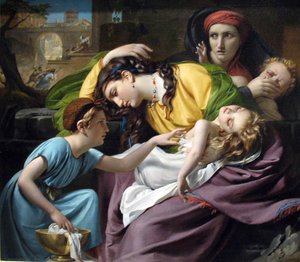
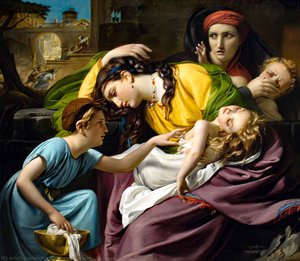
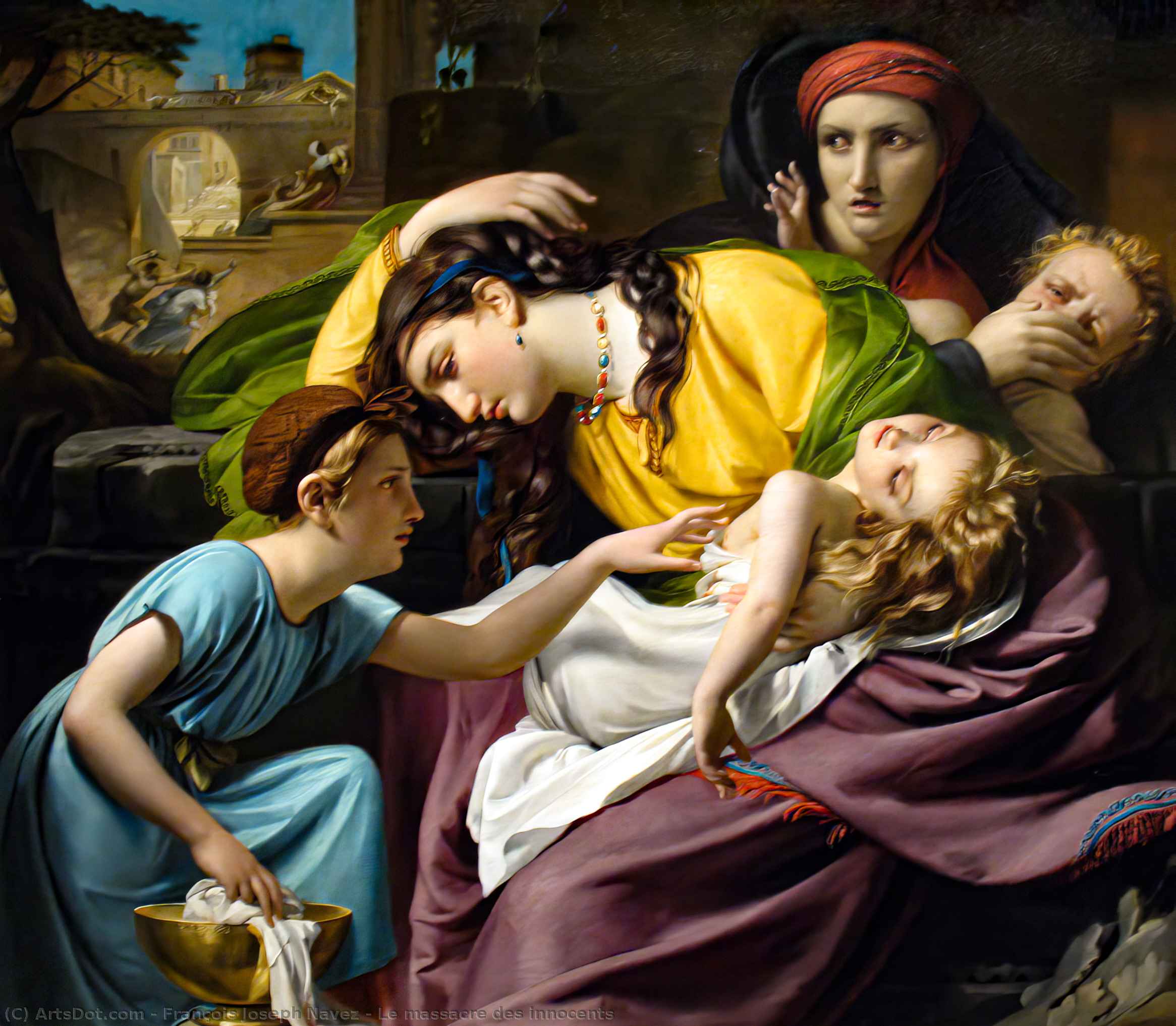
Le massacre des innocents


 Read More
Hand Made Oil Reproduction
Hand-painted oil on canvas in your size and frame, made to order by our artists. ( Buy Print Buy Image)




P118B $10

P118H $10

P118W $10

P438Z $10

P508JH $12

P508YH $12

P805H $10

P805Z $10

P919BZ $10

P919G $10

P919XJ $10

P959ZH $10

P968JZ $12

W106C $8

W218G $10

W218JH $8

W218Y $10

W307PJ $10

W316G $10

W316PJ $8

W316Y $10

W398PJ $8

W4111J $10

W500HY $15

W500JH $15

W692G $12

W849H $8

W940BG $15

W953PJ $8




Pick from our preset sizes that match the artwork's original proportions.

You may enter your own dimensions to fit a specific frame or space. If your selected size does not match the original image's proportions, we will either crop the artwork or extend the painting with additional hand-painted elements. A digital mockup will be sent for your approval before production begins.
Please note that the on-screen preview does not reflect the actual cropping or extension. Only the mockup will accurately show the final composition.
While custom sizes are available, we recommend selecting a dimension from the predefined list to preserve the original proportions.
After order, ArtsDot.com team will email client for instructions and provide a mockup preview
Worldwide Delivery () in 3/4 weeks instead of standard 5 weeks. (17 August). No compromise on quality.

Free Worldwide Express Shipping

High-Quality Linen Canvas

Full Shipping Insurance

Customs Tax Refund Guarantee

True Color Matching Guarantee

60-Day Return Policy (Defects Only)

100% Money-Back Guarantee

Bulk Discount Offer
 Glass option is only available in size under 110 CM

Le massacre des innocents
Reproduction Medium
Reproduction Size
-


Total Price
$ 263
Artwork Description
Le Massacre des Innocents: A Neoclassical Echo of Tragedy
François Joseph Navez’s “Le Massacre des Innocents,” completed in 1824, is more than just a depiction of a biblical scene; it's a profoundly moving meditation on innocence lost and the enduring weight of sorrow. Housed originally at the Metropolitan Museum of Art, this painting exemplifies the height of Neoclassical style – a movement that sought to revive the grandeur and moral clarity of ancient Greece and Rome. Navez masterfully employs composition, color, and detail to evoke a palpable sense of tragedy, inviting viewers into a moment of unbearable grief.
The Artist’s Hand: François Joseph Navez and His Influences
Born in Charleroi, Belgium, in 1787, François Joseph Navez was a pivotal figure within Brussels' artistic landscape during the early 19th century. His training under Pierre Joseph Célestin François at the Fine Arts Academy of Brussels laid a solid foundation, but it was his subsequent mentorship with Jacques-Louis David that truly shaped his artistic trajectory. David’s emphasis on balance, clarity, and a connection to classical ideals – particularly evident in his own work – profoundly influenced Navez's approach to composition and subject matter. This influence is immediately apparent in “Le Massacre des Innocents,” where the figures are arranged with meticulous precision, reflecting a desire for harmonious order amidst profound chaos.
A Scene of Biblical Horror
The painting depicts the harrowing event from the Gospels – Mary holding the infant Jesus while surrounded by Roman soldiers who massacre the innocent children. Navez’s rendering is strikingly realistic and emotionally charged. The central figure of Mary, rendered with a quiet dignity despite her anguish, cradles the lifeless body of her son. The surrounding figures—mourning parents, distraught servants—express a range of emotions: horror, grief, and helpless despair. The carefully placed bowls – one near the bottom left corner, another at the top right – subtly draw the eye and contribute to the overall sense of imbalance and devastation. Note the use of light; it dramatically illuminates the central figures, heightening their vulnerability and emphasizing the tragedy unfolding before us.
Neoclassical Technique and Symbolism
Navez’s mastery lies in his ability to translate classical principles into a deeply affecting narrative. The subdued color palette – dominated by earth tones of browns, grays, and ochres – reinforces the somber mood and evokes a sense of timelessness. Clean lines, precise details, and a restrained use of light contribute to the painting’s monumental quality and its adherence to Neoclassical ideals. Beyond its aesthetic merits, “Le Massacre des Innocents” carries significant symbolic weight, representing not only the vulnerability of innocence but also themes of sacrifice, betrayal, and divine justice – potent ideas that resonated deeply within the context of 19th-century Europe.
Related Artworks
Artist Biography
François-Joseph Navez: A Life in Neoclassical Art
Early Life and Education
- Born: Charleroi, Belgium, November 16, 1787.
- Navez came from a privileged background, allowing him to dedicate himself fully to artistic pursuits from a young age.
- He began his formal training at the Royal Academy of Fine Arts in Brussels from 1803 to 1808, studying under Pierre Joseph Célestin François.
- In 1810, he co-founded the “Société des amateurs d'arts,” demonstrating an early commitment to fostering artistic community.
Paris and Rome: Influences and Development
- Navez received first prize for history painting in 1812, which enabled him to travel to Paris.
- Key Influence: From 1813 to 1816, he studied with Jacques-Louis David, a pivotal figure in Neoclassical art. This mentorship profoundly shaped his style and approach.
- He continued his artistic journey in Rome from 1817 to 1822, where he encountered Jean-Auguste-Dominique Ingres and further refined his skills within the classical tradition.
- His time in Italy instilled a deep appreciation for classical forms and themes, which would become hallmarks of his work.
Career and Artistic Style
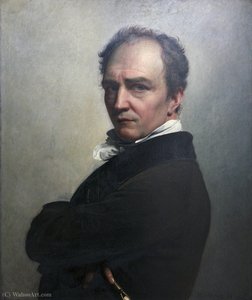
- Upon returning to Belgium, Navez established a successful studio and quickly gained recognition as a talented portraitist.
- Artistic Focus: He excelled in portraits, historical scenes, and mythological subjects, all executed with meticulous detail and elegant composition.
- His style is characterized by its clarity of form, balanced compositions, and restrained emotional expression – hallmarks of Neoclassicism.
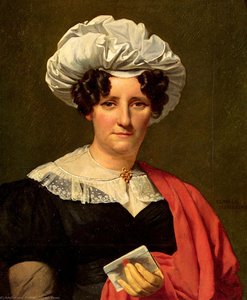
- He was a master of capturing the likeness and character of his sitters in portraiture.
Leadership at the Royal Academy
- Navez’s influence extended beyond his own artistic practice. He became Director of the Académie Royale des Beaux-Arts in Brussels between 1835 and 1862.
- Educational Impact: In this role, he played a crucial part in shaping the next generation of Belgian artists.
- Among his notable pupils were Jean-François Portaels (who also became his son-in-law) and Jean Carolus.
Major Works and Legacy
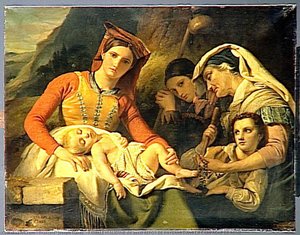
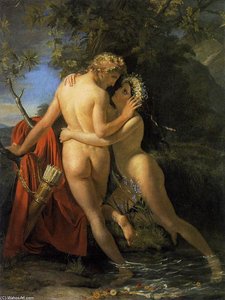
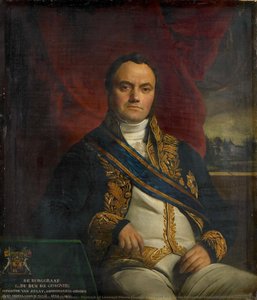
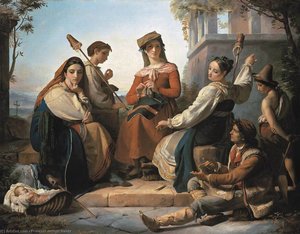
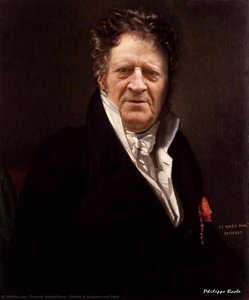
- Notable Paintings: Some of his most celebrated works include “Massacre of the Innocents,” “The Nymph Salmacis and Hermaphroditus”, “Women Spinning in Fondi” and his portrait of Jacques-Louis David.
- His paintings are held in prominent museum collections, showcasing their enduring artistic value.
- Historical Significance: Navez stands as a leading figure in Belgian Neoclassical painting. He bridged the gap between the classical tradition and emerging Romantic tendencies of the 19th century.
- He died in Brussels on October 12, 1869, leaving behind a rich artistic legacy that continues to inspire and captivate audiences today.
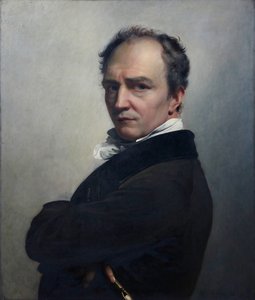
françois joseph navez
1787 - 1869 , Belgium
Quick Facts
- Birth Date: 1787
- Birth Place: Charleroi, Belgium
- Death Date: 1869
- Influenced:
- Jean-François Portaels
- Jean Carolus
- Influenced By: Jacques-Louis David
- Movement: Neoclassicism
- Name: François-Joseph Navez
- Nationality: Belgian
- Notable Works:
- Massacre of the Innocents
- The Nymph Salmacis and Hermaphroditus
- Portrait of Jacques-Louis David
Related Articles
Sacred Narratives Embodied: A Comprehensive Exploration of Religious Iconography in Art History
Explore the rich history of religious iconography in art! Discover symbolism, movements & masterpieces from Byzantine to Renaissance periods. Expert insights for collectors and enthusiasts at ArtsDot.
Sacred Narratives on Canvas: Exploring Religious Painting Through History
Explore the rich history of religious painting with ArtsDot.com! Discover iconic artworks, symbolism & techniques from antiquity to the Renaissance. Enhance your art appreciation today.
Sacred Narratives on Canvas: Exploring Religious Scenes & Their Enduring Influence
Explore the rich history of religious art from Giotto to the Renaissance masters with ArtsDot. Discover symbolism, techniques & enduring legacies. Museum-quality reproductions available.

Sacred Visions: Exploring Faith & Devotion in Religious Art Across Cultures
Explore the rich history of religious art across cultures! Discover symbolism, Renaissance masterpieces & the power of color in devotional works. Expert insights for collectors and enthusiasts.

Sacred Narratives on Canvas: Exploring Devotional Imagery Across Art History
Explore the rich history of devotional art! Discover iconic masterpieces, symbolism & techniques from antiquity to the Renaissance. Expert insights for collectors & enthusiasts at ArtsDot.